This article was written by Julia Mingorance, Senior Workplace Consultant at CBRE and alumn from the Master in Strategic Interior Design at IE School of Architecture and Design.
More than 500 days ago, our whole world was turned upside down and our way of life changed overnight. We were forced to stay at home and work away from the physical office, in a purely virtual collaboration. In general, companies were surprised to maintain the same levels of productivity and results during these months—many even predicted the end of the office. As the health situation has started improving, a lot of companies have returned to the office, experimenting with different flexible models combining remote work and in-office days. The normalization of remote work means that many organizations see it as an opportunity to reduce office space and therefore, save costs.
The classic concept of estimating m2 for an office is being challenged completely. New variables are appearing in the equation and these are increasing uncertainty about just how much office space is needed.
Seven years after the inauguration of Bosco Verticale in Milan, Stefano Boeri Architetti presented a video documentary of Trudo Tower, the first Vertical Forest in social housing. The 19-storey residential tower, which is built in Eindhoven, The Netherlands, features hundreds of various species on each of its four facades, with 125 affordable apartments that accommodate low-income residents. The miniseries consists of 3 episodes that explore how "living in contact with trees and greenery - and enjoying their advantages - is not the prerogative of rich people but could well become a possible choice for millions of citizens around the world.”
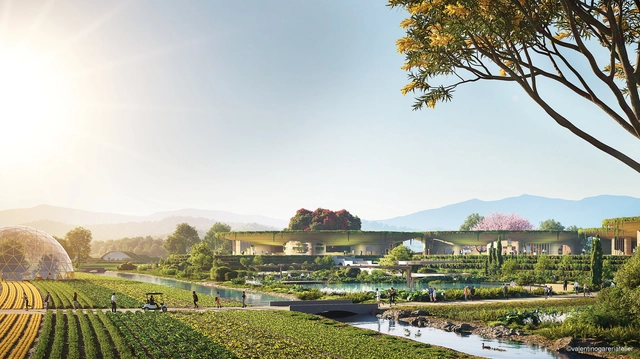
Valentino Gareri Atelier has been selected to design the pilot project for a circular economy village model that aims to redefine urban sprawl through sustainability and diverse programming. Comprising eight residential hamlets with co-working and entertainment spaces, The Spiral Village will be created using emerging 3D printing methods and will foster circularity through a waste-to-resources hub, a diverse regenerative agricultural system, a sustainable water management system and renewable energy.
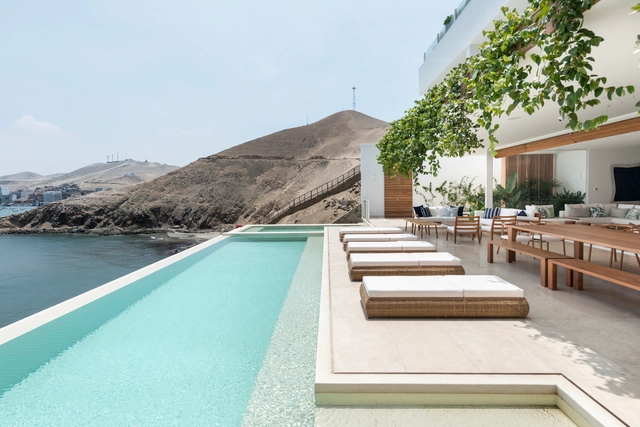
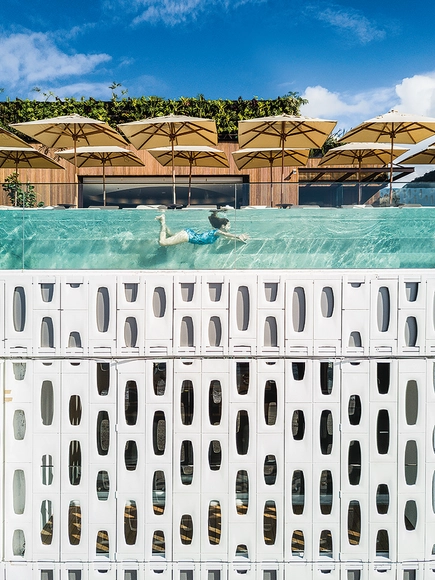
It could be said that one of the main aspects to take into account when designing a swimming pool is the choice of colour for the coating. The light, the shadows, the depth, the environment and the elements that surround it are variables that directly affect the final tonality of the water. The effects of artificial and/or natural lighting also determine the final aesthetic, because if it's located outdoors, reflecting the sky, it will create a different effect than if it's located indoors, where the ceiling would influence its colour.
New York Governor Kathy Hochul announced last week that the current and former sites of Terminals 1, 2, and 3 on the south side of John F. Kennedy International Airport in Queens will be redeveloped to make way for a $9.5 billion international terminal that will be built out in phases beginning next year. With the first of its 23 gates anticipated to go live in 2026, the 2.4-million-square-foot newTerminal One will rank as the largest at JFK and, per a news release from the Governor’s Office, “aspires to be among the top-rated airport terminals in the world.”
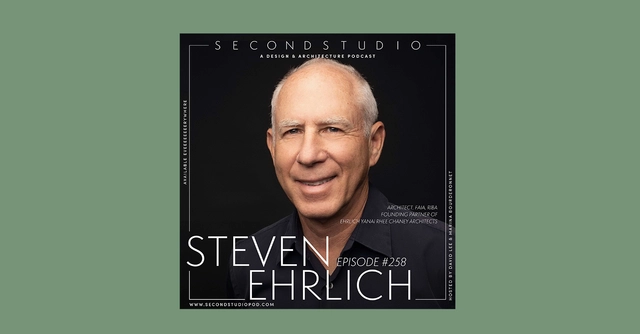
The Second Studio (formerly The Midnight Charette) is an explicit podcast about design, architecture, and the everyday. Hosted by Architects David Lee and Marina Bourderonnet, it features different creative professionals in unscripted conversations that allow for thoughtful takes and personal discussions.
A variety of subjects are covered with honesty and humor: some episodes are interviews, while others are tips for fellow designers, reviews of buildings and other projects, or casual explorations of everyday life and design. The Second Studio is also available on iTunes, Spotify, and YouTube.
This week David and Marina are joined by Steven Ehrlich, FAIA, RIBA and Founding Partner of Ehrlich Yanai Rhee Chaney Architects to discuss his working as an architect for the Peace Corps in Morocco, his architecture office in Los Angeles, Julius Shulman, his work, current challenges in the profession, and more.
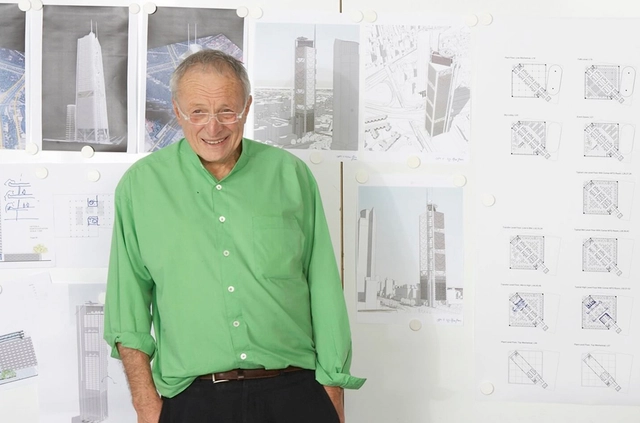
Richard Rogers, the fourth British architect to be awarded the Pritzker Prize, has passed away at 88 on Saturday, December 18, as reported by The New York Times.
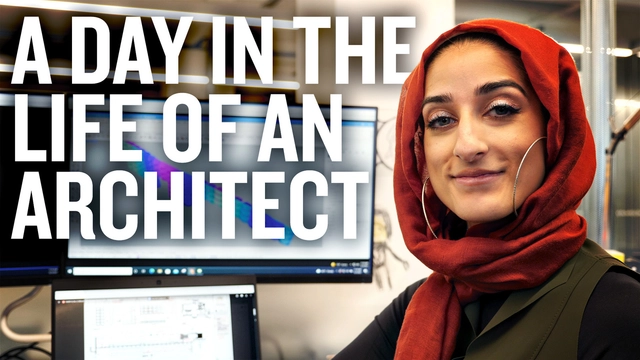
This video follows Hiba Bhatty, an architect at Valerio Dewalt Train in Chicago, through a day on the job. The daily activities of an architect can sometimes seem mysterious. This is likely due to the fact that no day is really “typical.” Designing buildings goes through multiple phases, each with very different responsibilities.
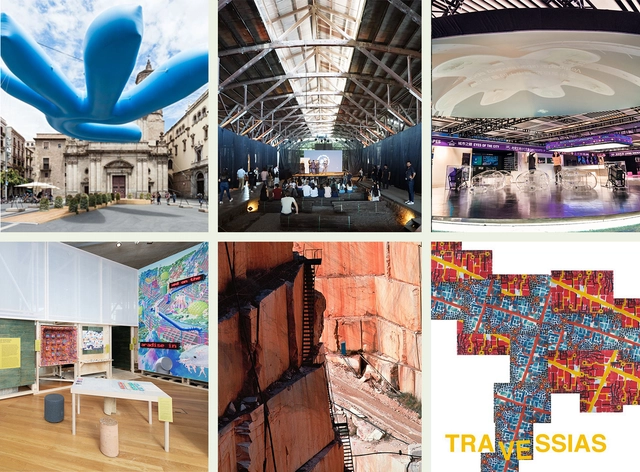
The 2021 Venice Architecture Biennale closed less than a month ago, leaving architects pondering the takeaways of this edition and anticipating the next. The pandemic disrupted the usual cycle of biennials and triennials, as most of the events of 2020 and even some of the ones of 2021 were postponed; nonetheless, next year promises a full calendar of exciting opportunities for knowledge sharing and inquiry. The following are some of the most important architecture events to look forward to in 2022.
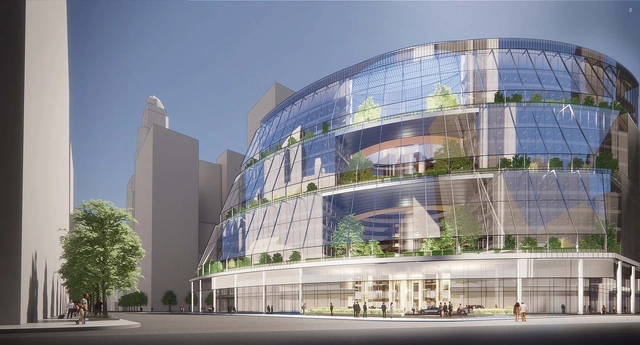
Thompson 2.0. Image Courtesy of Jahn Architecture Inc / HANDOUT
After years of ongoing demolition threats and renovation proposals, Illinois Governor JB Pritzker has announced that the state has finally reached a deal to sell Helmut Jahn's iconic Thompson Center to Real Estate company The Prime Group, who will carry out renovation works without any demolitions to the structure. The newly proposed design preserves the structure's original design, but implements new features that improve its thermal and acoustic conditions, and highlights its atrium as the "jewel of the building".
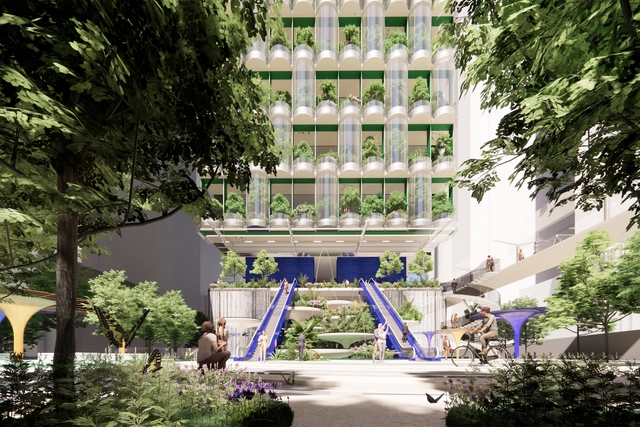
Arup reveals the competition-winning design for a 230m tall net-zero commercial tower in Hong Kong that embodies the city's aspirations to reach carbon neutrality by 2050. Taikoo Green Ribbon blends technology and nature to create an urban ecosystem sustaining a new generation of workplaces. Featuring a façade of curved PVs, hanging gardens, algae walls and various renewable energy sources, the project is a high-performance building slated to achieve carbon neutrality in less than a decade after construction.
With over 20 years of experience, Studio Arthur Casas celebrates the entirety of architectural practice. The office works in different scales, from furniture to urban projects, passing through residences, apartments and buildings, maintaining stringency about the quality of details.
Buildings contribute nearly 40% of greenhouse gases to the atmosphere, so the push is on to “get to zero” on many fronts. What happens when ambitious goals like zero energy meet a conventional building industry that’s structured on repetition and cost, in a market that struggles to keep up with massive demand? This is often—too often—our challenge.
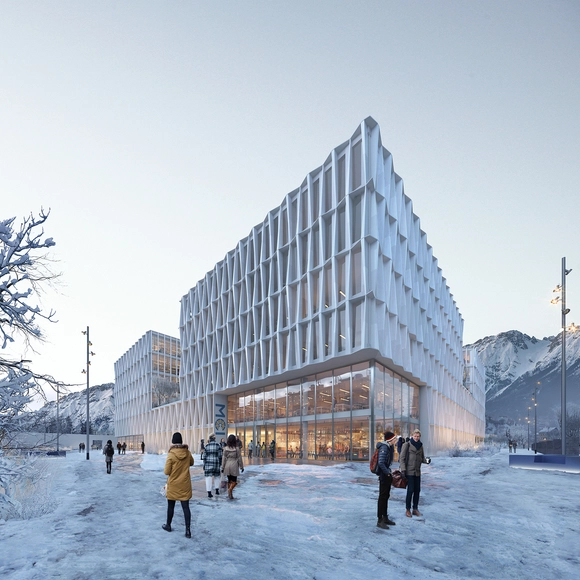
Henning Larsen won the competition to design a new university building for the Management Center Innsbruck (MCI), the studio’s first project in Austria. Founded in 1995, the MCI outgrew its facility in the city centre, and the competition was meant to establish a new unified campus, gathering together the many faculties now scattered on different locations throughout Innsbruck. The design consists of an isolated object with no back or front featuring multi-story voids carved into each façade, establishing distinct relationships with the surroundings and framing views of the Alps.
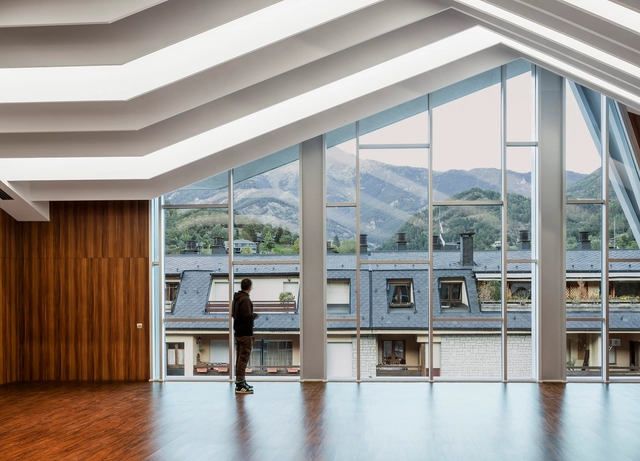
Wedged between France and Spain, Andorra is the sixth smallest nation in Europe. Less than 500 square kilometers in area, the landlocked microstate can be found in the eastern Pyrenees on the Iberian Peninsula. Today, new architecture is being built between Andorra’s rugged mountains and three narrow valleys that combine to form its Gran Valira river.
As the effects of climate change intensify across the world, the AEC industry is shifting toward green building to effectively address the climate crisis. In 2020, members of The American Institute of Architects (AIA) overwhelmingly approved a resolution making environmental stewardship the organization’s top priority. Since then, steady progress has been achieved to develop a Climate Action Plan, evolve the Framework for Design Excellence, and increase participation in the 2030 Commitment. The building and construction sector is responsible for 36% of energy consumption, 38% of energy related carbon emissions, and 50% of resource consumption globally. These percentages are expected to double in total footprint by 2060, exacerbating the negative effects of climate change on the environment. The Intergovernmental Panel on Climate Change (IPCC) 2021 Report warns of increasingly extreme heatwaves, droughts and flooding, and a key temperature limit being broken in just over a decade. The world must act fast to avoid these catastrophic events, and decarbonizing the built environment is a major step in the right direction.
https://www.archdaily.com/972553/net-zero-energy-and-net-zero-carbon-design-strategies-to-reach-performance-goalsSponsored Post
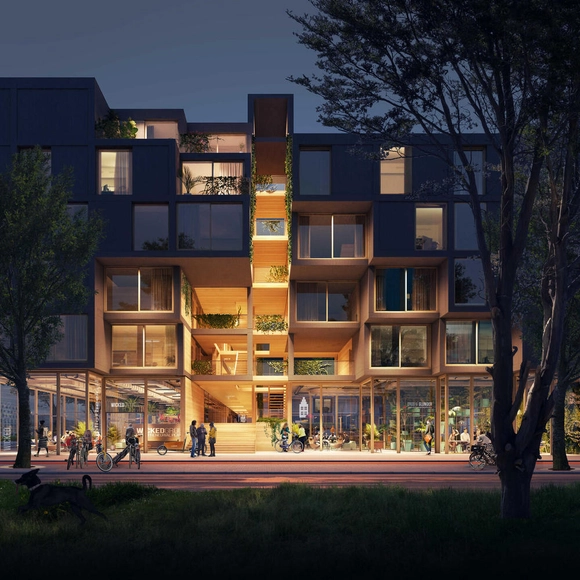
The first wooden housing modules of Juf Nienke, a new circular prefabricated timber housing project by SeARCH, RAU, and DS landscape architects, has been installed in Amsterdam. The project will feature 61 rental homes made entirely of wood, and will sit at the entrance of Centrumeiland, a newly raised piece of land on Lake IJmeer that features 1500 housing units. It is set to be one of the most sustainable apartment buildings in the Netherlands, incorporating an innovative cross-laminated timber construction and utilizing recycled materials.
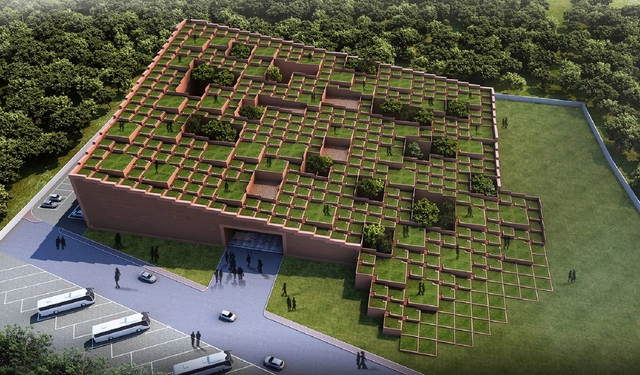
Sanjay Puri Architects has designed a new building for the Prestige University in Indore, a stepped massing with green terraces that blends with the landscape. Currently under construction within the 32-acre university campus, the project echoes traditional Indian architecture through its use of red brick and contextual adaptation to the local climate. The morphology creates an outdoor amphitheatre for students and faculty, while the interweaving of indoor and outdoor spaces is meant to foster engagement and social interaction.
Residential architecture is one of the most popular categories among our readers. In 2021 we published more than 3,800 projects, featuring houses from different regions of the world and offering a variety of solutions, materials, contexts, environments, scales, and typologies. Providing a broad source of inspiration for those seeking references for their own residential project.
https://www.archdaily.com/973682/best-houses-of-2021Clara Ott
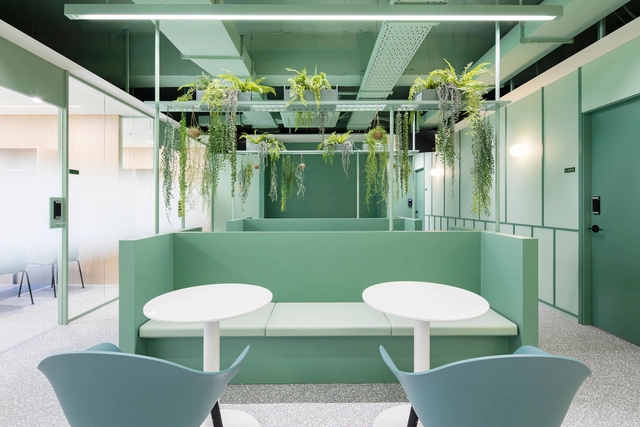
Offices have evolved tremendously in recent years. They are becoming more and more like a domestic space, incorporating new color palettes, flexible furnishings, warm textures, and even greenery as part of the design. In the latter case, it is not simply an aesthetic addition, but the greenery is integrated in such a way that it completely transforms and enhances the work experience of the people inside. How can plants become protagonists of the workspace? Let's review 7 cases that creatively integrate them in favor of the well-being of users.
In this week's reprint, Metropolis editors have selected a variety of new and forthcoming architecture and design books, rounding up a compelling reading list for the season. The following titles range from monographs and theoretical inquires to essential knowledge works, from authors like Michael Sorkin, Robert A.M. Stern or Paul Dobraszczyk.
In this second edition of the ArchDaily Professionals Video Interviews, ArchDaily's Managing Editor, Christele Harrouk, met with Mat Cash, Group Leader of Heatherwick Studio, Signe Nielsen, MNLA's Founding Principal, and David Farnsworth, Arup Principal, to discuss their collaborative work on one of New York City's latest green areas, Little Island Park at Pier 55.
During the last quarter of 2021, Herzog & de Meuron completed the construction of three museums: M+ in Hong Kong, 433 MKM Museum Küppersmühle Extension in Duisburg, and 473 SONGEUN Art Space in Seoul. To celebrate this milestone and highlight the projects' varied approaches to the presentation of art as culturally-enriching platforms, the firm has put together a video compilation of all three projects alongside each other, showcasing the different approaches to their contexts and geographical locations, spatial requirements and materiality, and how all three of them share a collective focus to foster the exchange between people and culture.
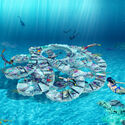
OMA / Shohei Shigematsu, together with artists Charlotte Taylor and Nicholas Préaud, created a series of NFTs inspired by an underwater sculpture designed for the ReefLine project. Commissioned by Aorist for its climate-forward NFT marketplace, the video NFT Coral Arena unfolds a virtual narrative of the monument, simulating the evolution of the future physical artwork from an abstract object to being the support of an underwater ecosystem. The NFTs were unveiled during Miami Art Week, and proceeds from their sale will be donated for the completion of the ReefLine project.


.jpg?1639992530 "© Paolo Rosselli")
.jpg?1639992517 "© Paolo Rosselli")
.jpg?1639992418 "© Paolo Rosselli")