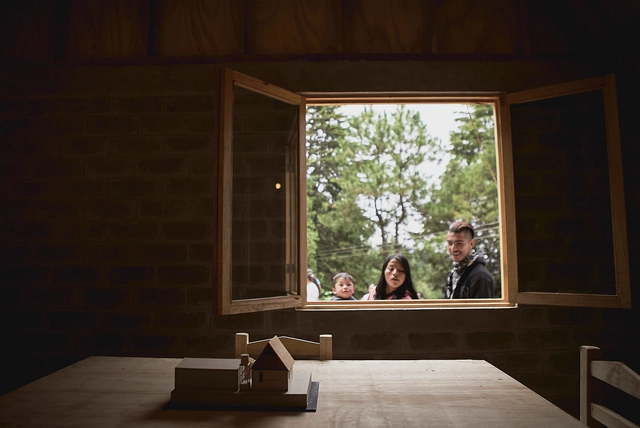
In conversation with ArchDaily en Español, the founders of the Paraguayan firm Gabinete de Arquitectura, Solano Benítez and Gloria Cabral, spoke about their involvement in Cuatro Cuatros, an ambitious Mexican project led by Mauricio Rocha y Gabriela Carrillo in Ensenada, Baja California.
For a decade, Rocha and Carrillo have worked on the 860 hectares comprising the Cuatro Cuatros project. In this new phase, a group of Mexican and international architects has created a manifesto explaining their collaborative involvement in a 500-home development within the 360 permitted hectares.
Historically, most social housing programs have focused on constructing new housing units. However, according to urban planning and housing specialist Elisabete França, this approach is often detrimental to the social development of low- and middle-income citizens.
https://www.archdaily.com/1114122/lessons-for-brazil-cities-that-developed-with-good-social-housing-projectsAndré Nunes e Daliane Nogueira
This year marks the bicentennial of the Battle of Maipú, the decisive clash that secured Chile's independence. 1818 also marks the vow made by Chilean liberator Bernardo O'Higgins to erect a votive temple in honor of the Virgin of Carmen, Chile's patron saint, to whom local troops prayed for the victory that ultimately freed them from the Spanish Empire.
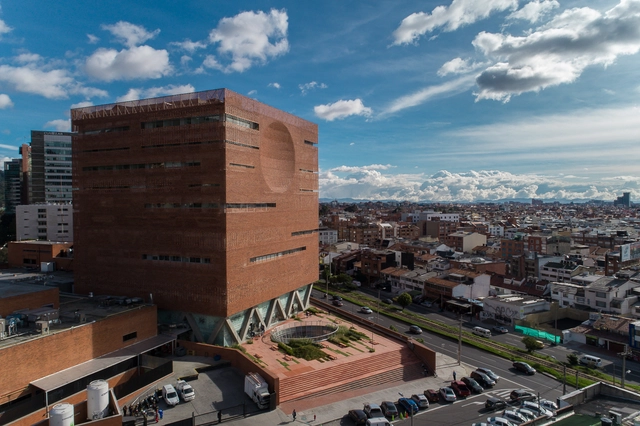
Designed by El Equipo de Mazzanti, the Fundación Santa Fe de Bogotá has been selected as the winner in the 'Healthcare Architecture' category of the 2018 Building of the Year Awards, making it the only Colombian project—and one of only two Latin American representatives—to win in the competition organized by ArchDaily, the network of websites to which ArchDaily Colombia also belongs.
The Building of the Year Awards are presented annually to the best projects published on our English-language edition—the most visited architecture website in the world—with winners chosen by the readers themselves, who can vote across 15 typological categories in two stages. In this edition, the competition reached 100,000 votes from around the world within a two-week period.
Videos
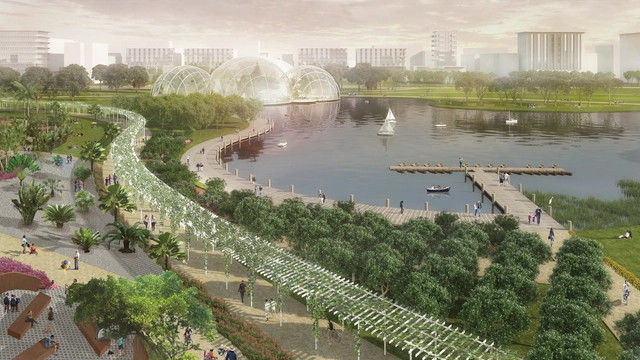
Jardín botánico en distrito central. Image Cortesía de Perkins Eastman
José Joaquín de Olmedo Airport—Ecuador's second busiest—will relocate to the outskirts of Guayaquil in 2022, freeing up 240 hectares in the city center. In response to the unprecedented urban opportunity presented by this relocation, the firm Perkins Eastman has revealed the first images of Nueva Ciudad, a 2-million-square-meter master plan in Guayaquil.
Stephen Forneris, head of the Ecuador office, explained that the project "can be a catalyst for economic growth, cultural activities, and entertainment; it will be the spark that begins Guayaquil's journey to becoming the city of the future."
Videos
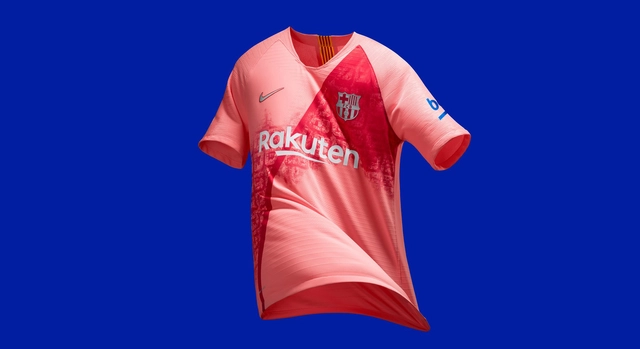
Barça's third kit for the 2018/2019 season. Image via FC Barcelona on Twitter
Barça’s history is closely tied to Barcelona, the city where the soccer club was founded in 1899. Today, the reigning Spanish league champions paid tribute to the city with the launch of their third kit for the 2018/2019 season.
The third jersey features a pale pink color crossed by a diagonal sash running from the left shoulder to the bottom right. The stripe pays tribute to Avinguda Diagonal, one of Barcelona's most important avenues, and is superimposed on a reddish-toned satellite image of the Eixample district.
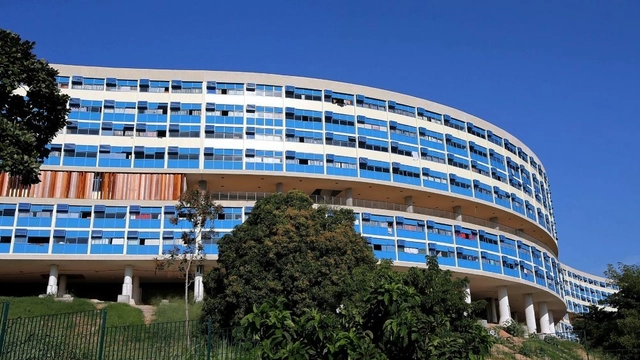
The challenge proposed by the competition, aimed at students, was to redefine the highway motel typology, creating a building that would engage with the Rio de Janeiro skyline and focus on design and entertainment for its guests.
According to the jury, “Many proposals focused on autonomous volumetric design, as if shifting volumes to meet a functional solution could account for the complexity required for urban integration. Therefore, the most critical evaluation criteria were program innovation, proper circulation planning, and the interaction between architecture and open spaces. In this regard, the proposals that managed to leverage the site's potential achieved the competition's objectives: the creation of an URBAN Motel.”
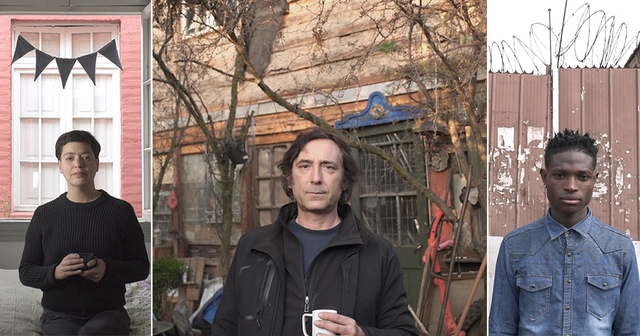
"How do Chileans live?" is the question directors Joaquín Mora and Verónica Wüst seek to answer in the series Habitar, which portrays the current reality of housing in Chile through the intimacy of their homes.
On October 22, the nine-episode series will launch on the official website of Proyecto Habitar and on ArchDaily en Español. It will also premiere on Thursday, October 26, as part of the Arqfilmfest programming.
Projections for the urban world have been updated. In May, the United Nations released a new edition of the World Urbanization Prospects, a report that takes an in-depth look at the planet's urban centers, concluding that 68% of the world's population will live in cities by 2050. This estimate is 2% higher than the previous study published in 2014, which is part of the series produced by the United Nations Department of Economic and Social Affairs (DESA).
At the end of each year, we issue a call for submissions for graduation projects from our Portuguese-speaking readers. Through this, we aim to select the most interesting proposals to present inspiring visions and foster debates for our entire audience.
For this edition, we received 466 proposals from all over Brazil, as well as cities like Lisbon and Luanda. Before presenting the 30 selected by our editorial team, it should be noted that this list does not necessarily feature the "best" projects received. Instead, it highlights the works we found most well-presented, graphically engaging, and with themes that seemed particularly relevant for a final graduation project. Rather than simply resolving a design program satisfactorily, we believe that a final graduation project—as a culmination of a student's efforts during the transition from academia to professional practice (while, importantly, still part of their academic journey)—should raise questions and provoke discussion about the proposed theme.
It is worth noting that several submissions did not follow the guidelines of the call and were disqualified or lacked sufficient material for evaluation.
Below is our selection* of the best final graduation projects from Portuguese-speaking countries, accompanied by descriptions provided by their authors.
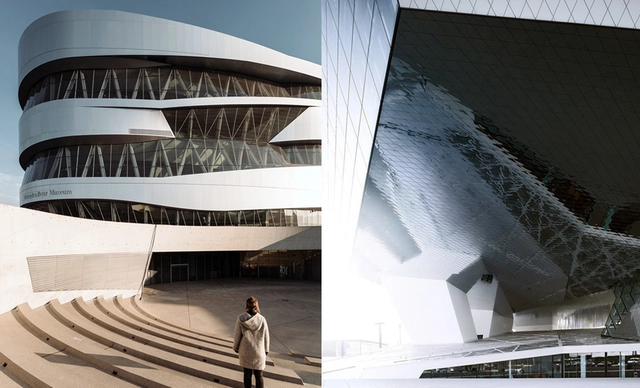
Architect Rafael Pina, from the ARKRIT Collective, presents an article comparing two prestigious German automotive brands and their effort to project, also through architecture, an image of modernity and power. These museums belong to a lineage of spectacular architecture, seeking to inspire admiration and surprise through showmanship across various dimensions: formal, technological, and financial.
Undoubtedly, 2018 has been one of the most important years in the history of ArchDaily México. Through both our existing and newly introduced tools, we have succeeded in providing inspiration, knowledge, and tools to architects currently facing the challenge of designing the future, aiming to improve the quality of life for those living in the world's urban centers.
This year, we connected more closely with our readers through various tools that fostered dialogue, participation, and the work of our Instagram community, aligning more closely with your interests. This community now consists of 71k followers who actively participate daily to discuss the present and future of architecture.
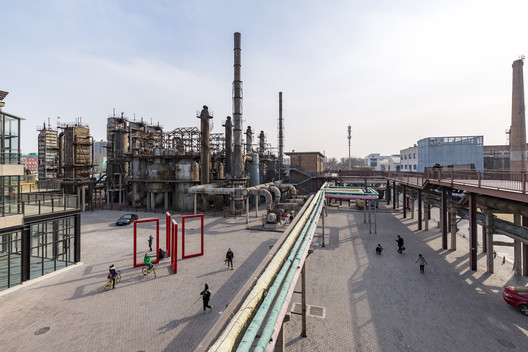
The American Planning Association (APA) recently announced that Sasaki’s 2006 Vision Plan for Beijing's 798 Art District has been honored with the organization's highest accolade, the Pierre L’Enfant International Planning Excellence Award. Today, the 798 Art District in Beijing is a thriving, mixed-use district that welcomes over three million visitors annually, earning a reputation as the city's third most popular destination after the Forbidden City and the Great Wall. The district's success has set a benchmark for the adaptive reuse of historic buildings and is internationally recognized as a model for industrial regeneration.
https://www.archdaily.com/1113953/sasakis-vision-plan-for-beijings-798-art-district-wins-apa-international-award-for-excellence-honoring-years-of-impactJoanna Wong
São Paulo is one of the Brazilian cities that have established fees for on-demand transport services. Photo: Arnaud Matar/Flickr
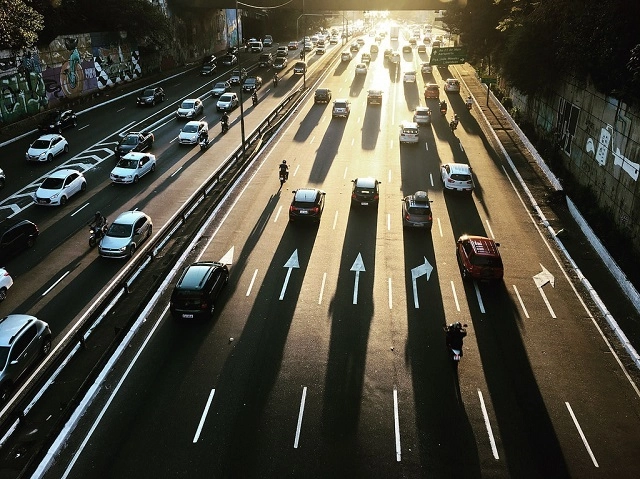
As ride-hailing services like Uber continue to gain popularity and draw attention for their impact on traffic congestion and other urban ills, cities around the world, from Washington, D.C., to São Paulo, are moving toward the inevitable next step: targeted fees.
This comes as no surprise. Recent research shows that these services are contributing to declining public transit ridership and an increase in private vehicles on the streets. However, new taxes and fees should do more than just raise revenue. They have the potential to make cities more livable and transport more sustainable. If ride-hailing services are taxed, this revenue must be allocated carefully, in ways that improve urban mobility as a whole.
https://www.archdaily.com/1113948/some-cities-are-taxing-ride-hailing-apps-is-this-a-good-thingBen Welle, Guillermo Petzhold e Francisco Pasqual
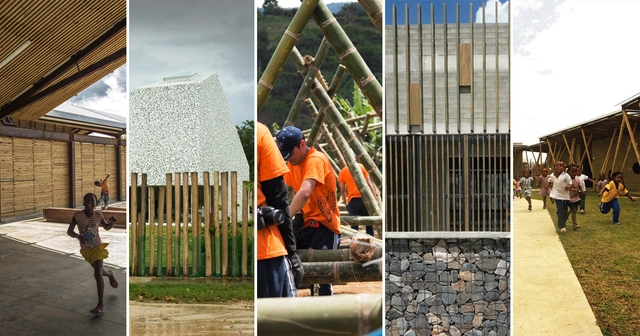
The need for both physical and mental reconstruction opens the door to various interpretations, highlighting the human capacity to adapt despite adversity: resilient individuals facing challenges in remote territories once constrained by armed conflict, oppression, and fear.
Post-conflict architecture is one of the major contributions to rebuilding a country that needs greater social awareness in this peace process. Redefining territories, preserving memory, and fostering a sense of ownership are the essential characteristics shaping these architectural spaces and reclaiming areas once marked by violence. Today, their symbolism plays an important role within many communities that find identity through architecture, proving that these remote locations in Colombia are now examples of unity and coexistence.
In light of this reality, we have selected five projects that have fostered a deep connection to the territory, offering flexible spaces that support new ways of building social fabric.
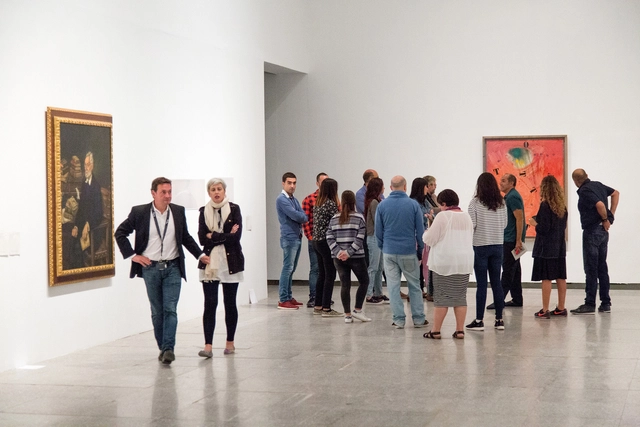
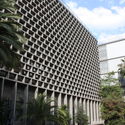
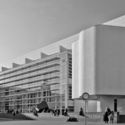
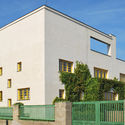
Adolf Loos, Joaquín Vaquero Palacios, Fernando Moreno Barberá, Norman Foster, and the bicentennial of the Museo del Prado are just some of the key names and milestones set to take over Spanish museums in 2018.
Here are 10 highly recommended architecture exhibitions for the new year that offer a rich and compelling cultural lineup. They span Spanish and international architects, iconic buildings from Spain's architectural history, and the profound impact of emerging technologies—such as artificial intelligence and virtual reality—on the field of architecture.
The exhibition "Women Architects XIX-XX" on the role of women in the history of the profession, installed at the University of Beira Interior (UBI) in Portugal, was vandalized between last Friday night and Saturday morning. Held by the Integrated Master's in Architecture of the university's Department of Civil Engineering, the exhibition occupied the building's lobby and was destroyed, likely by punches and kicks, according to an article published by the Portuguese newspaper Expresso.
Aiming to reflect on how "the visibility of women architects in the context of established architectural history is minimal and does not do justice to their actual and real presence in building cities and architecture," the exhibition, organized by Patrícia Santos Pedrosa, showcased the results of research on the production and presence of female architects over the past two centuries who contributed to expanding "the way we make, think, and question architecture."
View from the rooftop lookout. Photo: Courtesy of Sesc
Closed for renovations since 2010, the Sesc branch on Avenida Paulista now has an official opening date: April 29. Designed by the firm Königsberger Vannucchi Arquitetos Associados, the renovation project transformed the former Sesc Paulista space, creating three auditoriums, workshop rooms, exhibition areas, rehearsal and fitness rooms, as well as the traditional services offered by all Sesc branches, such as a café, restaurant, and shops.
Focused on performing arts and body movement, the program of Sesc Paulista is spread over 17 floors, featuring a rooftop café and an observation deck overlooking the avenue.
The Sebrae Sustainability Center (CSS), designed by architect and urban planner José Portocarrero, won the BREEAM Awards 2018 for best sustainable building in the Americas, as well as the popular vote category. Inspired by indigenous dwellings, which are benchmarks in bioclimatic design, the building in Cuiabá (MT) stands out for its thermal comfort and maximum use of natural light. Its double-shell roof enables internal cooling and rainwater harvesting, which is filtered and stored for garden irrigation and floor washing.
The project, titled Empatias Mapeadas, consists of an interactive parametric sculpture featuring pulsing lights and speakers that mix and broadcast the heartbeats of the participants who touch the piece.
Nearly a year after an earthquake struck Mexico City and several Mexican states on September 19, 2017, we are beginning to see the fruits of the many efforts that arose in response to the slow—and at times nonexistent—government reaction, with citizens taking it upon themselves to organize and help. Various associations, foundations, and collectives joined the cause, and the architectural community was no exception.
This gave rise to ReConstruir México, driven by the determination to put architectural expertise at the service of those most in need, assisting in the reconstruction and conservation of affected heritage by providing technical support and advice, as well as designing and proposing solutions. However, goodwill alone was not enough; a multidisciplinary, integrating entity was needed to channel these efforts into physical housing for the victims. PienZa Sostenible stepped into this role, coordinating the process as a non-profit organization. As a platform for study, analysis, critique, engagement, and implementation addressing Mexico's current situation, PienZa Sostenible promotes outreach and drives projects aimed at improving quality of life, social development, economic growth, and environmental sustainability in line with the United Nations 2030 Agenda for Sustainable Development.
If you want fast rendering, optimize the size of staging assets, textures, and light sources. Learn your rendering software inside out and construct your scenes based on actual resource needs. There is no point in using the largest, most detailed, or highest-resolution assets for every single case; doing so will only leave you frustrated with your computer and software, struggling to navigate the viewport while constantly wishing for the latest processor, graphics card, more RAM, and more money to upgrade your rig—entirely unnecessarily.
Whenever possible, choose a GPU-based renderer, such as Thea Render for SketchUp, which is used in the examples in this article.
Here are several tips to make your rendering workflow faster and more efficient:
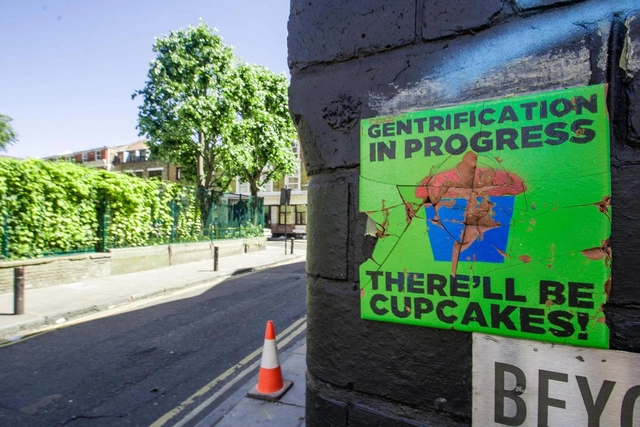
Gentrification is not only a timely topic, but a widespread concern. Today, it might make more sense to speak of touristification, or perhaps the phenomenon itself has evolved. Nevertheless, the term gentrification can broadly encompass all these concepts related to the displacement of a neighborhood's "original" inhabitants, who are replaced by residents with higher purchasing power or by vacation rentals.
This is an issue that interests people from all walks of life, not just professionals in urban planning or architecture. It draws the attention of citizens who, like myself, set out to find explanations or try to gather clues about what the future may hold under this trend.
From my perspective as an engineer—but above all as a Madrid resident—I decided to research the data published by the City Council on the city's commercial premises to see if it was possible to draw any conclusions on the matter. The purpose of this study was purely exploratory, conducted without any external commission. I had no preconceived hypothesis or goal beyond identifying certain neighborhoods as gentrified; the analysis simply grew from there, keeping all possibilities open.
https://www.archdaily.com/1114102/how-gentrified-is-your-neighborhood-luis-nadal-explores-the-case-of-madridLuis Nadal









.jpg?1525880666&format=webp&width=640&height=580)


.jpg?1518005943&format=webp&width=640&height=580)