Former ArchDaily's Managing Editor. BA in Architecture from Newcastle University, and interested in how overlooked elements of architectural culture —from the media to competitions to procurement processes can alter the designs we end up with.
With the London Festival of Architecture opening yesterday, this article in the London Evening Standard highlights just one of the many threads which make up this year's theme: the importance of foreign talent in making up London's cosmopolitan architectural culture. From Adam Caruso to Zaha Hadid, many of the city's biggest names have come from abroad to study and work in the UK, helping to make it one of the greatest centres for design in the world - but all this could be at risk from untenable housing prices and draconian new visa restrictions. You can read the full article here.
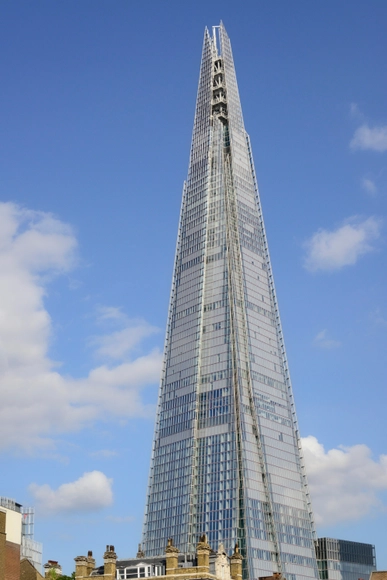
This interesting article by Oliver Wainwright at the Guardian reveals the trend in recent London architecture for "Shardettes" - smaller and usually cheaper imitations of Renzo Piano's famous design which Wainwright says "has become a beacon for designers bereft of inspiration." Highlighting four angular, glazed buildings that are either recently or partially constructed, he questions the quality of these miniature imitations and asks "is this Shardenfreude frenzy something to be welcomed?" You can read the full article here.
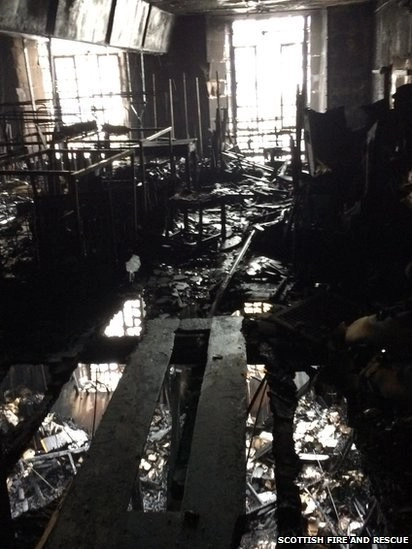
With no casualties, last week's fire at the Glasgow School of Art, which caused significant damage to parts of the building and gutted Charles Rennie Mackintosh's canonical library room, will be remembered as a tragic event that robbed us of one of the best examples of Art Nouveau of its time. The intention of the Glasgow School of Art is to restore the building in the hope that in generations to come, the fire will be all but forgotten, a strategy which has been largely well received by the profession.
However, in the case of other fires things have not gone so smoothly: for millennia, fire has played a big role in determining the course of architectural history - by destroying precious artifacts, but often also by allowing something new to rise from the ashes. Read on after the break as we count down the top 10 fires that changed the course of architectural history.
Plans to build a new soccer stadium in Miami have generated an argument this week between David Beckham, current city officials, and past city officials. The stadium, which will be home to a new Miami MLS team owned by ex-superstar Beckham, was originally proposed to occupy a site at PortMiami, with a design drawn up by Arquitectonica and 360 Architects. However, Miami-Dade County Mayor Carlos Gimenez had concerns over the location, and earlier this month convinced Beckham and his group to consider an alternative location, a disused boat slip between the American Airlines Arena and Museum Park.
Now a group including former mayor Manny Diaz and Alexander Cooper, the masterplan designer for Museum Park have issued a statement condemning the new plans and saying they are "not in harmony with the vision of Miami as a world class city with parks and open areas available for all."
After the tragic fire that tore through Charles Rennie Mackintosh's Glasgow School of Art last week, thoughts have now turned to the future of the building and the process of restoration. It seems that many people in the profession are in favour of a faithful restoration: John McAslan, who has previously worked on restoring one of Mackintosh's buildings in Northampton, saying that "it is not the time and place to interpret Mackintosh", and former GSA student and ex-director of FATSam Jacob commenting that the building "hadn't been turned into a museum piece" and therefore "a faithful restoration is exactly the right thing to do."
Though there has been one dissenting voice from George Cairns, a professor at Melbourne's RMIT who completed his PhD thesis on the building in 1992 and believes that a faithful restoration is impossible. In any case, this is what the Glasgow School of Art has resolved to do, and they have received a number of offers of help. Read on after the break to find out what's being done, and what you can do to help, after the break.
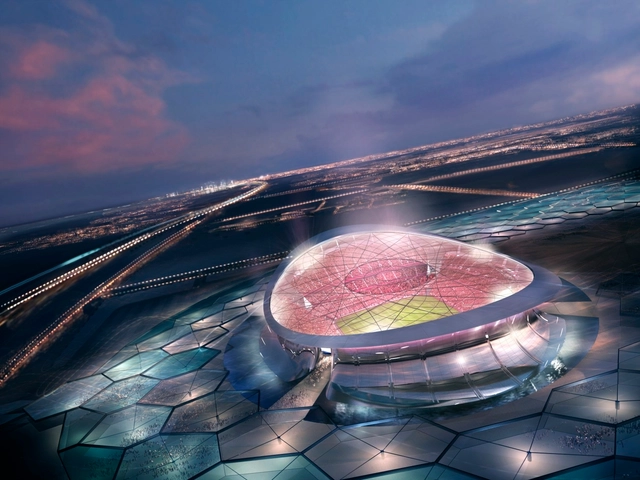
Foster + Partners' Previous Design for the 'Lusail Iconic Stadium' which formed part of Qatar's bid for the World Cup. Image Courtesy of Foster + Partners
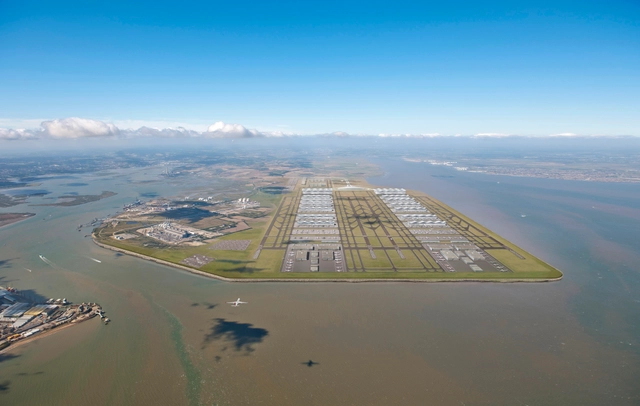
In response to the UK Airports Commission's call for evidence, Foster + Partners has released a detailed feasibility study supporting their plans for a new airport on the Isle of Grain in the Thames Estuary. Their plan proposes a four-runway airport built on a 35 square kilometre platform constructed partially in the mouth of the Thames. The scheme is popularly called "Boris Island" thanks to its most prominent supporter, Mayor of London Boris Johnson.
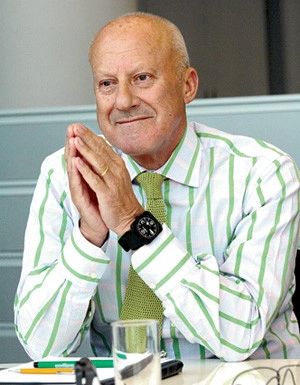
Norman Foster said "Since the Airports Commission submission a year ago, the need for increased airport capacity has become even more urgent. It is time to get serious about the issue of airport capacity. Britain needs an effective long-term solution, not the usual short-term fix that is Heathrow’s proposed third runway. London today needs to follow in the footsteps of its nineteenth-century forebears and invest boldly in infrastructure. Only long-term thinking will properly serve the demands of our future generations."
Read on for a breakdown of the information contained in the report
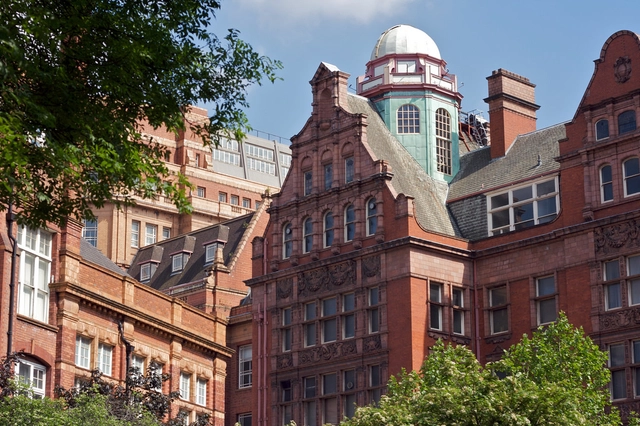
Mecanoo has been selected to design the new Engineering campus at the University of Manchester. At a value of £200 million, the project will be the largest ever completed by the Dutch Practice in the UK - slightly larger than the popular Library of Birmingham which they completed last year - and will involve both new build elements and a renovation of the University's Grade-II Listed Oddfellows Hall. The new technology building is part of a larger £1 billion overhaul which the university aims to complete by 2020. You can find out more details at the Architects' Journal.
Steven Holl's design for Maggie's Centre St Bart's. Image Courtesy of Steven Holl Architects
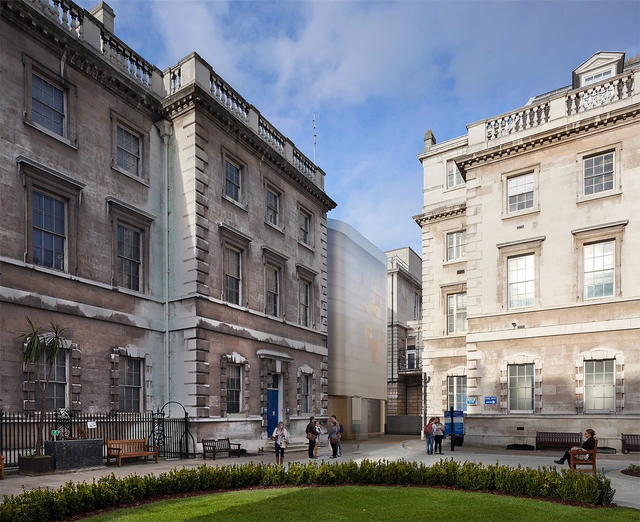
Michael Hopkins has added his thoughts to the row over Steven Holl's plans for the New Maggie's Centre at St Bart's Hospital in London, with a letter to London City Planners saying that the design is in the wrong place and would ruin the setting of the 18th Century Great Hall. Hopkins, whose rival scheme received planning permission last month, says that the construction of the Maggie's Centre represented a "once-in-a-lifetime opportunity" to restore the great hall to its original design which was only met by his plans to build the Maggie's centre in a different part of the St Bart's site.
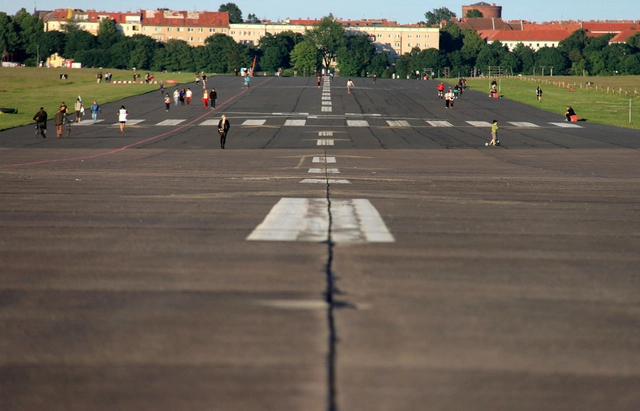
A plan to build 4,700 homes on the site of Berlin's Tempelhof Airport was blocked by voters this weekend. The airport, which was built in the 1920s and has a long history as a key site during World War Two and the Cold War, was closed in 2008 and there has since been a debate over what to with the vast site, including a 2011 competition to transform it into a park and other facilities, and an outlandish unofficial plan in 2009 to create a 1km high mountain on the site.
However perhaps the the most popular idea has also been the simplest: in 2010, the airport was opened to the public without any changes, and become an impromptu urban park popular with kite-flyers and roller-bladers who circle the site's runways.
Tokyo-based architect Edward Suzuki has launched another petition against Zaha Hadid's design for the 2020 Tokyo Olympic Stadium, claiming it is "overwhelmingly large for the context" and "will desecrate the 'sacred grounds' of Meiji Shrine Outer Gardens". This is the second petition against the design and is intended to support the earlier petition by Toyo Ito and Fumihiko Maki by providing an equivalent targeted primarily at English speakers, aiming to "pressure our government not only from within but also from outside of our country." You can see the petition in full here.
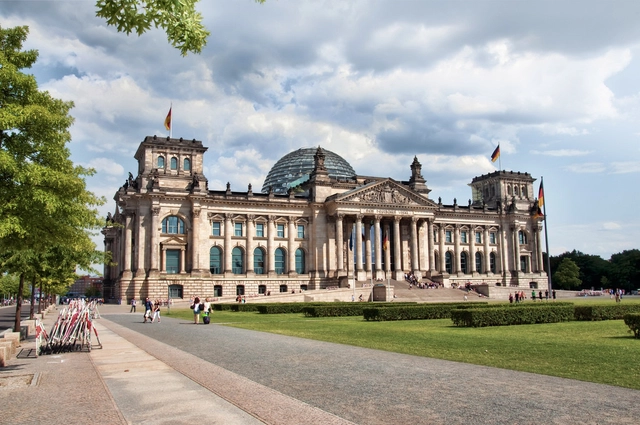
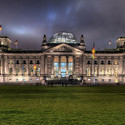
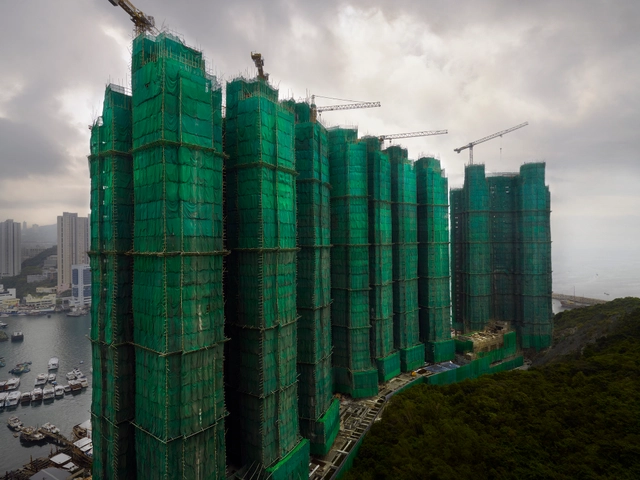
In 1994, a routine construction technique that has been practiced in Hong Kong for over 100 years caught the attention of photographer Peter Steinhauer - and led him to put almost a decade of work into capturing this unique urban phenomenon. The bamboo scaffolding and fabric wrappings he photographs serve the simple purpose of catching construction debris, but at a glance they look more like works by Christo and Jeanne Claude, the artists that have made their name wrapping buildings like the Reichstag in Berlin.
The resulting photos showcase the colossal towers of Hong Kong wrapped in brightly-colored fabric; their usually varied facades are made monolithic, like a plastic massing model rendered full-size. Steinhauer named his photo series "Cocoons" due to the effect they create over time: the buildings metamorphose under cover and emerge transformed.
The results of the Royal Institute of British Architects (RIBA) Future Trends Survey for April show that confidence among UK practices remains high at a Workload Index of +35, the same as in March. The positive figures came from across the board, with practices of all sizes and from all regions of the UK predicting increased workloads in the near future. However, after last months' survey showed Scotland as the region with the brightest outlook, the balance of power has shifted back to London, where architects reported the highest index of +45.
Foster + Partners has been named the UK's biggest architecture practice for the third year running in the annual AJ100 run by the Architects' Journal. The list of the top 100 architecture practices in the UK, based on the number of fully qualified architects employed, was announced at an awards ceremony last night in London.
In the past year Foster + Partners has almost doubled its lead at the top of the list, with its 290 architects putting it 87 ahead of second-place rival BDP, showing how the practice dominates the architecture world not just culturally, but also in terms of business size.
See the top 10 UK practices, as well as the results of the accompanying AJ100 Awards, after the break
UPDATE: The Glasgow School of Art Media Centre reports "With the incident under control indications are the firefighters' efforts have ensured more than 90 per cent of the structure is viable and protected up to 70 per cent of the contents - including many students' work."
A serious fire has broken out at the Glasgow School of Art, Charles Rennie Mackintosh's 1909 masterpiece. The extent of the damage is unclear at the moment, but BBC News is reporting that the fire is believed to have started in the basement, and has spread to the upper floors, where it is breaking windows and smoke is billowing from the building. Images, reactions and updates from twitter after the break.
Produced by The Bartlett Centre for Advanced Spatial Analysis, this somewhat hypnotic video charts the development of London from its origins as the Roman settlement of Londinium to the present day. It maps the changes in the city's road network and built environment, and catalogs the thousands of historic structures which are now protected by either listing or scheduling. Among the fascinating thing revealed by the video is how historic events continue to have a profound effect on the city's built environment: for example a law passed after the Great Fire of London determined that new buildings had to be built from brick, resulting in the large number of Georgian buildings that have survived to the present day.
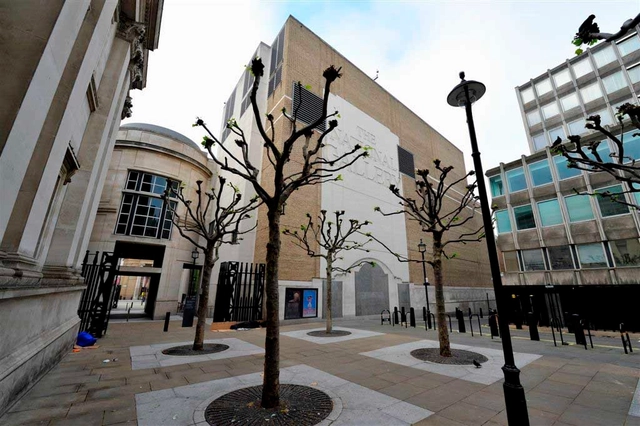
To mark the 30th anniversary of Prince Charles' famous "Carbuncle Speech", last week the RIBA held a discussion focusing on the speech's impact on British architecture. The speech in which the prince protested the design of a proposed extension to the National Gallery has been seen by some as expanding the debate around architectural quality, but the panelists on the night disagreed with this view: Owen Hatherley said "The idea he broadened the debate is curious. He shut it down." Similarly, Charlie Luxton commented "He turned the debate from one of quality to one of style – and architecture suffered." You can read more of the panelists' views on BD Online.
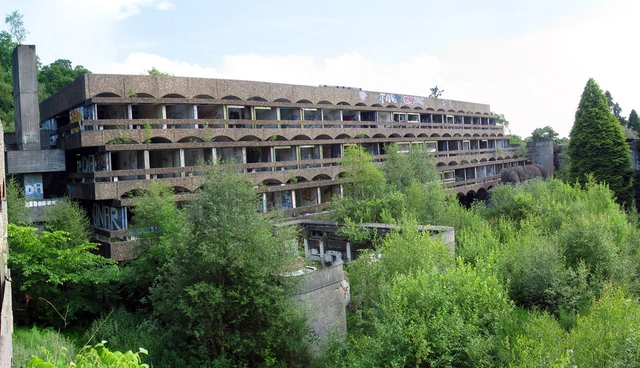
The Scottish arts charity NVA is looking for an architect to carry out the restoration of St Peter's Seminary in Cardross, designed by Gillespie, Kidd & Coia in 1966. The building is an icon of post war brutalism; the Grade-A listed structure was voted as the best modern building in Scotland by readers of Prospect Magazine in 2005, and is likely to feature heavily in Scotland's show at the 2014 Venice Biennale. However despite this adoration, the building had a very short functional life and has been in a state of ruin ever since it was abandoned in the 1980s.
NVA is looking for an architect "highly skilled in the conservation of modernist buildings" to take on the £8 million restoration, which will see the sanctuary and refectory preserved in a "semi-ruinous state", and a nearby 19th-century greenhouse converted into a visitor centre.
Read on after the break for more on the restoration