I first encountered Manuel Gallego's work in Valencia, introduced to it by José María Lozano. There, at the school where I was studying, they had organized a symposium on Galician architecture.

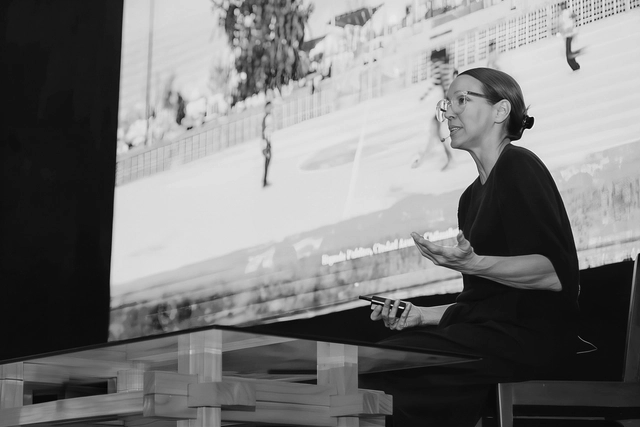
I first encountered Manuel Gallego's work in Valencia, introduced to it by José María Lozano. There, at the school where I was studying, they had organized a symposium on Galician architecture.

In recent years, architectural production in Mexico has faced a series of extraordinary challenges. Some of these stem from natural disasters that severely shook at least nine states, leaving several areas gravely affected across Mexico City, Puebla, Morelos, Oaxaca, Veracruz, Tlaxcala, Guerrero, and the State of Mexico. However, these events also served as a catalyst, prompting the architectural community to increase its focus—and active involvement—on housing and infrastructure for the most vulnerable sectors of the population.
As part of the 16th edition of the MUTEK Festival, which has been held in Mexico City since 2003, the participation of the 404.zero collective has been announced. This duo of audiovisual architects is dedicated to designing immersive experiences that blend A/V installations with live performances, driven by an uncontrollable fascination with the unknown, the cosmos, and death.

Dear readers, with your invaluable companionship, 2019 has flown by here at ArchDaily. Throughout the year, we have continued our daily mission of sharing and celebrating global architecture; along the way, we have grown, earned the recognition of architects, and enjoyed the unwavering support of our readers. Having received heartwarming holiday wishes from hundreds of design practices around the globe, we are excited to share their creative holiday cards with you here!

Creating a public space capable of reclaiming the neighborhood's heritage value while fostering participation and community appropriation among local residents was one of the primary goals driving the creation of the Zenteno Cultural Plaza. It is part of a balanced densification project that seeks to integrate local historical and cultural heritage while designing flexible, integrated spaces. Carried out by Activa Inmobiliaria, the project also enabled the preservation of the "Inmaculado Corazón de María" Basilica, a heritage building adjacent to the new plaza. Located in the historic center of Santiago, at the corner of Zenteno and Copiapó streets, the project freed up an area previously occupied by a warehouse building to expose and restore the brick facade of the basilica, which was declared a historic monument in 1987.

CLOU architects is an award-winning international design practice working across architecture, interior, and landscape design. The team has designed a diverse portfolio of projects focused on community connectivity and social spaces. CLOU's diverse design team consists of 65 experienced architects and designers from China and around the world. Clients include retail and mixed-use developers, residential investors, hotel operators, as well as governmental and educational institutions. Under the leadership of German architect Jan Clostermann, the CLOU team is dedicated to tailoring innovative, holistic spatial solutions for clients. By fully exploring the possibilities of public space within high-density developments, CLOU aims to subtly catalyze community growth and exert a positive impact on people's behaviors and lifestyles.

Located at 852 Leandro N. Alem Avenue in the Autonomous City of Buenos Aires, the Mercado de los Carruajes originally housed the “Presidential Carriage Garage,” serving as a storage and maintenance facility for horse-drawn carriages. Over time, the building was repurposed to accommodate the vehicular fleet of the Presidency of the Nation. Following a series of interventions and expansions, the historic heritage building began its conversion process in 2017, which is now complete with only the final details being finalized. A gourmet market concept featuring food stalls, fresh food vendors, retail spaces, and an event terrace eagerly awaits its grand opening, which was delayed due to the pandemic.

As is common in the design and architecture world, renderings have long been understood as a tool for visualizing spaces before they are built, thereby providing a broader, more realistic vision of what to expect. These images make it possible to identify and address potential errors, but above all, they serve as a powerful design tool for both interior and exterior spaces.

The three practices hiring this week represent "small is beautiful" design teams: Beijing-based PRAXiS d'ARCHITECTURE and AFFD Design Studio, along with Jane Z Studio, which is deeply rooted in southern China. Active across diverse architectural fields with their distinct design philosophies, they are now seeking talented architects to join their teams.

It is undeniable that public green space has gained renewed importance following the lockdowns of the coronavirus pandemic. In cities worldwide, plazas, parks, clubs, and waterfronts began to play a fundamental role. These spaces met the needs for leisure, relaxation, and collective gathering of residents who, in many cases, spent months confined to their homes, acting as agoras within the dense urban fabric. Beyond serving as spaces for recreation and civic gathering, UN-Habitat states that these green areas directly improve environmental conditions. By helping to increase air quality, reduce the greenhouse effect, and capture carbon, their expansion, development, and maintenance should be a priority for local governments.

Many of our ideas about the cities of tomorrow are shifting as we confront today's pressing global challenges—from the climate crisis to how we will live together.

During September, the 4th edition of the Chicago Architecture Biennial took place under the title Available City, providing the perfect opportunity to open a debate on the role of architecture in urban equity.
Can architecture foster equity in cities? Are there limits to what it can achieve? From a critical perspective, we discussed this issue through an initial question posed to our readers: How equitable is architecture?
After reading and compiling all the comments received from construction professionals, students, and architecture enthusiasts alike, we agree that equity in architecture is, first and foremost, a multiscalar issue—a global problem that concerns us all.

This article by Camila Pinzón and Juanita Fonseca was originally published under the title "Arrival Infrastructures: An Approach to Migrant Space in Destination Cities Like Bogotá" in issue 30 of the Dearq journal on May 1, 2021 (DOI: https://doi.org/10.18389/dearq30.2021.07).
Within the framework of recent studies on migratory flows, dynamics and concepts have been identified that help understand their relationship with urban space and the city—highly useful for architects, urban planners, and designers. Through a review of these concepts, this article questions their relationship with the Latin American context and reflects on the utility of defining the terms arrival city, arrival infrastructures, and porosity for a potential study in Bogotá.
Below, we present it as part of a joint collaboration to contribute to the dissemination of research, analysis, and opinions developed by the national and international academic community on architecture, urban issues, and related fields.

In April 2021, the A8 Design Center at Luxe Lakes in Chengdu presented the exhibition "2 Kilometers of Lakeshore: Southwest Independent Architects 2021 Luxe Lakes Cross-Disciplinary Joint Exhibition." **Thirty-one independent architects** were invited to create installations along the Luxe Lakes waterfront. Working within a **budget of 30,000 RMB**, and drawing on self-reflection and their understanding of public space, they built **experimental, interactive, and experiential micro-spaces, presenting 31 unique perspectives on the world.** Through dialogue among the architects and with the public, the exhibition sought to further stimulate public engagement in design.
Following the exhibition visit, the A8 Design Center organized a hotpot gathering under a bridge with Chengdu's independent architects, sparking this dialogue. **We wanted to delve deeper into what this new generation of independent firms in non-first-tier cities is doing, how they are growing, and what they are thinking.**
Interviewer: Shuangyu Han
Part 1 Interviewees: Yun Lu (MUDA Architects), Youcai Pan (Wray Architecture), Hongduo Jin (Xd-Architects)
Part 2 Interviewees: Kefei Cai (Menkou Architects), Xiang Wang (TeKtonn Architecture), Yuejiu Li (a9a rchitects), Tang Zhang (YI JIE Atelier)

Since ArchDaily launched its recruitment services, we have received job postings from architectural practices of various scales across China, from Beijing to Shenzhen and Hangzhou. Highly active across diverse architectural fields with their distinct styles, these firms are looking for talented architects to join their teams. Below are six curated openings for May, along with a showcase of their representative projects. Interested candidates are warmly invited to apply.

Every year, our curatorial team presents a retrospective of house projects that stood out over the period. This collection, a small selection of the more than two thousand projects published on ArchDaily Brasil this year alone, comprises a series of residences with specific design solutions that address, each in their own way, factors such as materials, construction techniques, structural systems, building processes, and programs.

The following article, based on the exhibition conceived by the Projective Drawing course and developed by the Digital Fabrication and Parametric Design Laboratory of the Institución Universitaria Colegio Mayor de Antioquia (FABLAB COLMAYOR), demonstrates the adaptability of undergraduate programs after COVID-19. This initiative, utilizing rendering and augmented reality, showcases a new approach to applying relevant tools in both academic and professional fields.

The Cocina Mendoza project is located in the municipality of Ixmiquilpan, in the heart of the Mezquital Valley in central Hidalgo, Mexico. This is home to the community of San Nicolás de Tolentino and the Mendoza family, who belong to the Otomí people and held the *mayordomía* (stewardship) during 2019 and 2020.