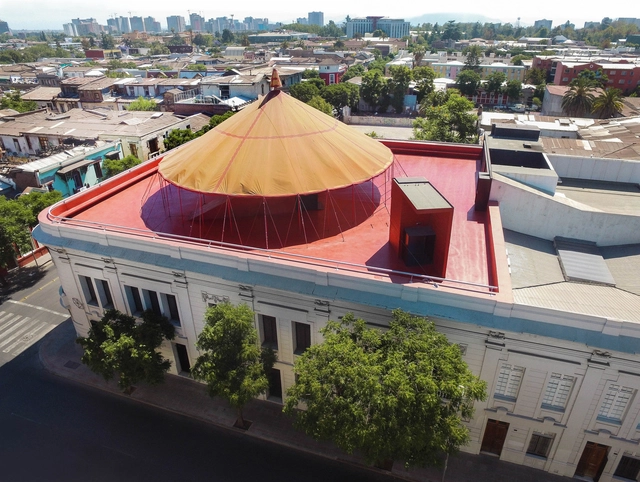
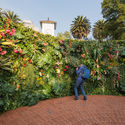
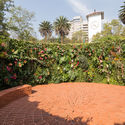
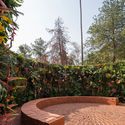
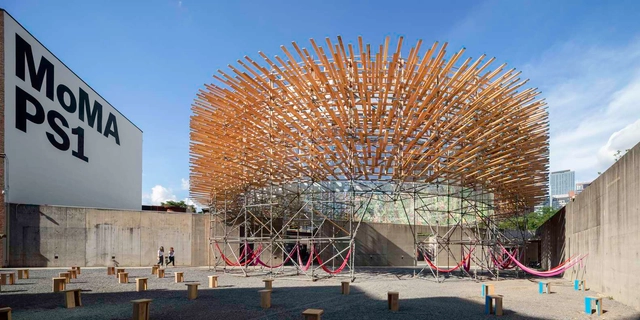
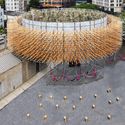
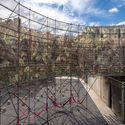
The installation Hórama Rama by Pedro y Juana (Ana Paula Ruiz Galindo and Mecky Reuss) opened this summer as part of the 20th edition of the Young Architects Program 2019 at MoMAPS1. This architectural installation is an immersive jungle landscape set within a large-scale cyclorama that sits atop the courtyard walls of MoMAPS1 and runs from June 28 through September 2, 2019.
2019 brought a wealth of enriching experiences through some of Mexico City's most prominent events, including the inaugural Porto Academy Workshop, the annual Design Week Mexico festival, and the Abierto Mexicano de Diseño, among others. These events hosted design and architecture exhibitions that captured the creative output of the moment—showcases that will serve as future reference points for understanding the architectural discourse of this era.
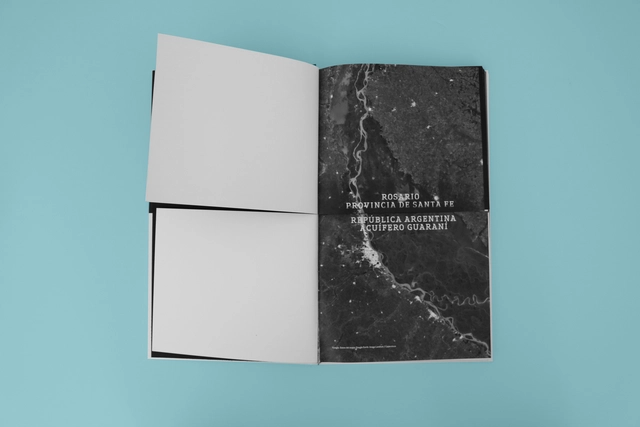
Reading "Poéticas Colectivas" is a unique experience: the pages divide into two, three, and then become one. The boundaries of the pages dissolve, and both knowledge and architectural works intersect on both a literal level—the pages—and a theoretical one—the ideas.
"SOM: Art + Engineering + Architecture" is an exhibition opening at the Antiguo Colegio de San Ildefonso in Mexico City. Presented in collaboration with MEXTRÓPOLI, the global architecture and urbanism festival organized by Arquine magazine, the exhibition offers a comprehensive overview of SOM's structural engineering practice, its integration with architectural design, and the firm's long tradition of collaboration with the visual arts.
https://www.archdaily.com/1120731/som-presents-exhibition-in-mexico-city-art-plus-engineering-plus-architectureArchDaily Team
With the launch of ODA19, this year we celebrate the eleventh anniversary of the Obra del Año (ODA) Award, the highest accolade in the architectural world where the winners are chosen by popular vote. Starting today, Monday, April 1, and for the next three weeks, our readers are responsible for determining which projects inspired us during 2018, faithfully representing the identity of our local contexts while shaping the way architecture is practiced around the world.
Over the next three weeks, the entire ArchDaily en Español network (Plataforma Arquitectura, ArchDaily México, ArchDaily Colombia, and ArchDaily Perú) will serve as the platform to celebrate the best built architecture in Spain and Spanish-speaking countries in Latin America.
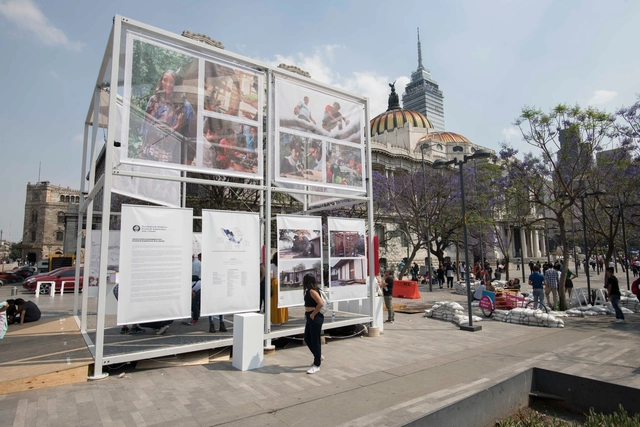
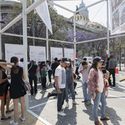
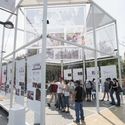
CUBO is the name of the installation created by the School of Architecture, Art, and Design at Tecnológico de Monterrey, which was presented in March at Alameda Central in Mexico City. The pavilion was designed as an open, flexible, and itinerant meeting point, hosting cultural events as well as exchanges of ideas and goods. CUBO (Urban Cell for Well-being and Opportunities) is a social innovation project that served as a stage for civic engagement, fostering participatory processes in communities through recreation, reconciliation, and learning.
The XI Ibero-American Biennial of Architecture and Urbanism (XI BIAU) recently announced the 210 selected works for its upcoming edition, which will be held for the first time in Asunción this October.
The winners of the Panorama of Works Award will be chosen from this list of selected projects, which includes the 14 Peruvian works featured below.
Twelve finalist projects, one honorable mention, and five winning works were announced yesterday in Barcelona, marking the results of the 4th edition of the AADIPA European Award for Architectural Heritage Intervention.
https://www.archdaily.com/1120673/these-are-the-winners-of-the-european-award-for-architectural-heritage-intervention-aadipa-2019ArchDaily Team
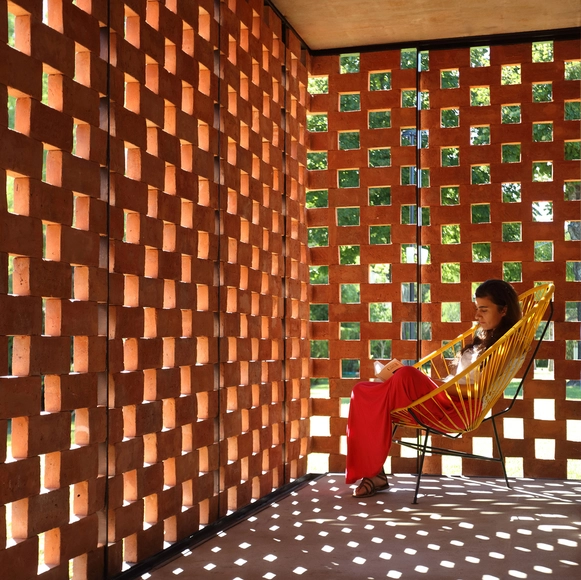
Brick is, without a doubt, the building material most widely validated by the collective imagination; from children's fables to the most experimental narratives, many have drawn inspiration from the diverse meanings shaped by its distinctive character.
So begins "Arquitecturas Argentinas con Ladrillo" (Argentine Brick Architecture), a book edited by Bisman Ediciones and co-published by the Universidad de Morón and Grupo UNICER, with the participation of the Universidad Católica de Córdoba. Conceived as a compendium, it features a meticulous selection of recently built projects in Argentina sharing a clear common denominator: the study and use of brick as a fundamental building material to create architecture.
Through various graphic resources such as floor plans, photographs, and unprecedented construction details, the book functions as a true catalog of typologies, exploring the diversity and versatility of masonry applications in the region. The volume compiles history, technique, and contemporary reference projects, demonstrating how brick has inevitably established itself as a characteristic and defining material of Argentine and Latin American architecture.
The 2019 Architecture Prize was a call for entries launched by the National Endowment for the Arts (FNA). Geared toward young architects, it aimed to highlight and showcase cultural projects built in Argentina, including museums, theaters, auditoriums, concert halls, art galleries, radio studios, cinemas, libraries, bookstores, art studios, production workshops, rehearsal spaces, and community, private, or public cultural spaces.
During June, Mexico City hosted one of the world's most famous workshops for the first time: Porto Academy. Held annually at the Faculty of Architecture of the University of Porto—designed by 1992 Pritzker Prize laureate Álvaro Siza—this event is the result of a deep passion for architecture and for those who believe that practice, as the exercise of the profession, is fundamental to the future of the discipline.
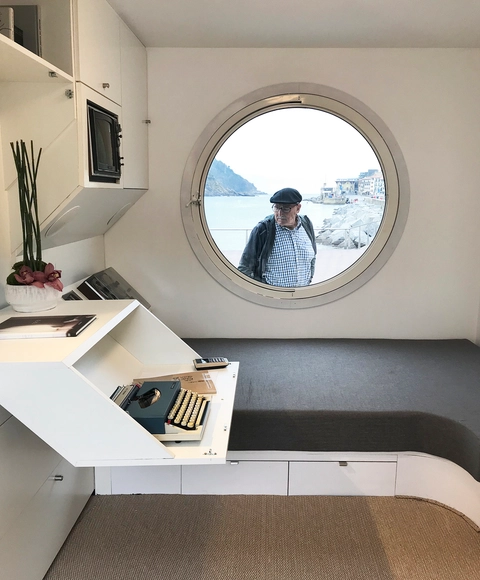
At a time when micro-housing has moved to the center of debate—driven by rapid urban densification and emerging social needs—the proliferation of micro-units such as capsule hotels in Europe has sparked conversations about the future of our cities, offering new ways to adapt to contemporary living. Against this backdrop, the MUGAK Basque Country International Architecture Biennial presented an installation titled "Nakagin 1:1," a full-scale replica of one of the capsule units from the Nakagin Capsule Tower by Kisho Kurokawa in Tokyo, Japan. Located next to the San Sebastián Royal Yacht Club, the installation overlooks one of the Basque Country's most iconic spots, La Concha Bay, allowing visitors to experience firsthand what it feels like to inhabit these micro-housing units of just 10 m2 at a 1:1 scale.
Tomorrow, Chile celebrates Cultural Heritage Day, marking two decades since its inaugural edition. This year, a wide range of buildings will open to the public, featuring free tours and activities on Saturday, May 25, and Sunday, May 26.
Below, we highlight 10 unique initiatives that promise a distinct experience.
Through the Urban Development Corporation (EDU) and the Colombian Association of Architects (SCA), Medellín launched an international competition to design a space of memory and reflection on the period between 1983 and 1994, one of the most violent eras in the Colombian city. The competition jury awarded first prize to the design team of Taller Alterno, Pequeña Escala Arquitectura, and Luis Felipe Zapata Flórez.
Read more about the project below, in the words of its designers.
Inflection. Def. A change of direction in a process or movement / A bend or angle in a flat or straight object
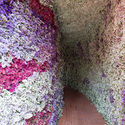
The Flower and Garden FestivalFYJA is an event held in Mexico City that brings together landscape architects, architects, artists, designers, artisans, gardeners, and students. In each edition, participants create a route featuring various activities and exhibitions, offering everyone—from experts and enthusiasts to the curious—the chance to engage with horticulture and experience the benefits of plants.
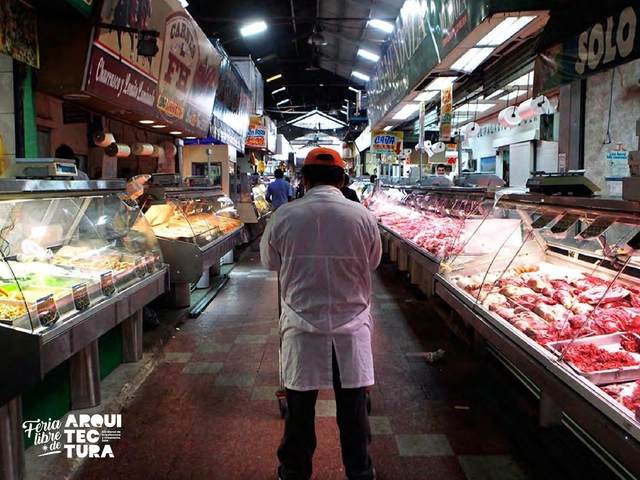
Aiming to propose “ordinary” solutions that meet the needs of the majority of people in Chile, the open call for the Feria Libre de Arquitectura—as this year's XXI Chilean Architecture Biennial is known—received 543 registrations, “a historic figure for this type of event,” according to the organizers.
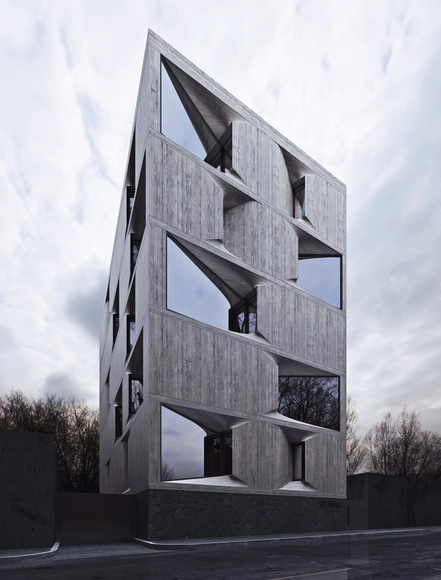
For its 66th edition, the Progressive Architecture (P/A) Awards recognize unbuilt projects that demonstrate overall design excellence and innovation. The evaluations took place in December 2018, and the winners will be honored at a ceremony in New York in February 2019.
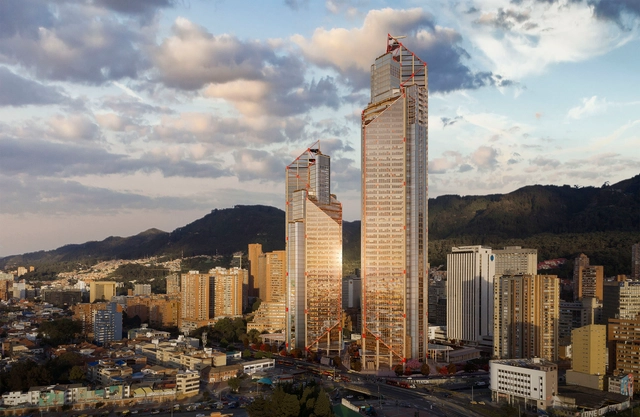
Over the next five years, Bogota will inaugurate a series of public and private projects across the city, from skyscrapers to Felicidad Centers, highlighting those resulting from public architectural design competitions, legally managed by the Colombian Society of Architects. Below, explore the main projects set to open:


.jpg?1551806000 "© Benny Chan")
_Tom_Harris_(15).jpg?1551806141 "© Tom Harris")
.jpg?1551806155 "© Benny Chan")
.jpg?1551806066 "© Benny Chan")