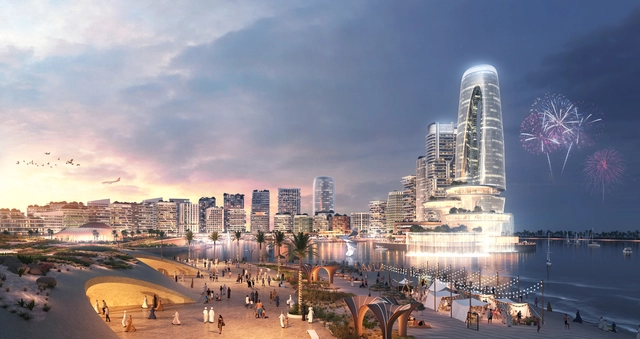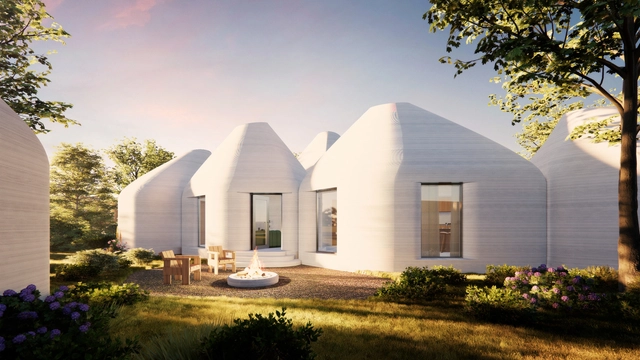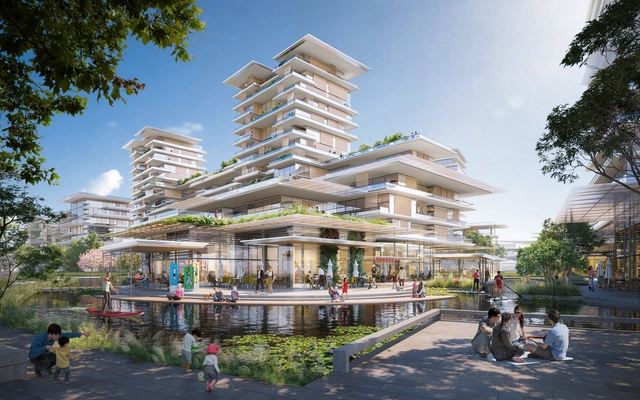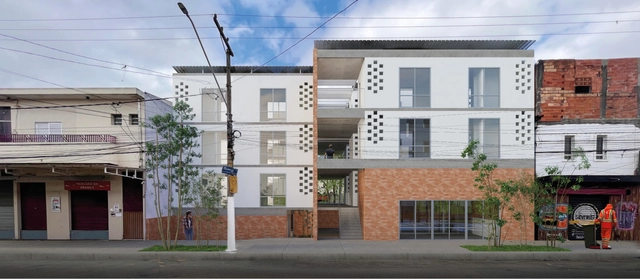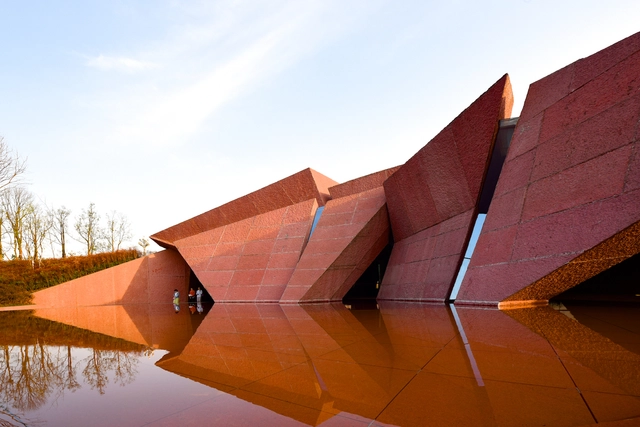
Isaac Michan Daniel of Michan Architecture, as well asLuis Beltrán del Río García and Andrew Sosa Martínez of the Mexican firm VRTICAL, have been recognized with the 2020 Architectural League Prize. Established in 1981 to recognize exemplary and provocative work by young practitioners, the Architectural League Prize is an annual competition organized by The Architectural League and its Young Architects + Designers Committee. This year's jury was comprised of the Young Architects + Designers Committee—Kutan Ayata, Mira Henry, and Kevin Hirth—alongside Lucia Allais, Paul Lewis, Anna Puigjaner, and Nanako Umemoto.
The main source of spread—and likely the origin—of the novel coronavirus (COVID-19), first detected in December 2019, is believed to be the Wuhan seafood market in China. From the facility's workers and vendors, the virus began to spread, initially affecting the local population and subsequently reaching more than 200 territories and countries worldwide. Today, three months after the WHO's declaration characterizing the disease as a pandemic, traditional wholesale and retail markets have come under scrutiny as potential contagion hotspots. How can food access be guaranteed for a population without posing a risk to distributors, vendors, and buyers?
Supported by a Graham Foundation grant, the artist explores the possibility and synchronicity of materials and processes across architecture and visual art in a new series of sculptures and drawings inspired by Miguel Fisac's innovative architectural and construction techniques.
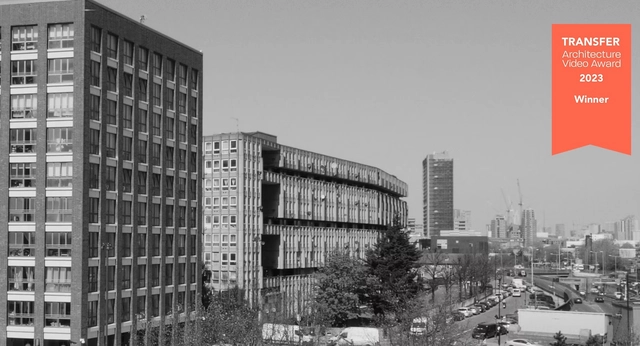
Experience it all through the short film by Spirit of Space.
“Empty Spain, Full Spain. Conciliation Strategies” is the proposal by Anna Bach, Eugeni Bach, and Óscar Miguel Ares that secured the curatorship of the upcoming XV Spanish Biennial of Architecture and Urbanism (BEAU).
As part of the exhibition program of the Museo Experimental El Eco, the open call for the Eco Pavilion 2020 was launched, inviting professionals practicing architecture in Mexico to engage in a dialogue with the museum's space. This edition marks the 10th anniversary of the Eco Pavilion, a competition launched in partnership with Buró-Buró to provide a platform for architectural production focusing on experimentation and spatial reflection.
https://www.archdaily.com/1123784/this-is-the-winning-proposal-for-the-eco-pavilion-2020-competitionArchDaily Team
The Porto Alegre-based firm 0E1 Arquitetos has launched an e-book to help professionals design their new home workspaces. The Home Office Guide is a digital publication featuring tips to improve remote work environments, created to raise funds for local charities.
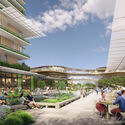
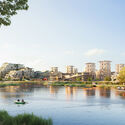
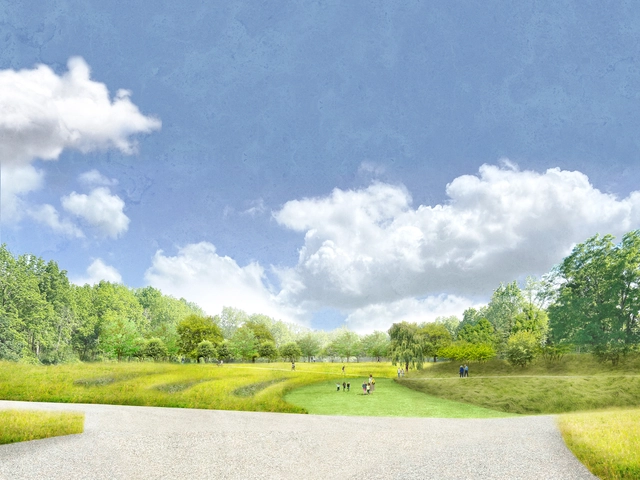
The winners of the design competition for the Madrid Metropolitan Forest have been announced. Coordinated by the Vice-Mayor's Office and promoted by the Urban Development Department, the initiative invited architects to develop natural infrastructure to drive green growth and sustainable development in the city. Located in Madrid, Spain, the Forest will span 75 kilometers, contributing to the area's ecological rebalancing, carbon emission reductions, the fight against climate change, and the environmental and landscape restoration of degraded areas.
During a live-streamed event on an exclusive microsite created for the XXII Pan-American Architecture Biennial of Quito, organizers presented the schedule for this year's online BAQ 2020, along with the participating jurors and speakers.
https://www.archdaily.com/1123824/full-schedule-speakers-and-jurors-of-the-pan-american-architecture-biennial-of-quito-2020ArchDaily Team
Inteligência lógica. Image Cortesia de Equipe de projeto
Winner of the 2018 National Ideas Competition promoted by the City of Fortaleza, the project presents the requalification of public spaces dating from the early 20th century. The goal is to make them inviting and establish a contemporary urban heritage park in the city center, with a special emphasis on the social dimension, the memory of Liberdade Park as the "Children's City" (Cidade das Crianças), and its connection with Sagrado Coração de Jesus Square.
São Paulo sidewalk. Image courtesy of Caos Planejado
The quality of streets and sidewalks is a widely debated topic in Brazil, and the coronavirus pandemic has added another layer of complexity—public health—prompting us to question whether it is actually possible for pedestrians to practice social distancing. This concern led architecture student Conrado Freire to develop a map of sidewalk widths in São Paulo.
Adapted from Meli Harvey's Sidewalk Widths NYC project on New York City sidewalks, Largura do Passeio uses sidewalk data provided by the GeoSampa portal to visually synthesize information about São Paulo's pedestrian pathways that is not typically accessible to the general public. Based on the open-source code released by Harvey—which has also been adapted for cities like Toronto, Washington, Berlin, and Milan—Freire creates a visual mapping of what is often only felt by pedestrians moving through São Paulo's urban space.
Wooden stilt houses in the Educandos district of Manaus. Photo by guentermanaus, via Shutterstock
The global pandemic caused by the coronavirus has demanded emergency actions to save lives, which, in turn, require complementary measures to preserve jobs and income, especially for the most vulnerable segment of the population. The field of architecture and urbanism is no exception: the precarity facing a significant portion of professionals is worsening due to social isolation measures, which are absolutely essential to combat the pandemic. Left without financial reserves to guarantee basic survival, many architects are left with no alternatives. Emergency measures currently being discussed in Congress, such as a basic income, are urgent. While they rightly focus on low-income populations, the scale of the crisis demands additional actions.
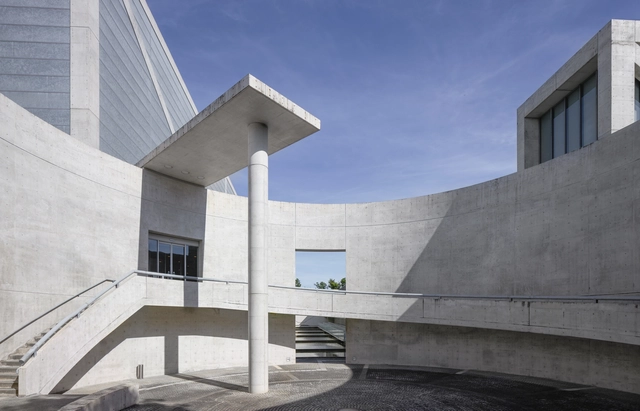
“Alternative Utility Platforms” is a project that seeks to generate spaces for social innovation in the integrated management of urban waste. According to Giulia Bianchi and Luis Morillo, the authors of the proposal, the city of Barquisimeto, Venezuela, currently generates approximately 21,147 tons of solid waste per month. Only 61.79% of this waste ends up in landfills, meaning the remaining 33.25% winds up on streets, in informal dumps, rivers, and streams, improperly disposed of. Out of this total, ultimately only 4.97% is processed by recycling companies, and the majority of that volume is sorted and supplied by street waste collectors. For this reason, and through their thesis project developed at the Central University of Venezuela, the authors propose to generate new employment models for the collection and treatment of municipal solid waste through an urban and architectural intervention.
The Eco Pavilion 2020 is the tenth edition of this competition, which, since 2010, has served as a space for reflection on architecture through temporary installations in the courtyard of the Museo Experimental el Eco. This year's edition was structured around Mathias Goeritz's idea of "the serpent," based on a concept proposed by architect Javier Senosiain.
Electric scooters represent a significant opportunity to reduce transportation-related carbon emissions by bridging the "first and last mile" connections that people often make by car to access public transit systems during urban trips.
With traditional access to information restricted due to social distancing measures implemented worldwide in response to the COVID-19 pandemic, and with many unable to access physical architecture media like magazines, books, and other print publications, Summa+ has decided to release nearly 100 digital issues of its magazine, making its content available for free to readers around the world.
For the third time since its founding in 2002, Mexico will host the Latin American Social Workshop of Architecture Students (TSL Mexico 2020). This edition is organized by the Latin American Coordinator of Architecture Students (CLEA Latin America), alongside CONEA Mexico and the Municipality of San Felipe del Progreso.
The Superintendency of Industry and Commerce has granted a utility patent for the invention "Multifunctional Self-Supporting Modular Roof System" to professors Camilo Ayala García and Christiaan Job Nieman Janssen, from the design department, and Diego Alejandro Velándia Rayo, from the architecture department, at the Faculty of Architecture and Design of the Universidad de los Andes.
Rojkind Arquitectos has proposed a "Mourning Claim" memorial for COVID-19 victims. Led by Michel Rojkind, Arturo Ortíz Struck, and Diego Díaz Lezama, the project is envisioned for Times Square in New York and the Zócalo in Mexico City. "We claim mourning for its own sake. At the very least, we can care for them, for these architectural symbols that bear witness to our lives and the lives of others," say the authors.
https://www.archdaily.com/1123559/rojkind-arquitectos-designs-statement-of-mourning-memorial-for-covid-19-victimsArchDaily Team
COVID-19 cases in Brazil continue to rise, overwhelming the healthcare system with patients diagnosed with the virus. Understandably, hospital visits by people suffering from other illnesses have also decreased due to fear of contracting the coronavirus. To prevent health complications among those hesitant to visit hospitals, the architects at the Brazilian studio Democratic Architects have proposed the Immediate Health Bus (O-SI), a system focused on telemedicine.
Two buildings in Brasília's Plano Piloto have received the CAU/DF Seal – Architecture of Brasília 2020, and another six will receive it in the coming days. Launched in August of this year by the Council of Architecture and Urbanism of the Federal District, the seal aims to recognize the historical value of Brasília's non-monumental buildings and their designers, as well as to promote building maintenance and conservation best practices that have preserved the architectural language of the Modern Movement.
“Renaturalizing cities and gaining quality space for citizens is no longer just an interesting idea—it is a necessity,” says Jordi Fernández, one of the two founding partners of ON-A Arquitectura. This Barcelona-based smart office specializes in urban greening and green building. Over its 15-year history, the firm has designed various ways to adapt green spaces to urban contexts, such as the remodeling proposals for Llano Amarillo Park in Algeciras and Taichung Gateway Park in Taiwan. Its current project, called Nou Parc, follows these international examples, aiming to transform Barcelona's Camp Nou stadium into a 26-hectare park.
Toward a New Normal with Less Urban Inequality is a petition addressed to the various levels of the Peruvian government –the Presidency of the Council of Ministers, Provincial Municipalities, Ministries, District Municipalities, and Regional Governments—that aims to draw attention to and denounce the current situation facing the country's cities. Through this document, the signatories express their concern and call for priority and structural actions to improve the living conditions of all citizens in Peru.