This guide covers a workflow that moves from project parameters to generated floor plans, 3D perspective views, exterior design exploration, and site context visualization, using AI tools in place of preliminary CAD and rendering work.
This guide covers a workflow that moves from project parameters to generated floor plans, 3D perspective views, exterior design exploration, and site context visualization, using AI tools in place of preliminary CAD and rendering work.
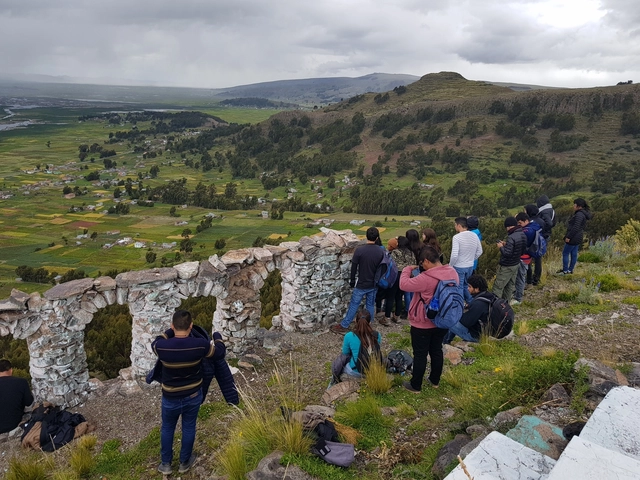

On the shores of Lake Titicaca, nearly 250 students from 15 countries kicked off TSL Puno 2018 in Peru, marking the 15th edition of the Latin American Social Workshop, led by the Latin American Coordinator of Architecture Students (CLEA) and the Peruvian Organization of Architecture Students (OPEA).
Continuing a tradition that began in 2002, architecture students from across Latin America are joining forces with public and private entities, architecture collectives, workshop leaders, faculty, and members of civil society to conceptualize, design, and build public amenities across the Spanish-speaking world.
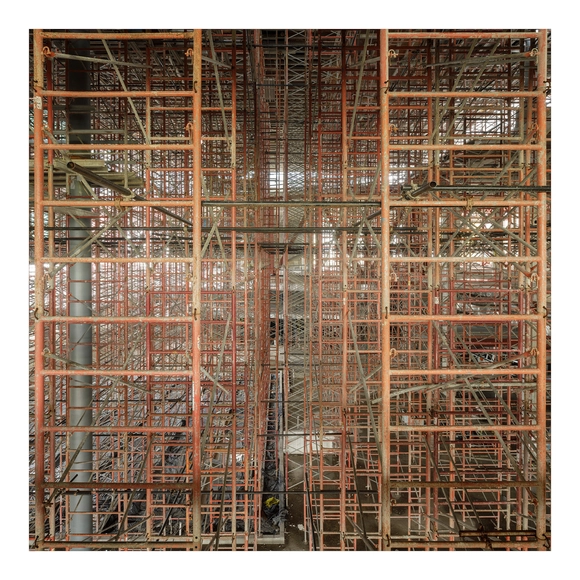
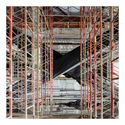
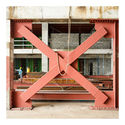
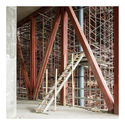
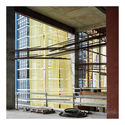
Spanish photographer Fernando Alda explores the construction of the Pacific Center building in Panama, designed by local firm Ventura Arquitectos, in his most recent photo essay. Titled "An Aesthetics of Disappearance," Alda's work was exhibited in the Panamanian firm's pavilion during the inaugural Expo Modii 2018 in Panama City.
Scaffolding, energy dissipators, shoring, electrical installations, and safety netting define the temporary spaces that make up this photo essay. These compositions center on spaces rendered invisible while awaiting the real spaces. "In Pacific Center," writes architect Silvia Escamilla, "he freezes this temporal lapse and the ephemeral elements that inhabit it, those that go unnoticed by us, granting them a new aesthetic value."
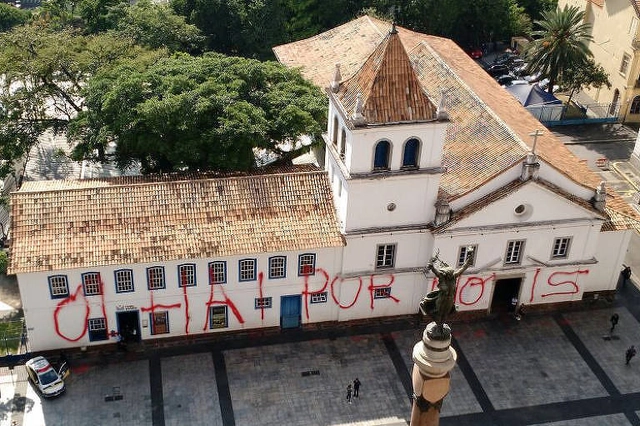
One of São Paulo's primary historical and tourist landmarks, the Pateo do Collegio—the founding site of the state capital—awoke with its facade covered in graffiti. "Olhai por nois" [Look out for us] is the phrase that, in red letters, covers the facade of the Museum of Sacred Art and the chapel of the complex, which belongs to the Society of Jesus.
Under Brazil's environmental crimes law, defacing monuments is a crime, and perpetrators can face up to one year in prison. At the time of publication, those responsible for the act had not been identified by the Metropolitan Civil Guard.
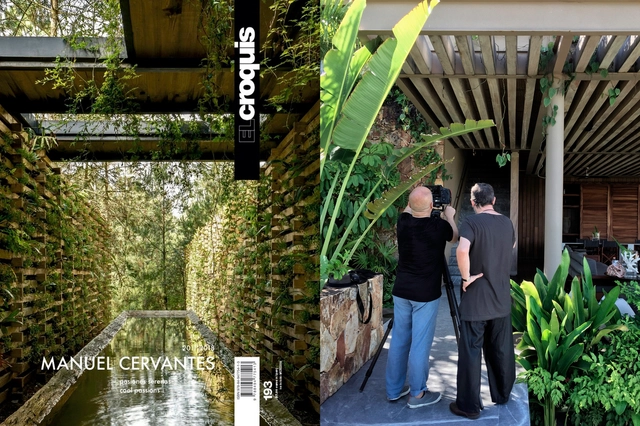
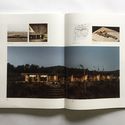
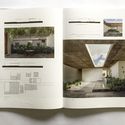
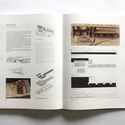
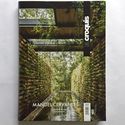
'El Croquis' is one of the most prestigious international architecture magazines, edited by architects Fernando Márquez Cecilia and Richard Levene. Published as carefully curated monographs, the magazine analyzes the work of architects whose careers feature some of the most influential and prestigious projects globally, such as OMA Rem Koolhaas, Kazuyo Sejima, Herzog & de Meuron, Álvaro Siza or Rafael Moneo. Every two months, a new issue is published with a print run of 35,000 copies, distributed to specialized bookstores in Europe, the Americas, and Asia.
The magazine is published in English and Spanish from El Escorial in Madrid, Spain, and is currently a member of ARCE (Asociación de Revistas Culturales de España) and the Asociación de Editores de Madrid. To date, only 193 issues have been published, the latest of which is dedicated to the career of architect Manuel Cervantes—the first Mexican architect to be featured in 'El Croquis' and the second from Latin America, following Smiljan Radic.
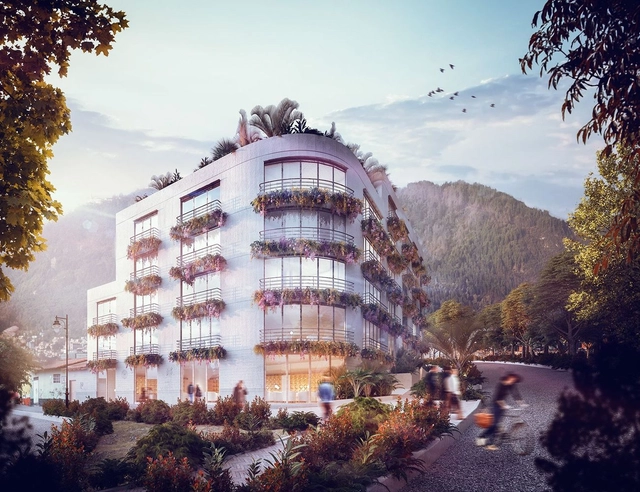
Renowned for his work with guadua bamboo, Colombian architect Simón Vélez will build his first steel project in Bogotá, according to the local newspaper La República.
The project, named La Primera, is a residential building in the La Candelaria neighborhood of the Colombian capital, and will feature 60 one- and two-bedroom apartments. Joining Vélez on the project are the firm A Korn Arquitectos, the construction company Kandelaria, and Geografía Urbana as urban planning consultant.
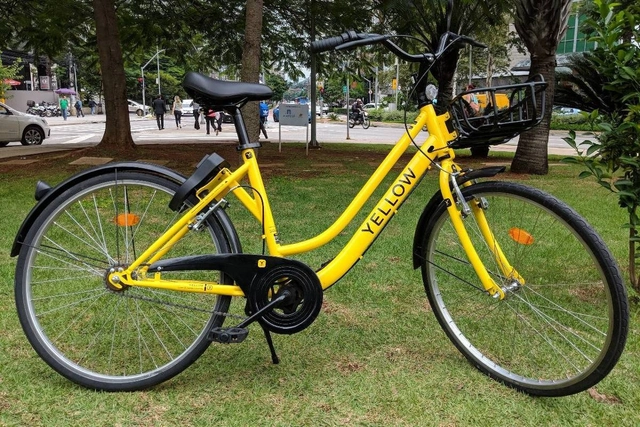
São Paulo will soon have a new bike-sharing system. Developed by the company Yellow, the system will deploy 20,000 vehicles and will not feature stations—the bicycles will be left freely on the streets.
Known as "dockless," the service already operates in other parts of the world, such as China and Germany, and involves leaving bikes "free" on the streets, available to users via an app that unlocks the selected vehicle. At the end of the trip, riders can leave the bicycle wherever is convenient, and it locks itself, remaining available for the next user.
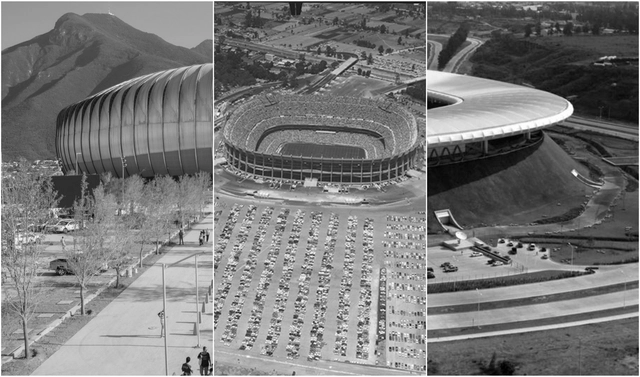
A few days ago, FIFA announced that Mexico, the United States, and Canada will host the 2026 World Cup. The news came as a surprise to some, as it will be the first World Cup to be played across three countries, featuring a new format with 48 teams divided into 16 groups of three. Consequently, further details on the organization will not be available until 2020, when FIFA is scheduled to announce the event's logistics.
Knowing that many of our readers are fans of both soccer and Mexican architecture, we present this special feature on the three Mexican stadiums that will host the 2026 World Cup. Don't miss it!
.jpg?1530823155&format=webp&width=640&height=580)
The CitYzens Collective and the Arkco-CUC research group at the Universidad de la Costa (CUC) conducted a collective mapping exercise in the Plaza de la Paz, located in the historic center of Barranquilla, Colombia. The event took place on June 1, 2018, at this emblematic public square.
The initiative not only involved collaboration with urban design collectives like Colectivo 016, but also drew the participation of dozens of citizens and passersby. They made symbolic contributions to "Save Barranquilla" by mapping their experiences, identities, appropriations, uses, and collective imaginaries of the city.

For the first time in its history, the São Paulo International Architecture Biennale opened a call for proposals to select the curators for its next edition. Consequently, on August 31, the Instituto de Arquitetos do Brasil - Departamento São Paulo (IABsp) announced the curatorial team that will lead the XII São Paulo International Architecture Biennale.
With the proposal Todo Dia, the winning team is composed of Brazilian architects Ciro Miguel and Vanessa Grossman, alongside French architect Charlotte Malterre-Barthes.
Below is an excerpt from the winning proposal's statement:
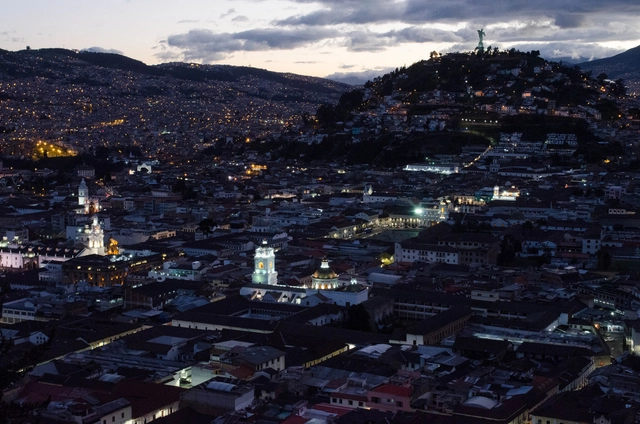
With one month to go before its opening, the details of the official program for the 21st Pan-American Architecture Biennial of Quito (BAQ2018) have been announced. Marking its 40th anniversary, the event will focus its dialogue and debate on architecture itself.
To be held from November 19 to 23 in the Ecuadorian capital, the event offers a prime opportunity to discuss and debate a discipline that, in recent years, has seen a decline in the spaces dedicated to fostering such encounters and dialogue.
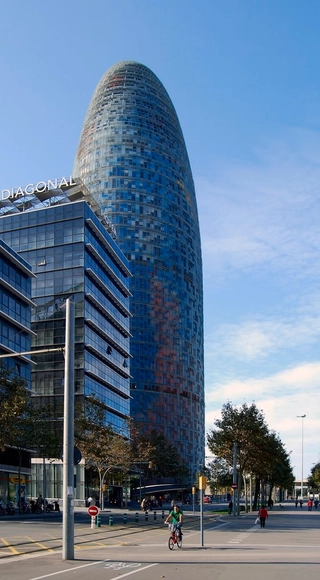
Although the Catalan political situation remains mired in uncertainty, companies seem to be regaining confidence in Barcelona as a location for their corporate headquarters, following the city's 2017 loss of the opportunity to host the European Medicines Agency (EMA) at Torre Glòries (formerly known as Torre Agbar) to Amsterdam.
Now, however, Facebook has chosen this tower—designed by architects Jean Nouvel and Fermín Vázquez (b720)—as the site for an operations center to combat and eliminate harmful content, such as fake news, on the social network.

National Architect and Urban Planner Day, celebrated on December 15, has officially become law. Law 13,627/2018, which adds the date to the official Brazilian calendar, was signed into law by the Presidency of the Republic on January 16. This marks an important step in the process of professional recognition initiated by CAU/BR and regional CAUs since their creation in 2011. The Council began operating precisely on December 15 so that its establishment would coincide with the birth date of Oscar Niemeyer.

The Brazilian Institute of Geography and Statistics (IBGE) released last week the 2017 edition of the Profile of Brazilian Municipalities (Munic). According to the document, fewer than half of Brazilian cities have structured planning for housing. The report points out that last year, of the country's 5,570 municipalities, 59.6% had some type of housing-directed initiative, but only 39.7% had a Municipal Housing Plan.
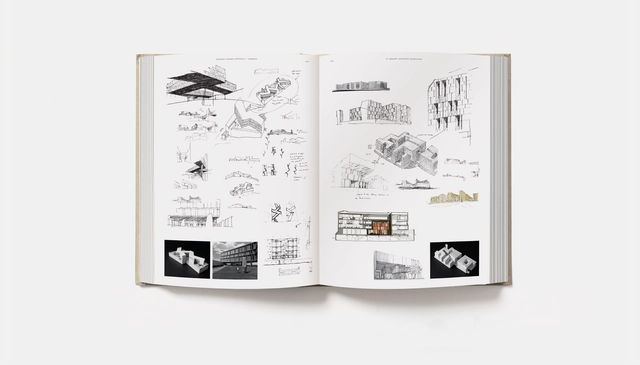
Phaidon recently published Elemental, a monograph that fully illustrates the social commitment and methods of Alejandro Aravena and his colleagues.

A historical platform available online offers a look at the last one hundred years of architectural competitions in Uruguay, exploring the shape of the city its society set out to imagine.
100 Years of Architecture Competitions in Uruguay is a project created by authors Virginia Delgado, Francisco Magnone, and Marcelo Staricco (architects and design instructors, DEAPA - FADU, UdelaR) along with research advisor Mag. Arch. Diego Capandeguy.

The crowdfunding campaign to produce the 2019 Athos Bulcão Illustrated Calendar is now live. Through November 28, the public can contribute to the production and distribution of 6,000 copies of the calendar. In return, supporters will receive copies of the publication alongside rewards featuring the artist's work, such as bookmarks, postcards, books, tote bags, magnet sets, mouse pads, silver jewelry, and even framed tiles, as well as having their names printed in the acknowledgements section. Supporters can view the rewards and make their contributions on Catarse.
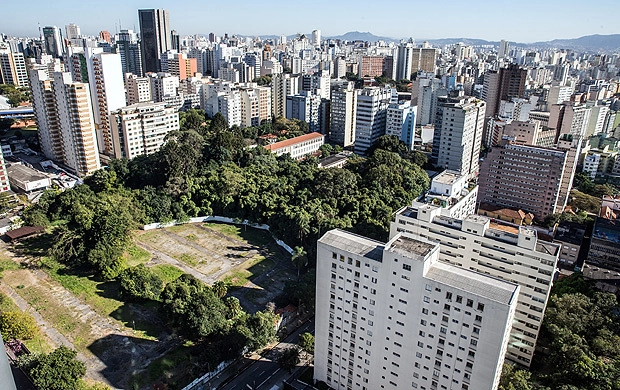
A happy ending to one of the disputes over the appropriation of urban space in São Paulo: the land that will house Augusta Park is finally becoming a public and common asset. After decades of impasse, the social, environmental, and cultural function of the city's last central woodland has prevailed over the right of the developers owning the land to exploit it by building high-rises.
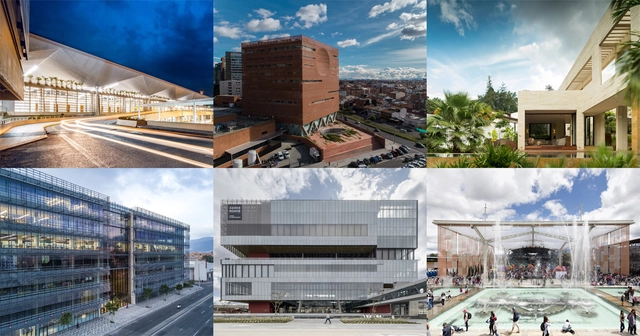
The Jury of the XXVI Colombian Biennial of Architecture and Urbanism has presented the list of projects and publications selected for the next edition of the event, which will be held once again in Cartagena this year.
Divided into eight categories, the 283 submitted projects were evaluated by an international jury comprised of Iñaqui Carnicero (Spain), Alejandro Beals (Chile), and Fabián Farfán (Bolivia), alongside local architects Germán Fonseca, Julián Rincón, Sara Giraldo, and Diego Aguilera.
The 108 finalist projects for the upcoming Colombian Biennial are:
The documentary FILME PAISAGEM, um olhar sobre Roberto Burle Marx (Landscape Film: A Look at Roberto Burle Marx) opens in theaters on November 15, showcasing the Brazilian landscape architect's profound contribution to the country's native flora. Written and directed by João Vargas Penna, the film is a journey through the art and personality of Roberto Burle Marx, who was also a painter, cook, and singer—lesser-known facets of his life to the general public.
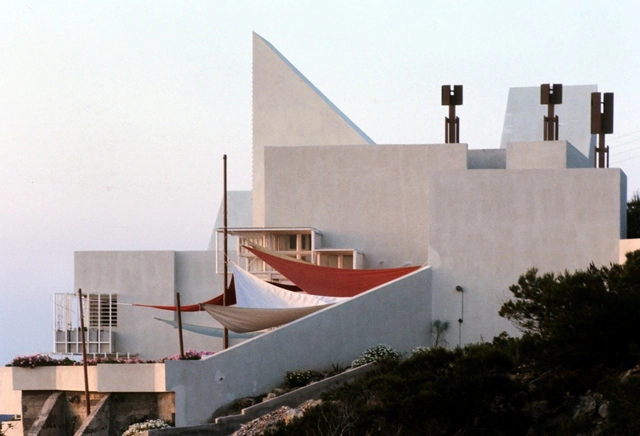
The Van der Driesche House, designed by Spanish architects José Antonio Martínez Lapeña and Elías Torres Tur—winners of the 2016 National Architecture Award—has narrowly escaped demolition, avoiding yet another loss of contemporary Spanish architectural heritage to cultural insensitivity.
On Tuesday, September 18, the Island Council of Ibiza approved a decree suspending the demolition of the Van der Driesche House for up to three months. Because the building is currently neither listed nor declared of cultural interest, the next step is to take the necessary measures to preserve its cultural value, preventing any work or intervention that could alter the complex's original features.

On August 30, the press conference for the 2018 Beijing Design Week - 751 International Design Festival was held at the Geyuan space in Beijing's 751D·PARK. Wang Yudong, General Manager of Beijing Design Week, and Zhang Junyuan, General Manager of 751D·PARK Cultural Development Co., Ltd., delivered opening remarks. The event was attended by Per Boesgaard, Sector Counselor for Sustainable Urban Development at the Royal Danish Embassy, Bart Hofstede, Cultural Counselor of the Dutch Embassy, and over 40 Chinese and international media representatives.
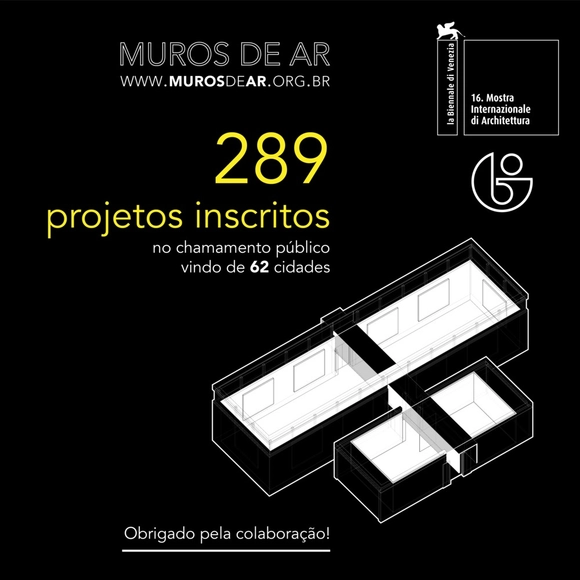
The open call for projects for the Brazilian Pavilion at the 16th International Architecture Exhibition of the Venice Biennale closed on Friday, January 19, at 11:00 p.m., after being open to the public for one month.
The initiative aimed to find projects across Brazil that demonstrate architecture as a tool to mediate conflicts, nego
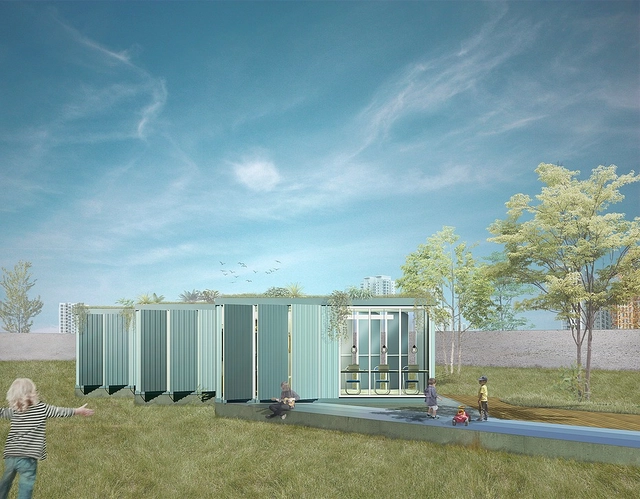
The Agisa Todeschini Ideas Competition brought together architects and students of architecture and urbanism to select and award the three best free-design concepts utilizing one or more habitable modules as an interactive space for the beneficiary institution. In addition to a cash prize, the competition winner will design a furnished habitable module to be built and donated to Lar Infantil Sol Amigo—an organization supporting vulnerable children in Curitiba—to serve as an educational and interactive space.
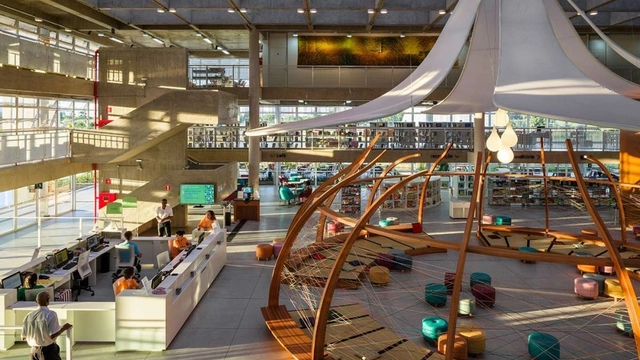
The Villa-Lobos Park Library (BVL), in the western zone of São Paulo, is one of five finalists for the best public library award from the International Federation of Library Associations and Institutions (IFLA), the industry's most prominent international organization. The Villa-Lobos Park Library was built on the site of a former open-air landfill. The revitalization of the area led to the creation of a free-entry, open-access reading space, modeled after the São Paulo Library in Youth Park (Parque da Juventude), which has also competed for another international award.