1. ArchDaily
  2. Editor's Choice

Editor's Choice

10 Books on Architecture You Can Read Online For Free

There are few things in this world better than books on architecture, especially when they're available to download for free! Following on from our ever-popular post from 2014, we've gathered up ten more books that cover a broad range of interesting topics—including advice to architecture students from Herman Hertzberger, a look at what sparks the formation and growth of a city, and even a book that offers an in-depth architectural analysis of Alfred Hitchcock's films. Check out the list below!

Round-Up: The Serpentine Pavilion Through the Years

Lasting for close to two decades now, the annual Serpentine Gallery Pavilion Exhibition has become one of the most anticipated architectural events in London and for the global architecture community. Each of the previous eighteen pavilions have been thought-provoking, leaving an indelible mark and strong message to the architectural community. And even though each of the past pavilions are removed from the site after their short summer stints to occupy far-flung private estates, they continue to be shared through photographs, and in architectural lectures. With the launch of the 18th Pavilion, we take a look back at all the previous pavilions and their significance to the architecturally-minded public.

Round-Up: The Serpentine Pavilion Through the Years - Image 1 of 4Round-Up: The Serpentine Pavilion Through the Years - Image 2 of 4Round-Up: The Serpentine Pavilion Through the Years - Image 3 of 4Round-Up: The Serpentine Pavilion Through the Years - Image 4 of 4Round-Up: The Serpentine Pavilion Through the Years - More Images+ 33

Frida Escobedo's 2018 Serpentine Pavilion Opens in London

The 2018 Serpentine Gallery Pavilion, designed by Frida Escobedo, was unveiled today in London's Hyde Park. Escobedo's design, which fuses elements typical to Mexican architecture with local London references, features a courtyard enclosed by two rectangular volumes constructed from cement roof tiles. These tiles are stacked to form a celosia, a type of wall common to Mexican architecture which is permeable, allowing ventilation and views to the other side.

Frida Escobedo's 2018 Serpentine Pavilion Opens in London - Image 1 of 4Frida Escobedo's 2018 Serpentine Pavilion Opens in London - Image 2 of 4Frida Escobedo's 2018 Serpentine Pavilion Opens in London - Image 3 of 4Frida Escobedo's 2018 Serpentine Pavilion Opens in London - Image 4 of 4Frida Escobedo's 2018 Serpentine Pavilion Opens in London - More Images+ 6

Wearable Architecture: 11 Architecture-Inspired Jewelry Lines

Subscriber Access | 
Wearable Architecture: 11 Architecture-Inspired Jewelry Lines - Image 14 of 4
via Yumi Endo

Let’s face it. You can spot a design enthusiast from miles away thanks to his or her remarkably unique style. Whether it’s their one-of-a-kind backpack or customized sneakers, they’ll make sure they turn heads wherever they go. While some love to "go big or go home" with their outfits and accessories, others choose a more subtle approach to their styling. Thankfully, some creative minds have stretched their love of architecture and geometry and developed unique jewelry pieces inspired by their interests.

To all the architects, designers, artists, expressionists, and people outside the design world with really good taste, here’s a list of architecture-inspired jewelry that will undoubtedly stand out. Get those credit cards out because we promise, you won’t be able to resist.

See the Twelve Russian Stadiums That Will Host the 2018 World Cup

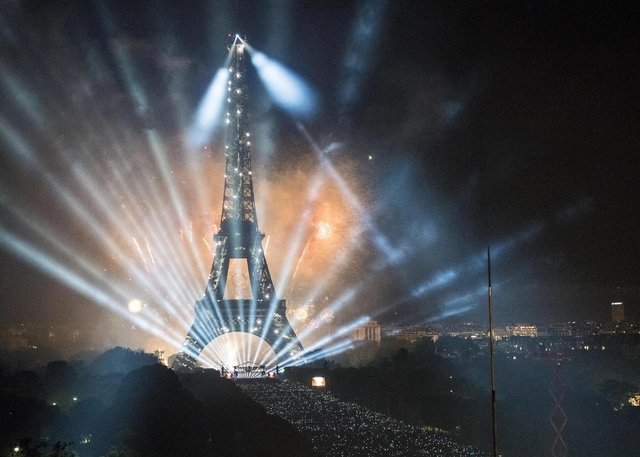
Every four years, millions of soccer fans tune in to watch the best national teams battle it out at the World Cup—all for a chance to call themselves the best soccer team in the world. The FIFA World Cup, much like the Olympic games, encourages a great deal of development in the host country, with the addition of stadiums, infrastructure, and other programs needed to support the mass of fans who will head to cheer on their country. This year, Russia will be hosting the event and will be spending an estimated 10 billion dollars in both building new arenas, and refurbishing their existing facilities. The 2018 tournament will host 65 matches across 11 cities in 12 of the most modern stadiums in the world. We've compiled a list that show these impressive stadiums and arenas, and offer a glimpse as to how they will be used long after the winner of the 2018 World Cup is crowned.

Check out the twelve stadiums that will host matches in the 2018 World Cup below.

A Simple 6-Step Guide to Getting a Job in Architecture

Black Spectacles, in collaboration with the American Institute of Architecture Students (AIAS), has released a new guide called How To Get A Job In Architecture, in order to help recent architecture graduates navigate through the process of finding their first job. The free 17-page guide is filled with helpful hints on how to apply, tricks to landing your first offer, and even advice from architects and HR professionals at some of the top firms in the world including Cannon Design, Adrian Smith + Gordon Gill, and Gensler.

11 Must-See Exhibitions at the 2018 Venice Biennale

Subscriber Access | 

As always, this year’s edition of the Venice Architecture Biennale is brimming with exhibitions and installations—the result of thousands upon thousands of hours of research and work. When arriving at the Arsenale or Giardini, the overwhelming amount of "things to see" are neatly tucked into the national pavilions, or, in the case of the Arsenale, hidden on the sides of the sweeping corridor. In the likely event that you have limited time to enjoy all that FREESPACE has to offer, ArchDaily's editors have selected our favorite works displayed at the 16th International Architecture Exhibition.

Here, presented in no particular order, are some of our top suggestions from across the Biennale sites.

Rem Koolhaas and Son Tomas Talk About The Years-Long Process of Shooting “REM”

Subscriber Access | 

ArchDaily had the chance to catch Rem Koolhaas and his son, Tomas Koolhaas, together, when they met for a weekend in Los Angeles. In their first ever interview together, following the release of “REM” online, we spoke with the pair about the documentary that was four years in the making. The film had Tomas following his father from the desert to the ocean to the 2014 Venice Biennale, as well as inside several OMA projects around the world, like the Seattle Central Library in America and Maison à Bordeaux in France.

The pair reveal what their father-son relationship is like, how the profession of architecture and filmmaking inform each other, and shine a light on the challenges of filming a well-known family member. Work aside, what came across the most strongly throughout the conversation was the respect they had for each other’s craft, and their gratitude for the chance to work so intimately as father and son.

How Surrealism Has Shaped Contemporary Architecture

Subscriber Access | 
How Surrealism Has Shaped Contemporary Architecture - Image 1 of 4
1974 installation of Mae West’s Face which May be Used as a Surrealist Apartment by Salvador Dali. Image © Flickr user Torrenega licensed under CC BY 2.0

In 1924 writer André Breton penned the Surrealist Manifesto, which called to destabilize the divides between dreams and reality, between objectivity and subjectivity. For many architects who had been—and continue to be—interested in the fundamental role of the built environment, Breton’s surrealist thinking provided a rich resource to examine the role architecture plays in forming reality. Since then, from Salvador Dali and Frederick Kiesler to Frank Gehry, Surrealism has profoundly shaped architecture in the 20th century.

This Company Is Using Prefabrication to Rapidly Deliver Huge Numbers of Buildings in India

Subscriber Access | 

This article was originally published by Autodesk's Redshift publication as "Can Prefab Construction Meet Infrastructure Needs in India? KEF Infra Thinks So."

At KEF Infra One—a prefabrication plant outside of Krishnagiri, India—houses, cafeterias, and hospitals roll off an assembly line, as do the premade doors, windows, bathroom fixtures, and furniture to be installed within them. It’s a one-stop shop that makes building a house as easy as buying the food, dishes, and cookware for a family dinner in one fell swoop at Target.

The demands on infrastructure in India are huge. Given the country’s decentralization and its building trades’ reliance on manual labor, this level of modular building integration has been a far-off dream across all sectors. KEF Infra says it’s the only such facility in the world, integrating design, engineering, and fabrication to assemble building kits that provide far more than four walls and a roof, right out of the box.

75 Types of Wood Ranked by Hardness

Subscriber Access | 

Ever wondered about the hardest and softest woods in the world? As architects, we're all pretty familiar with the softest: Balsa. Its material qualities are what make it so attractive to make models. But what about the the strongest wood in the world? Ever pondered just how many pounds or kilos of force they can withstand?

The Perks of Dating an Architect

Subscriber Access | 

If you’re reading this post then it's likely that you are either an architect, or you’re dating one. If you belong to the former group, we salute you and all your hard work. But if you belong to the latter, this list might serve as a reminder of how lucky you are to be with somebody with the unique talents and traits of the architect—and that's not to mention the obvious fact that you could end up living in a beautiful house with the most beautiful furniture.

Photo-Series Provides an Abstracted Look at China's Iconic Architecture

Subscriber Access | 
Photo-Series Provides an Abstracted Look at China's Iconic Architecture - Image 20 of 4
Sky SOHO, Zaha Hadid Architects. Image © Kris Provoost

A decade ago, a wave of striking architecture invaded major Chinese cities as the country prepared for the 2008 Beijing Olympics and 2010 Shanghai World Expo. Internationally renowned architects proposed and developed over-the-top structures, which soon became new symbols of the country. These iconic buildings helped mark Beijing and Shanghai as the major entry points to China, but as time progressed, the phenomenon spread to other, lesser-known Chinese cities. As these "second tier" cities thrived, their governments wanted to improve living standards and develop their own trademark, resulting in new theaters, stadiums, schools, and office towers.

Having focused on Beijing and Shanghai in his first series of photographs, Kris Provoost has continued his "Beautified China" series with a deeper look at buildings in 12 Chinese cities throughout the country, from Harbin to Hong Kong. The project continues under the same premise: 20 minimalist photos taken over the past 8 years of striking architecture built in the last decade.

Photo-Series Provides an Abstracted Look at China's Iconic Architecture - Image 1 of 4Photo-Series Provides an Abstracted Look at China's Iconic Architecture - Image 2 of 4Photo-Series Provides an Abstracted Look at China's Iconic Architecture - Image 3 of 4Photo-Series Provides an Abstracted Look at China's Iconic Architecture - Image 4 of 4Photo-Series Provides an Abstracted Look at China's Iconic Architecture - More Images+ 17

How Ila Bêka Puts People's Emotional Responses to Space On Film

Subscriber Access | 

Celebrated for their unique, lively, and intimate take on architecture, in their films Ila Bêka and Louise Lemoine break with the traditional representation of architecture, choosing instead to follow people living inside buildings, focusing on them instead of capturing empty structures. In a new video, Louisiana Channel interviews the Italian filmmaker and architect Ila Bêka, in which he discusses the rhythm of everyday life within contemporary architecture projects, and their importance in triggering emotions.

We felt that the movement inside architecture is very important to understand how the architecture works.
– Ila Bêka

7 Lessons from New York's New Affordable Housing Design Guide

When we think of public housing architecture in the United States, we often think of boxes: big, brick buildings without much aesthetic character. But the implications of standardized, florescent-lit high-rises can be far more than aesthetic for the people who live there. Geographer Rashad Shabazz, for one, recalls in his book Spatializing Blackness how the housing project in Chicago where he grew up—replete with chain link fencing, video surveillance, and metal detectors—felt more like a prison than a home. Accounts of isolation, confinement, and poor maintenance are echoed by public housing residents nationwide.

But American public housing doesn’t have to be desolate. A new set of design standards from the New York City Public Design Commission (PDC)—in collaboration with The Fine Arts Federation of New York and the American Institute of Architects New York Chapter—hopes to turn over a new leaf in affordable housing architecture.

7 Lessons from New York's New Affordable Housing Design Guide  - Image 1 of 47 Lessons from New York's New Affordable Housing Design Guide  - Image 2 of 47 Lessons from New York's New Affordable Housing Design Guide  - Image 3 of 47 Lessons from New York's New Affordable Housing Design Guide  - Image 4 of 47 Lessons from New York's New Affordable Housing Design Guide  - More Images+ 11

From Romantic Ruins to the Ultra-Real: A History of the Architectural Render

Subscriber Access | 
From Romantic Ruins to the Ultra-Real: A History of the Architectural Render - Featured Image

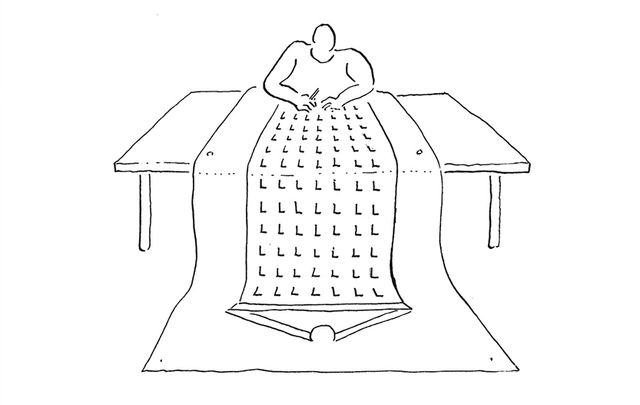
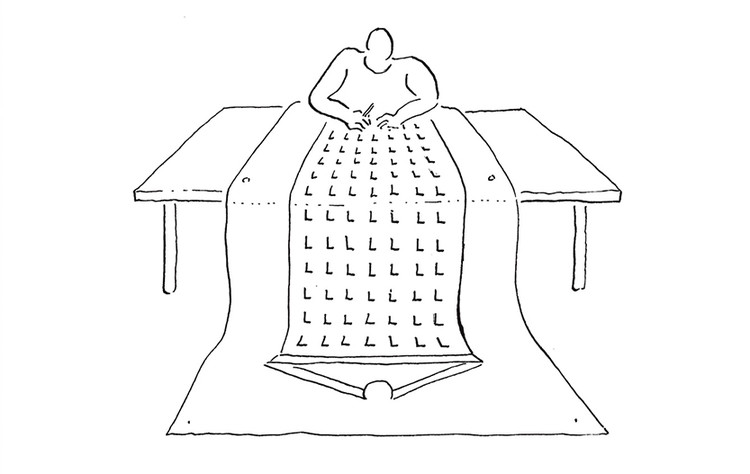
Throughout history, architects have used sketches and paintings to display to their clients the potential outcomes of the projects rattling around their minds. Since Brunelleschi’s adoption of drawn perspective in 1415, architectural visualizations have painted hyper-realistic imaginings of an ideal, where the walls are always clean, the light always shines in the most perfect way, and the inhabitants are always happy.
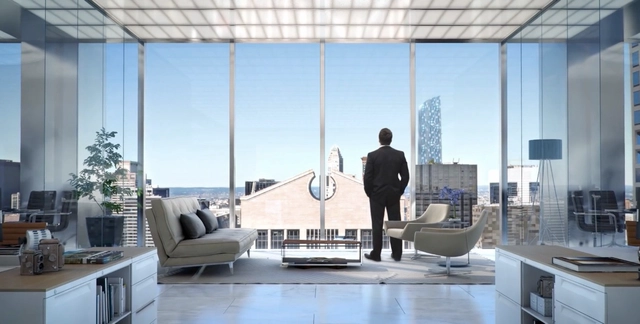
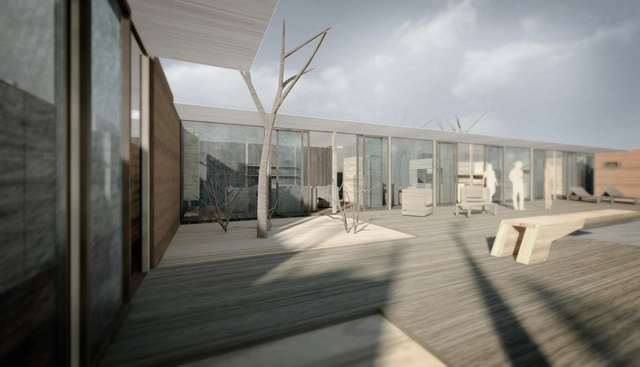
With technological advances in 3D modeling and digital rendering, this ability to sell an idea through a snapshot of the perfect architectural experience has become almost unrestricted. Many have criticized the dangers of unrealistic renderings that exceed reality and how they can create the illusion of a perfect project when, in fact, it is far from being resolved. However, this is only the natural next step in a history of fantastical representations, where the render becomes a piece of art itself.

Below is a brief history of the interesting ways architects have chosen to depict their projectsfrom imagined time travel to the diagrammatic.

From Romantic Ruins to the Ultra-Real: A History of the Architectural Render - Image 1 of 4From Romantic Ruins to the Ultra-Real: A History of the Architectural Render - Image 2 of 4From Romantic Ruins to the Ultra-Real: A History of the Architectural Render - Image 3 of 4From Romantic Ruins to the Ultra-Real: A History of the Architectural Render - Image 5 of 4From Romantic Ruins to the Ultra-Real: A History of the Architectural Render - More Images+ 5

When Is the Best Time to Look for an Architecture Job?

Subscriber Access | 
When Is the Best Time to Look for an Architecture Job? - Image 2 of 4
Photo by STIL on Unsplash

This article was originally published by The Architect's Guide.

So I won't make you wait for the answer. The best time to look for an architecture job is...

Berlin's Tempelhof Airport: Achieving Redemption Through Adaptive Reuse

Subscriber Access | 

The story of Berlin’s Tempelhof Airport never quite ends.

Located just south of the city’s hip Kreuzberg neighborhood and only fifteen minutes by bike from the city center, the disused former Nazi complex—with its terminal, hangars, and massive airfield—occupies nearly 1,000 acres of prime real estate in the ever-growing German capital. In any other metropolis, this land would have been snatched up by a developer years ago, but in Berlin, creative reuse has prevailed over conventional narratives of redevelopment.

Berlin's Tempelhof Airport: Achieving Redemption Through Adaptive Reuse - Image 1 of 4Berlin's Tempelhof Airport: Achieving Redemption Through Adaptive Reuse - Image 2 of 4Berlin's Tempelhof Airport: Achieving Redemption Through Adaptive Reuse - Image 3 of 4Berlin's Tempelhof Airport: Achieving Redemption Through Adaptive Reuse - Image 4 of 4Berlin's Tempelhof Airport: Achieving Redemption Through Adaptive Reuse - More Images+ 19

You've started following your first account!

Did you know?

You'll now receive updates based on what you follow! Personalize your stream and start following your favorite authors, offices and users.