Australian architecture is rooted in contemporary western aesthetics combined with adaptations based on climatic concerns and unique cultural nature. Though strongly influenced by its British past, Australia architecture has come to embrace a multicultural identity when it comes to design. The architecture of Australia ranges based on proximity to the coast, historically using local materials to create semi-permanent beach homes by indigenous people. This background finds itself in how modern architects design with consideration to light, landscape, and ancestry. This list of projects, firms, and interviews examines the influence and character of contemporary Australian architecture.
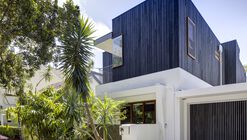
Living by the beach has long been a defining aspiration—drawn by the promise of tempered nature, privacy, and immediate access to the water. Historically, beach houses tended to be rustic and pared back: partly because servicing remote sites and delivering materials was difficult, and partly because their charm lay in being closer to the elements—simpler, rougher, more direct.
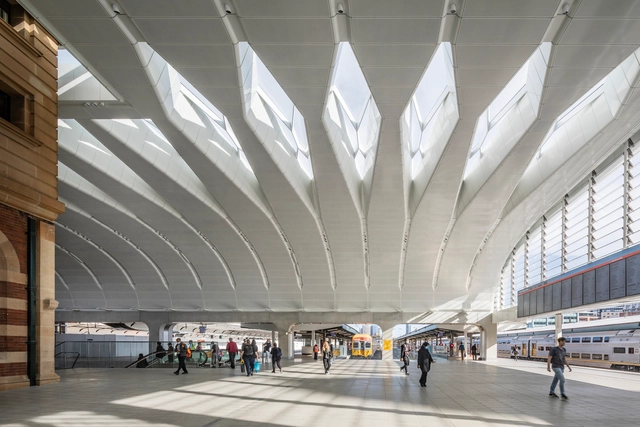
Foster + Partners has opened Civic Vision, the first comprehensive exhibition of the practice's work to be presented in Australia. On view until December 21, 2025, at Parkline Place, the firm's latest completed project in Sydney, developed by Investa on behalf of Oxford Properties Group and Mitsubishi Estate Asia, the exhibition offers an in-depth overview of Foster + Partners' global portfolio since its founding in 1967 by Norman Foster. It explores the evolution of the practice's design approach and its exploration of civic architecture across different contexts and scales.
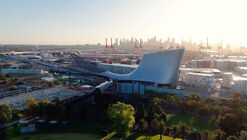
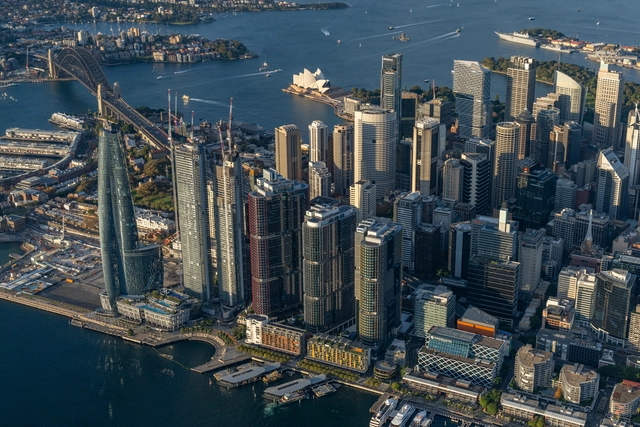
RSHP has announced the completion of the Barangaroo South Masterplan in Sydney, marking the realization of a 15-year redevelopment that has reconnected the city's north-western harbour edge to its urban core. Once a disused container port, the 22-hectare site has been transformed into a mixed-use, carbon-neutral precinct, integrating commercial, residential, and public spaces along the waterfront. Developed in collaboration with Lendlease following an internationaldesign competition, the masterplan is organized into three zones: Barangaroo South, a high-density extension of the Central Business District; Barangaroo Reserve, a reconstructed natural headland that reintroduces native landscapes to the harbour; and Barangaroo Central, a low-density residential area linking the northern and southern ends of the development.
Across geographies and generations, architects are rethinking the idea of home, balancing personal expression, contextual sensitivity, and material clarity. These contemporary residential proposals, submitted by the ArchDaily community, reveal how the house continues to evolve as both an architectural statement and an intimate landscape for living. From the sculptural and futuristic to the grounded and vernacular, they explore how built form balances between identity, environment, and lifestyle in an increasingly complex world.
This week, architectural developments around the world highlighted the balance between continuity and change in the built environment. Conversations around sustainability, heritage, and resilience highlight how architecture adapts to shifting cultural, social, and environmental conditions, reimagining the role of design in shaping future communities. Across different contexts, projects, and initiatives, ongoing efforts to address environmental challenges, preserve cultural landmarks, and prepare new infrastructures reflecting the diverse scales and directions shaping architectural practice today.
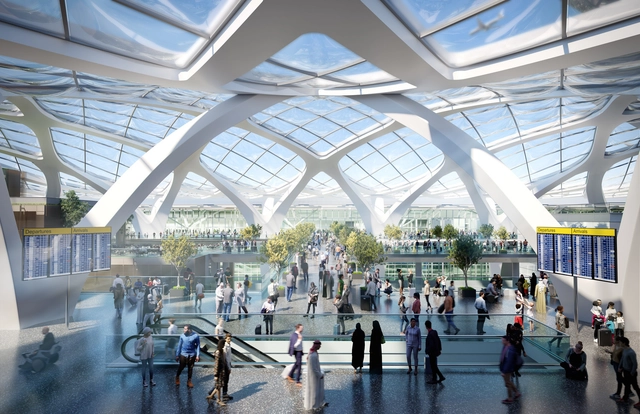
This edition of Architecture Now brings together projects that explore how architecture is reshaping global gateways, cultural destinations, and urban living. SOM's design for a new Arrivals and Departures Hall in Austin and Scott Brownrigg's Heathrow West proposal highlight the airport as a civic threshold, while Kerry Hill Architects' three-tower precinct in Brisbane emphasizes public space and subtropical landscapes in high-density housing. Zaha Hadid Architects' beachfront tower in Florida extends Miami's sculptural coastal tradition, and Pharrell Williams and NIGO's Japa Valley Tokyo introduces a temporary cultural district blending art, hospitality, and retail. Together, these initiatives reflect how infrastructure, lifestyle, and design intersect to define contemporary urban experience.
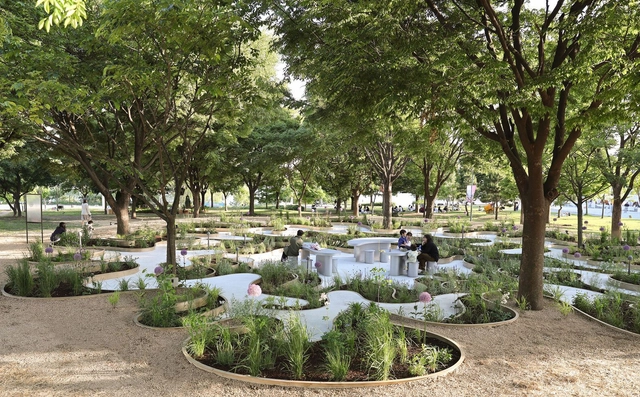
Immersive Resilience Garden / Changyeob Lee + Studio ReBuild. Image Courtesy of Studio ReBuild
The concrete canyon of Melbourne's Degraves Street was once a stark service corridor in functional obscurity. Today, the narrow laneway now pulses with life beyond its famous café. Native grasses cascade from carefully positioned planters while small shrubs create cooling microclimates. Challenging traditional ecological design models, community-led approaches to biodiversity invite a reimagining of how architects, planners, and communities collaborate to develop biodiverse urban futures.
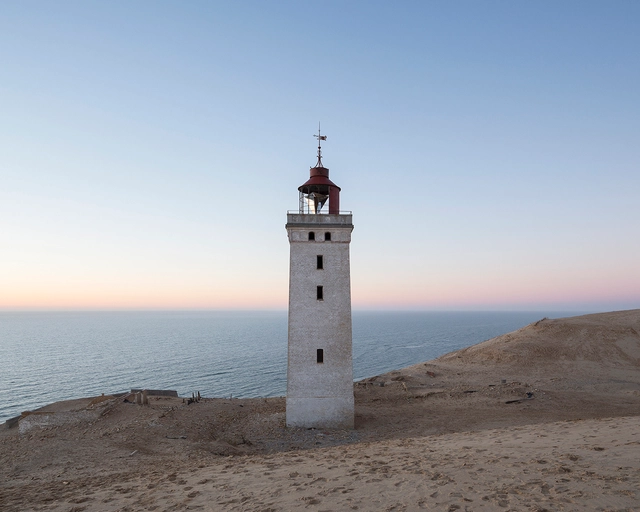
Lighthouses have stood along the margins of continents and islands for centuries as points of light in vast maritime territories. Rising in solitude from rocky cliffs, reefs, and headlands, these towers were tools for navigation and instruments of spatial clarity, shaping coastlines and marking the boundary between land and sea. Built to guide, warn, and locate, they constituted a global network of visibility long before the advent of digital mapping. Yet as maritime technologies evolved, many of these structures lost their original purpose. The typology, once essential, now stands at the edge of obsolescence. What remains is not merely an architectural relic, but a powerful spatial form — resilient, symbolic, and increasingly open to reinterpretation.