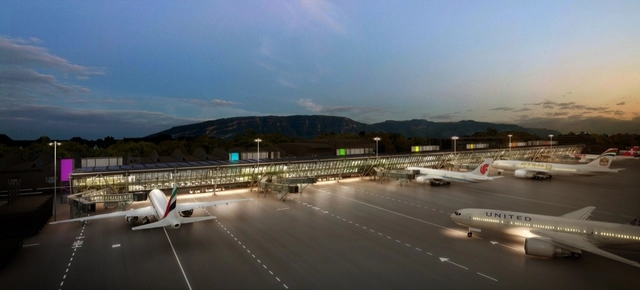
External view of Geneva Airport East Wing at dusk. Image Courtesy of RBI-T consortium
Rogers Stirk Harbour + Partners’ (RSHP) design for the Geneva airport’s East Wing has received planning permission from the Federal Authorities in Switzerland. The 520 meter-long facility will connect to the airport’s existing terminal and includes additional Departures and Arrivals halls, contact stands and gate lounge seating as well as first class airlines lounges and technical basements, according to a press release.
Harvard Art Museums have released this time-lapse video of their recently completed four-year renovation and expansion project carried out by Renzo Piano Building Workshop and Payette. Filmed from June 2010 – November 2014, the video shows the amount of work that went into renovating, expanding and uniting the Fogg Museum, the Busch-Reisinger Museum and the Arthur M. Sackler Museum under the same roof. Watch as snow falls (and then melts) on the construction site in the full video above and learn more about the project here.
A+u magazine was recently granted an exclusive interview with the co-founders of Flux, the Google[x] startup whose mission is to harness data to automate architectural and urban design. The discussion is one of 14 essays and interviews from leading urban technologists in the current November issue, Data-Driven Cities.
“We began our exploration with the premise that buildings and the sustainability of our modern lifestyle are deeply intertwined. In addition, buildings – more specifically, housing – is an issue of human dignity. We wanted to find ways to apply Google-scale thinking to tackle these important issues," says co-founder Nicholas Chim in the interview.
Read on after the break for a+u magazine's full interview with Flux co-founders, Nicholas Chim and Michelle Kaufmann. And check out the November issue of a+u magazine, available in digital and print editions, which features new essays by Carlo Ratti (MIT), Dan Hill (City of Sound), Alastair Parvin (Wikihouse) and more.
The IV annual Moscow Urban Forum is quickly approaching. To be held from December 11-14, the forum is an international conference on city planning, urban development and related subjects. With the overarching theme of “Drivers of City Development,” this year’s forum will feature talks by Uma Adusumilli, Pablo Allard, Dan Hill, Sergei Kapkov, Maksim Liksutov, Antanas Mockus and Hui Wang, among many others.
The Forum will look at infrastructure, economy, social development and culture as the main drivers of city development, with day one starting by discussing the global development of megacities as well as the agenda for Russian city development. Day two will focus specifically on Moscow’s city agenda, while days three and four will feature the Forum speakers as well as special events for urban communities.
During his recent trip to Chile, organized by the Harvard David Rockefeller Center For Latin American Studies, we caught up with the Dean of Harvard’s Graduate School of Design (GSD), Mohsen Mostafavi, to see what challenges he thinks are facing the future of architecture education and to learn more about his work on ecological urbanism.
“[Architecture is] both a singular discipline, but at the same time it needs to be a collaborative discipline. It’s at once focusing on disciplinary knowledge but at the same time trans-disciplinary practicing; therefore it means that architectural education has to find new venues for collaboration,” he said.
"I think the GSD is very well-positioned to address key societal issues today because first, we’re a very multidisciplinary school in the sense that we believe strongly both in the focus of individual disciplines like architecture, but also on the inter-relationship between architecture, landscape architecture, urban planning and urban design. "
Watch the full interview above to see what else Mostafavi had to say about architecture school, the role of architecture in society and ecological urbanism.
Resiliency has become a keyword when it comes to city planning and development, so much so that former AIA president, Clark Manus, declared last year that “resilience is the new Green.” To address resiliency on a global level and help cities around the world become more resilient to social, economic and physical challenges, The Rockefeller Foundation kicked off its 100 Resilient Cities Challenge in 2013. Under the initiative,100 cities will be selected to be part of the challenge, where they will receive help and funding to hire a Chief Resilience Officer and assistance in developing and implementing a resilience strategy.
So far 33 cities have been selected and last week the first-ever Chief Resilience Officer summit was held in New Orleans. To learn more about the summit in New Orleans, the overall initiative, and how cities can become more resilient, we spoke with President of 100 Resilient Cities, Michael Berkowitz, who said: "When you think about what makes a resilient city, you have to think in holistic terms. The reality is that resilience building is a multi-sector, multi-level kind of enterprise."
Read the full interview with Berkowitz after the break
CEMEX has announced both the international and national winners of the XXIII Building Awards, which aim to recognize the best architecture and construction both internationally and within Mexico. All projects were reviewed by a panel of judges comprised of some of the most important and prestigious representatives of the industry at an international level.
The international awards recognizing housing, institutional/industrial and large-scale infrastructure projects that were built during 2013 and stand out for their constructive solutions, aesthetics and innovative techniques. Finalist projects ranged from Frank Gehry’s Biomuseo in Panama to Plan B Arquitectos’ Click Clack Hotel in Bogotá, Colombia, covering a range of countries and architectural styles.
The CEMEX Building Award is itself a unique piece of art created by Mexican sculptor Miguel Angel Gonzalez and made out of black marble and concrete.
Read on after the break for both the international and national winners…
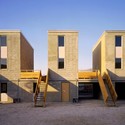
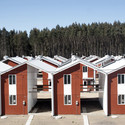
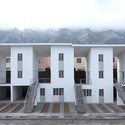
Aravena also emphasized the importance of community participation in his projects, saying: “We won’t ever solve the problem unless we use people’s own capacity to build.” Watch Aravena’s full talk above and take a peek at some of his key projects below.
DesignIntelligence has released their 2015 rankings of the Best US Architecture Schools for both undergraduate and graduate programs. Over 1,400 professional practice organizations were surveyed and asked to respond to the question: “In your firm’s hiring experience in the past five years, which of the following schools are best preparing students for success in the profession?” In addition, more than 3,800 architecture, landscape architecture, interior design, and industrial design students were also surveyed about their education, in data presented separately from the rankings.
However, perhaps more enlightening than the ranking itself are the firms' responses to several additional issues raised in the report. For example, 54.6% of the firms surveyed selected sustainability and climate change as the professions’ biggest concern, while maintaining design quality was a close second. Firms also provided insights on the most important qualities of new graduates entering the workplace, with an overwhelming 70.1% selecting attitude/personality as the most important attribute.
Read on after the break for the Top 10 undergraduate and graduate programs.
The program aims “to support new and emerging design talent that will influence the near future of European architectural design, thinking, and theory with the direct consequence of impacting future environments and future European and international cities,” reads the press release. Architects under the age of 40 ( as of December 1, 2015) were allowed to submit both built and unbuilt projects for consideration.
Check out the full list of Europe’s 40 Under 40 after the break.
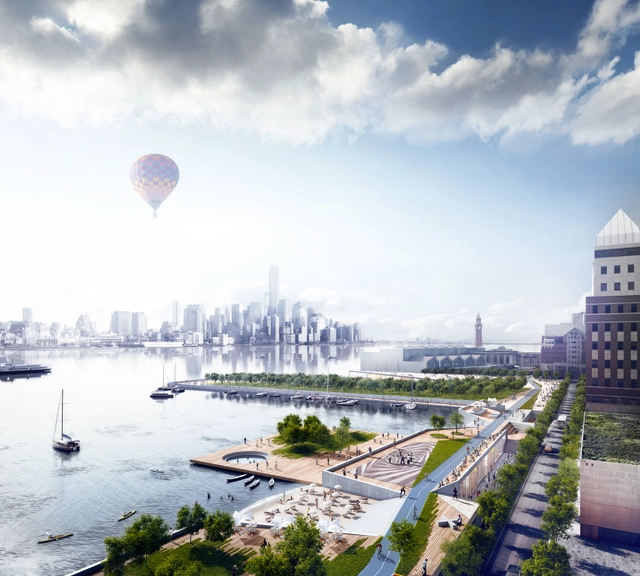
Last year the UN General Assembly issued a resolution to “designate 31 October, beginning in 2014, as World Cities Day.” A legacy of the Expo 2010 Shanghai, the first World Cities day is being hosted today in Shanghai, with the aim of focusing on global urbanization and encouraging cooperation among countries to solve and promote sustainable urban development worldwide.
“In a world where already over half the population lives in urban areas, the human future is largely an urban future, said UN Secretary-General Ban Ki-moon, on the importance of World Cities Day. “We must get urbanization right, which means reducing greenhouse emissions, strengthening resilience, ensuring basic services such as water and sanitation and designing safe public streets and spaces for all to share. Liveable cities are crucial not only for city-dwellers but also for providing solutions to some of the key aspects of sustainable development.”
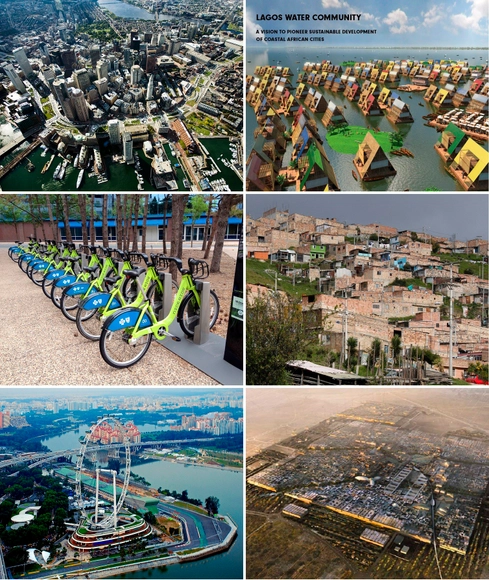
To celebrate World Cities day, we’ve rounded up 23 articles that you can’t miss on critical issues relating to our cities, ranging from sustainability to addressing equality and creative solutions for integrating cycling into our cities.
Think we’ve missed something? Let us know in the comments below.
MCHAP was established by the Illinois Institute of Technology (IIT) in Chicago to recognize the best built works in the Americas. As Kenneth Frampton noted when the finalists were announced in Santiago, Chile, the MCHAP Awards are the first time that an architectural prize has been approached, not in a trans-atlantic, horizontal manner, but rather vertically across the Americas.
Although initially the jury intended to select one work to be honored for the 2000-2013 period, they felt that both projects represented “an uncommon expressive display of structure,” and divided the 13-year period into two parts. Siza’s Iberê Camargo Foundation was selected as the 2000-2008 winner, while Herzog & de Meuron's mixed-use parking garage was selected for the 2009-2013 period. The two winning projects were selected from a total of seven finalists by jury members Jorge Francisco Liernur, Sarah Whiting, Wiel Arets, Dominique Perrault, and Kenneth Frampton.
Learn more about the winning projects after the break.
The Pärnu Municipal Government (in West-Estonia) announces an open architectural competition for the Rail Baltic Pärnu passenger terminal.
The aim of the architectural competition is to find the best comprehensive spatial solution for Pärnu’s Rail Baltic passenger terminal and its immediate surroundings. The hope is to commission the construction design project for the terminal and its immediate surroundings from the winner of the competition, and the intention is to also include the winner in drawing up the detailed master plan for the area.
All individuals or groups where one co-author and representative of the design team has a certificate of professional qualification as an authorized architect can participate in the idea competition.
A little over a year ago, New York City-based graphic designer José Guizar started illustrating an obsession of his that had quickly grown since moving into the city: New York’s varied and eclectic windows. “A product of countless steps of journey through the city streets, this is a collection of windows that somehow have caught my restless eye out from the never-ending buzz of the city,” Guizar writes on his website. “This project is part an ode to architecture and part a self-challenge to never stop looking up.”
Ranging from Victorian and porthole windows to windows with security bars, planting boxes and the occasional cat, the windows are as varied as the cities and buildings they occupy.
Read on after the break for a journey through the windows of New York and São Paulo.
CEMEX has unveiled the international finalists for the XXIII Building Awards, which aim to recognize the best architecture and construction internationally. Spanning across three categories, the awards recognize housing, institutional/industrial and large-scale infrastructure projects that were built during 2013 and stand out for their constructive solutions, aesthetics and innovative techniques.
Both the international and national winners will be announced on November 5. Read on after the break for the international finalists and check out our coverage on the Mexican finalists for the XXIII Building Awards here.
The Espacios de Paz (Spaces for Peace) project in Venezuela is turning “zones of danger” into “zones of peace” through participatory design in violent areas of the country. Led by Venezuelan firm PICO Estudio, Espacios de Paz was a six-week long workshop that involved five groups of architects from both Venezuela as well as internationally. Each group focused on developing a project in a community with a high presence of violence. By transforming unused spaces such as empty plots and unregulated landfill areas, the projects sought to create “social dynamics that invite new ways of living in communities, transforming categories that rule the daily life: the use of time and space.” Community involvement in project development was also key to the Espacios de Paz initiative, which sought to create “a space built not only "for" the community but "by" the community.”
Read on after the break to see the projects that were implemented…
“I think architectural thinking is quite often about how to manage complexity, how to manage the complexity of different stakeholders -- an architect is a mediator between those different demands. And politics operates quite often in similar ways,” he said on the connection between architecture and politics. “I think what politics and architecture have in common is the need for strategy and for thinking and to design strategies."
Check out some of Powerhouse Company’s designs below and watch the full video above to see what else de Ru has to say about politics, empathy and education in architecture.
Yet following his climb, Lebedev was arrested and charged with criminal trespass and reckless endangerment, local press reported.
We caught up with Lebedev to learn what it's like to climb to the top of the city's tallest buildings and how the city changes as it extends upward. Read what Lebedev had to say and enjoy his stunning photos after the break.


![A+U Interviews Co-Founders of Google[x] Startup, Flux - Featured Image](https://snoopy.archdaily.com/images/archdaily/media/images/546b/8b9c/e58e/cea7/5a00/0123/large_jpg/au1411_cover.jpg?1416334233&format=webp&width=640&height=580)







Hufton___Crow.jpg?1413917075 "1111 Lincoln Road. Miami Beach, Florida, USA.. Image © Hufton + Crow / Courtesy of MCHAP")
_Erica_Overmeer.jpg?1413917133 "1111 Lincoln Road. Miami Beach, Florida, USA.. Image © Erica Overmeer / Courtesy of MCHAP")
Erica_Overmeer.jpg?1413916984 "1111 Lincoln Road. Miami Beach, Florida, USA.. Image © Erica Overmeer / Courtesy of MCHAP")