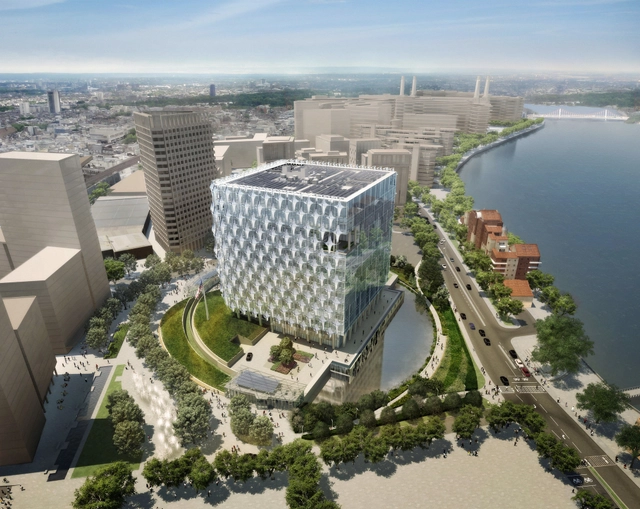
“Embassies and consulates serve as the front door for US diplomacy. The safety and security they provide to our personnel are the first priority, but they must also reflect our national values of openness and ingenuity. Embassies and consulates must exemplify the best of American architecture, environmental stewardship, and innovation.” - Secretary of State John Kerry on the US Department of State’s Design Excellence program, November 2013
As the meeting point for diplomacy, embassies serve as the face of America abroad. Embassy location and architectural design have the potential to promote inclusion and openness, but when tucked behind tall fences and bunker-style architecture they can convey exclusion and hostility.
While protecting diplomatic personnel is critical, conveying core American values such as transparency, openness and equality is also key. But how do you balance security and openness? Does a focus on design put safety at risk?
These questions are currently at the center of debate, as the State Department’s embassy Design Excellence program is facing criticism for being too costly and jeopardizing security.