TED Talk: WikiHouse co-founder Alastair Parvin Speaks at TED2013

YouTube Preview Image

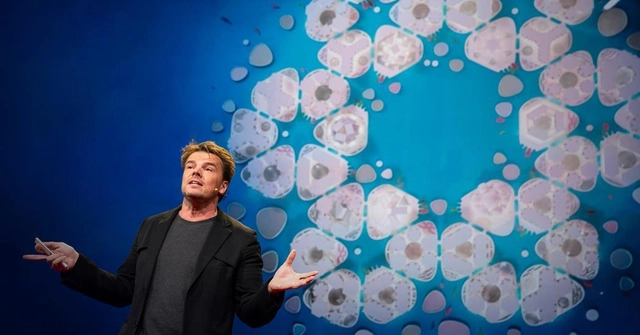
In this talk at TED 2013, WikiHouse co-founder Alastair Parvin elaborates on some of the ideas which he presented in 2012. WikiHouse is his project to create an open-source library of houses which can be downloaded, manufactured with a machine and assembled in a day – an idea which he hopes will democratize the production of housing and the city as a whole – as he puts it, “In a way it should be kind of obvious that in the 21st century maybe cities could be developed by citizens”.

The 10 Most Inspirational TED Talks for Architects

Courtesy of Youtube – TEDtalksDirector

is a funny thing: when you need it is nowhere to be seen, and just when you’re not expecting it, it can blindside you in the least convenient of places. Here’s ten inspirational for architects (in no particular order) from people with broad and unique views on architecture. Some might enlighten, educate or even enrage you – at the very least they should get those creative juices flowing a little better.

Take-in these ten TED talks after the break…

Can You Recap 30 Years of Architecture?

via

Are you an architect, architecture critic, historian of architecture or otherwise involved with architecture and design? Have you always wanted to give a TED Talk? Can you recap 30 years of architecture?

To celebrate the 30th anniversary of TED, the 2014 conference will include several talks that look back on three decades of advances in a handful of fields. Until June 30, 2013, we are seeking proposals for an 18-minute, multimedia presentation that will take the TED audience through the most important developments in the past 30 years of architecture and suggest where the field is going – or needs to go – in the future.

More details after the break…

TEDx: The Design Genius of Charles and Ray Eames

YouTube Preview Image

Charles and Ray Eames, the husband and wife duo, left an indelible mark on and modern architecture.  Their work has been highly regarded for its invention and regard for the principles of modernism.  This TEDx Talk, delivered by their grandson Eames Demetrios, humanizes these idolized designers – bringing family, and their early struggles as designers to the forefront of the conversation.With a collection of rarely seen footage, the TEDx Talk reveals Charles and Ray’s relationship and life prior to designing the famous Eames Chair.

More after the break, including a vintage interview with the Eames. 

Video: WikiHouse co-founder Alastair Parvin at TED@London

YouTube Preview Image

Alastair Parvin, co-founder of WikiHouse gave his TED Talk last week (one of the many architecturally relevant talks at TED 2013). Although the video of his latest talk is not yet available, to whet your appetite we present you with his speech from last year at @London. In it he explains the conditions of architectural and material culture that led to the foundation of , an open source database of house designs that can be manufactured with a CNC cutter and assembled in a day.

Parvin says: “If design’s great project in the 20th century was actually the democratization of consumption… I believe design’s great project in the 21st century is the democratization of production.” Last year, the WikiHouse project was one winner of TED’s City 2.0 Awards.

TEDxRamallah: Simply Look Inside You, Never at Others / Suad Amiry

YouTube Preview Image

In this TEDxRamallah, Palestinian Architect – who works in architectural restoration on Palestinian buildings – discusses her journey as someone finding a path for herself.  Although she speaks about her nationality and her family’s refugee history, her focus is on learning how to find the things that are fulfilling in one’s life in the face of challenges.  Her sense of humor and passion is inspiring.  Not only is she an architect working in a field for which she has a passion, she has also stumbled upon the role of an author, having written “Sharon and my Mother–in-Law: Ramallah Diaries”, which is an account of living under Israeli occupation.  Even in the dire political circumstances of of her refugee status, Amiry finds humor under tragic circumstances.

More about Amiry after the break…

TEDx: Who will run the world for the next 100 years? / Desmond Wheatley

Who will run the world for the next 100 years? Envision Solar President and CEO Desmond Wheatley argues that it will be whoever has abundant sources of power. That is constructive power, rather than destructive power, which is essential to run the information and technology industries that our world is entirely dependent on. Additionally, Wheatley states that energy equals . And, with less than 1% of the world’s fresh available for use, desalination is becoming an increasingly plausible solution. The only problem now is that energy is expensive. But, once have the will to switch over to renewables, that will no longer be an issue. Could you imagine San Diego as an net exporter of ? Desmond Wheatley can. 

TEDx: Metal that breathes / Doris Kim Sung

Biology student turn architect, Doris Kim Sung has dedicated her studies to the infinite possibilities of thermobimetals, smart that respond dynamically to temperature change. As tested with DO|SU Studio Architecture’s recent installation “Bloom”, whose surface is completely fabricated with thermobimetal, these smart materials are capable of relieving our dependence on energy-inefficient mechanical systems with their self-shading and self-ventilating properties.

Imagine a building skin capable of maintaining thermal comfort in an environmentally responsible and cost effective way by responsively mimicking the characteristics of human skin.

TEDx: Brilliant designs to fit more people in every city / Kent Larson

With industrialization came unchecked suburbia and car-centric lifestyles. But now, in the rapidly approaching age of the super city, our current standards of living will not suffice. According to MIT Research Scientist Kent Larson, 21st century will account for 90% of global population growth, 80% of all global CO2, and 75% of all global energy use.

Understanding that the global population faces serious issues of overcrowding, affordability and overall quality of life, Larson presents new technologies that intend to make future cities function like the small village of the past. Folding cars and quick-change apartments with robotic walls are just a some of the fascinating innovations he and his colleagues are currently developing.

TED Talk: Why Architects Need to Use their Ears / Julian Treasure

In architecture we talk about space and form.  We talk about experience and meaning.  All of these qualities are inextricably the sensory experience of light, touch, smell and .  Sound expert Julian Treasure asks architects to consider designing for our ears, citing that the quality of the acoustics of a space affect us physiologically, socially, psychologically and behaviorally.

More after the break.

Where Does the Internet Live?

YouTube Preview Image

One day, Andrew Blums internet stopped working. He called a repair man, who told him that, quite simply, a squirrel had chewed on his internet.

Blum was perplexed. The internet is a nebulous, untouchable “cloud” – isn’t it? Or, as Blum puts it in his TEDTalk: “The Internet is a transcendent idea. It’s a set of protocols that has changed everything from shopping to dating to revolutions. It was unequivocally not something a squirrel could chew on. But that in fact seemed to be the case. [...] And then I got this image in my head of what would happen if you yanked the wire from the wall and if you started to follow it. Where would it go? Was the Internet actually a place that you could visit? Could I go there?”

The question prompted Blum to explore the physical wires, cables, and boxes that make up the internet – an adventure he chronicles in his book Tubes: A Journey to the Center of the InternetA part of that journey was visiting Data Centers, those power-guzzling monstrosities where all your Data (and we mean all your data) goes to live.

Curious for more? Check out Blum’s TEDTalk, and revisit our past coverage on Data Centers, including our Editorial “Data Centers: Anti-Monuments of the Digital Age


TEDx: Fracture-Critical Design / Tom Fisher

Thomas Fisher, Professor in the School of Architecture and Dean of the College of Design at the University of Minnesota, discusses the subject matter of his most recent book, Designing To Avoid Disaster: The Nature of Fracture-Critical Design.

Fisher believes we have been engaged in a “Ponzi scheme” with our planet, as fracture-critical design has lead to a number of recent catastrophic events in our infrastructure, politics and economy. The I-35W bridge collapse in Minneapolis, New Orleans’ flooding, the BP oil spill, Port au Prince’s destruction by earthquake, Fukushima nuclear plant’s devastation by tsunami, the Wall Street investment bank failures, and the housing foreclosure epidemic are all examples of fragile systems that were created by this failed system. The solution? Integrating resiliency back into our lives. Watch the to learn more.

via TEDxUMN

TED Talk: A Giant Bubble for Debate / Liz Diller

Liz Diller, founding principle of Diller, Scofidio + Renfro, shares the story of creating the pneumatic addition to the Hirshhorn Museum in Washington, DC. Commonly known as the “Bubble”, the inflatable event space is planned for the cylindrical courtyard of the National Mall’s modernist museum that was originally designed by Gordon Bunshaft in 1974. The first inflation of the “Bubble” is expected to take place at the end of 2013.

“To truly make good public space, you have to erase the distinctions between architecture, urbanism, landscape, [and] media design.” – Liz Diller

TED Talk: Daniel Libeskind’s 17 words of architectural inspiration

Filmed back in 2009, this Talk by Daniel Libeskind has yet to diminish in popularity. Once a free-verse poet, an opera set designer and a virtuoso musician, Libeskind has evolved into an internationally-renowned architect with an illustrious style that has been praised and criticized by many. In just seventeen words, Libeskind describes what inspires his unique approach to architecture. Believing that optimism is what drives architecture forward, he begins by stating, “Architecture is not based on concrete and steel and the elements of the soil. It’s based on wonder.”

Enjoy the talk and continue after the break to review Libeskind’s seventeen words of architectural inspiration.

Video: Preserving World Heritage Sites through 3D Laser Scanning

Ben Kacyra, co-founder and CEO of Cyra Technologies and managing director of CyArk, discusses digital preservation of the World’s Heritage Sites through 3D laser scanning. The non-profit organization uses quick and precise 3D scanning systems to create high-resolution, digital models of historic sites through the creation of point clouds. These systems have the capability of gathering nearly 10,000 points per second, compared to a surveyor gathering only 500 points a day. With the constant threat of natural disasters and human destruction, the CyArk 500 Challenge aims to digitally preserve 500 World Heritage Sites within five years. Ben Kacyra states, “We are losing the sites and stories faster than we can physically preserve it.”

Could a digital archive of historical architecture offer some relief to the important buildings that are currently or may someday be at risk?

Reference: TED, CNN

Video: Physicist Geoffrey West on Cities

YouTube Preview Image

In this July 2011 TEDGlobal talk, physicist Geoffrey West argues that mathematical laws of networks and scalability govern the properties of cities. West demonstrates how wealth, crime rate, walking speed, and other aspects of a city can be predicted  based on a city’s population–universally, and with startling accuracy.

West’s presentation is constructed through a comparison of cities’ statistical similarities with the mathematical laws of biology. Both are dominated by economies of scale, but while the pace of life decreases as biological organisms scale upwards, the pace of life in cities increases. For example, doubling the size of a city systematically increases income, wealth, number of patents, number of colleges, number of creative people, the number of police, crime rate, number of aids and flu cases, and waste by 15% per capita.

Although some might find West’s fervent empiricism tiresome, his model of urban scientific inquiry holds massive potential both as data and methodological model for theoretical inquiry autonomous from practice. As a scientist, West is free from our field’s predilection towards theory as model for practice–he can speak of his observations, but lets them remain as such. Any practical suggestion would limit the versatility of the information he and his team have produced, forever linking that new body of knowledge with a delimited body of interpretations. By way of example: West’s argument is reminiscent of Christopher Alexander’s classic essay, “A City is Not a Tree,” in which Alexander argues that cities are fundamentally social networks, and that those lattice like-networks are in opposition to the synthetic tree-like networks designed by Modernists from Tange to Hilbershimer. Alexander’s essay, organized categorically and grounded in anecdotal models, is too oppositional to have easy currency outside of its use with respect to the projects it references and criticizes. Given that, it is not surprising that Alexander’s later work in A Pattern Language is more often identified as a political statement against modern planning ideals than as the dictionary of design strategies it purported assumed itself to be. West’s argument, organized systematically rather than categorically and grounded in data rather than anecdote, operates in an epistemological universe resistant to the political and able to be understood and applied in a wide variety of contexts for numerous related and unrelated causes.

Mitchell Joachim on TED Talks

What do you think of this TED talk by Mitchell Joachim and his discussion about growing homes?  The strategy he proposes for creating “green villages”, pleaching – which is where vegetation is fused together to then create desired geometries –  makes an architecture that is the landscape.   We could potentially “pre-grow” a community, as Joachim puts it, providing homes for millions of people that instead of harming the environment, will just eliminate carbon from the air.   Things get even  more interesting when Joachim shares how his own studio is growing extracellular matrix from pigs, and can print geometries to make objects.  Check out his new wall section idea for a meat house which replaces standard wall construction with fatty cells for insulation and cilia for tackling wind loads.   Joachim is doing some interesting things in his studio and we want to know what you think of his ideas.


How architecture helped music evolve / David Byrne

We love listening to TED talks as the speakers offer fresh perspectives and challenge us with thought provoking ideas.  Today, we share David Byrne’s talk about music and architecture. Byrne chronologically moves through different architectural periods, noting the difference musical composition experiences as the years progress.  For instance, the airy and flowing music that filled cathedrals became more textural with frequent changes in key as the size and shape shifted to become something like Carnegie Hall.

More about Byrne after the break.

Bjarke Ingels at TED

Quick video friday, at TED talks. You can download an iPhone/iPod friendly version here.

Sir Norman Foster on TED Talks

Well, not exactly on TED Talks but on the DLD (Digital Design Life) Conference in Munich which is being presented at the site. discusses his work to show how computers can help architects design buildings that are green, beautiful and “basically pollution-free.”