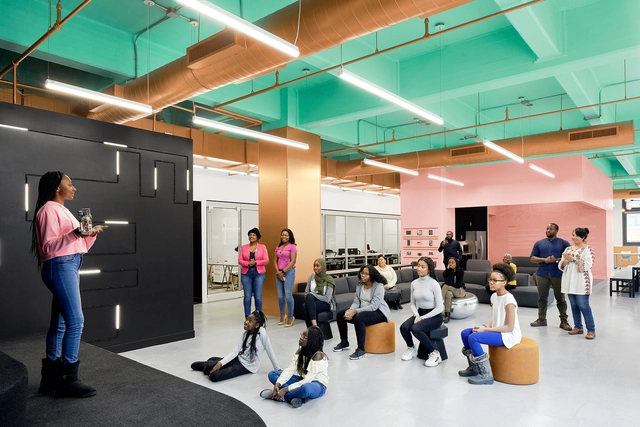
Last year, architect Danish Kurani completed a new tech lab in New York City in partnership with Black Girls Code. As a place where young women from all over New York can come together to learn about technology, the revamp project includes 3,900 square feet of space at Google’s New York offices that were turned into a tech exploration lab.
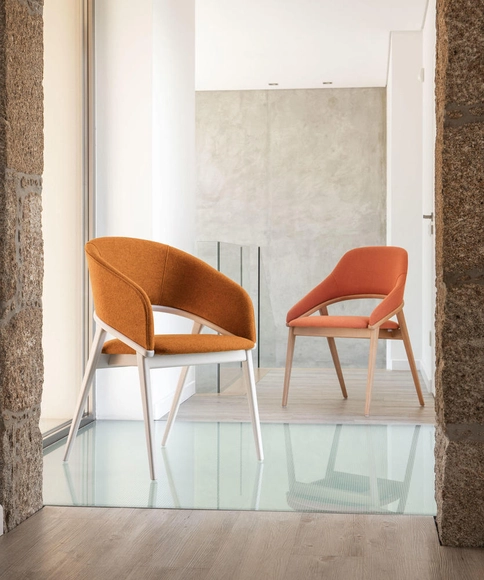
Fenabel’s designs match lasting elegance with super durability. Image Courtesy of Fenabel
Contract furniture that counters the radical changes of our time with elegant design and optimal functionality is what Portuguese specialist Fenabel offers. Discover their new collection at supersalone, Hall 03 k18.
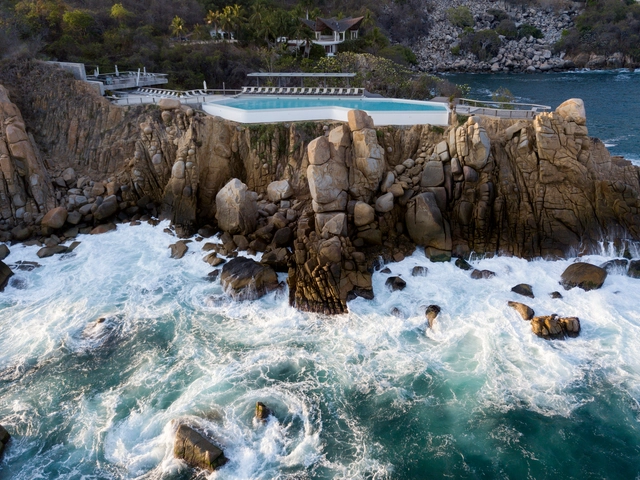
Guerrero is a state in the southwest corner of Mexico that shares land borders with the State of Mexico, Morelos, Puebla, Oaxaca, and Michoacán and a coastline with the Pacific Ocean. With over 64,281 km² of territory, it is the twelfth most populated state in Mexico. It's capital city is Chilpancingo de Juárez and it's most populated city is Acapulco de Juárez.
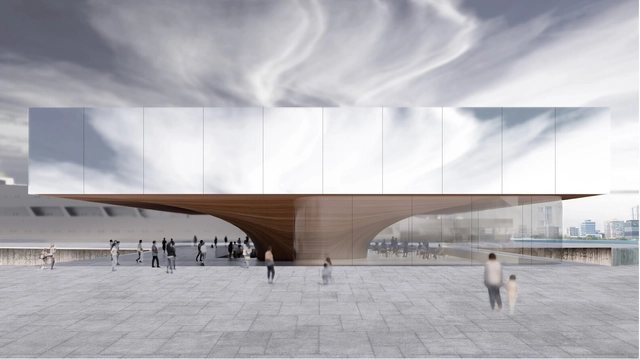
This week’s curated selection of Best Unbuilt Architecture highlights museum projects submitted by the ArchDaily community. Through examples from all around the world, the article explores how these spaces of knowledge and discovery are designed to inspire and inform.
Featuring a vertically developed art museum in Finland, a structure that merges with the landscape in China, or a maritime museum shaped by the conditions of the shoreline in Brazil, the round-up spans various kinds of museums and art spaces, as well as different attitudes towards the built or natural environment. The following projects reveal the ideas that shape museums in different contexts, illustrating diverse approaches towards what constitutes an institution of learning.
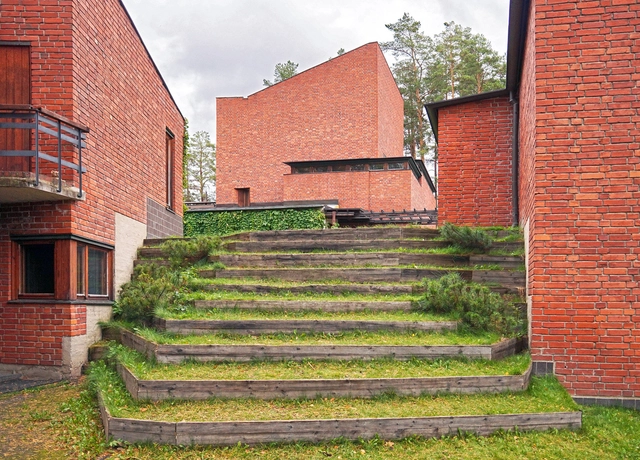
Finnish architect Alvar Aalto was a pioneer of modern architecture and design, especially in his use of organic, naturally derived materials. When he decided to embark on a career as an architect, he traveled to Helsinki, the only place where he could find academic training in the profession. His journey did not end there, however, as his work can be seen around the world. Here, we have mapped out 20 of his most notable works that must be seen up close and in-person to truly be appreciated.
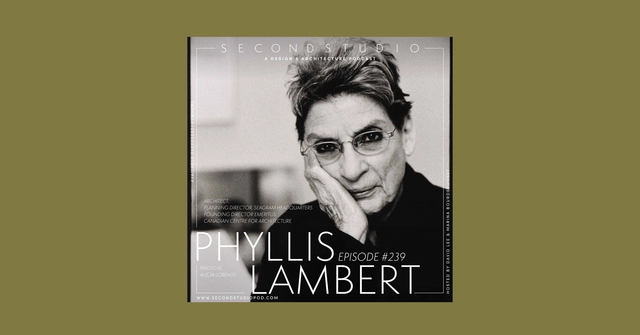
The Second Studio (formerly The Midnight Charette) is an explicit podcast about design, architecture, and the everyday. Hosted by Architects David Lee and Marina Bourderonnet, it features different creative professionals in unscripted conversations that allow for thoughtful takes and personal discussions.
A variety of subjects are covered with honesty and humor: some episodes are interviews, while others are tips for fellow designers, reviews of buildings and other projects, or casual explorations of everyday life and design. The Second Studio is also available on iTunes, Spotify, and YouTube.
This week David and Marina are joined by Phyllis Lambert, an architect, the Planning Director of the Seagram Headquarters, and the Founding Director Emeritus of the Canadian Centre for Architecture in Montréal.
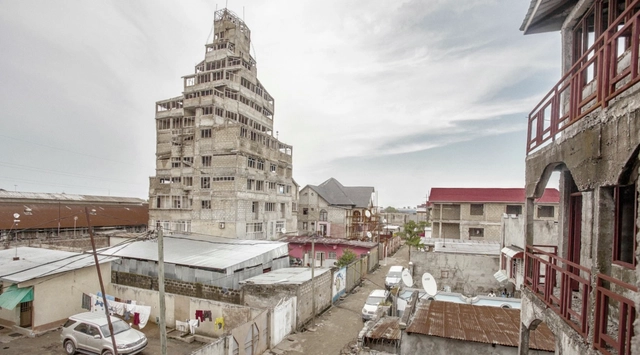
When we look at African architecture, we see the architectural diversity of a continent which has been shaped and moulded into its present form by a combination of internal and external factors. When we look at African architecture, there is also a tendency for certain regions to take precedence over other parts of the continent. The Tropical Modernist works of Maxwell Fry and Jane Drew in Ghana and Nigeria, for example, are extremely well documented. So is the extremely well-preserved colonial-era architecture of the Eritrean capital of Asmara. Yet, there seems to be parts of the continent that “slip under the radar” in African architectural conversations – and the book Architectural Guide: Sub Saharan Africa is a welcome addition to African architectural scholarship.
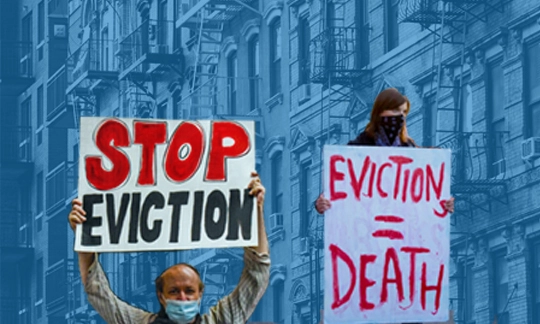
One of the big economic factors of the COVID-19 pandemic has been the issue of tenant evictions and rent moratoriums. As millions of people quickly lost their jobs, it meant that they began to struggle to pay their rents. Now, as the economy slowly begins to recover and some return to work, there’s been pushback on the moratoriums, with landlords and tenants being split on how to move forward with the future payments. Tenants still can’t pay their rent and landlords themselves are burdened by the lack of income. But what this tug of war really sheds light on is how out of reach the costs of living have become in some of the densest cities, and how housing in some ways has been seen as an amenity, not a necessity or a basic right- even in a global pandemic.
Architecture 2030 is calling on all architects, engineers, planners, and individuals involved in the building sector worldwide to design all new projects, renovations, landscapes, cityscapes, and infrastructure to be zero carbon starting now.
Cradle to Cradle is the name of the design concept in which the recycling of a product´s components at the end of its life cycle is already planned for. GROHE is a sanitary-industry pioneer and is launching its first Cradle to Cradle Certified® products. Image Courtesy of Grohe
With the building industry responsible for 50 per cent of material consumption worldwide, GROHE sees huge potential for innovation here and is putting the Cradle to Cradle® design concept at the heart of its product development.
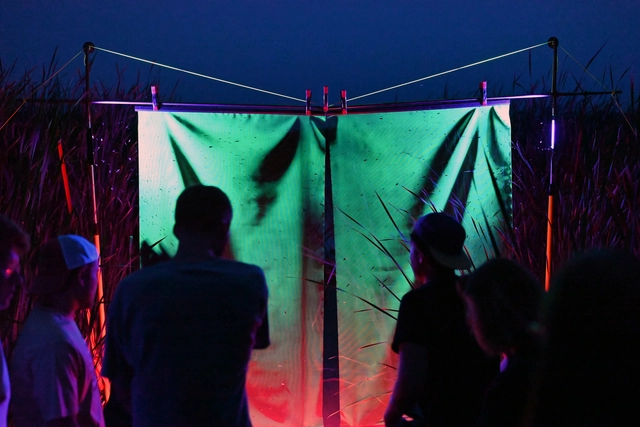
Artist collective Space Saloon recently completed the inaugural Public Art and Ecology Artists-in-Residence in the Okoboji region of Northwest Iowa. Observing local landscapes and diverse ecosystems, the team created a series of temporary installations, site-specific sculptures and multi-species performances. Working in association with Imagine Iowa Great Lakes and the Iowa Lakeside Lab, the process led to a series of public events reimagining how to engage regional ecologies.
Questioning the new now, especially with the new challenges of Covid-19, around the world, cities are advocating for structural change and collective action. Berlin questions, an annual, multi-day conference and a platform for transdisciplinary dialogue, in its 2021 edition “Metropolis: The New Now”, tackled the immediate present, creating a place for debate. Dedicated to local solutions to global challenges, the event took on a hybrid format, at various locations in Berlin and online, resembling the world we live in.
ArchDaily had the chance to meet up with the winner of the Iconic Awards 2021 in the Architects of the Year category Dorte Mandrup, architect, founder, and creative director of Dorte Mandrup Arkitekter at Berlin Questions, to discuss the firm’s latest project in the German capital, the Exile Museum and to reflect on her career and visions.
Morelos is a state nestled in the south-central region of Mexico, surrounded by the states of Puebla, Guerrero, Estado de México, and Mexico City. With just over 4,893 km² of territory, it's Mexico's second smallest state. It's capital and largest city is Cuernavaca.
The historical Roman town has been busy at work and new exciting buildings, squares, and public parks have bloomed across the city. Since my first trip to Zürich in 2014, a lot has happened around good old Turicum.
After a compelling trip organized by Visit Zürich and my friend Philipp Heer, we were able to visit some of the newest, most interesting and uplifting places of the city. Flitting hither and thither, Roc Isern, David Basulto, and I enjoyed the privilege of a tailored itinerary, access to Zürich's gems, and perhaps the most inspiring, the architects behind these amazing structures.
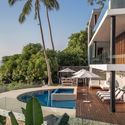
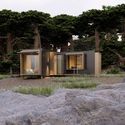
D Residence. Image Courtesy of Jemma Chidiac Achitects _ By JPAG.co
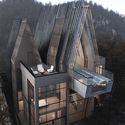
This week’s curated selection of Best Unbuilt Architecture highlights private residential projects submitted by the ArchDaily community. From futuristic private retreats on the coast of Hawaii to a mini-housing concept on the rocky cliffs of Montenegro, this article explores residential architecture and presents projects submitted to us from all over the world.
Featuring a secluded private residence that sits between a Persian mountain and river, an interior renovation of an 80's Mediterranean house, and a minimalist forest retreat, this round-up explores the diversity of private homes and how each design responds to its site's topography, context, and to the occupants spatial needs. The selection also includes villas in Lebanon, Iran, Tanzania, Netherlands, Ivory Coast, Kosovo, and Vietnam.
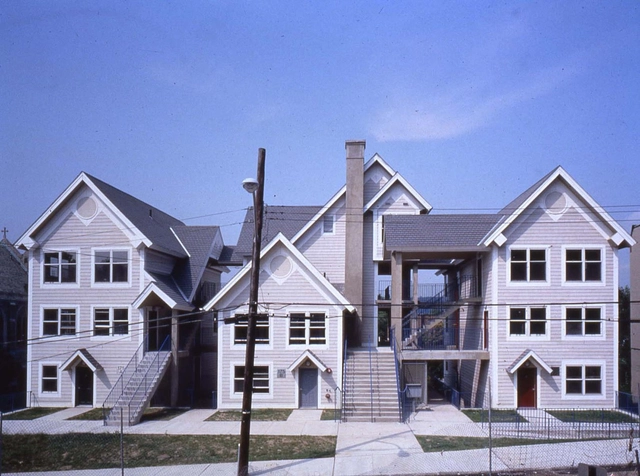
Courtesy of Duo Dickinson Cephas Housing, Yonkers, New York
In the 14th century, Geoffrey Chaucer wrote “Familiarity breeds contempt”. By definition “local” is “familiar”. Why are humans so thrilled to go beyond the familiar, the local, and reach for what is new, universal, and salvational? The word “local” has the weight of true value, like “density” or “sustainable” But the lure of connection between all humans is powerfully seductive, and that desire to connect almost always falls short of our hopes.
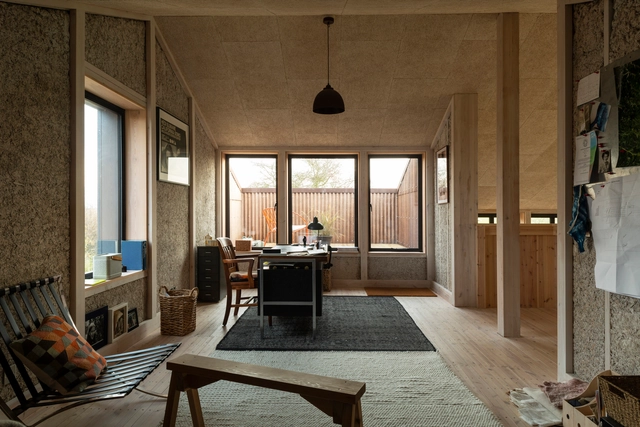
Every time we publish an article about Hempcrete, we get a lot of comments on social media - with a certain level of irony - about what would happen if the material caught fire. This is actually a legitimate question, as there is still a lot of confusion about the differences between marijuana and hemp, both of which come from the same plant species (Cannabis Sativa). But while marijuana has psychoactive effects due to tetrahydrocannabinol (THC), mainly present in the flowers of the plant, hemp-based building materials are produced from its stem, which contains small amounts of THC. To quickly answer the title question: no, the building won't be destroyed in the event of a fire. In fact, some tests have shown that these materials have excellent behavior against fire, dissipate flames, maintain structural integrity, and don't emit toxic smoke.
A building stands out along the maritime walkway in Palma, Mallorca's capital. Designed by José Ferragut Pou and completed in 1960, the building was a poster child for the modern architectural movement sweeping the globe at that time. Today, like many of its brethren, it stands in abandoned disrepair.
Lluís Bort is the Spanish architect and photographer behind "Empty Architecture," a photographic compilation of abandoned buildings from throughout the island of Mallorca, Spain.
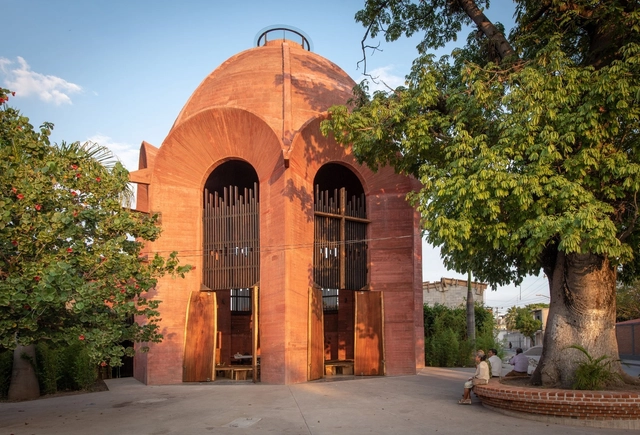
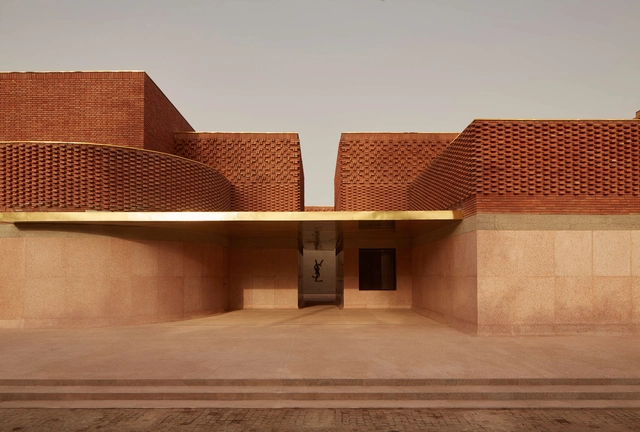
Few materials are as timeless, durable and beautiful as terracotta. With a range of inherent properties, terracotta is being specified to redefine building envelopes. Used for its many colors and textures, as well as its flexibility, this ceramic can be constructed as cladding, rain screens and a variety of components. Dating back to the Babylonians, terracotta has been used throughout history, and it continues to be a material selected for diverse building types around the world.
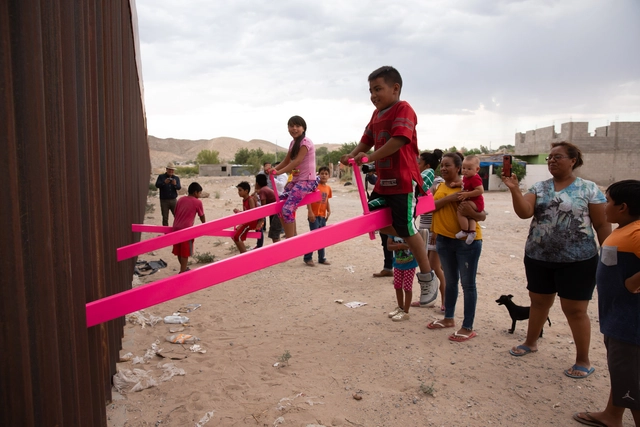
Mexico, a North American country spanning over 1,964,375 km2, features a vast mosaic of different cultures that extends far beyond its geographical boundaries. Nowhere is this diversity more evident than along the 3,141km border stretching from the Gulf of Mexico to the Pacific Ocean, running through 48 counties within the United States and 94 municipalities within the Mexican states.
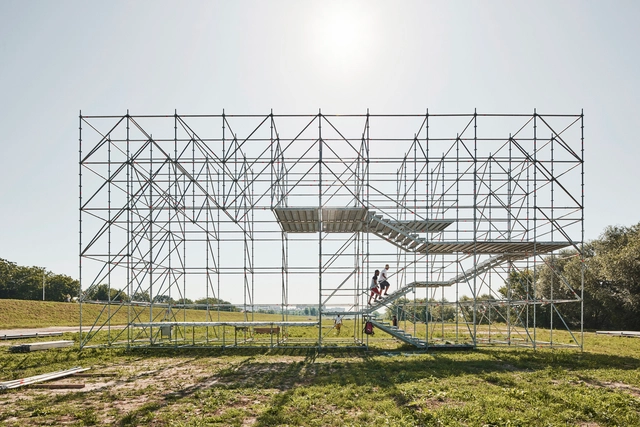
Beyond "experience tourism" and light entertainment, temporary architecture is a fertile ground for testing ideas, examining places, popularizing new concepts and technologies. Taking a wide array of forms, from disaster relief projects and utilitarian structures to design experiments, architectural statements and playful installations, transient structures showcase alternative visions for the built environment, opening up new possibilities and questioning established norms. As temporary architecture now seems at odds with sustainability imperatives, the following discusses the value of temporary architecture as a vehicle of experimentation, advancing design and engaging communities.
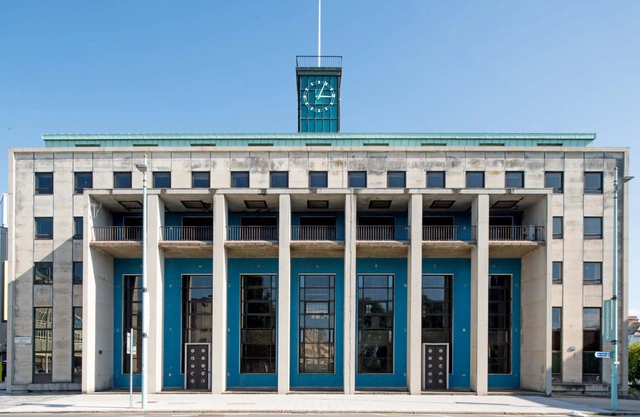
The National Provincial Bank in Plymouth, Southwest England, completed in 1959 and designed by the bank’s architecture department with BC Sherren serving as chief architect. . Image Courtesy of Elain Harwood
The term “mid-century modern” conjures up images of a sharp-suited Don Draper, slender teak cabinets, and suave chairs from Scandinavia. That is, at least, one perspective of the design movement and a view more of 1950s-era Manhattan offices than anything else. But in Britain, mid-century modernism manifested as something slightly different, coming in the form of schools, cathedrals, housing, and an era-defining festival, all eloquently described and illustrated by the prolific architectural historian Elain Harwood in Mid-Century Britain: Modern Architecture 1938-1963.
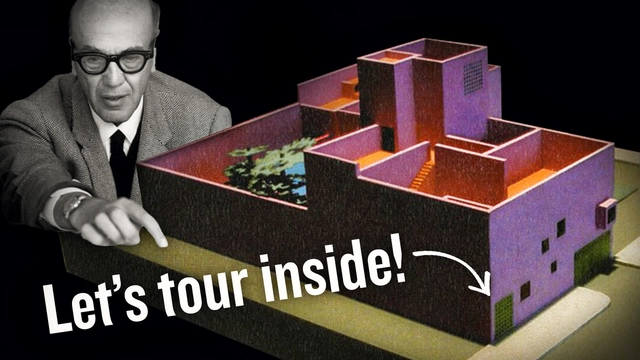
In 1984, the Menil Museum in Houston, Texas, commissioned the Mexican architect Luis Barragan to build a 3,000-square feet guest house to be located across the street from the famous Rothko Chapel. The architect came back with a design for a dazzling purple, pink, and orange 8,000-square feet mansion that looked to be more at home in Mexico City than a Houston residential suburban lot. So, due to the ensuing conflict between client and architect, the house would never get built, only displayed as an exhibition within the Menil’s galleries.
























.jpg?1630414739&format=webp&width=640&height=580)

.jpg?1630414689 "D Residence. Image Courtesy of Jemma Chidiac Achitects _ By JPAG.co")
.jpg?1630414739)

.jpg?1630490207 "© Henry-Fussell Hitchcock, Jr and Philip Johnson")
.jpg?1630490219 "Courtesy of Weißenhofsiedlung Stuttgart")
.jpg?1630490299 "Courtesy of Bauhaus, Dessau, Germany")



.jpg?1627404680 "© Jaime Fernández de la Cruz")
.jpg?1627404912 "© Nómada Laboratorio Urbano")
.jpg?1627404887 "© Nómada Laboratorio Urbano")