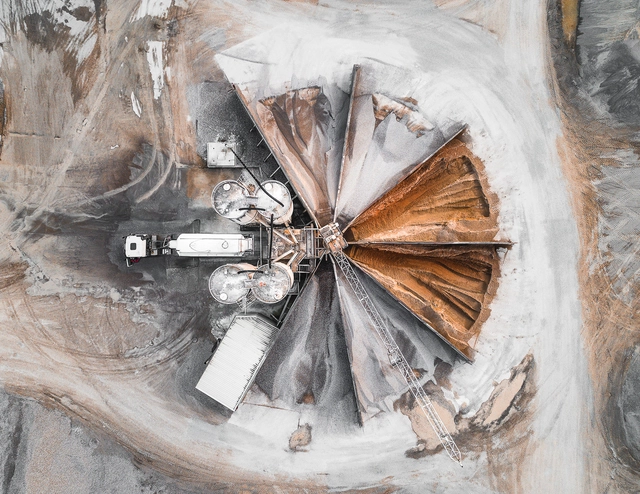
Newton’s Third Law of Motion dictates that for every action, there is an equal and opposite reaction. In urbanism, this concept is evident in how the unprecedented growth of the built environment causes a reaction in rural landscapes. By 2050, the number of people living in cities will have increased by 2.5 billion, representing two-thirds of the global population. This mass flow of people from rural to urban areas gives rise to an equally dramatic flow of natural resources. As can be seen in studies such as Tom Hegen’s The Quarry Series, whose imagery accompanies this article, the extraction of these minerals represents yet another physical manifestation of rapid, linear urbanism.
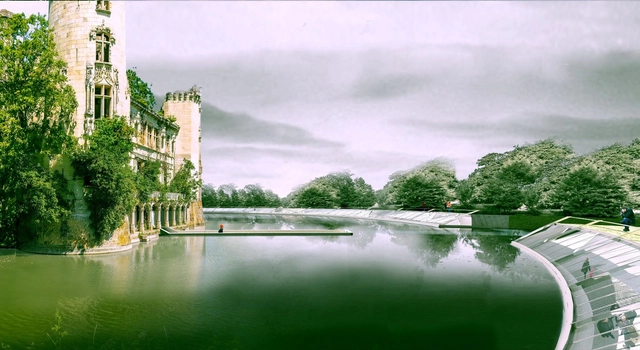
Hiroshi Toda, Mitsuki Shibairi, Kahara Mori are the three members of team D-D-D rewarded with the 1st Prize and a “Castle Choice” Mention at the COMMON RUINS international competition held by YAC - Young Architects Competitions and Mothe Chandeniers .
https://www.archdaily.com/930111/three-japanese-young-architects-to-breathe-new-life-into-an-iconic-french-castleSponsored Post
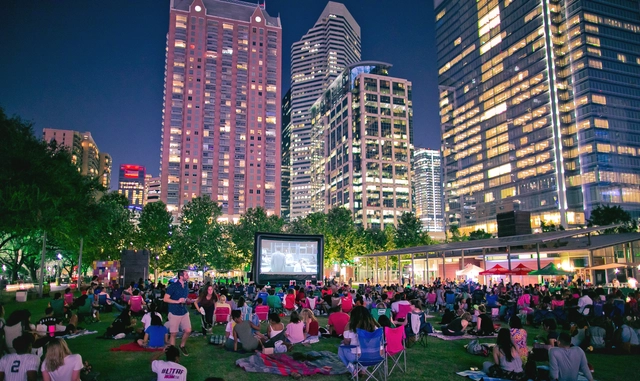
A crowd of locals watch a movie at Discovery Green, Houston, TX, USA. Image Courtesy of PPS
This article was originally published by Project for Public Spaces as "What makes a successful place?", a brief guideline about how to develop great public spaces by following four qualities: Sociability, Uses & Activities, Access & Linkages, and Comfort & Image.
Great public spaces are those places where celebrations are held, social and economic exchanges occur, friends run into each other, and cultures mix. They are the “front porches” of our public institutions – libraries, field houses, schools – where we interact with each other and government. When these spaces work well, they serve as the stage for our public lives, but what makes some places succeed while others fail?
https://www.archdaily.com/914616/what-makes-a-great-public-placeProject for Public Spaces
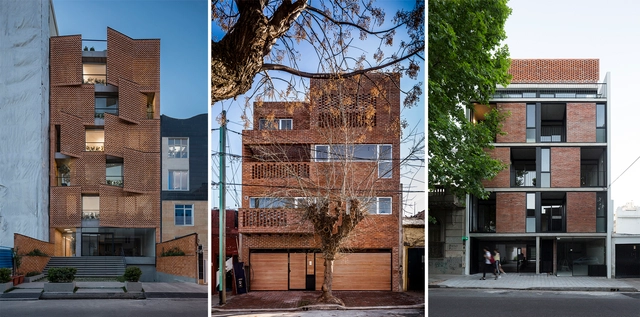
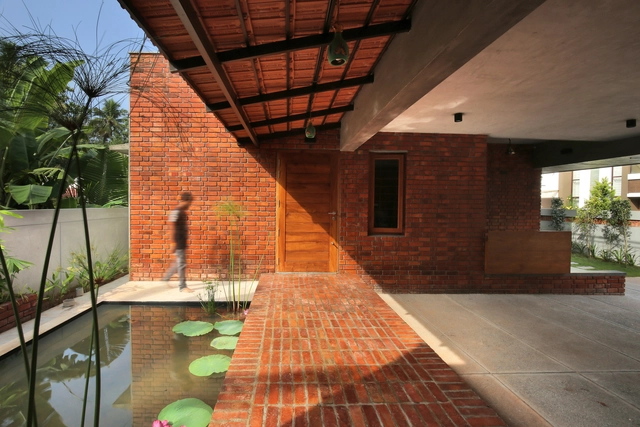
Rotation, displacement, and interleaving of blocks are some of the options that enable the diversity of raw brick patterns in architecture. The shape of these elements, usually used for the construction of walls, has been explored in a creative way to compose facades of residential buildings, representing the formal identity of the building itself and its relationship with its context.
The field of architectural visualization has come a long way: It used to be a very time and cost-intensive process that only larger firms could afford and was usually outsourced to specialist companies that let their supercomputers render images for days or even weeks. Whilst this still might sound familiar to some architectural companies, the reality today is that something else is becoming the new standard in visualization: real-time rendering.
https://www.archdaily.com/934243/real-time-rendering-in-architecture-evolves-to-become-a-natural-workflow-enhancementSponsored Post
What if hiring an international architect with great skills, qualifications, and unique insights was as easy as hiring someone from upstate New York or Indiana? Architects worldwide dream of an opportunity to enter the competitive American market and it is common for young professionals to travel internationally for study or work. At the same time, many top US firms are searching for diverse new talent, yet the cost, paperwork, and bureaucracy of hiring international candidates can be discouraging. Architect-US was created to fill that gap.
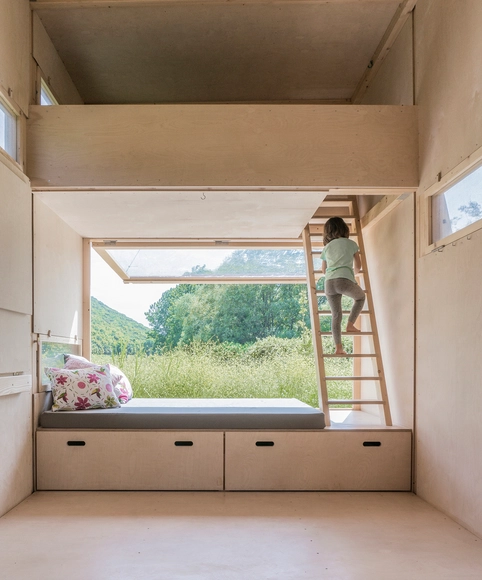
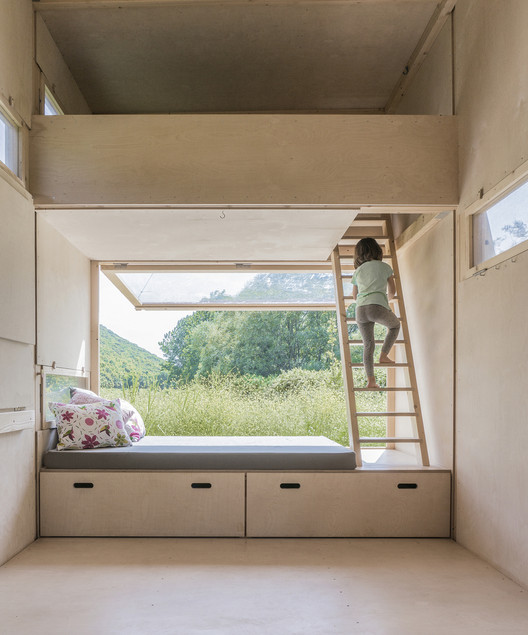
Cabin on the Border / SO? Architecture&Ideas. Image Cortesía de SO?
Dense cities mean small homes. With more and more frequency we are forced to adapt to spaces within which some elements simply do not fit. As architects, these restrictions actually provide us with opportunities and remind us that our goal is to give precise solutions to specific problems. Designing with infinite number square meters and/or an unlimited budget is practically unheard of.
What's the key to accommodating everything? Let's review some effective storage solutions for minimum, tight spaces.
The historic village of Indein, Myanmar was founded by monks around the 3rd century B.C, who wanted to spread Buddhism across the country. Hundreds of pagodas, ornaments, and statues of Buddha were built around the area, but with time, the village was abandoned and its temples were consumed with greenery. Nowadays, the site stands as a visual contradiction of old and new, as people have begun renovating and preserving the historic structures little by little, surrounding the crumbling temples with brand new white stupas.
Photographer Romain Veillon had the chance to explore and photograph Indein, capturing the raw remains of the historic site.
In a continued effort to deliver tools, inspiration, and knowledge for readers, 2019 saw ArchDaily editors and contributors engage in a wealth of conversations with distinguished individuals from all corners of the design world. Whether this be a discussion with Carlo Ratti and Winy Maas on artificial intelligence or a conversation with Mario Botta on Modernism, these interviews convey the remarkable variety of talent, ideas, and paradigms through which one can engage with architecture and design.
https://www.archdaily.com/929978/the-top-20-architecture-interviews-of-2019Niall Patrick Walsh
What happens when the sensor-imbued city acquires the ability to see – almost as if it had eyes? Ahead of the 2019 Shenzhen Biennale of Urbanism\Architecture (UABB), titled "Urban Interactions," ArchDaily is working with the curators of the "Eyes of the City" section at the Biennial to stimulate a discussion on how new technologies – and Artificial Intelligence in particular – might impact architecture and urban life. Hereyou can read the “Eyes of the City” curatorial statement by Carlo Ratti, the Politecnico di Torino and SCUT.
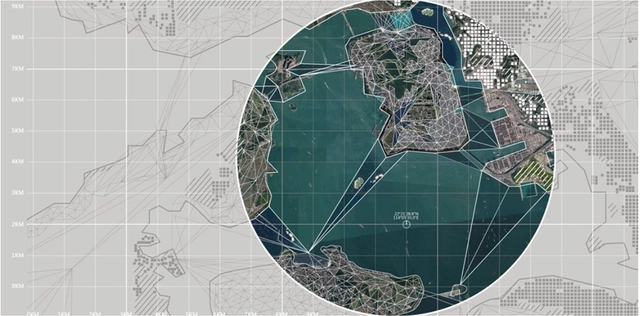
The recent ‘Greater Bay Area’ (GBA) initiative has led to a renewed interest in the supra-urban and regional or territorial planning scale by the spatial planning professions, urbanists and strategic spatial planners globally. The emergence of ‘mega’ urban-scapes and their regional agglomeration into urbanised areas of over 70 million – at least an order of magnitude larger than has ever been planned before - has reframed many conventional challenges of the spatial planning agenda. With the mega region in formation, a new necessity emerges, that being the investigation of the dynamic, morphogenetic and ecosystemic properties specific to specific regional conditions. Simply, the integration of eleven significantly sized cities and their corresponding metropolitan hinterlands, three special economic or administrative regions, three currencies, and three (or more) different cultural groups into one urban regional entity is a massive undertaking. At present aside from the governance and policy intentions this has primarily resulted in an infrastructural planning approach, one that utilizes a systemic top-down approach that seeks to provide the connective tissues and reticules, as well as civic and economic systems that mobilise people, capital and goods in such a vast region. This approach is akin to the smart city models which seek to enfold all aspects of civic life within infrastructure systemic control paradigms. But in reality, given the scope and scale of this undertaking the modalities of planning in the GBA need to shift from an extensive planned realm in which every part coheres to a plan, to one of a differentiated field in which different intensities arise as an effect of their urban eco-system integration (or its lack of). This clearly needs new approaches, concepts and models of planning that can deal with these regional issues in dynamic, open-ended ways that can foster new modalities of planning.
https://www.archdaily.com/934165/game-boarding-regional-developmentGerhard Bruyns, Peter Hasdell, and Diego Sepulveda-Carmona
Often recognized as one of the most widespread constructive materials in the world, brick is, with no doubts, very versatile, low-cost and easily applied. Although it usually used in vertical surfaces, it also presents excellent properties when applied to horizontal ones, like floors.
EGGER places an emphasis on the topic of digitalisation in the new collection. "We know that collections with real samples are important, but no longer sufficient, in order to advise customers optimally. This is why we have complemented our service offering with the new collection app, which combines many helpful features. This means that customers always have the collection digitally at hand", says Head of Marketing at EGGER Hubert Höglauer, summarising the comprehensive service.
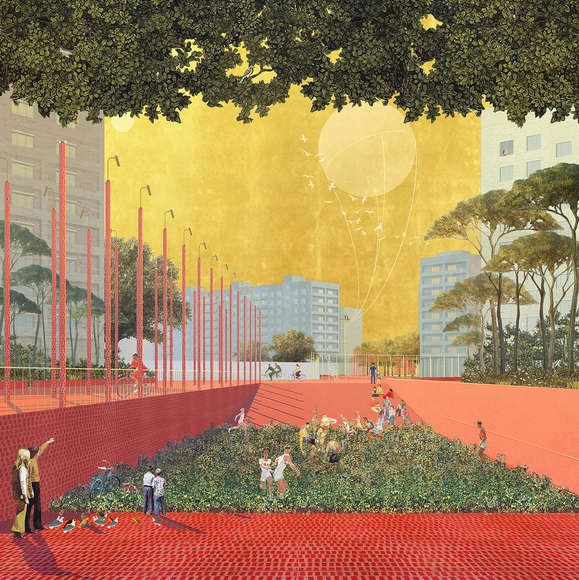
We are continuing our five-year-long tradition of celebrating “The Best Architecture Drawings of the Year.” The 2019 edition sees a carefully-curated collection of architectural drawings with a wide variety of techniques and representations, all orientated towards a common goal of sharing architectural ideas, visions, and designs.
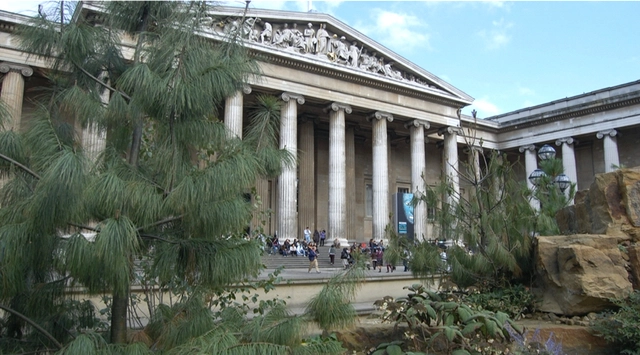
Those who reject Classical and traditional architectures out of hand fail to recognize their important biophilic qualities, emerging from evolution and refinement over centuries to produce some of the most successful, well-loved and enduring places in the world — like the British Museum in London. Photo: Michael Mehaffy
A draft of an executive order titled “Making Federal Buildings Beautiful Again” is moving forward towards possible signing by President Donald J. Trump. The proposed document favors Classical Greco-Roman design typologies for federal buildings in Washington, DC and elsewhere throughout the USA. This order would revise the current rules that regulate the design of federal buildings contracted through the GSA (General Services Administration — a Federal agency managing the construction, administration, and upkeep of US Government buildings and real estate). It was initiated by the National Civic Art Society, a Washington, DC based nonprofit organization that disapproves of what the US government has been building for decades. According to the New York Times, the chairman of the National Civic Art Society, Mr. Marion Smith, stated that: “For too long architectural elites and bureaucrats have derided the idea of beauty, blatantly ignored public opinions on style, and have quietly spent taxpayer money constructing ugly, expensive, and inefficient buildings.”
https://www.archdaily.com/934164/three-comments-on-the-executive-order-making-federal-buildings-beautiful-againMehaffy, Michael W., Nikos A. Salingaros, and Ann Sussman
NASA Sustainability Base. Image Courtesy of William McDonough + Partners
Sometimes referred to as “the leading environmental architect of our time,” in his roles as architect, designer, author, educator and social leader, William McDonough (born 20 February 1951) has provided a renewed look at the things that we make and their impact on both our bodies and the world. Through his Cradle to Cradle philosophy, McDonough’s buildings are designed to function for a predetermined lifespan, after which they can be broken down into their various parts whose core elements can be used anew to solve a different design problem.
Videos
Dana Alfayez: first female architect to advance to the finals at VDAY Madrid
Held each year by the IE School of Architecture and Design, Venture Day provides start-ups a chance to pitch their ideas to a panel of judges. Part of the IE accelerator program Venture Lab, the high-pressure competition gives participants just five minutes to give concise, impactful presentations. This pitch is followed by a Q&A session, after which the winners are selected by a jury.
The vast history of the United States involving migration, the great variety of climates and the mix of cultures, has built a very diverse urban and architectural landscape. Despite this, there is a large number of historic buildings that – unfortunately, as in many other countries – are in the state of decay due to poor maintenance, which attracts developers.







.jpg?1552337492 "Bazillion / YCL Studio. Image © Leonas Garbačauskas")





.jpg?1576530934&format=webp&width=640&height=580)



.jpg?1456012027&format=webp&width=640&height=580)