New York-based Stephen B Jacobs Group has almost completed construction on a pair of towers at 29-26 Northern Boulevard in Long Island City. Dubbed the QE7 for its adjacency to the Q, E, and 7 trains (not to mention its cruise ship-like amenities), the pair of towers will contain 467 units, including 13 floors dedicated to the largest co-living development in North America. What makes this building so unique, however, is how the architects and engineers devised a solution to overcome noise generated by the three neighboring subway lines.
Modern cities, especially New York, are always looking for ways to increase density, which often means building in locations that were once overlooked due to their particular site conditions. We spoke with SBJGroup principal Isaac-Daniel Astrachan to find out how his firm managed to reduce noise levels on this site.
At ArchDaily we want to see more women showing their projects to the world and receiving the recognition they deserve for their work. Today, we celebrate International Women’s Day and, with the help of our readers, we want to continue to give visibility to the valuable contribution made every day to the field of architecture by millions of colleagues.
https://www.archdaily.com/890360/help-us-recognize-the-women-that-are-shaping-architecture-around-the-worldPola Mora
As one of the largest architecture firms in the world, and based in Battersea, London, Foster + Partners has released their report into gender pay issues, becoming one of the first architecture firms to do so. The report reveals significant under-representation of women at senior level resulting in a pay gap across the firm, and outlines a commitment to encouraging gender diversity at all levels of management.
https://www.archdaily.com/890336/theres-a-gender-pay-gap-at-foster-plus-partners-unsurprisinglyNiall Patrick Walsh
In its 2017 annual report, the LEGO Group has announced a decline in revenue for the first time in 13 years. But fret not brickheads – this news has already led to a reduction in prices, and may continue to do so moving forward until the company can unload its excess stock.
https://www.archdaily.com/890340/lego-prices-drop-after-company-reports-too-much-stock-in-warehouses-and-storesAD Editorial Team
Earlier today, B.V. Doshi was named the winner of the 2018 Pritzker Prize, the profession’s highest accolade. For the past 70 years, Doshi has shaped the discourse of architecture and urban design, with a particularly strong influence in his native India, through projects including private residences, schools, banks, theaters, and low-income housing developments. Here are seven examples of this work that exemplifies Doshi’s respect for eastern culture and his desire to contribute to his country through authentic designs that enhance people's quality of life.
Le Corbusier and Balkrishna Doshi. Photo courtesy of Balkrishna Doshi.
B.V. Doshi, one of modern Indian architecture’s most celebrated practitioners, was born in Pune, India in 1927. Nearly 90 years later, the Pritzker Prize jury chose Doshi as the 2018 Laureate. Get to know about Doshi’s history—including his close relationship to the legendary Le Corbusier—in this list of interesting facts.
https://www.archdaily.com/890128/who-is-balkrishna-bv-doshi-12-things-to-know-about-the-2018-pritzker-laureateAD Editorial Team
This year’s Pritzker jury has selected Indian architect Balkrishna Doshi, often known as B.V. Doshi or Doshi, as the 2018 Pritzker Prize Laureate. Doshi has been a practitioner of architecture for over 70 years. Previously, he had studied and worked with both Le Corbusier and Louis Kahn. Doshi’s poetic architecture draws upon Eastern influences to create a body of work that “has touched lives of every socio-economic class across a broad spectrum of genres since the 1950s,” cites the jury. Doshi is the first Indian architect to receive architecture’s highest honor.
https://www.archdaily.com/890126/balkrishna-doshi-named-2018-pritzker-prize-laureateAD Editorial Team
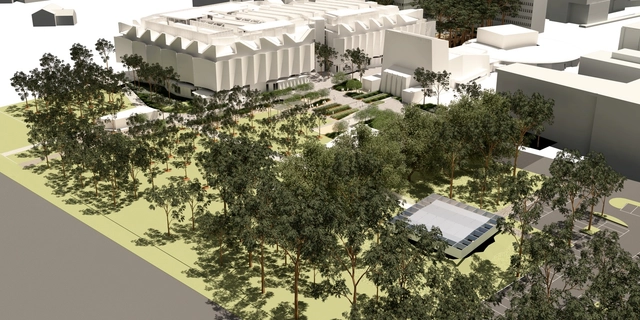
Rem Koolhaas & David Gianotten / OMA’s 2017 MPavilion has found a permanent home at Monash University, Clayton, the Naomi Milgrom Foundation has announced. The news marks the fourth MPavilion to be gifted to the public by the Foundation.
“The relocation of Rem Koolhaas and David Gianotten’s MPavilion to Monash University ensures it will continue to be a dynamic incubator, where ideas about architecture, design, and creativity are encouraged and nurtured. I’m extremely pleased that it will carry on inspiring our young practitioners,” said Naomi Milgrom AO, founder of the Naomi Milgrom Foundation.
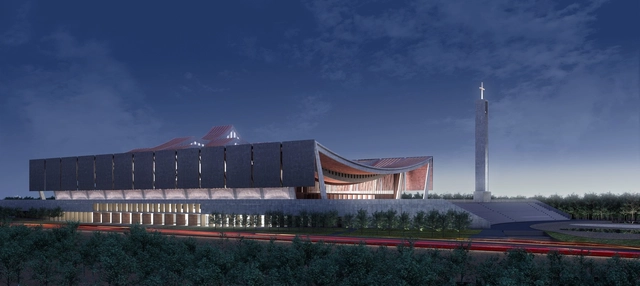
Exterior at Dusk. Image Courtesy of Adjaye Associates
On the 61st anniversary of Ghana’s independence, President Nana Addo Dankwa Akufo-Addo has unveiled plans for a New National Cathedral of Ghana to be built in the capital city of Accra. Led by British-Ghanaian architect David Adjaye of Adjaye Associates, the design is envisioned as a “physical embodiment of unity, harmony and spirituality” where people of all faiths will be welcome to gather and practice their faith.
Videos
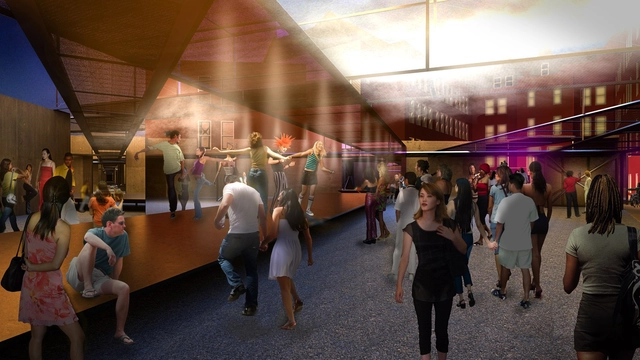
Jennifer Newsom and Tom Carruthers of Dream The Combine. Hide & Seek. 2018. The Museum of Modern Art and MoMA PS1’s Young Architects Program 2018, winner
Inspired by “the jostle of relationships found in the contemporary city,” Hide & Seek will feature a landscape of kinetic, responsive elements that connect the courtyards of the MoMAPS1 site to its surrounding streets.
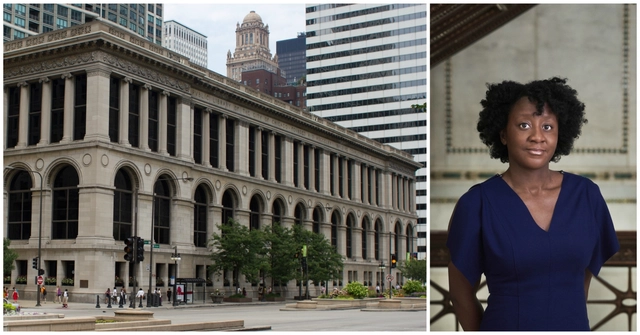
Currently holding the position of Exhibitions Curator at the Reva and David Logan Center for the Arts at the University of Chicago, Umolu draws from her background in architectural design and curatorial studies in creating exhibitions that explore the politics of the built environment. Recent projects include Kapwani Kiwanga: The sum and its parts, The Land Grant: Forest Law, and The Museum of Non Participation: The New Deal.
Rural House designed by RCR Arquitectes. Rafael Aranda, Carme Pigem, and Ramón Vilalta of RCR Arquitectes won the Pritzker last year. Image Courtesy of RCR Arquitectes
“The Nobel Prize in Architecture.” “The profession’s highest honor.” These are some of the terms used to describe the Pritzker Prize. One day before the 2018 Pritzker Prize winner is to be revealed, ArchDaily’s editors discuss whether the prize still lives up to its hype.
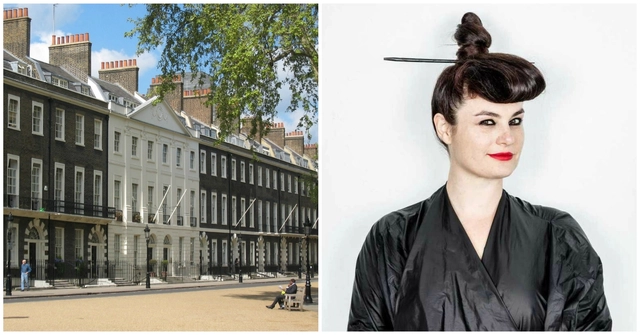
Left, The Architectural Association on Bedford Square, London. Photograph by wikimedia user Jeremysm. Image is in the public domain. Right, Eva Franch i Gilabert. Photo by Stefan Ruiz
The AA School Community, consisting of students, staff and Council members, selected Franch i Gilabert from a shortlist of 3 candidates by a majority vote of 67%, the highest percentage received in a contested election since 1990. Over 1,000 total ballots were cast.
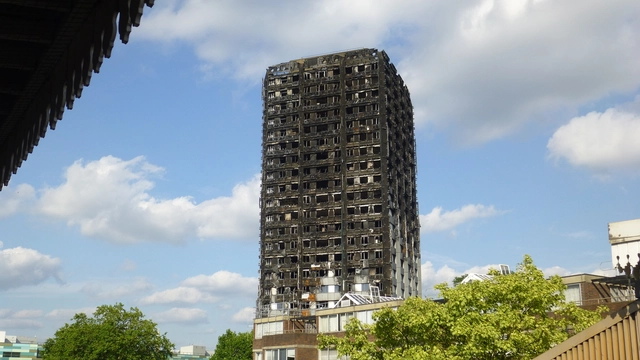
Nearly 8 months after the devastating fire at London’s Grenfell Tower resulted in the loss of 71 lives, the UK government has announced that they will be working together with the tower’s survivors, families and community to determine the future of the Grenfell Tower site.
A government document released with the announcement outlines the guiding principles for handling the future of the site and its memory. According to the document, the most likely results will be an on-site memorial and the renaming of the nearby Latimer Road station of the London Underground:
As part of our 2018 Venice Architecture Biennale coverage we present the proposal for the Saudi Arabia Pavilion. Below, the participants describe their contribution in their own words.
The first Saudi participation at the International Architecture Exhibition of La Biennale di Venezia will be located in the Arsenale and will feature an exhibition commissioned by the Misk Art Institute under the theme of “Un/Design.”
https://www.archdaily.com/889494/saudi-arabias-inaugural-entry-to-the-2018-venice-biennale-to-focus-on-design-procesesAD Editorial Team
The hyperrealistic representation of architecture is not a new concept due to the ubiquity of tools that offer the possibility of creating perplexing images with photographs. However, those who defend the expressive capacity of hand drawings have found ways to take advantage of the digital tools of the last decades to represent their architectural projects.
A new group of young Mexican architects is committed to a form of representation that relies on tools from our era, simultaneously taking up concepts from the sixties and seventies, where the technique of collage made it possible to face the frustrating reality that took place at the time to represent the utopias thought up by architects.
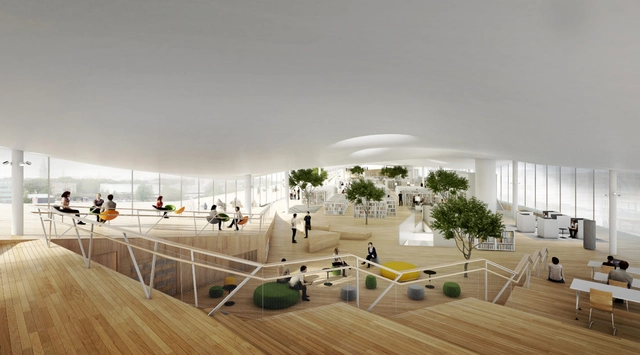
As part of our 2018 Venice Architecture Biennale coverage we present the proposal for the Finnish Pavilion. Below, the participants describe their contribution in their own words.





.jpg?1520365081&format=webp&width=640&height=580)


.jpg?1520367849 "CEPT University. Image © Laurian Ghinitoiu")
.jpg?1520365081)