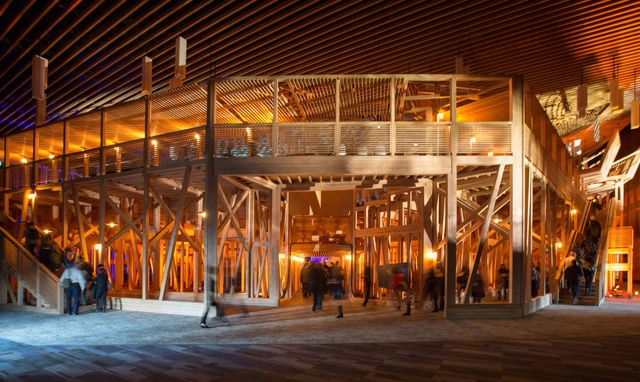
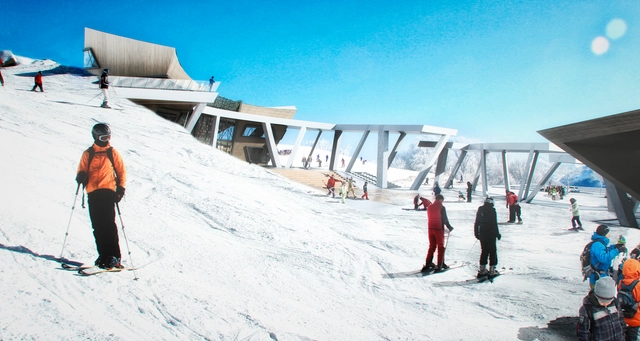
Daniel Libeskind has been commissioned to design a leisure destination for the Lithuanian city of Vilnius. Perched on the highest point in the city, between Vilnius’ historic center, business district and airport, the “Vilnius Beacon” aims to become a cultural and recreational attraction at the Liepkalnis Ski Hill that offers a range of summer and winter activities.
“I was inspired by the landscape of this beautiful city. My goal with this project was to bring an exciting dimension of architecture that respects the natural elements, while providing a year- round sustainable center for the citizens of Vilnius,” said Libeskind. “The Beacon is set to become a new epicenter of entertainment, leisure and culture for the city.”
One of the most hyped stories in the world of technology is the development of powerful, affordable virtual reality headsets for the commercial market. For architects, the ability to immerse yourself in an imaginary world is an enticing prospect, for both professional and recreational uses - but at $200 and upwards for what is still a product under development, devices like Oculus Rift are not for the faint-hearted.
But now Google, ever the ambassador for the more fiscally-cautious tech junkie, has a solution that won't break the bank. Their contribution to the emerging virtual reality market is "Google Cardboard," which creates a simple headset from an Android-powered smartphone and - you guessed it - some cardboard. Read on to find out how it works.
Videos
Courtesy of Metropolitan Redevelopment Authority
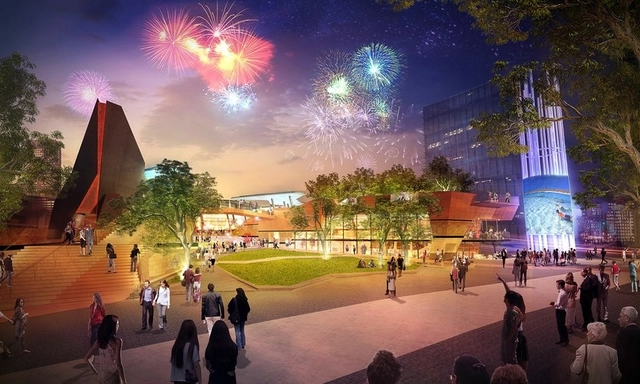
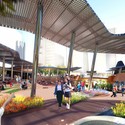
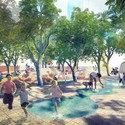
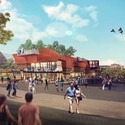
The Metropolitan Redevelopment Authority of Perth has released conceptual images for what is to become the city’s latest public space, designed by a team comprised of Aspect Studios, Iredale Pedersen Hook, and Lyons Architecture. With construction to begin in mid-2015 and slated for completion in 2017, the square takes its name from Yagan, an Indigenous Australian warrior of Perth’s local Noongar people. Integral to early resistance against British colonization, Yagan’s tenacity, leadership, and subsequent execution by settlers have cemented his role in Indigenous Australian folklore. Read more about this significant acknowledgement of Indigenous history after the break.
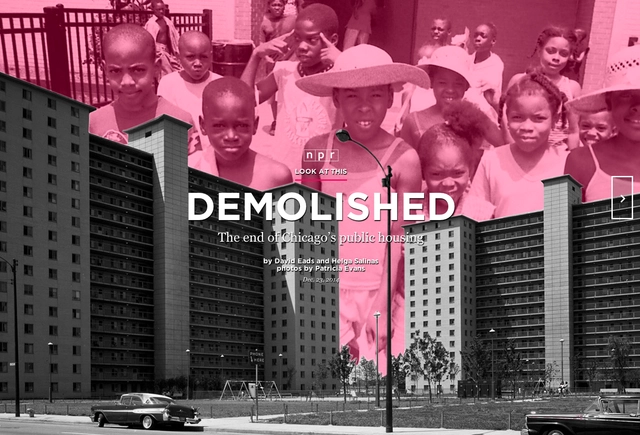
NPR journalists David Eads and Helga Salinas have published a photographic essay by Patricia Evans alongside their story of Chicago’s public housing. Starting with Evans’ iconic image of a 10-year-old girl swinging at Chicago’s notorious Clarence Darrow high-rises, the story recounts the rise and fall of public housing, the invisible boarders that shaped it and how the city’s most notorious towers became known as “symbols of urban dysfunction.” The complete essay, here.
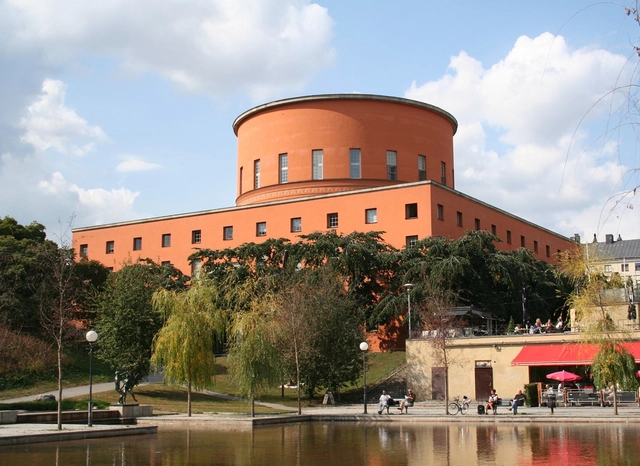
The City of Stockholm has named Caruso St John, working with Swedish practice Scheiwiller Svensson, as the architects for a renovation of Gunnar Asplund's 1928 Stockholm Public Library. The work will see alterations to the interior spaces of the main building and annex, as well as the three additional "bazaars" built to the west of the original building between 1930 and 1953, however there will be no alterations to the external appearance of the building.
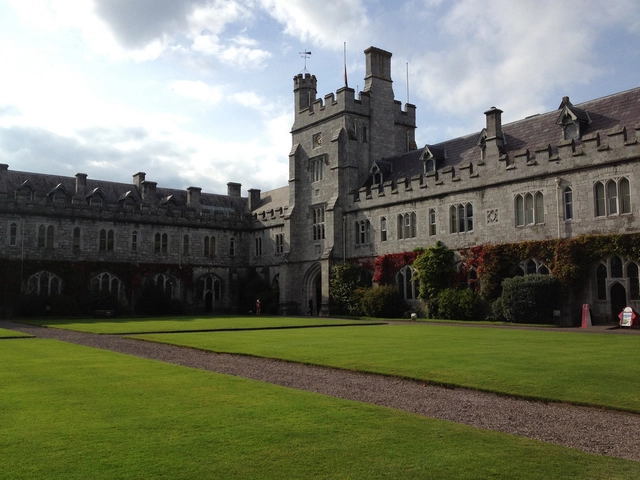
University College Cork has selected O'Donnell + Tuomey to design the university's new student hub, which will house learning, student support and administration spaces in a new building adjacent to the campus' Victorian Windle Medical Building, to the West of the main quadrangle. Selected for their ability to work within and around the historic buildings, the project will also see O'Donnell + Tuomey restore the medical building.
The new student centre will be the second building designed by the practice for University College Cork, a decade after the completion of their Stirling Prize-shortlisted Lewis Glucksman Gallery.
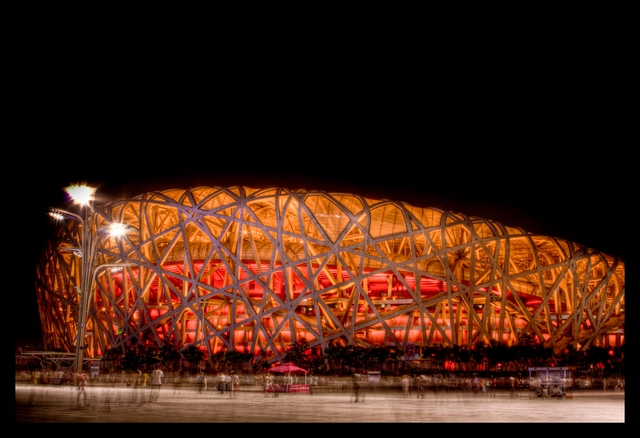
Herzog & de Meuron is said to be collaborating with Lifschutz Davidson Sandilands to explore options for expanding the Chelsea Football Club’s Stamford Bridge home stadium in west London. According to a report by the Architects’ Journal, news of the possible expansion first broke last June, after considerations of relocating the stadium were heavily criticized by the public.
The stadium, originally designed by Scottish architect Archibald Leitch and built in 1876, has already undergone several renovations. Chelsea FC hopes to increase its capacity from 41,837 to 60,000, as well as provide a new decking over the railway line on the east and north sides of the building.
More from Chelsea FC regarding the expansion, after the break.
One of four shortlisted proposals (click to view them all). Image Courtesy of The Architects' Journal
Sutherland Hussey, Faed Brown Architects, Daykin Marshall Studio, and Gibson Thornley Architects have been announced as finalists in the RIBA-backed competition for a new community hub and sports pavilion for the Sessay Cricket Club in North Yorkshire. The four shortlisted competitors, selected from over 80 entrants, will be reviewed by a judging panel on January 8. A winning team is expected to be announced shortly after.
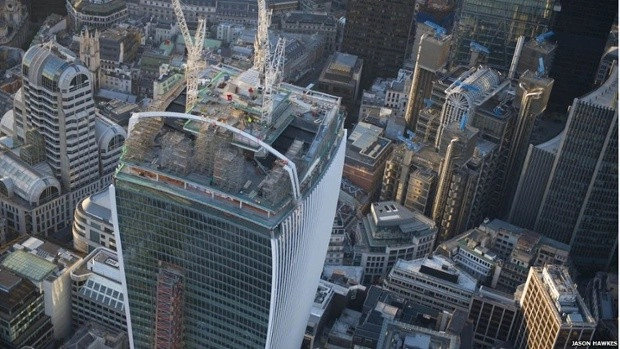
In a review of Rafael Viñoly Architects'20 Fenchurch Street, which is also known as the 'Walkie-Talkie' or 'Walkie Scorchie' after it emerged that its façade created a heat-focusing ray strong enough to melt cars, Rowan Moore questions London's preoccupation with iconic buildings and its money-driven planning schemes. Using 20 Fenchurch Street as a key example, Moore argues that not only does the building seem "to bear no meaningful relationship to its surroundings," but its Sky Garden - a terrace at the top of the building which claims to be "the UK’s tallest public park" - is a symbol of a bewilderingly unbalanced economy.
What is the most misused word in the world of architectural writing? Could it be "iconic"? What about "innovative"? The staff over at Curbed have a nomination: referring to spaces as either "masculine" or "feminine." In an op-ed published last month, they write that "the people who write about decor and design need to stop describing spaces with gendered terms," arguing: "Let's say two spaces were written up in a decor blog, and one was described as masculine, and the other feminine. Which would have white walls? Which would have raw concrete floors? ... If these have fairly easy answers, it's because we're in the realm of stereotype."
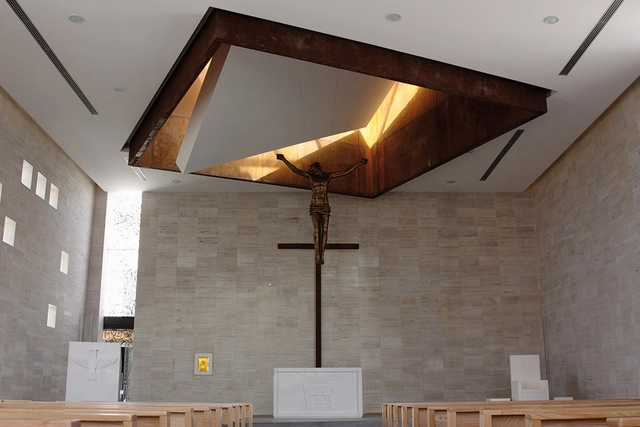
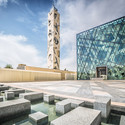
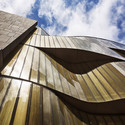
If the winners of Faith & Form's 2014 Religious Art & Architecture award are any indication, it may be something different every time. A high ceiling, curved walls, stained glass windows or lush landscaping -- no two winners are alike, and yet each offers viewers a fresh way of interacting with the divine.
Take a look at some of Faith & Form's 2014 award and honor award winners for religious architecture after the break
Architecture critic Alexandra Lange recently stumbled upon “On Architecture” - an Audible.com collection of over 16 hours of Ada Louise Huxtable’s best writings from the New York Times, New York Review of Books, the Wall Street Journal and more. Displeased with the narration, Lange has taken it upon herself to read Huxtable’s 1971 New York Times critique “A Look at the Kennedy Center” in honor of its “many famous witticisms." Give it a listen, here.
What happens at the intersection of urban culture and architecture? How can the four elements of hip hop (DJing, MCing, Breaking and Graffiti) inspire the built environment? Participants of JUX.TA.PO.SI.TION are encouraged to create a sketch using mediums of their choice to depict new building forms, urban design concepts, and/or architectural products inspired by the four foundational elements of hip hop. This international competition is open to all individuals including students, graffiti artists, architects, urban planners, landscape architects, graphic designers, muralists, etc. You can complete the free registration form and find more information, here.
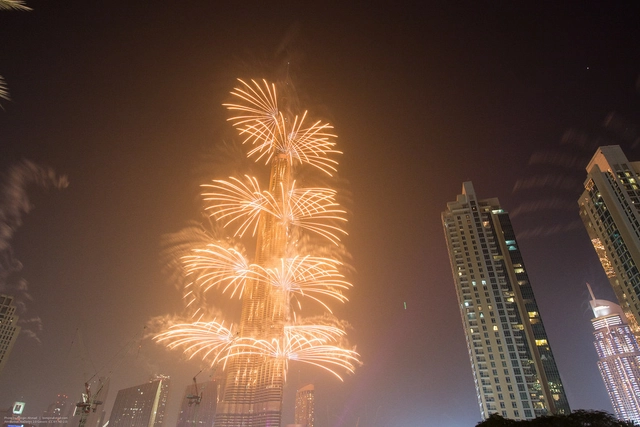
As any self-respecting world city now knows, when the time comes to change the calenders, you'd better also have an iconic building from which to hang some fireworks. With people all over the world looking out for the most impressive New Year's celebrations, we've picked the most impressive architecturally-focused displays. Not surprisingly, Dubai - the world capital of "go big or go home" - probably had the most impressive show of the year, with a combined light-and-firework show to turn the Burj Khalifa into the world's largest celebratory canvas. However, a special mention goes to Paris' Arc de Triomphe, where a tasteful 14-minute light mapping display paid homage to the city's other great architectural works, from the Eiffel Tower to the Centre Pompidou, before moving onto stylized scenes of Paris life to bring in the new year.
Continue after the break for all the videos of the world's best New Year celebrations.
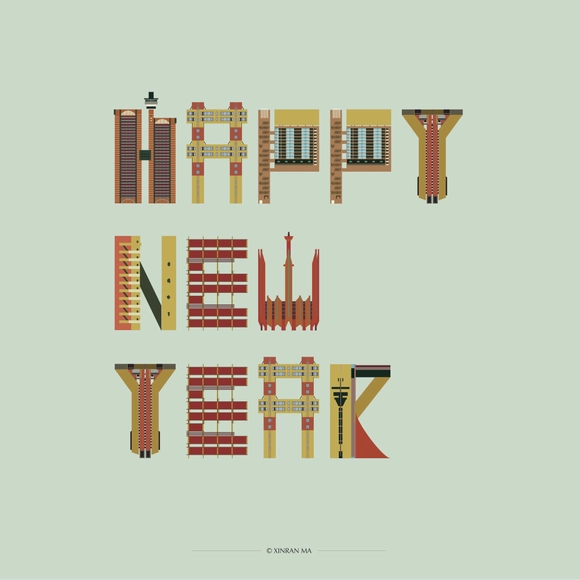
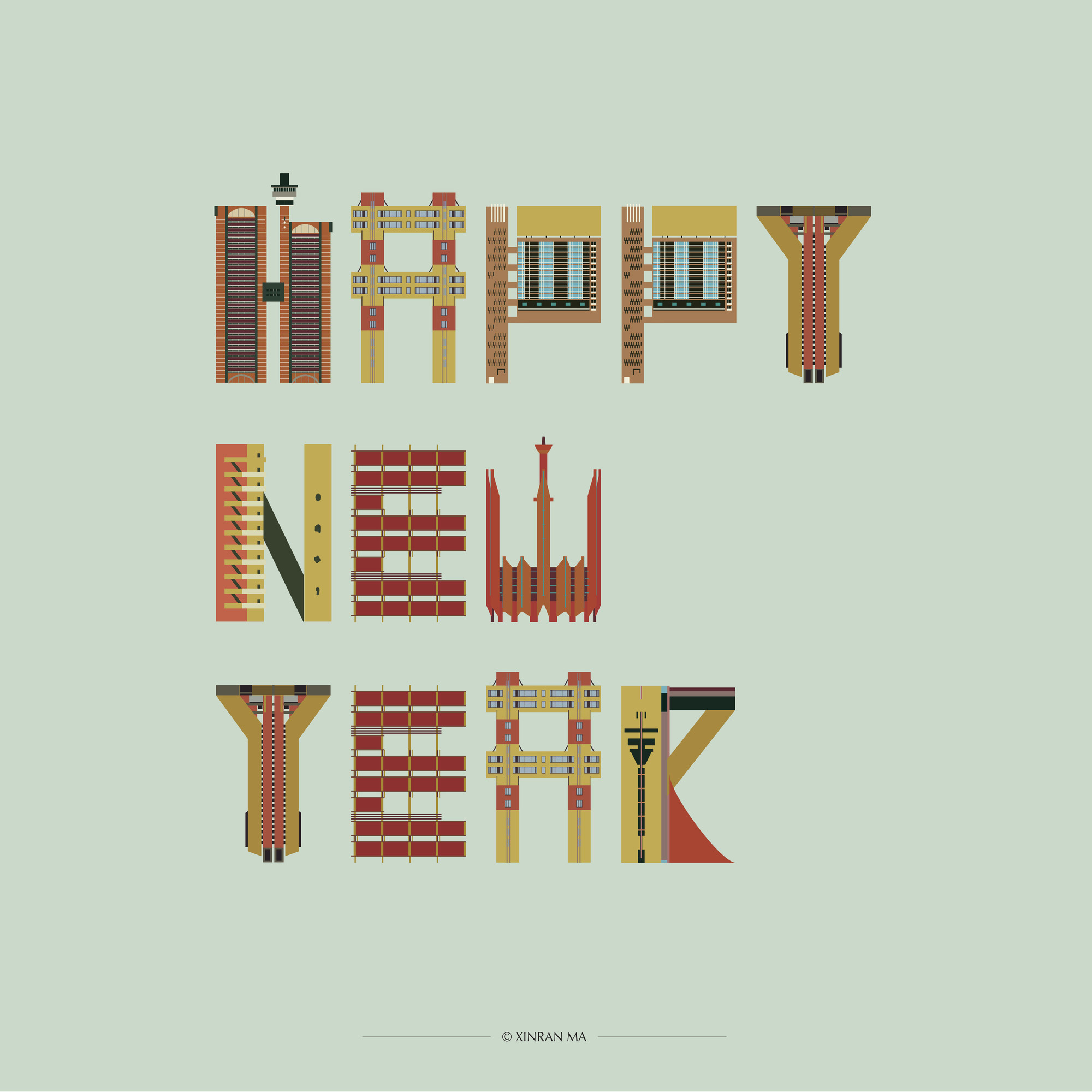
To celebrate the start of 2015, Xinran Ma, a New York-based architectural designer and illustrator, has created this brutalist-inspired greetings card. Based on his work illustrating over 50 of the classic projects of modernist and brutalist architecture, this card features pieces of these recognizable buildings, remixed and adapted to create a typeface.
Xinran says that the buildings he illustrates all have one unfortunate thing in common: "they are extremely attractive and inspiring to me," he says, but "ironically they have been somehow gradually forgotten." As a result, the illustrations he produces are not just a hobby, but part of an obligation he feels "to defend, memorize and deliver the classics that I believe are immortal." Xinran has shared 18 of these illustrations with ArchDaily to spread the word about these buildings; check them out after the break, and click on the images to find out more about each one.
The final exterior scaffolding has been removed from Diller Scofidio + Renfro’s “The Broad” in downtown Los Angeles, revealing its distinctive honeycomb-like “veil.” Comprised of 2,500 fiberglass reinforced concrete panels and 650 tons of steel, the structural exoskeleton “drapes” over the building’s interior “vault,” lifting at its south and north corners to provide two street-level entrances. At its side, the veil is torn by a central “oculus” that provides a direct visual connection between the museum and Grand Avenue.
“The Broad will be porous and absorptive, channeling light into its public spaces and galleries. The veil will play a role in the urbanization of Grand Avenue by activating two-way views that connect the museum and the street,” described Liz Diller.
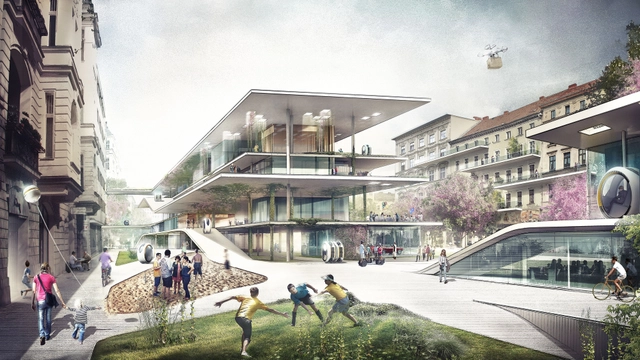
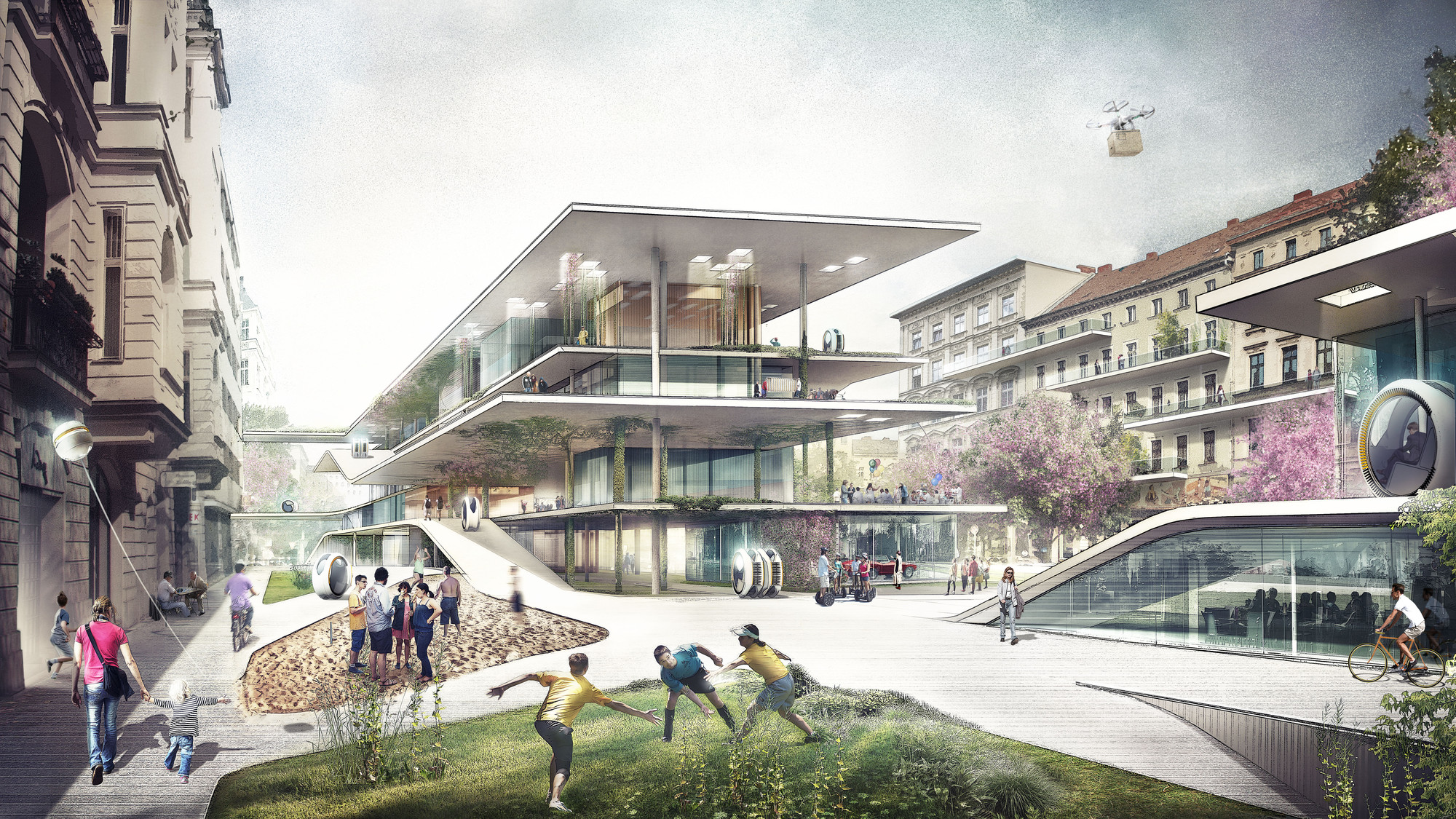
One of three runners-up in the 2014 Audi Urban Future Award, the Berlin Team of Max Schwitalla, Paul Friedli and Arndt Pechstein proposed a futuristic and innovative concept for an entirely new type of personal transport. Drawing inspiration from sources as diverse as elevator technology and biomimicry, their designs offer a thought-provoking alternative to our existing transportation systems that could revolutionize the city as we know it.
Though their proposal ultimately lost out to Jose Castillo's Team Mexico City, the work of the Berlin team correlates closely with the aims of Audi's Urban Future Initiative, offering a compromise between the convenience and status of personal transport and the civic benefits of public transport. Read on to find out how this was achieved.
Happy New Year to ArchDaily's readers all around the world: from the first people to celebrate in Kiribati, Samoa and New Zealand, to those in Hawaii and American Samoa - who at the time of publishing are still waiting to celebrate the new year - we wish you all the best in 2015. The past 12 months has been a fantastic year here at ArchDaily, and we can't wait to see what the next one will bring. In the meantime, make sure you've read all of our round-ups of 2014, after the break.
https://www.archdaily.com/583351/happy-new-year-from-archdailyAD Editorial Team
In honor of Rockwell Group’s 30th year of design, Forbes has published a profile on its founder, American architect David Rockwell, detailing his life, work and thoughts on the power of theater. “My mother, Joanne, played a great role in forming my interest in design,” stated Rockwell. “She first introduced me to the excitement and spectacle of live theater, which has had a profound impact on my life and work. These productions really opened my eyes to the power of design to create emotional connections between people and their environment.” Read the complete article, here.
Many have come to associate drones with the looming unmanned aircraft deployed in the defense industry, but as technology continues to improve drones have gotten smaller and progressively less expensive. Consumers can now purchase their very own drone for as little as $600 or less and the technology is already proving to be useful for a wide variety of purposes, including possible uses for architects in everything from site analysis to construction.
However, this technology could have much broader consequences on not only the airspace above our streets, but also in how we design for increasing civilian and commercial drone traffic. Just as other technologies such as cars and security surveillance have shaped our urban infrastructure, so too will an emerging network of infrastructure for pilotless technology. Particularly as drones become ever more precise and nimble, opportunities arise for their increased use in urban areas. If these devices can be programmed to learn from repeated maneuvers with the use of cameras and sensors, it is not unrealistic to say that they could soon learn how to navigate through increasingly complex vertical cities. But if drones become fixtures of our urban environment, what impact will they have on exterior spaces? And could they become as ubiquitous in our city’s skies as cars on our streets?
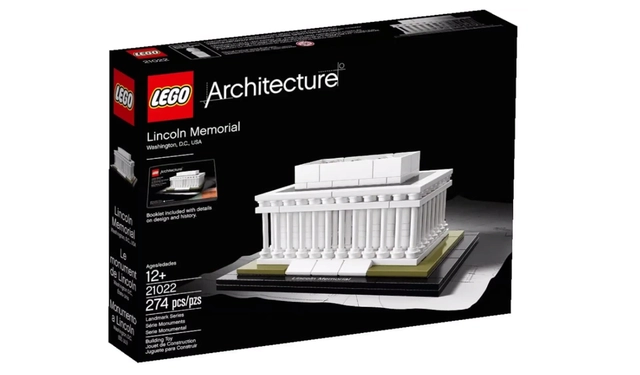
LEGO® has unveiled the latest buildings to join their architecture series: the Washington D.C. Lincoln Memorial and the New York City Flatiron Building. Both will be released in 2015.
The Lincoln Memorial, a national monument honoring the 16th President of the United States, was designed by Henry Bacon and features a sculpture of Lincoln by Daniel Chester French. The Flatiron Building, originally known as the Fuller Building, is a landmark Manhattan skyscraper designed by Daniel Burnham Frederick Dinkelberg.
The news was released following the grand opening of a new LEGO® Brand Store adjacent to the Flatiron.
More images of the new LEGO® sets, after the break.
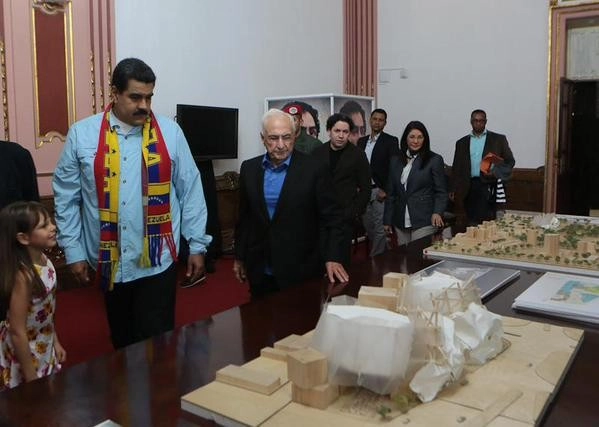
Frank Gehry presents the National Center for Social Action Through Music project
With Venezuelan President Nicolás Maduro in attendance, Frank Gehry presented the model for the future National Center for Social Action Through Music building in Lara state. The project is Gehry’s second in Latin America, following the recently inaugurated Biomuseo in Panamá.
To be located in Barquisimeto, Venezuela’s fourth most populated city, the National Center for Social Action Through Music forms part of the National Network of Youth and Children’s Orchestras and Choirs of Venezuela, more commonly known as “El Sistema.” Founded in 1975 by orchestra director José Antonio Abreu, El Sistema is now funded by the government and provides musical training and education for children from impoverished backgrounds. The Adjkm-designed Simon Bolivar Complex for Social Action is also part of El Sistema.
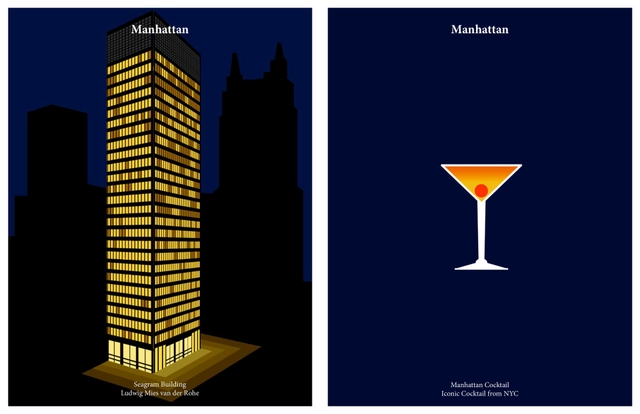
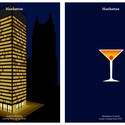
Seagram Building by Mies van der Rohe / Manhattan Cocktail. Image Courtesy of Kosmos Architects
To paraphrase an old adage, "behind every great building is a great architect." According to Swiss-based Kosmos Architects, a less familiar version of this might say "beside every great building is a perfectly mixed cocktail." The firm has revealed a scientifically (un)proven link between alcohol and architecture: ramps, for instance, are often built at an inclination of five to seven degrees, a statistic that correlates to the alcoholic percentage of an average beer. Furthermore, a steep forty-degree roof incline designed to throw off snowfall matches the forty percent alcohol content of vodka used in Arctic climates to keep out the winter chill.
Kosmos Architects has published a series of twelve illustrated postcards, linking iconic buildings with their appropriate drink. A Manhattan for Mies, a Blue Blazer for Zumthor, and a Smoky Martini for Herzog & de Meuron all belong to the series 'Good Drinks & Good Buildings,' a booze-soaked comparison of architecture and alcohol, just in time to ring in 2015.
What's insideSOM's martini? Find out after the break










.jpg?1420225628&format=webp&width=640&height=580)