As part of our 2018 Venice Architecture Biennale coverage, we present the completed Romania Pavilion. Below, the curatorial team describes the exhibition in their own words.
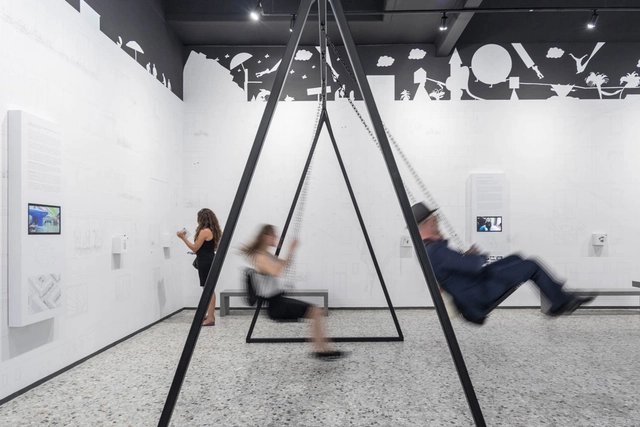
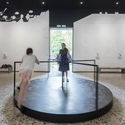
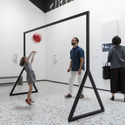
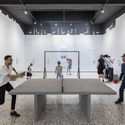
Mnemonics proposes a contemporary take on the event’s theme and takes an ultimately optimistic snapshot of the public urban space that Romanian society has seen transforming over the past decades. It raises the question of the social and cultural functions of the free public space in Romanian cities.
The National Council of Architectural Registration Boards (NCARB) has recently released new data surveying the number of licensed architects in the United States. Conducted annually by NCARB, the 2017 Survey of Architectural Registration Boards provides exclusive insight into data from the architectural licensing boards of the 50 U.S. states, the District of Columbia, Guam, Puerto Rico, and the U.S. Virgin Islands. At first glance, the numbers reflect promising growth for the architecture profession. The number of architects licensed in the U.S. rose to 113,554, according to the survey, which is a 3% increase from 2016 and a 10% increase from the numbers reported a decade ago.
Even more impressive, when you compare the increase in registered architects to the U.S. population, the number of architects licensed has risen over 10% since 2008; while the total U.S. population has risen 8%, according to data from the U.S. Census Bureau. That equates to roughly 1 architect for every 2,900 people in the country. To put this into perspective, a medium-sized architecture firm of 50 people would theoretically have the potential to directly impact 145,000 people in the U.S.
Based on these statistics, one might assume that more architects naturally means more architecture, thus more influence from the profession in general. But that might not be the case. Read on for more data from NCARB's report and what it could mean for the profession as a whole.
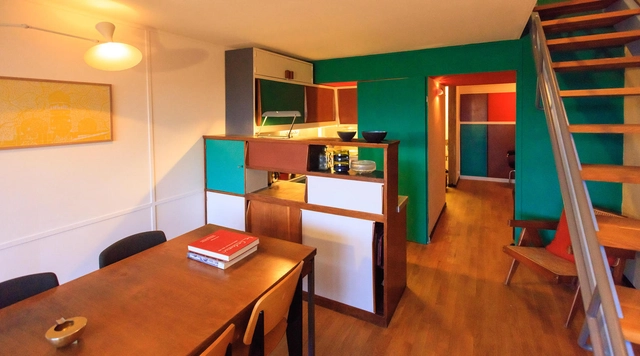
Mohr purchased the apartment in 2016 and embarked on a journey of demolition, measurement, and extensive renovation including lowering ceilings and moving walls in order to recreate the interior likely envisioned by Le Corbusier.
Stretching over one mile (1.5 kilometers), the cable car links the two thriving residential districts of Amsterdam-West and Amsterdam-Noord through a system of three slender pylons and two stations. The cable car has been designed to accommodate a future third station depending on the pattern of growth for surrounding districts.
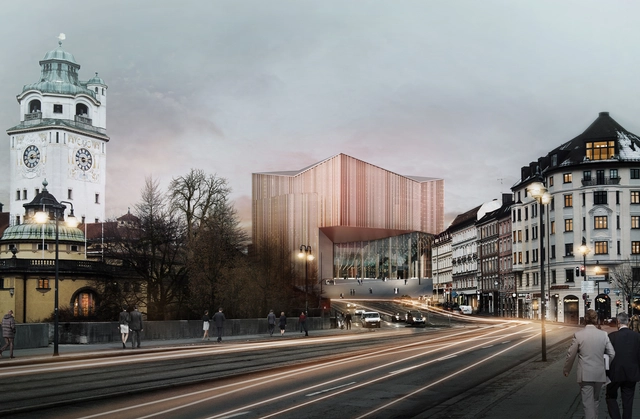
After conducting a concert at Munich’s Gasteig concert hall, Leonard Bernstein offered a scathing edict for the building: “burn it down.”
The Gasteig’s behemoth structure of brick and mirrored glass never met Bernstein’s decree. Instead, it has stood for decades, garnering vitriol from those who resent its postmodern aesthetic. In a design competition hosted by the Gasteig, seventeen architecture firms have attempted to change the concert hall and cultural center’s public perception with varied renovation schemes.
As part of our 2018 Venice Architecture Biennale coverage, we present the completed Indonesia Pavilion. Below, the curatorial team describes the exhibition in their own words.
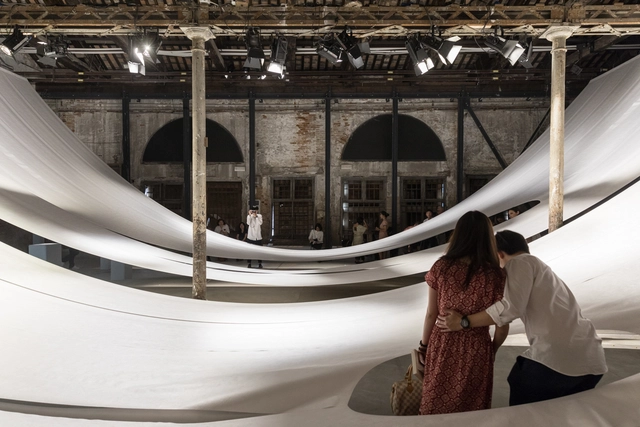
What if architecture has no form and shape? It will be freed.
Even after the death of John Portman & Associates’ namesake architect in January, the firm continues his legacy of innovative and elegant hotel architecture. On Monday, the Atlanta and Shanghai-based firm announced that they had been selected to design a new hotel and residential tower in Xi Shui, China. Portman & Associates’ design, dubbed “Greenland Wuxi 200,” beat out international entries to a design competition hosted by the hotel developer Greenland Hong Kong Wuxi.
Eight sites from the World Monuments Fund’s 2018 World Monuments Watch list have been awarded $1 million in funding from American Express to support much-needed preservation and restoration initiatives. The sites were selected based on their vulnerability to specific threats like natural disasters, climate change or social forces like urbanization that have left them neglected.
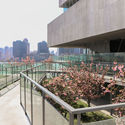
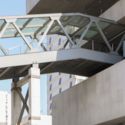
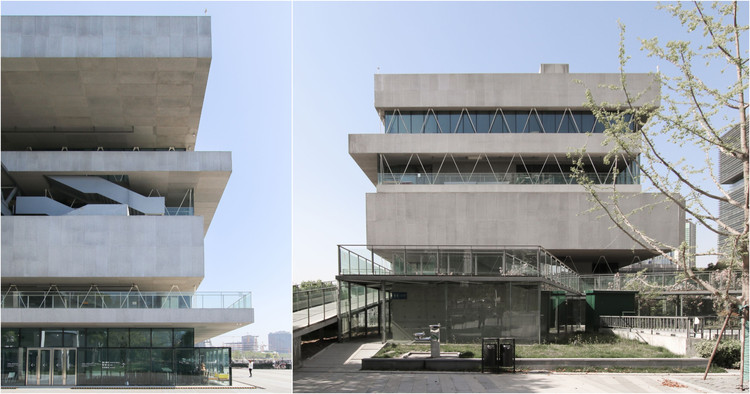
Architect Kris Provoost, who lives and works in Shanghai, has captured Atelier Deshaus' new Shanghai Modern Art Museum through a series of photographs, displaying both the details of the building as well as its context on the Shanghai riverfront. The Shanghai Modern Art Museum is an adaptive re-use project on the old Laobaidu coal bunker, its industrial exterior kept and re-interpreted into a contemporary architectural project. Provoost captured the beautiful detailing of the project, as well as how it transforms during the cherry blossom season.
The Australian Institute of Architects’ Gold Medal recognizes exemplary work by architects who have designed buildings of high value and great distinction, resulting in the advancement of the architecture profession.
This year, Jury Chair Richard Kirk presented Australian practitioner and Emeritus professor Alec Tzannes with the ceremony’s highest honor.
When you tap an Instagram geolocation, the nine most popular posts in that location float to the top. Sometimes, there's an uncanny similarity to these posts: near-identical pictures of smoothie bowls, tiled floors, or neon signs. In part, a place’s popularity on Instagram is a domino effect—one person posts a picture of a mural (Wynwood Walls, anyone?), and then everyone does. But a new Instagram Design Guide from Valé Architects suggests that some design features might be inherently more Instagrammable than others. Valé’s guide is interesting for its quasi-scientific analysis of Instagram aesthetic, but it also has real implications in the architecture world; a building’s popularity on social media (in this case, its Instagramability) can influence its perception in the non-digital world. Here are some of the traits that Valé says make a space successful on Instagram:
For the second time in 4 years, Charles Rennie Mackintosh’s Glasgow School of Art Building is ablaze. The BBC reports that the fire began at 23:00 BST and it has engulfed a large portion of the building. Thankfully no casualites have been reported, but one eye-witness said the building is ”going up like a tinderbox.”
https://www.archdaily.com/896545/charles-rennie-mackintoshs-glasgow-school-of-art-is-burning-againAD Editorial Team
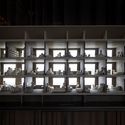
Black walls and an exposed concrete floor create a mysterious and eerie backdrop for Together and Apart: 100 Years of Living—the Latvian Pavilion curated by urbanist Evelīna Ozola, architect Matīss Groskaufmanis, scenographer Anda Skrējānem and director Gundega Laiviņa.
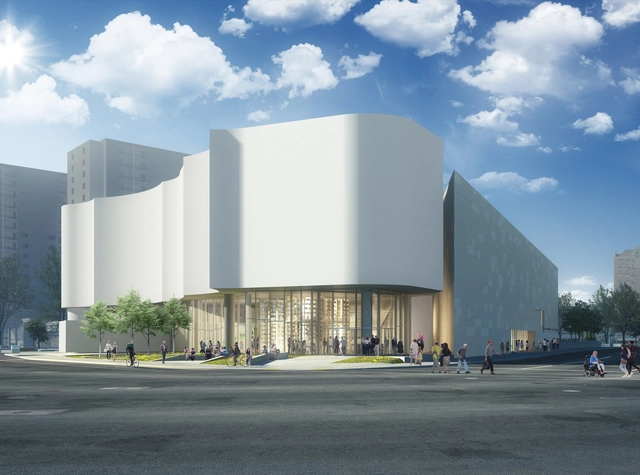
Arranged over four stories, the scheme is an addition to the 1971 museum designed by Gustavo Da Roza, and seeks to form a new cultural landmark for downtown Winnipeg.
https://www.archdaily.com/896511/michael-maltzan-architectures-inuit-art-centre-breaks-ground-in-winnipegNiall Patrick Walsh
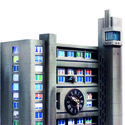
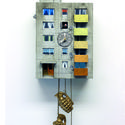
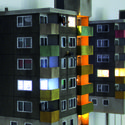
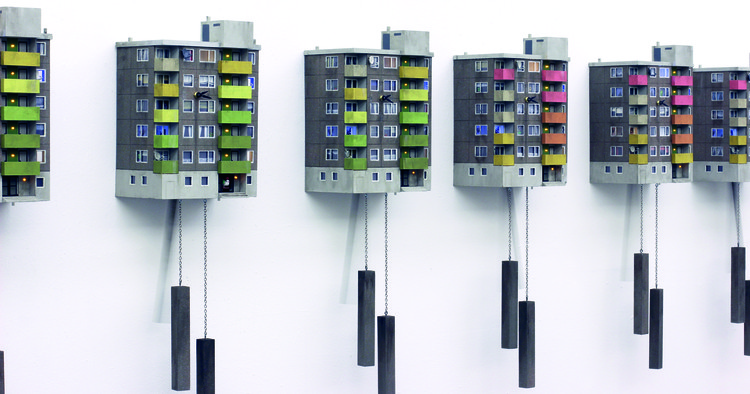
More than an aesthetic centerpiece for Brutalist fanatics, the clocks are in fact a response to a decline in the middle class caused by increasing rent prices in modern metropolises.
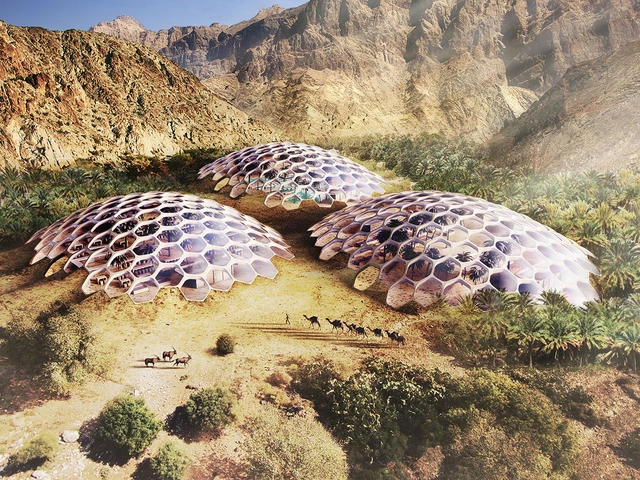
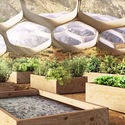
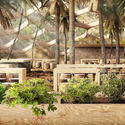
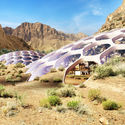
The world’s tallest building, the Burj Khalifa, towers at 828 meters in the heart of Dubai’s ever-growing urban core. But just a few hours east of the metropolis, a different kind of monument is garnering tourism to the United Arab Emirates: the Al Hajar Mountains. With its peak at 3,008 meters, the mountain range’s natural elegance rivals the country’s architectural achievements. The Biodomes Wildlife Conservation Centre, a project from Baharash Architecture for the UAE’s Eco Resort Group, seeks to celebrate the mountain range through an ecotourism paradigm.
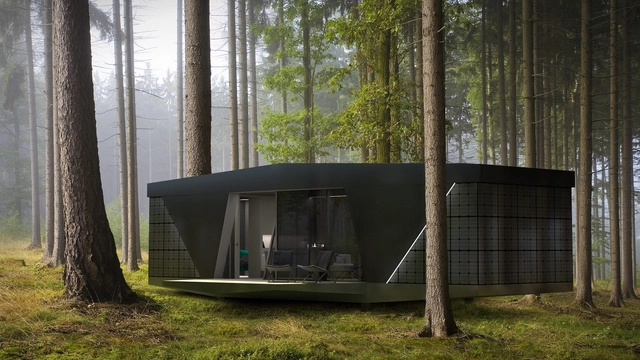
The uncontrollable roar of construction sites, the chaotic city streets, the monotony of spending more than 8 hours a day in a cubicle… All these daily grinds can take a toll on the human body and mind. Retreating into nature sounds liberating, however, our dependence on technology makes living off-the-grid almost impossible. Well, what if you could keep your modern lifestyle and sleep in a house hidden in the forest?
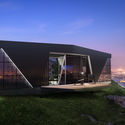
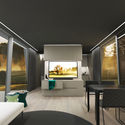
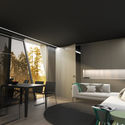
IO Houses created The SPACE, a versatile and innovative housing project for people who love nature and want to preserve it, just as much as they love contemporary, luxurious living.
The Russian Pavilion highlights the past, present, and future of Russian railways. The exhibition shows railways as a response to a landscape which is in many places uninhabitable, allowing the people who use them to explore Russia's expansive territories.
In celebration of the launch, the studio is offering a mixed pack of 50 diverse, high resolution cuts outs for free, normally priced at £100. Users can gain access to the offer using the discount code “archdaily” on the cutout shop here during the purchasing process.
https://www.archdaily.com/896437/enliven-your-renders-with-studio-esinams-hi-res-cutouts-free-with-archdaily-discount-codeNiall Patrick Walsh
The laws of home decor often derive from personal opinion, varying depending on which “expert” you ask. In an effort to uncover the most serial interior design crimes of our time, technology giant Samsung turned to the British public.
In a public vote of 2000 UK adults, Samsung asked participants to vote on the worst interior design trends of the past 50 years. The results are as controversial as they are varied, with a total of 25 trends spanning half a century, and leaving no room intact.
https://www.archdaily.com/896422/do-not-try-this-at-home-the-25-worst-interior-design-trends-of-last-50-yearsNiall Patrick Walsh
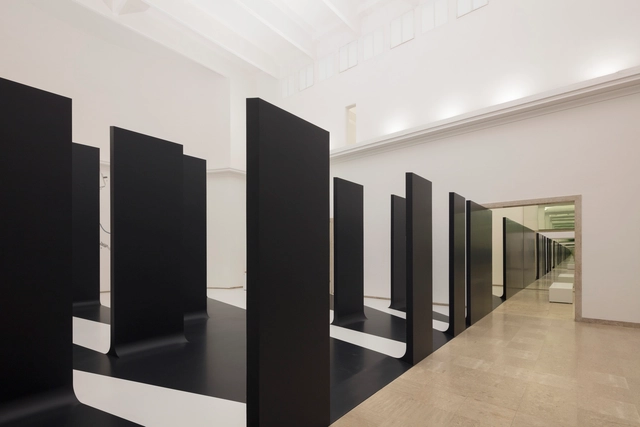
Curated by GRAFT and Marianne Birthler, the German pavilion explores architectures of division and inclusion. In a light-filled space, black panels create division. The initial simplicity of the panels is complicated by their opposite sides, where text and images explicate the impact of wall-building worldwide.
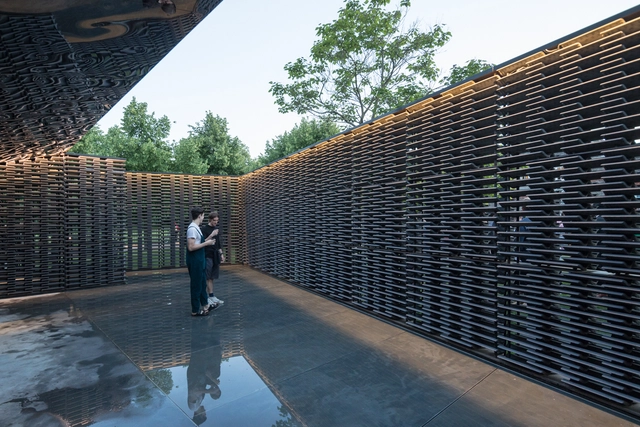
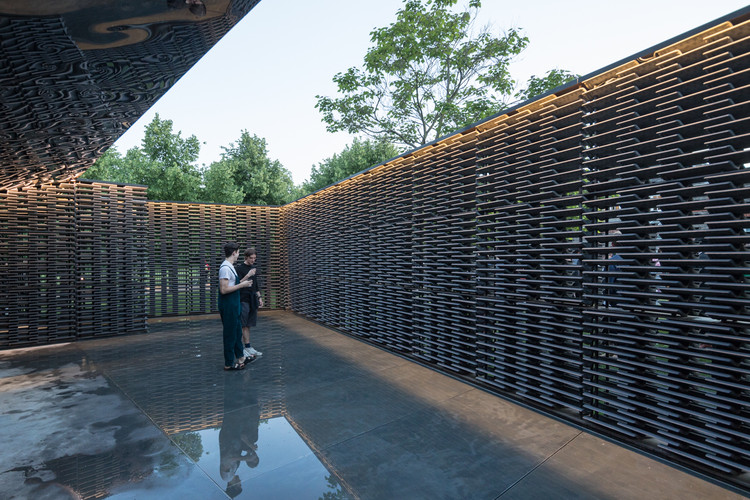
Fusing elements typical to Mexican architecture with local London references, the pavilion centers on a courtyard enclosed by two rectangular volumes constructed using the characteristic celosia method.
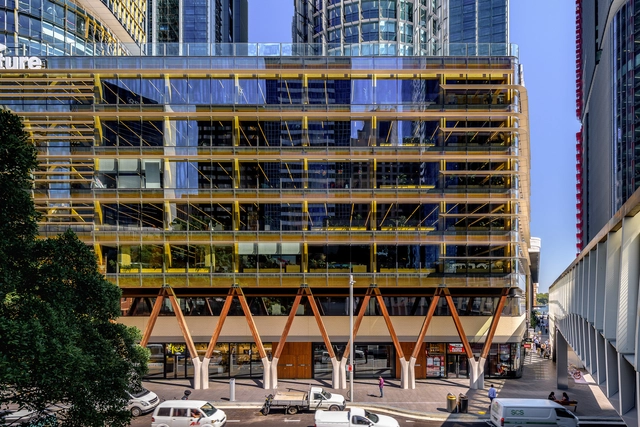
WOHA has released an update of their first office skyscraper for China, as their Vanke Yun City scheme tops out in Shenzhen. Manifesting as three tower blocks attached to a central T-shaped core, the scheme seeks to present “an alternative office tower typology that responds to the sub-tropical climate in Shenzhen.”
Set against the backdrop of ubiquitous post-modernist skyscrapers, the 1.6 million-square-foot (150,000 square-meter) scheme aims to “radically transform the soulless skyscraper into a highly liveable, humane, and sustainable micro-vertical city.”
Architecture is always evolving. The practice and business of architecture are undoubtedly evolving alongside the more obvious technological advances, but what we often forget is that there are no new ideas. When it comes to design, what we see manifested in our daily lives is the result of evolution. And at the root of that design evolution is inspiration.
A new initiative from Gianpiero Venturini and his firm Itinerant Office titled Past, Present, Future aims to open a research path based on the analysis of successful practices in the 21st Century while ultimately providing a new form of inspiration for the next generations of architects and designers. The documentary series begins with a select group of 11 international architects, including Jacob van Rijs, co-founder of MVRDV, Mario Cucinella, and Simone Sfriso, co-founder of TAMassociati. Each architect is featured in three video interviews in which they reveal the methodology behind their designs, the themes and approaches within their architectural practice, and the predictions they have for architecture in the near and distant future.







.jpg?1529322837&format=webp&width=640&height=580)
.jpg?1529322827 "Courtesy of Plompmozes")
.jpg?1529322882 "Courtesy of Plompmozes")
.jpg?1529322837 "Courtesy of Plompmozes")
.jpg?1529322845 "Courtesy of Plompmozes")
.jpg?1529322837)








.jpg?1528069797&format=webp&width=640&height=580)
.jpg?1528069731 "© Ansis Starks")
.jpg?1528069782 "© Ansis Starks")

.jpg?1528069797)







.jpg?1528079465&format=webp&width=640&height=580)
.jpg?1528079427 "Courtesy of The Russian Pavilion")
.jpg?1528079373 "Courtesy of The Russian Pavilion")
.jpg?1528079361 "Courtesy of The Russian Pavilion")
.jpg?1528078250 "Courtesy of Anna Mikheeva")
.jpg?1528079465)







.jpg?1528902145)
.jpg?1528902160 "Courtesy of WOHA")
.jpg?1528902003 "Courtesy of WOHA")
.jpg?1528902220 "Courtesy of WOHA")

.jpg?1528903768)


