

This guide explains how to structure multi-image prompts in the RunDifussion platform. Explore RunDifussion's product catalog.
Architecture News
How to Prompt and Annotate Multiple Images with AI
| Sponsored Content
https://www.archdaily.comhttps://www.archdaily.com/catalog/us/products/38860/how-to-prompt-and-annotate-multiple-images-with-ai-rundiffusion
Schmidt Hammer Lassen and Architectus Design Earthquake-Resistant Library in Christchurch
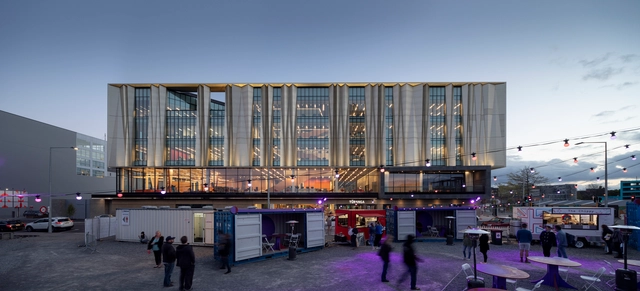
Schmidt Hammer Lassen Architects and Architectus have announced the opening of Tūranga, the new central library for Christchurch, New Zealand. Built to address the earthquakes that damaged Christchurch in 2010 and 2011, the library is one of the first public buildings to open downtown after the disasters. Working with Architectus and the indigenous Māori people of New Zealand’s South Island, the design was made to celebrate rebirth in Christchurch.




https://www.archdaily.com/904021/schmidt-hammer-lassen-architects-designs-earthquake-resistant-library-in-christchurchEric Baldwin
Edoardo Tresoldi's Basilica di Siponto awarded the Gold Medal for Italian Architecture
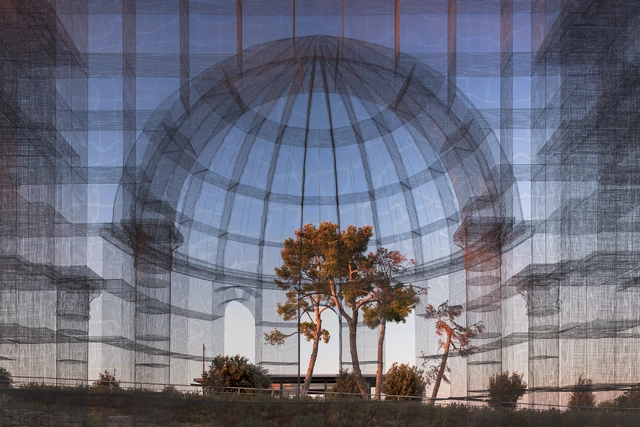
The Basilica di Siponto by Edoardo Tresoldi has been awarded the “Gold Medal for Italian Architecture – Special Prize to Commission,” considered the most prestigious award in Italian architecture.
The wire mesh sculpture reinterprets the volumes of an Early Christian basilica which formerly sat on the site of the sculpture, adjacent to an existing Romanesque church. The scheme serves as a “bridge towards the memory of the place” allowing the public to contemplate time and history.


https://www.archdaily.com/903999/edoardo-tresoldis-basilica-di-siponto-awarded-the-gold-medal-for-italian-architectureNiall Patrick Walsh
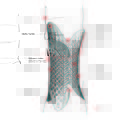
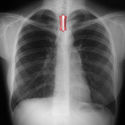
Tonkin Liu Create Innovative Medical Device using their Signature Shell Lace Structure
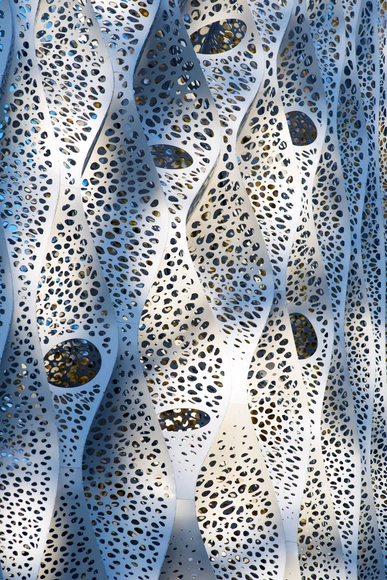
Anna Liu and Mike Tonkin of London-based Tonkin Liu have developed an innovative medical device for use in patients’ windpipes. The prototype stent is based on the firm’s signature Shell Lace Structure, a “single-surface structural technology designed and developed through a decade of research for architectural and engineering applications.”
The 3D-printed prototype is 500 times smaller than those used by the firm for their architectural applications and was developed in collaboration with Arup and the Natural History Museum.



https://www.archdaily.com/903995/tonkin-liu-create-innovative-medical-device-using-their-signature-shell-lace-structureNiall Patrick Walsh
Architecture Costumes For Halloween, Carnival and Office Parties

This was originally posted on October 17, 2017.
When it's time to dress up for Halloween, Carnival or theme parties, people often choose costumes that resonate with their interests. This is especially true for architects, who are particularly well-suited to designing and building head-turning outfits. For students and young architects, the yearning to construct (and destruct) stems from the will to create elaborate headpieces and ingenious appendages.
https://www.archdaily.com/881710/architecture-costumes-for-halloween-carnival-and-office-partiesAD Editorial Team
"Brixel" Reinvents Basic Bricks for the Digital Age
Many contemporary design innovations have embraced the growth and expansion of new technologies. BREAKFAST, a Brooklyn-based rapid product and prototype company, has released ‘Brixel’ a product that combines the customizability technology can provide with the most fundamental building block of architecture - the brick.
The Brixel is an infinitely rotating brick controlled by a software app on your phone. The sleek design and variety of available shapes provide the designer or architect with the tools needed to create a 3-dimensional, interactive installation. Brixel’s design flexibility allows it to be used in many applications, such as dynamic wall installations, railings, facades, and sculpture. Andrew Zolty, BREAKFAST's Co-Founder and Head of Design described Brixel:
https://www.archdaily.com/903877/brixel-reinvents-the-basic-brick-for-the-digital-ageLindsay Duddy
Herzog & de Meuron Release Revised Plans for Museum of 20th Century Design in Berlin
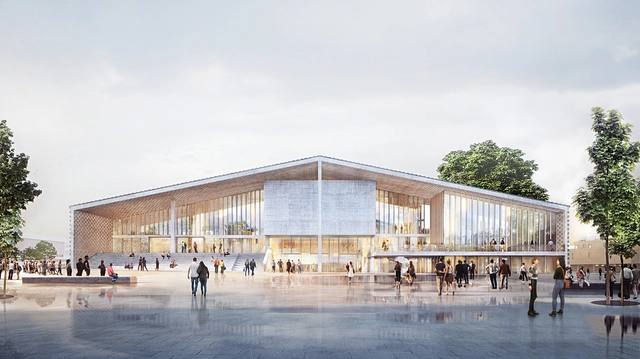
Swiss practice Herzog & de Meuron have released revised plans for the Museum of the 20th Century project in Berlin's Cultural Forum. Designed to house the extensive National Gallery on 20th century art collection, the project was made in partnership with the Berlin State Museums and the Prussian Cultural Heritage Foundation. Herzog & de Meuron originally won the competition to design the museum building in 2016, and the revised design features new plans and a facade that opens the building to the outside.
https://www.archdaily.com/903941/herzog-and-de-meuron-release-revised-plans-for-museum-of-20th-century-design-in-berlinEric Baldwin
Refine your Visuals with Toffu's Premium Content Library
Online shop Toffu has produced a stylish content library aimed at architects seeking to improve their Photoshop, Illustrator, or CAD drawings. Hosting a range of vector and cad format packs, the library's vibrant content is markedly different from standard black and white line figures.
The content is available in elevation, plan, and isometric format, featuring people, furniture, icons, vehicles, and vegetation. Check out the Toffu site here to explore their full content.
https://www.archdaily.com/903938/refine-your-visuals-with-toffus-premium-content-libraryNiall Patrick Walsh
The 30 Most Influential Architects in London
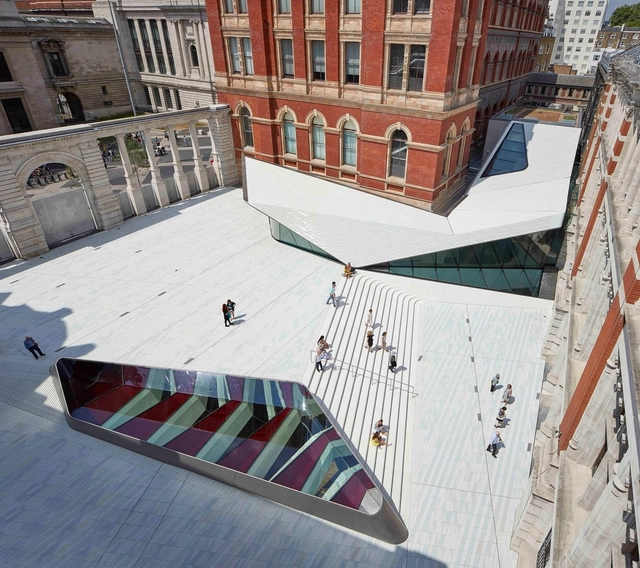
As a “global capital,” London is home to some of the world’s most influential people, architects included. This fact has recently been laid bare by the London Evening Standard newspaper, whose list of the 1000 most influential Londoners features 30 architects, big and small, who use the city as a base for producing some of the world’s most celebrated architectural works.
Below, we have rounded up the 30 most influential architects in London, complete with examples of the architectural works which have put them on the city and world map.





https://www.archdaily.com/903932/the-30-most-influential-architects-in-londonNiall Patrick Walsh
Touch It, Smell It, Feel It: Architecture for the Senses

This article was originally published on Metropolis Magazine as "Architecture You Can Smell? A Brief History of Multisensory Design."
What comes to mind when you encounter the term “sensory design”? Chances are it is an image: a rain room, a funky eating utensil, a conspicuously textured chair. But the way things actually feel, smell, even taste, is much harder to capture. This difficulty points to how deeply ingrained the tyranny of vision is. Might the other senses be the keys to unlocking broader empirical truths? Does the ocular-centric bias of art, architecture, and design actually preclude a deeper collective experience?

https://www.archdaily.com/903925/touch-it-smell-it-feel-it-architecture-for-the-sensesAlice Bucknell
BIG Reveals Skyscraper Design for First Project in South America
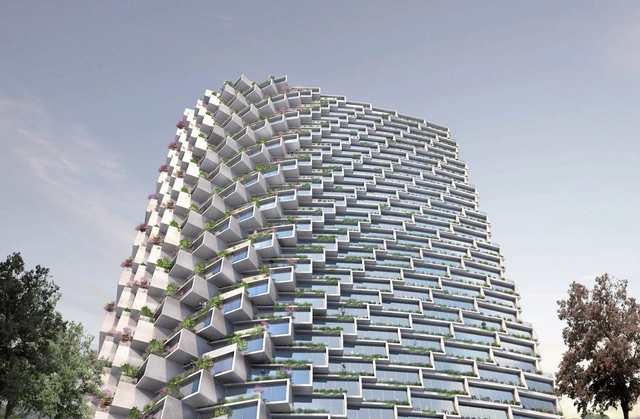
Soon to become the tallest building in Quito, IQON is Bjarke Ingels Group's first project to be built in South America. Currently undergoing construction, the largely residential building is a curved tower with gradually protruding balconies. Encased between the dense city and the park, the self-dubbed "urban tree farm" aims not only to encompass the surrounding views of the volcanoes and nature beyond but also to integrate the landscape within the building itself.
.jpg?1539451458 "Courtesy of Bjarke Ingels Group")


https://www.archdaily.com/903860/big-reveals-skyscraper-design-for-first-project-in-south-americaVasundhra Aggarwal
A' Interior Space, Retail and Exhibition Design Award Winners
| Sponsored Content

A’ Design Award & Competition, the world’s largest and most diffuse international design awards featuring 1,962 Winners from 100 countries in 99 different design disciplines. Among the design world's many awards, the A' Design Award stands out for its exceptional scale and breadth; in 2015, over 1,000 different designs received awards, with all fields of design recognized by the award's 100 different categories. This year's edition is now open for entries; designers can register their submissions here.
There are five different levels of distinction: Platinum, Gold, Silver, Bronze and Iron A’ Design Awards, which are distributed annually in all design disciplines. Designers, companies, and institutions from all countries are invited annually to take part in the open call by nominating their best works, projects, and products for consideration.
https://www.archdaily.com/903826/a-interior-space-retail-and-exhibition-design-award-winnersZoë Montano
CUBO’s Entrance Pavilion Seamlessly Integrates Aarhus City’s Old Town Into The Modern City
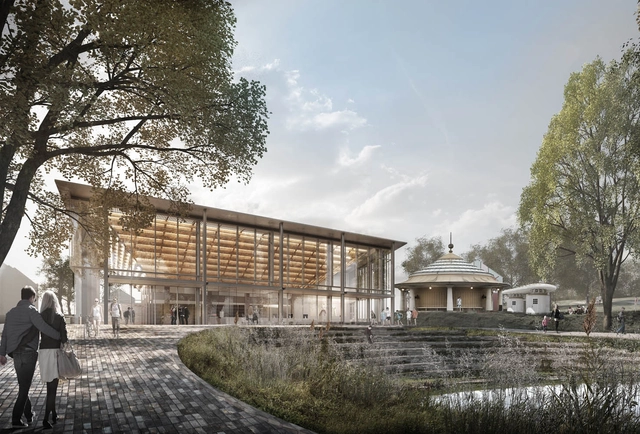
CUBO, a local architecture firm from Aarhus City, Denmark, has designed the main entrance pavilion for the firm's native city which will connect two existing elements of Aarhus - the Botanical Gardens and the Old Town. The building is both inviting and welcoming to residents and visitors, alike, providing the city with a gathering space, meeting point, and information hub.
Both the Botanical Gardens and Old Town are major attractions for visitors, playing an integral role in the city’s international reputation. CUBO’s pavilion seeks to enhance and add to what already exists by sensitively integrating the structure in the existing landscape.
https://www.archdaily.com/903861/cubos-entrance-pavilion-seamlessly-integrates-aarhus-citys-old-town-into-the-modern-cityLindsay Duddy
Le Corbusier’s Paintings Showcased for the First Time Since 1966

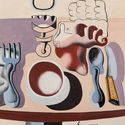
They say one cannot separate art from the artist, or perhaps in this case, the artist from the architect. Arguably one of the most criticized architects, Le Corbusier is often portrayed as cold and controlling. Depicting his more dreamy and humorous nature, the Nasjonalmuseet's exhibition titled, “Le Corbusier by the Sea,” draws upon his memories from his summer travels along the coast of southwest France.
Hosted in Villa Stenersen, one of the National Museum's venues, the exhibition showcases Le Corbusier's work as an artist during the period 1926-36. Not only does the exhibition include fifteen of his reproduced paintings alongside a collection of sketches, but also screens two films from Le Corbusier's own footage of his surrounding views.




https://www.archdaily.com/903626/le-corbusiers-paintings-showcased-for-the-first-time-since-1966Vasundhra Aggarwal
Getty Foundation Announces Grants for Architectural Conservation of 11 Modern Buildings
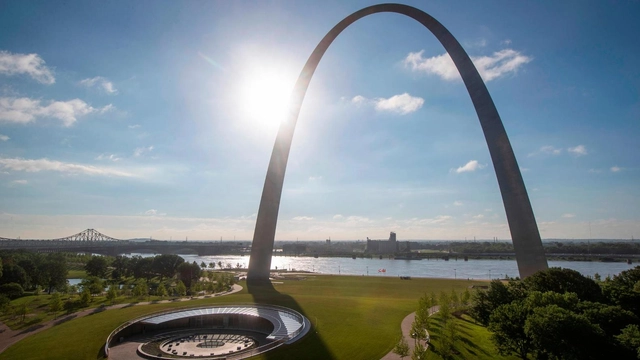
As part of its Keeping It Modern initiative, the Getty Foundation announced over $1.7 million will be dedicated as architectural conservation grants to eleven iconic 20th-century buildings this year. Including national and international sites such as Eero Saarinen's recently renovated Gateway Arch in St. Louis, Missouri, and Oscar Niemeyer’s Rashid Karami International Fairground in Tripoli, Lebanon, the organization has supported 54 conservation projects since 2014.

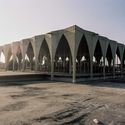
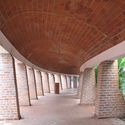

https://www.archdaily.com/903882/getty-foundation-announces-grants-for-architectural-conservation-of-11-modern-buildingsVasundhra Aggarwal
This Week in Architecture: Awards Season
.jpg?1539350633&format=webp&width=640&height=580)
The dominating news of the week came courtesy of RIBA and IIT, with the two announcing this year’s laureates of the Stirling Prize and Mies Crown Hall Americas Prize, respectively. Foster + Partners were awarded RIBA’s Stirling Prize for their Bloomberg HQ in London. Said jury member Sir David Adjaye, “Bloomberg is a once-in-a-generation project which has pushed the boundaries of research and innovation in architecture.” The project has been a controversial choice, with some citing the tension between the building’s massive price tag and the current UK housing crisis.
https://www.archdaily.com/903837/this-week-in-architecture-awards-seasonKatherine Allen
Rios Clementi Hale Studios Address Gentrification Through New L.A. Office
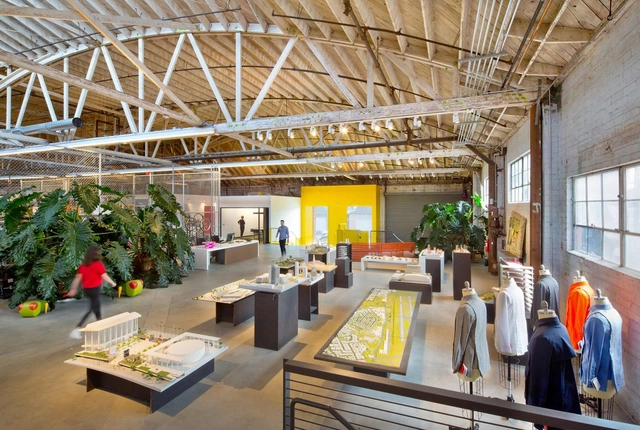
The Los Angeles-based firm, Rios Clementi Hale Studios, a transdisciplinary practice engaging in design from urban planning to product design, opened their new offices in the city's Crenshaw neighborhood. A recent article by Metropolis Magazine outlines the firm's design process in creating their new office layout to emphasize their aspirations as an established practice.
https://www.archdaily.com/903816/rios-clementi-hale-studios-address-gentrification-through-new-la-officeThomas Musca
Urban Nouveau Aims to Save Stockholm's Lidingö Bridge by Combining New Housing
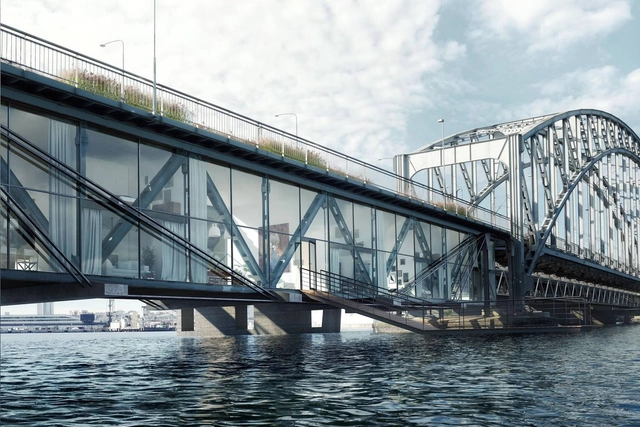
Swedish studio Urban Nouveau has created a plan to save Stockholm's Gamla Lidingöbron bridge by transforming it into a linear park and housing. Built in the 1920s, the rail and pedestrian bridge features a lattice structure and arched steel trusses that would frame 50 new apartments and a pedestrian park above. While the local council has made plans to demolish the Lidingö bridge, Urban Nouveau launched a petition with the aim of saving the bridge and re-purposing it for the city.





https://www.archdaily.com/903840/urban-nouveau-aims-to-save-stockholms-lidingo-bridge-by-combining-new-housingEric Baldwin
World's Largest CLT Building Provides a Model for High Density Urban Housing
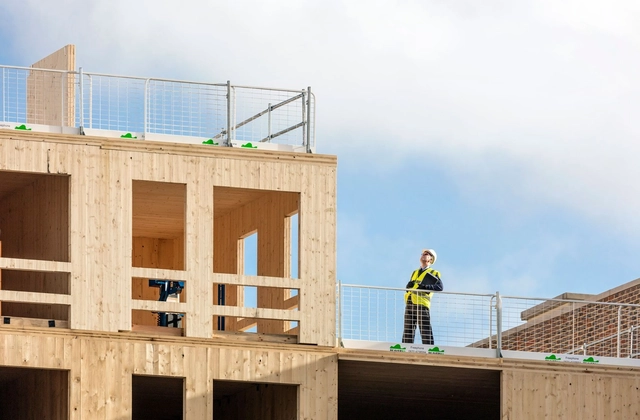
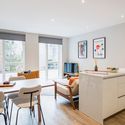
Waugh Thistleton Architects’ ten-story Dalston Works project stands proudly as the world’s largest Cross Laminated Timber building in Hackney, London, having been completed in 2017. The 121-unit development made entirely of CLT from external to core walls, the scheme weighs one-fifth of an equivalent concrete building.
In addition to tackling London’s need for dense, high-quality housing, the scheme offers a methodology for implementing timber technology with a significantly reduced carbon footprint, such as an 80% reduction in the number of deliveries during construction.




https://www.archdaily.com/903839/worlds-largest-clt-building-provides-a-model-for-high-density-urban-housingNiall Patrick Walsh
Olson Kundig's Hydro-Solar Generator Proposal Could Power 200 Melbourne Homes
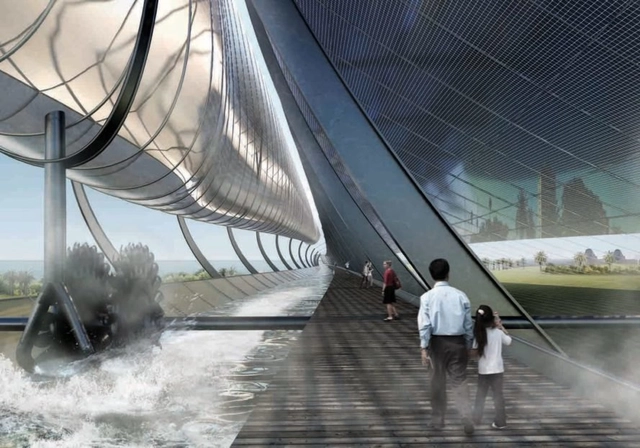
Seattle-based Olson Kundig has released details of their second-place winner from the 2018 Land Art Generator competition, set in Melbourne, Australia. The “Night & Day” scheme combines solar energy with a hydro battery, generating enough power for 200 Australian homes, 24 hours per day.
The St Kilda-situated infrastructure proposal doubles as an artwork and pedestrian bridge, with a flagship 5,400-square-meter solar sail suspended above the St Kilda Triangle in Port Phillip city. After sunset, further electricity is generated through two turbines capturing the kinetic movement of water released through them.
https://www.archdaily.com/903828/olson-kundigs-hydro-solar-generator-proposal-could-power-200-melbourne-homesNiall Patrick Walsh
7 Architecture Films to Watch from the Architecture Film Festival Rotterdam
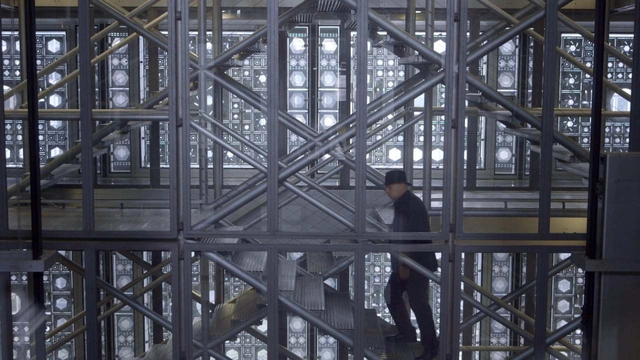
In recent years, architecture film festivals have erupted around the globe providing critics, theorists, and all architectural thinkers with an additional median for architectural expression and discussion. The symbiotic relationship between architecture and film stems from architecture’s effect on its built environment and its determined social/cultural impact.
As the international audience grows and new genres emerge, architecture film festivals have come to encompass more than just the film’s initial viewing; programs, lectures, and discussions are organized, enhancing the intellectual impact of the viewing material. Architecture Film Festival Rotterdam (AFFR) is celebrating its tenth edition this October by exploring the concept of “building happiness” in an age when we seek to build a more sustainable world - a challenge for both historic and contemporary design.
https://www.archdaily.com/903492/architecture-film-festival-rotterdam-explores-building-happiness-in-historic-and-contemporary-designLindsay Duddy
This Moss-Covered, Octagonal Micro-Cabin Combines Luxury and Rustic Aesthetic
lumadeline.jpg?1539283261)
Jacob Witzling may lack formal architectural training, but his passion for nature and cabin architecture has provided him with all the tools needed to both design and construct idyllic living spaces. Witzling’s cabins can be found throughout the United States; these structures are often sequestered to the woods, providing a remote escape from urban centers and suburban sprawl.
Witzling’s interest in cabins began at the age of 16. His father, an architect and engineer, provided him with a preliminary exposure to the world of designing and building. “I needed to exist in the woods, and even though I had never built anything other than a blanket fort, I knew that my passion to create would be sufficient,” says Witzling. “I remember pouring over the pages of my dad’s favorite book, 'Handmade Houses: A Guide to the Woodbutcher’s Art.' I would gaze at the pictures from inside my blanket fort and daydream about building one of my own.”
https://www.archdaily.com/903776/this-moss-covered-octagonal-micro-cabin-combines-luxury-and-rustic-aestheticLindsay Duddy
Orange Architects + KCAP Create a Golden City Block for St. Petersburg in Russia
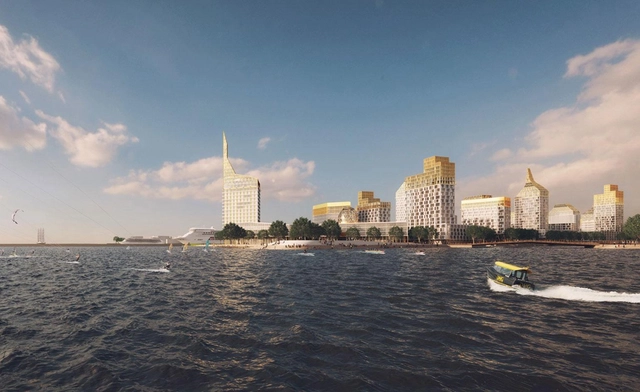
Orange Architects + KCAP have created a Golden City Block for St. Petersburg, Russia. Bordering the Finnish Gulf, the new urban development is part of Vasilievsky Island. Three of Orange and KCAP's projects in the development are already underway, including the towers of block 6, as well as construction for block 7 and block 8. Inspired by the morphology and structure of St. Petersburg’s city center, the design utilizes urban blocks with enclosed gardens and courtyards.




https://www.archdaily.com/903821/orange-architects-plus-kcap-create-a-golden-city-block-for-st-petersburg-in-russiaEric Baldwin
Zaha Hadid's Project in Rio Canceled
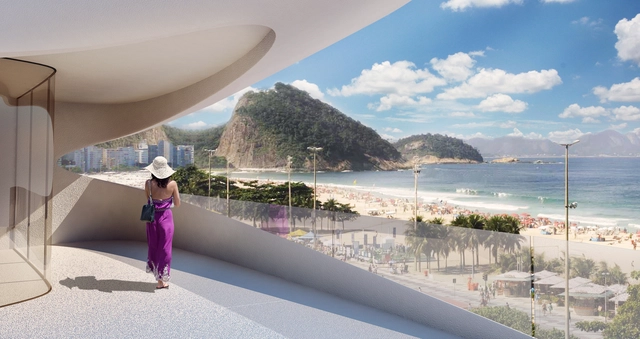
"Residencial Casa Atlântica" in Copacabana, Zaha Hadid's first project in South America, was canceled. O Globo reported the cause as "the delay of the city hall to release the work license and the consequent delay of the launch and inauguration of the project." The luxury residential condominium was designed in 2013 and should have been opened in time for the Olympics.
https://www.archdaily.com/903774/zaha-hadids-project-in-rio-canceledRomullo Baratto
MIT Team Working with Neri Oxman Design "Fiberbots" to Respond Quickly to Natural Disaster

The MIT-based Mediated Matter Group have created Fiberbots, an autonomous digital fabrication platform designed to quickly build architecture during disaster. By utilizing cooperative robotic manufacturing, Fiberbots can create highly sophisticated material structures. The small robots work as a group to wind fiberglass filament and create high-strength tubular structures. MIT researchers envision the bots building in extreme environments and natural disaster zones.





https://www.archdaily.com/903758/mit-designs-autonomous-fiberbots-to-build-for-natural-disasterEric Baldwin