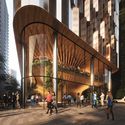
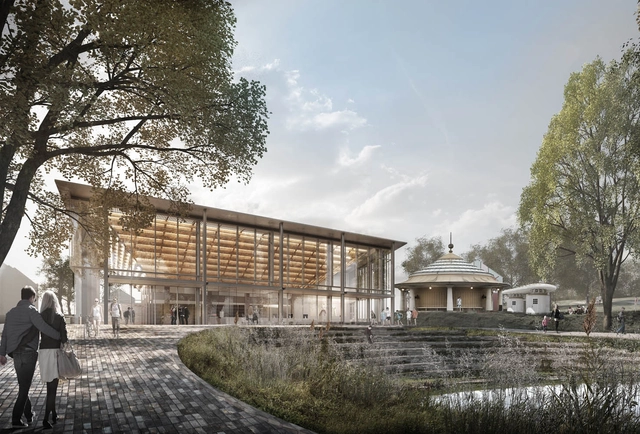
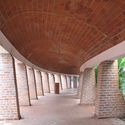
CUBO, a local architecture firm from Aarhus City, Denmark, has designed the main entrance pavilion for the firm's native city which will connect two existing elements of Aarhus - the Botanical Gardens and the Old Town. The building is both inviting and welcoming to residents and visitors, alike, providing the city with a gathering space, meeting point, and information hub.
Both the Botanical Gardens and Old Town are major attractions for visitors, playing an integral role in the city’s international reputation. CUBO’s pavilion seeks to enhance and add to what already exists by sensitively integrating the structure in the existing landscape.
They say one cannot separate art from the artist, or perhaps in this case, the artist from the architect. Arguably one of the most criticized architects, Le Corbusier is often portrayed as cold and controlling. Depicting his more dreamy and humorous nature, the Nasjonalmuseet's exhibition titled, “Le Corbusier by the Sea,” draws upon his memories from his summer travels along the coast of southwest France.
Hosted in Villa Stenersen, one of the National Museum's venues, the exhibition showcases Le Corbusier's work as an artist during the period 1926-36. Not only does the exhibition include fifteen of his reproduced paintings alongside a collection of sketches, but also screens two films from Le Corbusier's own footage of his surrounding views.
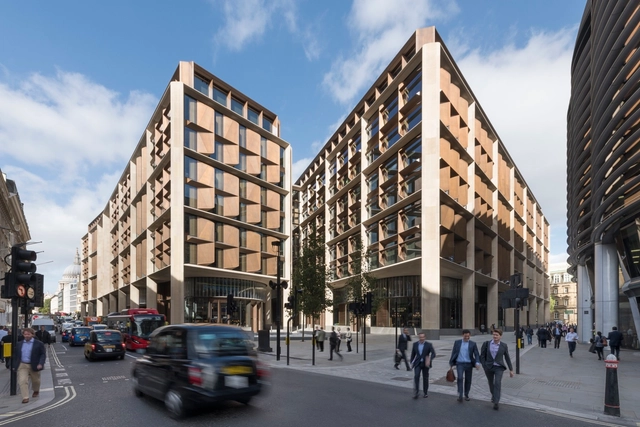
The dominating news of the week came courtesy of RIBA and IIT, with the two announcing this year’s laureates of the Stirling Prize and Mies Crown Hall Americas Prize, respectively. Foster + Partners were awarded RIBA’s Stirling Prize for their Bloomberg HQ in London. Said jury member Sir David Adjaye, “Bloomberg is a once-in-a-generation project which has pushed the boundaries of research and innovation in architecture.” The project has been a controversial choice, with some citing the tension between the building’s massive price tag and the current UK housing crisis.
https://www.archdaily.com/903837/this-week-in-architecture-awards-seasonKatherine Allen
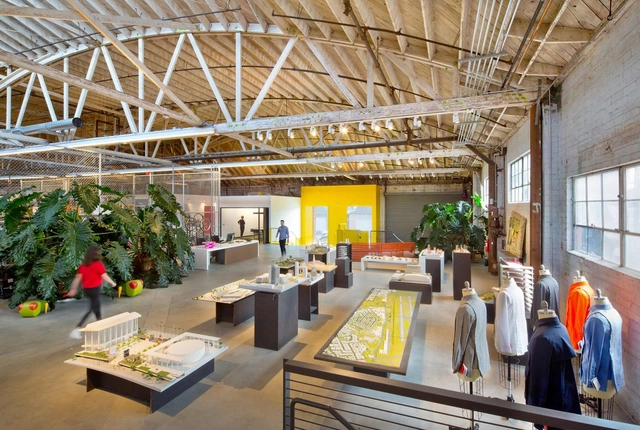
The Los Angeles-based firm, Rios Clementi Hale Studios, a transdisciplinary practice engaging in design from urban planning to product design, opened their new offices in the city's Crenshaw neighborhood. A recent article by Metropolis Magazine outlines the firm's design process in creating their new office layout to emphasize their aspirations as an established practice.
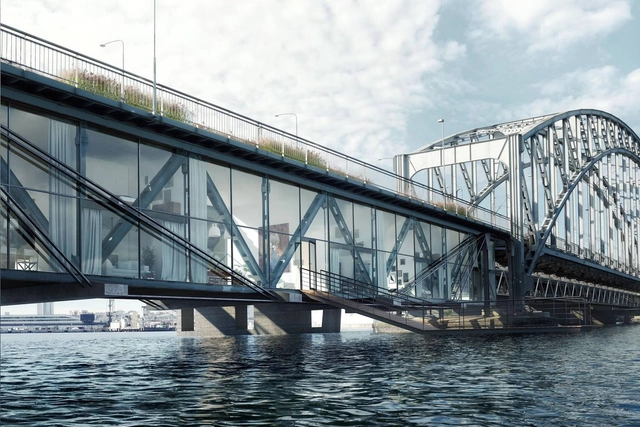
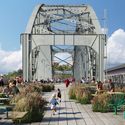
Lidingö Bridge Village. Image Courtesy of Urban Nouveau
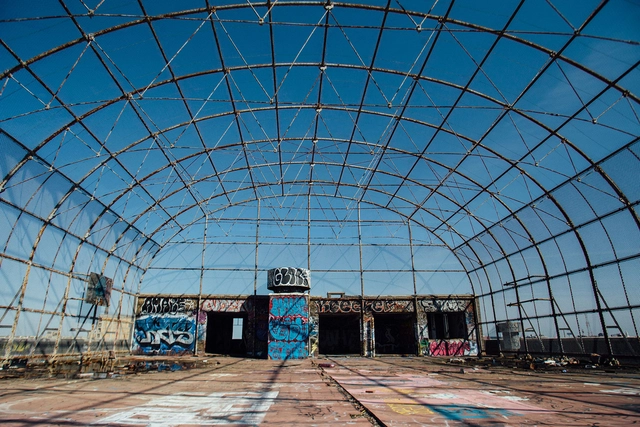
Swedish studio Urban Nouveau has created a plan to save Stockholm's Gamla Lidingöbron bridge by transforming it into a linear park and housing. Built in the 1920s, the rail and pedestrian bridge features a lattice structure and arched steel trusses that would frame 50 new apartments and a pedestrian park above. While the local council has made plans to demolish the Lidingö bridge, Urban Nouveau launched a petition with the aim of saving the bridge and re-purposing it for the city.
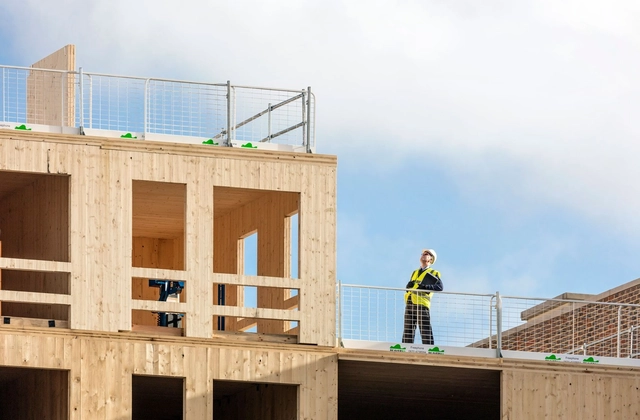
Waugh Thistleton Architects’ ten-story Dalston Works project stands proudly as the world’s largest Cross Laminated Timber building in Hackney, London, having been completed in 2017. The 121-unit development made entirely of CLT from external to core walls, the scheme weighs one-fifth of an equivalent concrete building.
In addition to tackling London’s need for dense, high-quality housing, the scheme offers a methodology for implementing timber technology with a significantly reduced carbon footprint, such as an 80% reduction in the number of deliveries during construction.
Seattle-based Olson Kundig has released details of their second-place winner from the 2018 Land Art Generator competition, set in Melbourne, Australia. The “Night & Day” scheme combines solar energy with a hydro battery, generating enough power for 200 Australian homes, 24 hours per day.
The St Kilda-situated infrastructure proposal doubles as an artwork and pedestrian bridge, with a flagship 5,400-square-meter solar sail suspended above the St Kilda Triangle in Port Phillip city. After sunset, further electricity is generated through two turbines capturing the kinetic movement of water released through them.
https://www.archdaily.com/903828/olson-kundigs-hydro-solar-generator-proposal-could-power-200-melbourne-homesNiall Patrick Walsh
In recent years, architecture film festivals have erupted around the globe providing critics, theorists, and all architectural thinkers with an additional median for architectural expression and discussion. The symbiotic relationship between architecture and film stems from architecture’s effect on its built environment and its determined social/cultural impact.
As the international audience grows and new genres emerge, architecture film festivals have come to encompass more than just the film’s initial viewing; programs, lectures, and discussions are organized, enhancing the intellectual impact of the viewing material. Architecture Film Festival Rotterdam (AFFR) is celebrating its tenth edition this October by exploring the concept of “building happiness” in an age when we seek to build a more sustainable world - a challenge for both historic and contemporary design.
Jacob Witzling may lack formal architectural training, but his passion for nature and cabin architecture has provided him with all the tools needed to both design and construct idyllic living spaces. Witzling’s cabins can be found throughout the United States; these structures are often sequestered to the woods, providing a remote escape from urban centers and suburban sprawl.
Witzling’s interest in cabins began at the age of 16. His father, an architect and engineer, provided him with a preliminary exposure to the world of designing and building. “I needed to exist in the woods, and even though I had never built anything other than a blanket fort, I knew that my passion to create would be sufficient,” says Witzling. “I remember pouring over the pages of my dad’s favorite book, 'Handmade Houses: A Guide to the Woodbutcher’s Art.' I would gaze at the pictures from inside my blanket fort and daydream about building one of my own.”
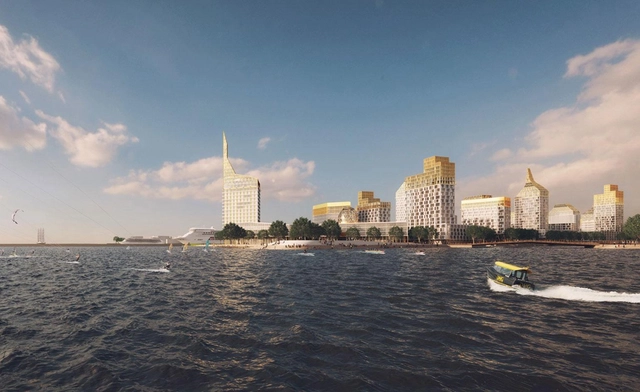
Golden City. Image Courtesy of KCAP and Orange Architects
Orange Architects + KCAP have created a Golden City Block for St. Petersburg, Russia. Bordering the Finnish Gulf, the new urban development is part of Vasilievsky Island. Three of Orange and KCAP's projects in the development are already underway, including the towers of block 6, as well as construction for block 7 and block 8. Inspired by the morphology and structure of St. Petersburg’s city center, the design utilizes urban blocks with enclosed gardens and courtyards.
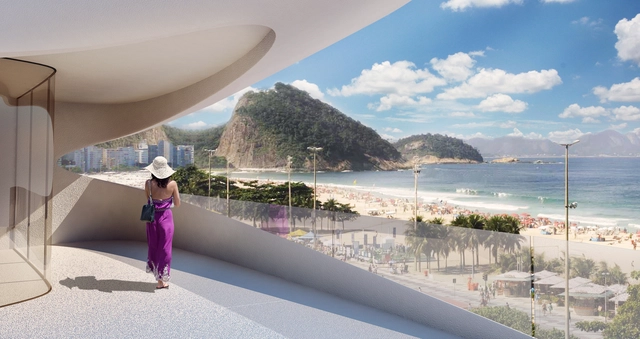
"Residencial Casa Atlântica" in Copacabana, Zaha Hadid's first project in South America, was canceled. O Globo reported the cause as "the delay of the city hall to release the work license and the consequent delay of the launch and inauguration of the project." The luxury residential condominium was designed in 2013 and should have been opened in time for the Olympics.
The MIT-based Mediated Matter Group have created Fiberbots, an autonomous digital fabrication platform designed to quickly build architecture during disaster. By utilizing cooperative robotic manufacturing, Fiberbots can create highly sophisticated material structures. The small robots work as a group to wind fiberglass filament and create high-strength tubular structures. MIT researchers envision the bots building in extreme environments and natural disaster zones.
UK entrepreneur Ehab Syed has developed a mushroom-based insulation with his company Biohm, embodying techniques that are “completely natural, biodegradable and vegan.”
As reported by Global Construction Review, the material will come to the market in the coming months, with interest expressed by Tata Steel, Heathrow Airport, and leading UK house builders.
https://www.archdaily.com/903744/biohms-vegan-insulation-system-offers-a-future-for-green-constructionNiall Patrick Walsh
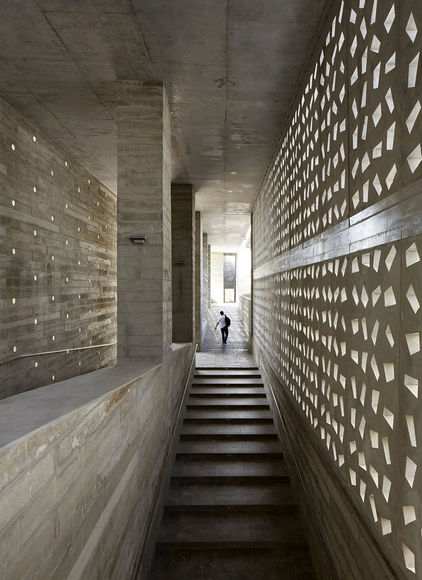
https://www.archdaily.com/903653/barclay-and-crousses-university-of-piuru-edificio-e-in-peru-wins-the-2018-mies-crown-hall-americas-prizeNiall Patrick Walsh
The Royal Institute of British Architects (RIBA) have announced Foster + Partner's Bloomberg HQ as the winner of the 2018 Stirling Prize. Seen as the UK's most prestigious architecture award, this award is given to the building " that has made the biggest contribution to the evolution of architecture in a given year." Selected from a list of six projects, the design highlights the collaboration between a civic-minded client and architect, as well as addressing the public realm.
Trigoni, Helsinki High-Rise. Image Courtesy of Brick Visual
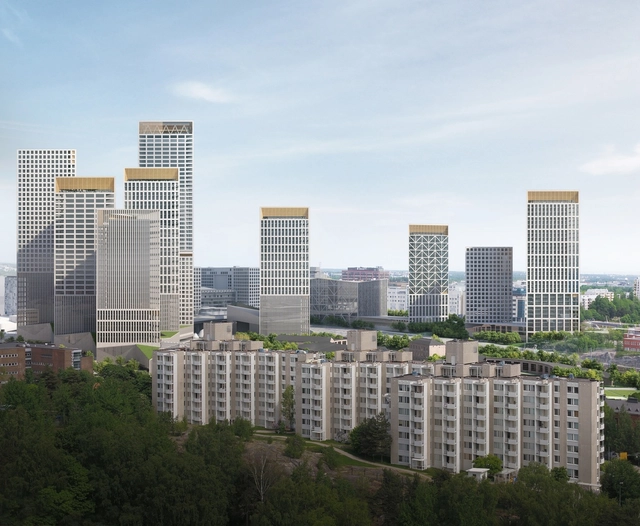
Finnish office Lahdelma & Mahlamäki architects have won the competition to design a new high-rise district in Helsinki. Proposing a cluster of public space and triangular plan towers, the firm will see the phased construction of the high-density, mixed-use towers and public space alongside construction firm YIT. Located in the Pasila district, the project is called Trigoni as a reference to the triangular plan of the towers and the desire to create strong connections around sustainable development.
Videos
Courtesy of American Institute of Architects
The American Institute of Architects have released the winning films for the 2018 Film Challenge. As part of the institute's larger Blueprint for Better campaign, the film challenge asked participants to produce, shoot, and edit 3 to 5 minute documentary-style short films. The AIA invited architects and filmmakers to collaborate in telling stories of architects, civic leaders and communities working together toward positive community impact.
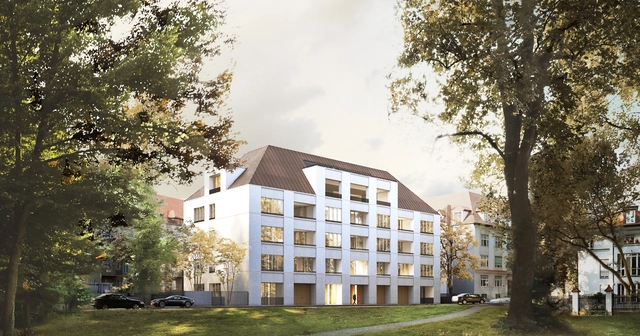
David Chipperfield and Euroboden have collaborated on the design of a five-story building in Munich, located near the city’s Herzog Park. The 2800-square-meter scheme seeks to “fit sensitively into the historic fabric of the neighborhood.”
The design process revolved around the incorporation of history and pattern from the surrounding environment, without copying or resorting to historicization. The result is a scheme which is “simultaneously self-confident yet restrained, a building that integrates itself into its context without subordinating itself.”
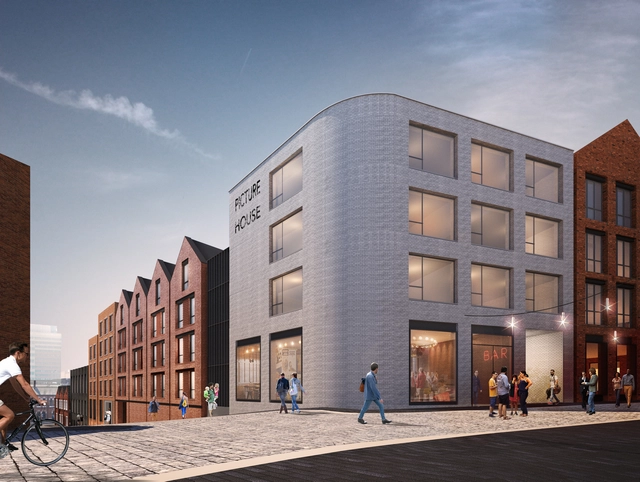
Home to the historic engineering firm, AE Harris, for over 50 years, Birmingham’s treasured Jewellery Quarter is being revamped on account of modernized manufacturing methods adopted by the company.
Joint venture partners Galliard Homes and Apsley House Capital are working alongside Glenn Howells Architects to transform the site into a residential-led, mixed-use hub for the quarter.
After creating the perfect sketchbook, Architools is back with a minimalist notebook made for designers and architects alike. The project is now raising funds on Kickstarter, and aims to bring a subtle elegance to the humble notebook. Named the Dérive, or “drift” in French, the notebook embodies qualities of wanderlust and sensory exploration. Featuring refined materials and design, it was made to inspire the next project or adventure.
Videos
65 Federal Street. Image Courtesy of Woods Bagot
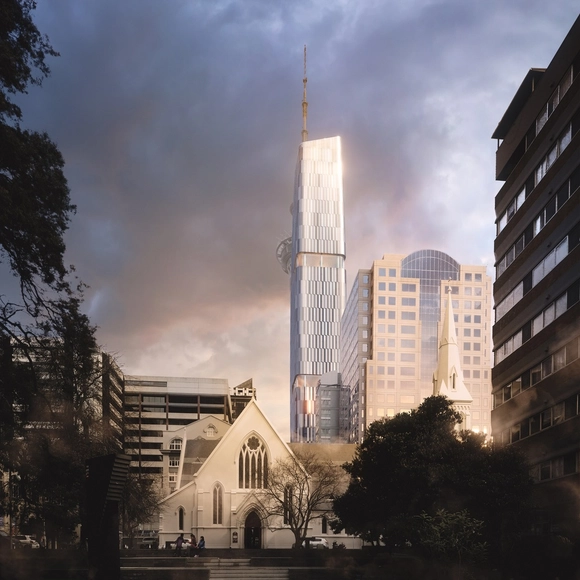
Woods Bagot and Peddle Thorp have been announced as the winners of the international competition to create a new high-rise tower in central Auckland. Drawn from five finalists including Warren and Mahoney, Cox Architecture, Zaha Hadid Architects, and Elenberg Fraser, the winning design will stand 180m high. The building design is inspired by New Zealand’s natural landscape and the country’s unique geology and fauna.
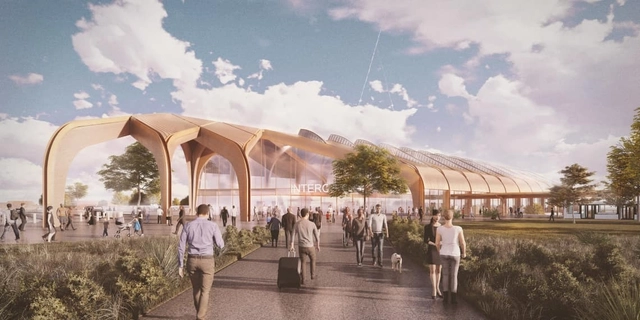
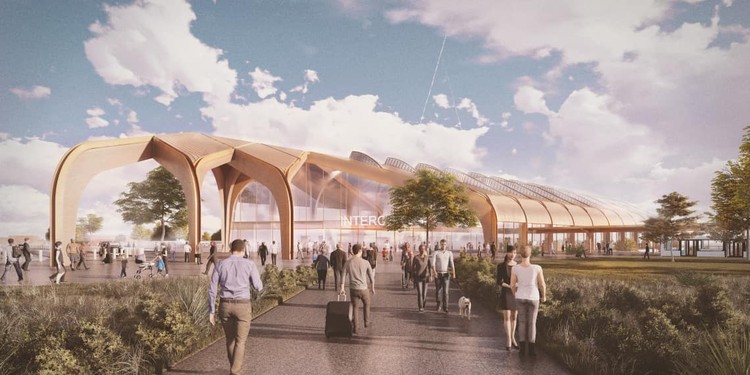
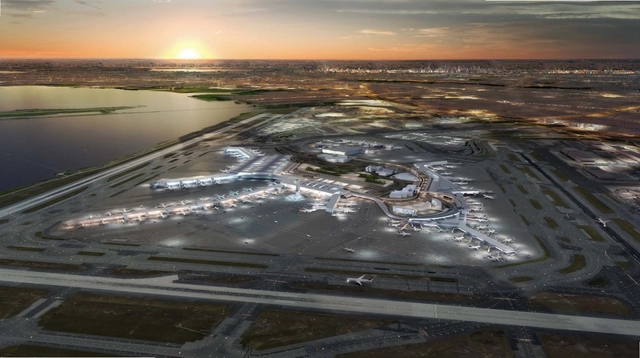
New images have been published of Grimshaw and Arup-designed stations for the UK’s ”High Speed 2” railway system. Connecting London to the British Midlands, the mega-infrastructure project will be the UK’s second high-speed rail system, with HS1 already connecting London and the South East to the Channel Tunnel.
The Grimshaw and WSP-designed Curzon Street station in Birmingham will be the first brand new intercity station to be built in Britain since the 1800s, while Interchange Station, designed by Arup, will serve as a gateway station to the West Midlands and Birmingham Airport.










.jpg?1539350633&format=webp&width=640&height=580)









lumadeline.jpg?1539283261)














_James_Newton.jpg?1539114598 "© James Newton")

_Nigel_YoungFoster___Partners.jpg?1539114234 "© Nigel Young")