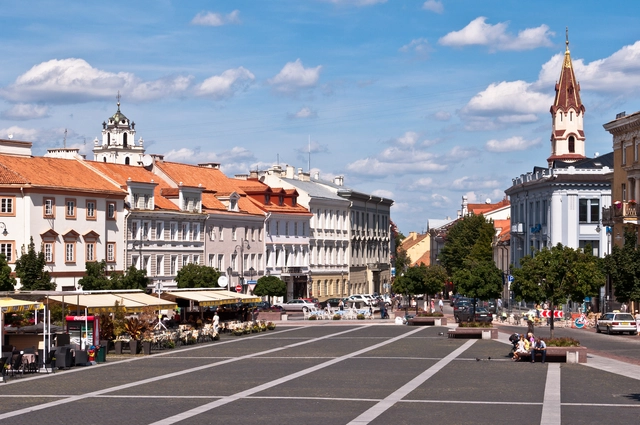
The Town Hall Square in Vilnius, Lithuania. Image via Shutterstock/ By Donatas Dabravolskas
The Lithuanian capital Vilnius has decided to allocate its public spaces to bars and cafes, to encourage the reopening of restaurants under required physical distancing measures. Turning the outdoor space into one vast open-air café, the city is taking new safety measures to step into the next phase of the lockdown.
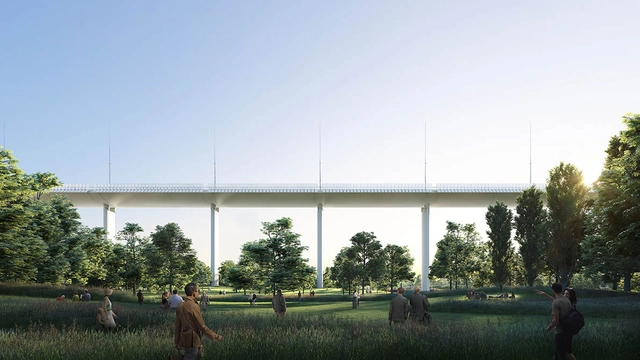
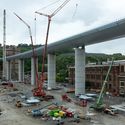
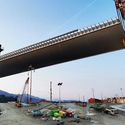
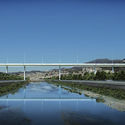
The final piece of the new Morandi Bridge decking in Genoa, Italy has been put in place. Designed by Renzo Piano, the structure is being built to address the tragic collapse of the original bridge that claimed 43 lives. In the aftermath of the disaster, Piano offered to donate the design of a bridge to replace the old one, having been deeply affected by the tragedy. The latest announcement comes from PERGENOVA, the company established to design and build the new bridge.
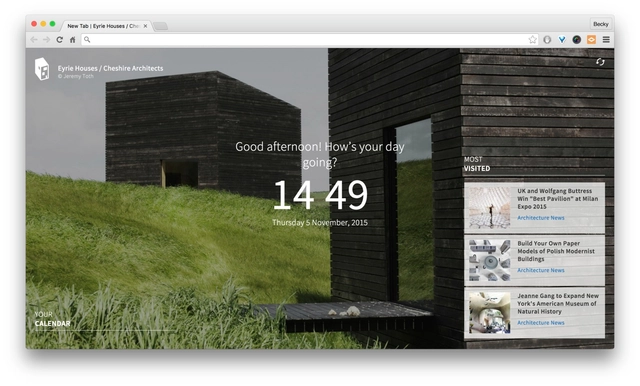
Transform your “New Tab” page into a useful, inspiring tool with ArchDaily’s New TabChrome Extension.
Every time you open a new tab in your Chrome browser, it’s an opportunity to be inspired with a randomly selected photograph of our +38,000 curated projects. If you want to learn more about the project featured, you can easily click to see more pictures, drawings, and information.
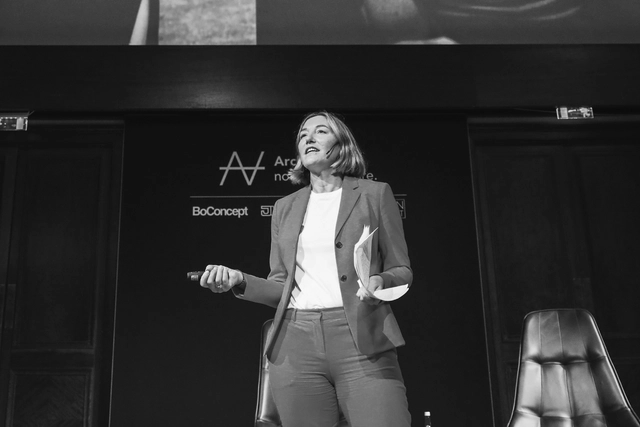
Architects, not Architecture decided to open their archive to help us cope with the current situation of not being able to go out as usual and create a source of inspiration and entertainment through sharing one of the unique talks from their previous 35 events, which have never been published before – including those of architects like Daniel Libeskind, Tatiana Bilbao, Peter Cook, Richard Rogers, Massimiliano Fuksas, Kim Herforth Nielsen, Ben van Berkel, Benedetta Tagliabue, Anupama Kundoo, Sadie Morgan, Dan Stubbergaard, Manuelle Gautrand and Kjetil Thorsen,
Every week, Archdaily will be sharing one of the Architects, not Architecture. talks which they are currently publishing online in the form of daily full-length video uploads as part of their event: Home Edition 2020 (www.architectsnotarchitecture.com).
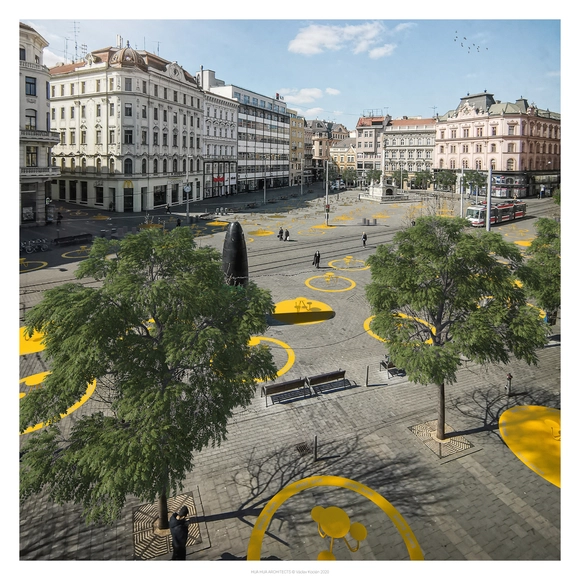
HUA HUA Architects has imagined a proposal that can reconcile people and public spaces, post Covid-19. The Gastro Safe Zone program aims to awaken stagnant gastronomic businesses by regulating outside eating and ensuring the required social distancing measures. The first prototype has been already installed in the streets of Brno in the Czech Republic.
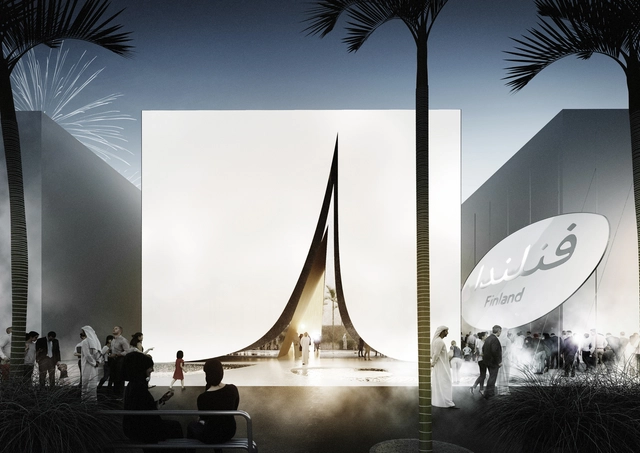
The FinlandPavilion for Expo Dubai 2020 draws inspiration from Finnish nature, design, and innovation. Imagined by JKMM Architects, the project also takes on elements from the local context, with tent-like features.
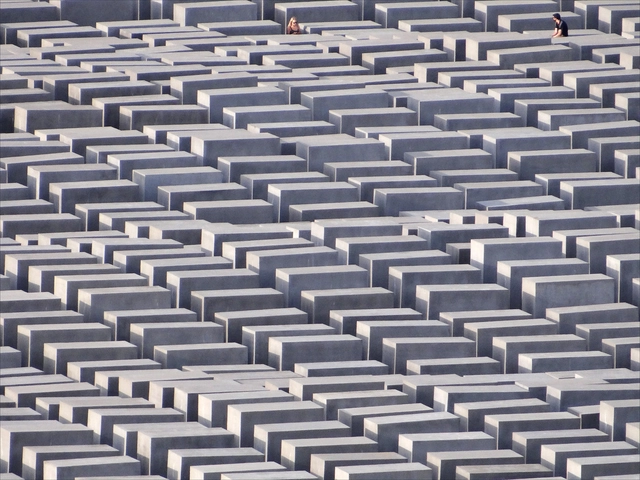
The Louisiana Channel recently released a new interview with Peter Eisenman on the Memorial to the Murdered Jews of Europe in Berlin. Sharing his thoughts on what went into building the memorial, he touches on the desire to move away from Jewish symbolism. The video explores the larger idea and feeling of being lost in space and time, a concept that Eisenman describes as a "field of otherness."
ArchDaily has become one of the 1,000 most visited websites on the Internet, according to the latest Alexa Internet ranking -- an Amazon-owned company that measures the popularity of all Internet sites.
More than 360,000 users visit our flagship English-speaking platform every day, which when combined with our network of Spanish, Portuguese, and Chinese sites, creates a daily global audience of 650,000 people: the most visited architecture network in the world.
But why is this relevant? Why do these numbers matter?
When we started this project 15 years ago, we knew that the expansion of cities would become the biggest challenge for humanity, and that architects, with better access to knowledge, had the ability to radically improve the quality of life of billions of people. That is why we envisioned ArchDaily as a global source of inspiration, knowledge, and tools to help architects face this challenge. A carefully curated, objective, categorized database of projects and knowledge, paired with a stream of globally diverse content.
But architecture is bigger than architects, and it has become - to our joy - a transversal subject. We have all, as a society, understood the importance of our built environment, how it can shape our mindset, improve our well being, form our education, and drive opportunities and set the grounds for a more egalitarian society. Moreover, a bounty of changes in urban and economic dynamics is also molding architecture into something more relevant, more recognizable, and more democratic. That is why our profession and craft are permeating into Netflix and Apple TV shows, becoming an object of admiration on Instagram, and representing something that you can dream of, aspire to, and work towards catalogues such as Pinterest.
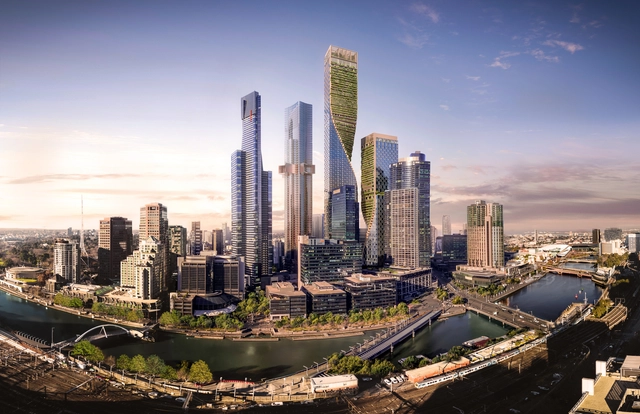
The Victorian State Government has given official approval for the Southbank project, in Melbourne, with construction scheduled for next year. Set to become Australia’s tallest tower, the building is conceived by Dutch firm UNStudio and local firm Cox Architecture.
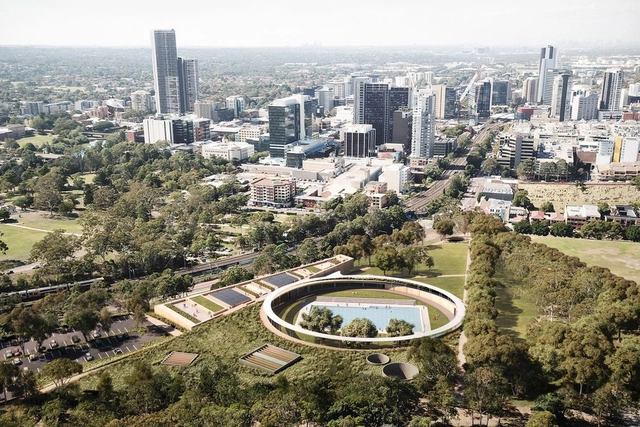
Parramatta City Council has approved the new Aquatic and Leisure Center project by Grimshaw, Andrew Burges Architects and McGregor Coxall. Located in New South Wales, Australia, the project was reviewed via a development application that outlined the project's vision since its inception in June 2018. The aquatic center will replace the Parramatta Memorial Pool and will integrate with the surrounding park setting.
Autodesk has quickly become an industry standard for architecture and engineering software. Bringing together a range of tools and programs with resources like Autodesk University and the Autodesk Foundation, the company is exploring the future of how we design and build. In an exclusive interview with ArchDaily, we explore the company's thoughts on generative design, machine learning and new emerging technologies.
ArchDaily and Strelka Mag have launched a jointly curated section that will host projects of emerging architects and offices that promote new design ideas and bring about positive transformations in their cities.
Another year, another successful ArchDaily China Building of the Year Awards! With more than 20,000 votes gathered over the past 20 days, the results of the 2020 edition are in! Once more, the award has proved to be the largest architecture prize centered around people’s opinion. Crowdsourced, the most relevant projects of the year were nominated and selected by our readers.
This year we celebrate three projects -- highlighting a wide range of interventions, typologies, scale, material and locations, the winners are a mere reflection of the vast outreach of the profession. With new names surfacing every year, this edition, as the previous ones did, honors well-established practices and the newcomers. High-profile figures include Atelier FCJZ with its bridge museum in the Chinese countryside, Neri&Hu Design and Research Office and its sculpture art center, and Atelier Lai's Bamboo Bridge.
True to its status, ArchDaily China, the most far-reaching Chinese architectural website, is and will always be a platform for all architecture enthusiasts. Curating the best in the world, thanks to the trust of architectural firms and the devotion of our readers, ArchDaily’s realm keeps expanding exponentially. For that, we are grateful!
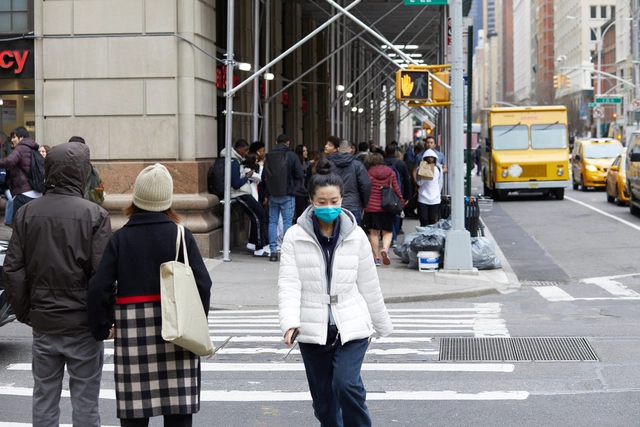
New York, NY / USA - March 12, 2020. Image via Shutterstock/ By hector de jesus
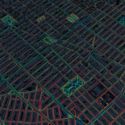
As social distancing becomes the new norm in the fight against COVID-19, people are finding it harder to keep up with the six-foot rule in dense cities. Urban Planner Meli Harvey developed a map of New York that shows the width of sidewalks in the city, aiming to highlight public areas where social distancing can be maintained.
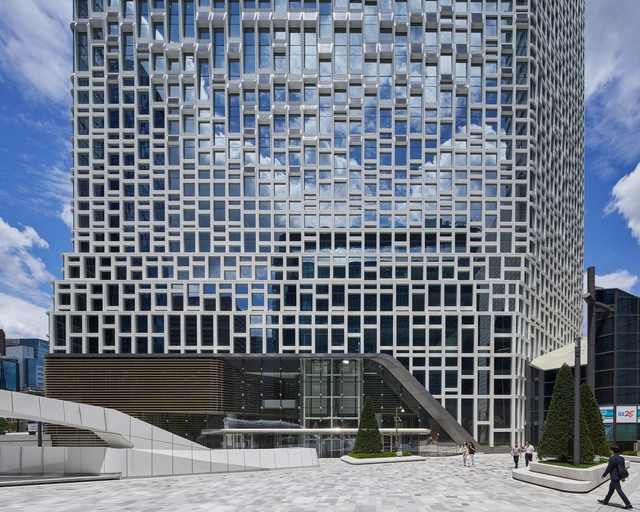
UNStudio has just completed the remodeling works of the Hanwha headquarters building in Seoul, while the building remained fully occupied. The refurbishment operations have created a modern establishment that meets the current sustainability requirements.
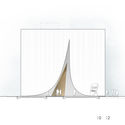
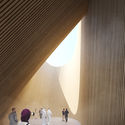
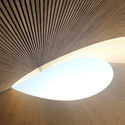
The QuzhouSports Campus by MAD Architects is taking shape in China’s Zhejiang province. Led by the Ma Yansong, the team designed the campus as a futuristic landscape with mountains and a lake conceived as a sunken garden. The design connects to the historic city to become a surreal and tranquil landscape. The project's vision is to bring both the competition among sports stars and the physical activity of people’s daily lives together.
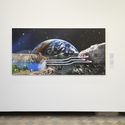
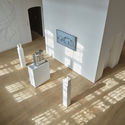
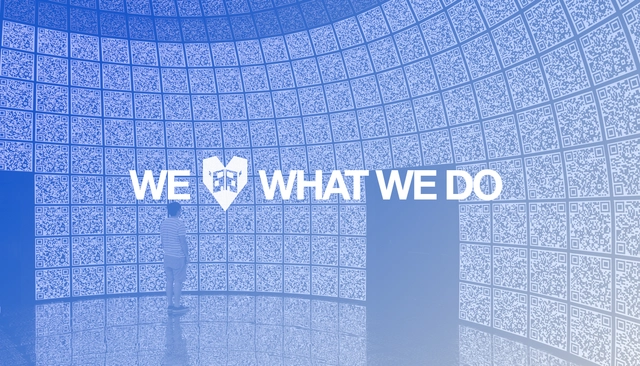
I recently viewed a public art commission at Dubai's foremost cultural district - Alserkal Avenue: it was an installation by an artist collective - METASITU, who had transformed a warehouse on the Avenue previously known as Nadi Al Quoz, into a 21st-century ruin. The work titled: 'we were building sand castles_but the wind blew them away', was inspired by the perennial demolitions that have become an integral part of contemporary placemaking around the world. Through this piece of work, METASITU reflects on the extractive city-building processes, while contextualising them within different human and ecological timelines. The long-term vision of the artists was to deconstruct the building and return its constituent materials to their ‘original state’. Later this year, they plan to further deconstruct the installation into a public landscaped environment.
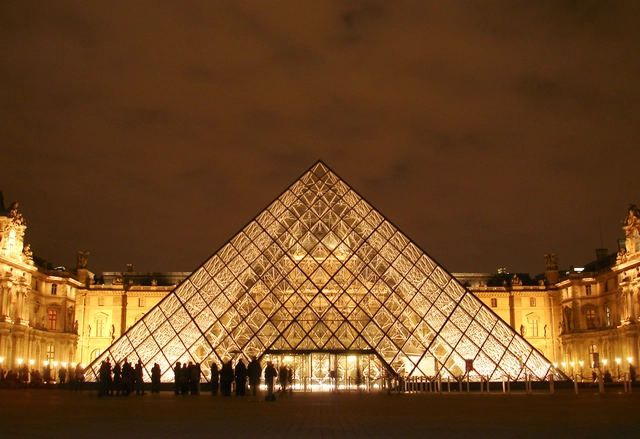
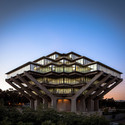
Chinese-American architect Ieoh Ming Pei (April 26, 1917-May 16, 2019), is arguably the greatest living member of the modernist generation of architects. When he received his Pritzker Prize in 1983, the jury citation stated that he "has given this century some of its most beautiful interior spaces and exterior forms."
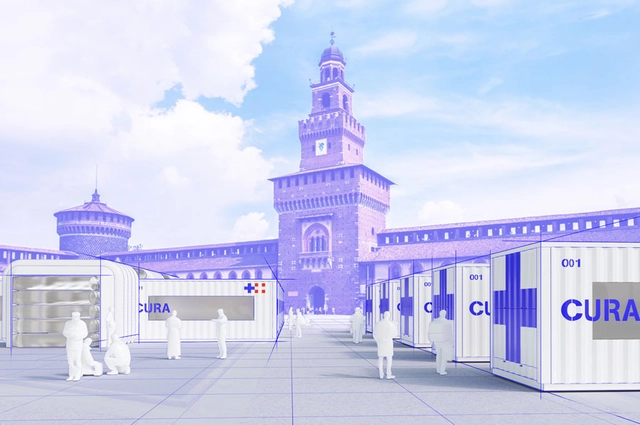
CURA pods. Image Courtesy of Carlo Ratti Associati
As the global health crisis continues, architects and designers are putting their expertise, technical capabilities and research skills in the service of the fight against the coronavirus. Metropolis Magazine has gathered together a list of several companies and their different initiatives for helping out in this novel situation. From 3d-printing personal protection equipment for medical staff, to designing modular intensive care units, and researching steps for converting buildings into hospitals, the creative community is bringing its own contribution to the efforts of tackling the pandemic.
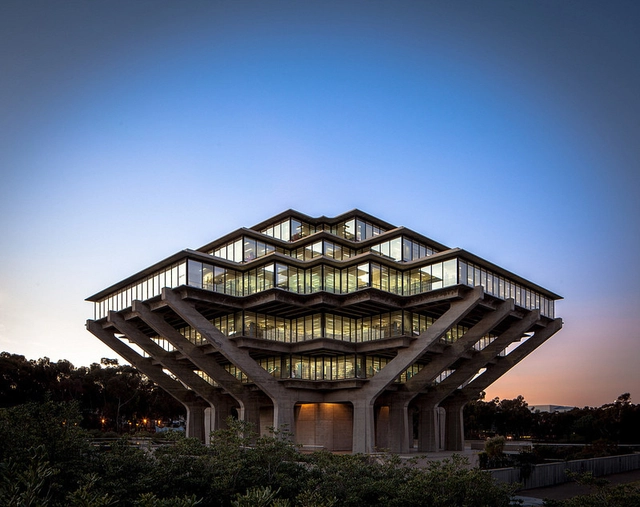
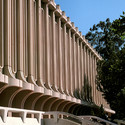
Winner of the 1942 Acadamy Award for Best Special Effects, William Pereira (April 25, 1909 – November 13, 1985) also designed some of America's most iconic examples of futurist architecture, with his heavy stripped down functionalism becoming the symbol of many US institutions and cities. Working with his more prolific film-maker brother Hal Pereira, William Pereira's talent as an art director translated into a long and prestigious career creating striking and idiosyncratic buildings across the West Coast of America.
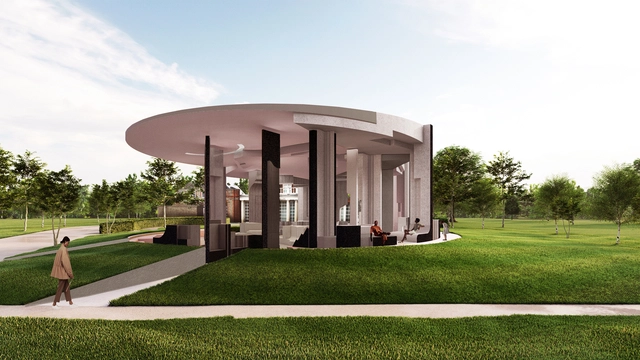
The opening of the 20th Serpentine Pavilion, designed by South African Studio Counterspace, has been postponed to summer 2021. "Counterspace, directed by Sumayya Vally, Sarah de Villiers and Amina Kaskar, will collaborate with the Serpentine on a series of off-site and online research projects throughout 2020, which will culminate with the opening of the Pavilion in Summer 2021," the Serpentine Galleries announced.
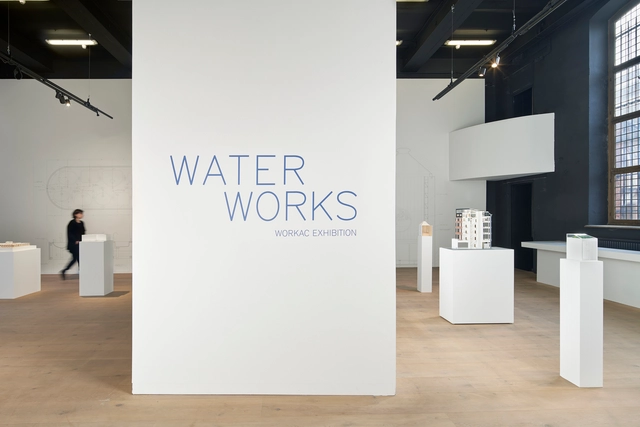
WORKac in collaboration with Musea Brugge and Cultuurcentrum Brugge has created an exhibition entitled Water Works. Set to run initially from March 7th to June 7th, 2020 at the historic Poortersloge in Bruges, Belgium, the exhibition has been temporarily closed to the public due to the ongoing COVID-19 epidemic. However, the New York-based architectural practice has produced a brief video highlighting its six themed rooms and the eighteen projects on display.
GXN, a sister company of 3XN, rethinks architecture, spaces, and materials. Researching how architects can and should close the feedback loop with their structures, the multidisciplinary team at GXN harvests and analyzes vital data from buildings in order to help architects build a better future. Concentrating their efforts on Circular Design, Behavior Design, and Digital Design, the people behind GXN are architects, engineers, designers, and social scientists. From Copenhagen, Kåre Poulsgaard, Head of Innovation at GXN, spoke with ArchDaily’s Christele Haarouk, about Artificial Intelligence in Architecture.









au_003_cp_4K.jpg?1588061761&format=webp&width=640&height=580)


au_003_cp_4K.jpg?1588061761)
_(1).jpg?1587734157&format=webp&width=640&height=580)




.jpg?1587722437 "Courtesy of UNStudio")

.jpg?1587679731&format=webp&width=640&height=580)
.jpg?1587679017 "Courtesy of MAD Architects")
.jpg?1587679000 "Courtesy of MAD Architects")
.jpg?1587679138 "Courtesy of MAD Architects")
.jpg?1587679159 "Courtesy of MAD Architects")
.jpg?1587679731)
10.jpg?1587641554&format=webp&width=640&height=580)
7.jpg?1587641448 "© Ismail Noor")
4.jpg?1587641493 "© Ismail Noor")
2.jpg?1587641529 "© Ismail Noor")
11.jpg?1587641544 "© Ismail Noor")
10.jpg?1587641554)