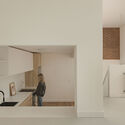
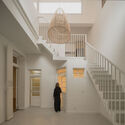
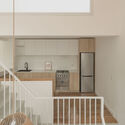
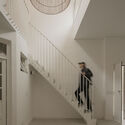
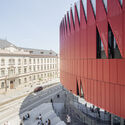
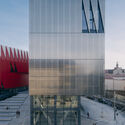
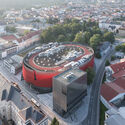
-
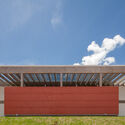
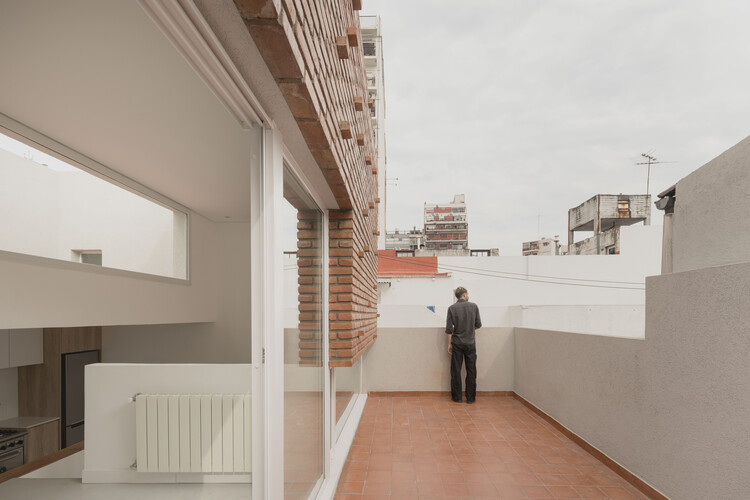
Architects: Alejandro Puentes, Carolina Jaimes, Juan Esteban López
- Area: 750 m²
- Year: 2024


Robert A.M. Stern, the American architect, educator, and historian whose work shaped both the physical and intellectual landscape of contemporary architecture, has died at the age of 86. His passing was confirmed by Robert A.M. Stern Architects (RAMSA), the New York-based practice he led for more than five decades. Known for advancing a contextual, historically informed approach during decades dominated by modernist and high-tech architecture, Stern remained a prominent voice advocating for continuity, urban civility, and an understanding of architecture as part of a longer cultural lineage.

On November 20, 2025, the Mississippi Museum of Art (MMA) confirmed the purchase of Fountainhead, a house designed by Frank Lloyd Wright in 1948 and completed in 1954. The renowned modernist architect designed the residence and its furnishings for oil businessman J. Willis Hughes, who lived there with his family until 1980. Established in 1911, the MMA is the largest art museum in the state of Mississippi, offering exhibitions, public programs, artistic and community partnerships, educational initiatives, and opportunities for exchange year-round through a permanent collection of paintings, photography, multimedia works, and sculpture. The purchase is part of the Museum's goal to embed itself in neighborhoods across the city in ways that support its community-building priorities, making the architectural landmark available to the public for tours with reservations. The initiative is inspired by institutions such as the Crystal Bridges Museum of American Art, which acquired the Wright-designed Bachman-Wilson House in 2015.

In public restroom design, innovation goes far beyond aesthetics—it transforms the entire user experience. One of the most exciting trends today is integrating all functional elements—hand dryers, faucets, soap dispensers, and paper dispensers—behind the mirror.
This approach creates a cleaner, minimalist look while optimizing space and enhancing hygiene. All devices remain fully functional but hidden: users simply place their hands where indicated on the mirror, and the equipment activates automatically—no physical contact required.