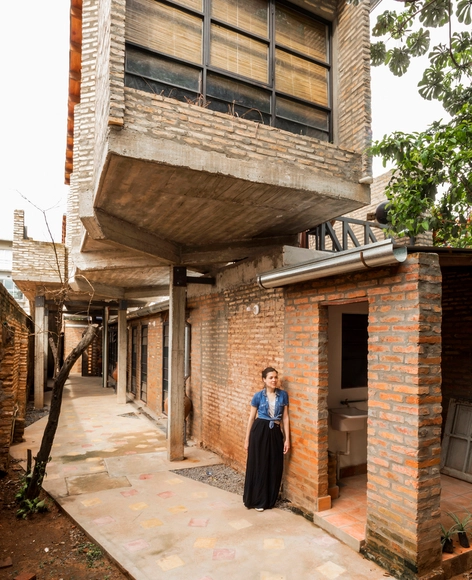
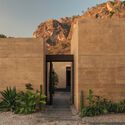
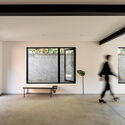
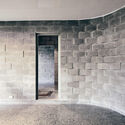
What makes a building architecture? The eternal debate over what distinguishes architecture from mere utilitarian construction has often included affordable and social housing as an influential topic, sparking different points of view. This question is particularly significant in the Latin American context, where unique conditions go beyond cost concerns, whether imposed or unavoidable. Limited access to financing, the prevalence of self-construction, and the spread of informal settlements are interconnected factors shaping the built environment. These dynamics foster an aesthetic that, for some, challenges notions of good architecture, manifesting in urban landscapes where exposed materials become a defining feature.
https://www.archdaily.com/1024259/unpolished-narratives-exposed-materials-in-latin-american-affordable-housingEnrique Tovar & José Tomás Franco
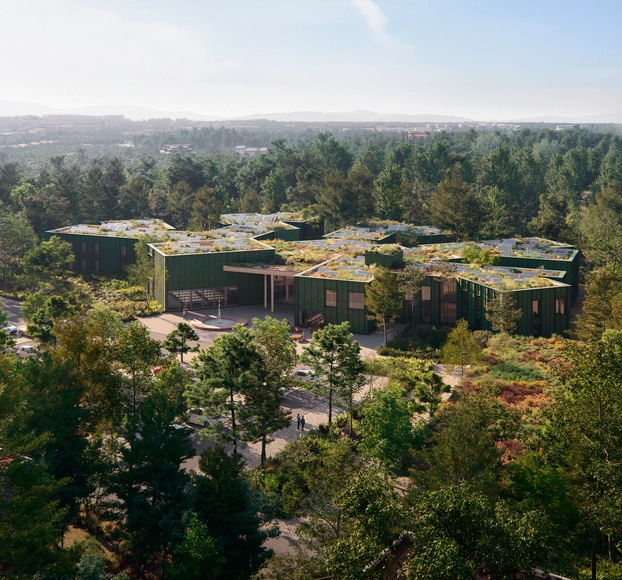
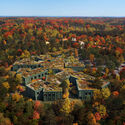
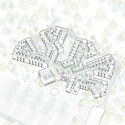
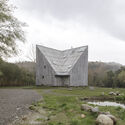
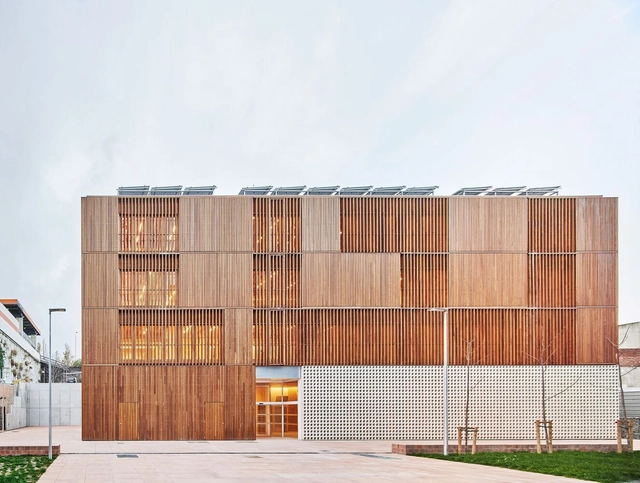
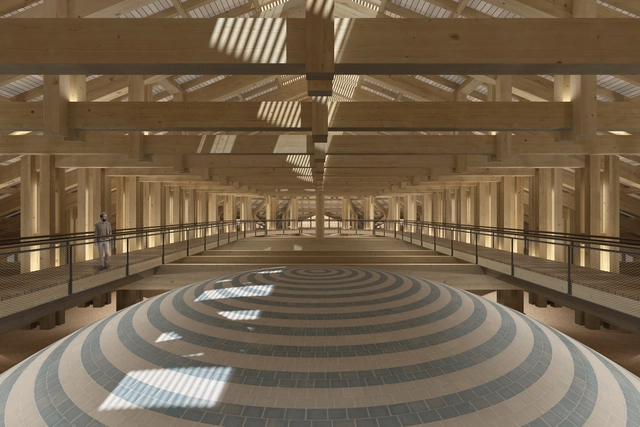
In 2016, an international public architecture competition was announced to design a new administrative center for the Czech Forestry Commission. The new building would replace the existing headquarters on the outskirts of Hradec Králové, a medieval city surrounded by municipal forests on its eastern limit. CHYBIK+KRISTOF's 'Forestry in the Forest' project was selected as the winning proposal in 2017 after a two-round anonymous competition. Now, seven years after the competition, the firm has revealed images and plans for what is set to become the largest wooden structure in the Czech Republic. The design is characterized by establishing a permanent relationship with the surrounding landscape and by seeking to exemplify the benefits of timber construction for the local industry.
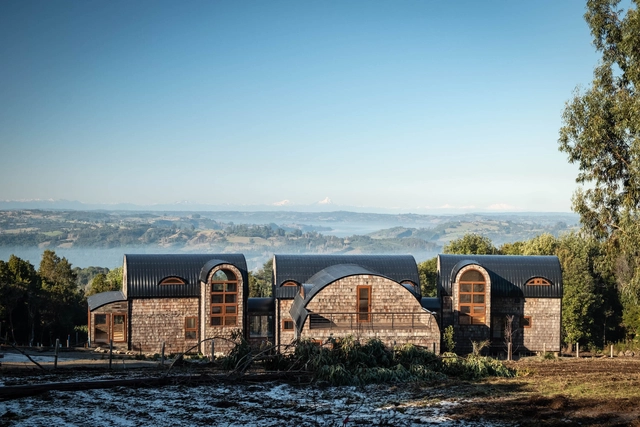
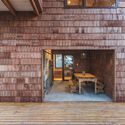
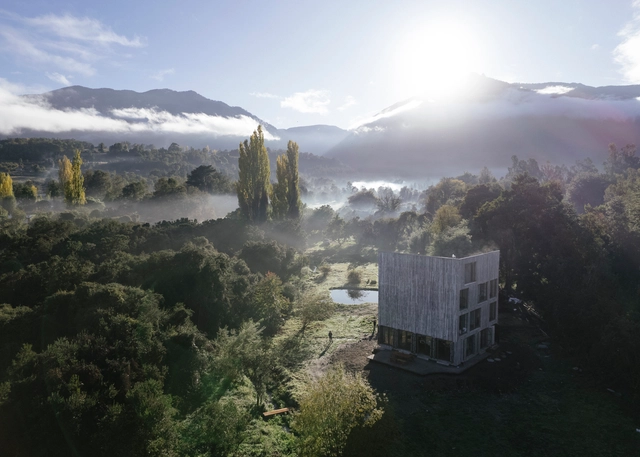
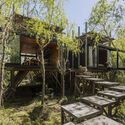
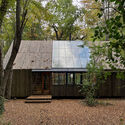
On a slope, along the banks of a river, among trees, or on an expansive hillside, each territory serves as a living testament to its local traditions. Through its architecture, the experimentation, appreciation, and use of certain materials, construction techniques, local crafts, and site-specific tools aim to preserve stories and pass on the discoveries and learnings that have shaped many of the practices still used in construction today. In Chile, the language of wooden shingles evokes a reflection rooted in history and an understanding of relationships, timelines, and life networks.
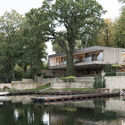
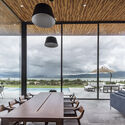
On the shores of serene lakes, where water reflects the harmony between architecture and nature, homes emerge as true retreats. Designed to offer comfort and a deep connection with the surroundings, these residences stand out worldwide for their diverse materials and scales, adapting to different landscapes and lifestyles. From remote woodencabins to sophisticated concrete and glass mansions in urban areas, each project takes advantage of natural resources and the unique characteristics of its setting.
Annually, ArchDaily's curatorial team undertakes a rigorous selection process to identify exemplary projects in Latin American residential architecture. The goal is to share these works of architecture with our audience and highlight and promote good practices within contemporary architecture. This meticulous effort focuses on identifying projects that stand out for their design and their positive impact on the environment, innovative use of materials and techniques, and ability to address current needs.
As 2024 comes to an end, a dynamic year that questioned knowledge, tradition, and innovation, we take a look at how global events and trends influenced the design of interior spaces. Last year, architecture practices sparked worldwide discussions, challenging norms and tradition, and embracing overlooked regions. Interior design, on the other hand, took a more reserved, modest approach, favoring simplicity and individuality. Fast forward a year later, the overall architecture and design themes of 2023 remain the same - reinforced if anything - but have embraced "crafted experimentations" through subtle, acupuncture-like interventions.
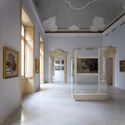
Mario Cucinella Architects (MCA) has reimagined the architectural design of Palazzo Citterio in Milan, Italy, integrating historical and contemporary elements to create a dynamic cultural space. As part of the Grande Brera initiative, which seeks to unify key cultural institutions such as the Pinacoteca di Brera and the Braidense National Library, the palazzo now stands as a hub for modern and contemporary art. Ultimately, the project aims to reestablish Palazzo Citterio as a significant cultural and social landmark, fostering community engagement and interaction.
For some, the perfection of nature reveals the signature of a divine force, something that defies rational explanations. The result of millions of years of adaptation and evolution, natural structures and organisms operate with an efficiency that is hard not to admire. Every form seems to have a precise purpose, showcasing ingenuity where functionality and beauty harmoniously coexist. From leaves to the smallest organisms, nature follows an impeccable logic of economy and precision, eliminating waste. It demonstrates that simplicity is often the purest expression of sophistication. Trees, for instance, grow to maximize strength and stability while minimizing resource use. This structural efficiency is achieved by aligning fibers along paths of maximum tension and shaping trunks and branches to optimally distribute loads. It's a testament to the fact that nature, above all, is a masterful engineer.
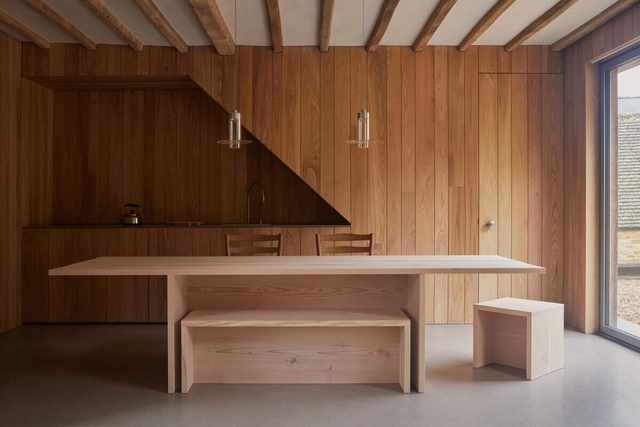
John Pawson is a renowned British architect and designer, widely recognized for his minimalist approach, which values simplicity, proportion, and material authenticity. In his work, he explores space and light with depth, refining each element to its essence to create environments that promote tranquility and focus. His portfolio spans private homes, galleries, churches, and monasteries, each exemplifying his dedication to material purity and spatial harmony. By balancing clean lines, natural textures, and understated details, Pawson establishes a modern elegance and timeless quality that make him a pioneer of architectural minimalism.
Traditionally, architecture's role has been to create a barrier between inhabitants and the elements, providing protection and security. Even with material and technological advances over time, this function remains fundamental. We still rely on our building envelopes to keep us dry, safe, and comfortable, allowing us to live our daily lives with ease. Nowadays, high-performance building envelopes expand this protective function by using advanced materials and technology, transforming into essential elements of sustainable and resilient design. They not only protect interiors from external factors—such as heat, humidity, and pollutants—but also contribute directly to the building's energy efficiency, durability, and aesthetics. Consisting of facades, solar shading systems, and windows, these envelopes define the building's character and play an essential role in its overall performance.
A new generation of sustainable practices is transforming the architectural landscape. What is its 'secret'? The combination of innovation, ecological awareness, and, fundamentally, the revaluation of natural resources that have accompanied humanity since its earliest days. While this knowledge was never truly lost, the techniques associated with these materials have long remained in the background. Today, they are making a resurgence, adapting to modern challenges, and reestablishing themselves as essential, timeless elements in tomorrow's architecture.
https://www.archdaily.com/1022116/smart-eco-conscious-architecture-and-decor-inspired-by-natures-finest-materialsEnrique Tovar
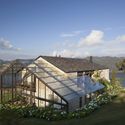
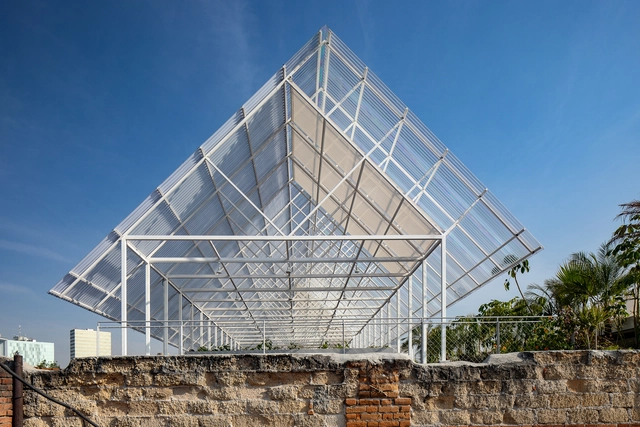
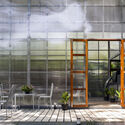
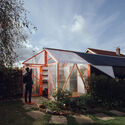
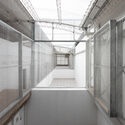
Polycarbonate, commonly used in roofing and industrial cladding, has gone beyond its initial applications to become a material widely used across various architectural typologies. Its combination of strength, lightness, easy installation, and ability to allow natural light to pass through has made it an attractive option for residential,educational, and even cultural architecture projects. In homes, polycarbonate not only helps create bright and comfortable environments but also allows for creative use of translucency to generate private spaces without sacrificing visual connection to the outdoors.
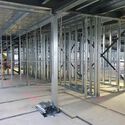
Two primary building approaches are commonly identified in architecture and design: solid versus hollow construction. These methods vary significantly across different cultures and regions, specifically for interior partitioning systems, when they appear interchangeable. Each has its own established practices influenced by local materials, labor preferences, climatic conditions, and cultural traditions. When architects and designers focus on their local context, it is easy to overlook the broader construction assumptions, limiting design flexibility and methodology. This raises an important question: How do these two building approaches differ?
Focusing mainly on interior systems, the distinctions between solid and hollow construction largely stem from the availability of materials and workforce preferences. For example, in the United States and Japan, stud walls, both wood and metal, are frequently used for partitioning. Conversely, brick remains the predominant material for partition walls in regions such as Hong Kong and southern China. Why do we build differently, and what are the benefits and challenges of each building methodology?
Italy's influence on contemporary design has been profound and captivating, with Italian architecture consistently bridging cultural heritage and innovation, from advancements in construction techniques to the evolution of the neoclassical style. A prime example of this integration is the Italian villa typology, which reached its zenith during the Renaissance with groundbreaking innovations. Villa Almerico —designed by Andrea Palladio and inspired by Alberti's treatise De re aedificatoria— exemplifies this evolution. Renowned for its centralized and symmetrical plan, its construction marked a turning point with classical proportions and the incorporation of courtyards and gardens as extensions of the living space, highlighting a remarkable contextual relationship.
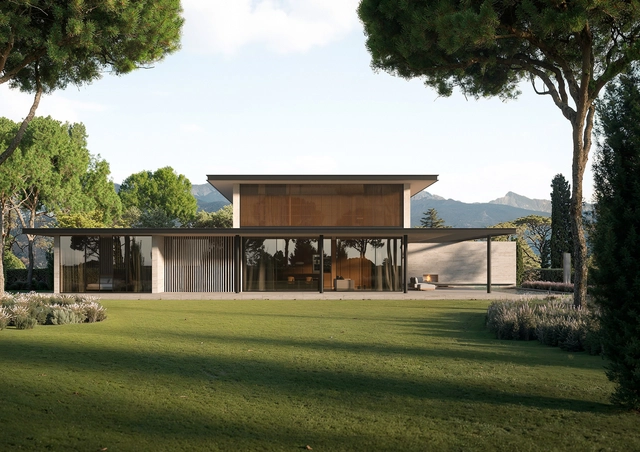
Although Palladio's influence was so profound that his style defined much of European and American architecture in subsequent centuries, the concept of the Italian villa has endured and evolved. Its ability to combine functionality, aesthetics, and respect for the environment has allowed its fundamental principles to remain in force, now merging with new currents of contemporary design. A clear example is Villa Apua, a project by PAN Architetti inspired by the Versilian concept of buen ritiro. The house's meticulous design addresses the needs of its inhabitants while fostering an intimate, thoughtful connection with the landscape and the memory of Forte dei Marmi, a town nestled between the Mediterranean coast and the Apuan Alps. This harmony is further enhanced by the great flexibility of the antoniolupi collections, whose rich finishes and materials seamlessly integrate the living space with its furnishings and the surrounding environment.
https://www.archdaily.com/1021313/where-italian-style-meets-wellness-and-serenity-the-case-of-villa-apuaEnrique Tovar
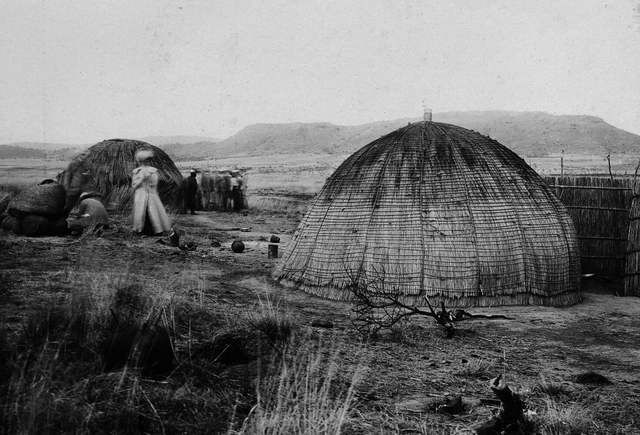
Reflecting on the past is often viewed as nostalgia or, from a more critical standpoint, as a sign of regression. However, looking back can offer valuable insights into a society that sometimes appears overly focused—if not obsessed—with the future and technology. In architecture, this reflection allows us to reconnect with our roots and appreciate the knowledge accumulated over generations. It invites us to explore how our ancestors designed durable structures adapted to their environment. Refined through centuries of observation, experimentation, and likely even errors, these systems demonstrate a profound understanding of local materials and building techniques.
https://www.archdaily.com/1020943/heritage-in-mud-stone-and-reeds-rediscovering-ancestral-construction-techniquesEnrique Tovar
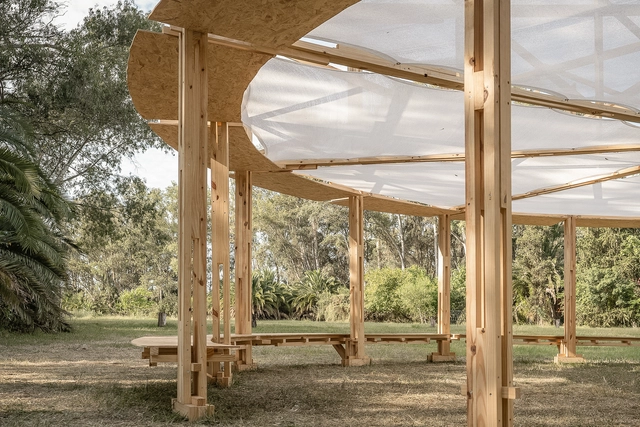
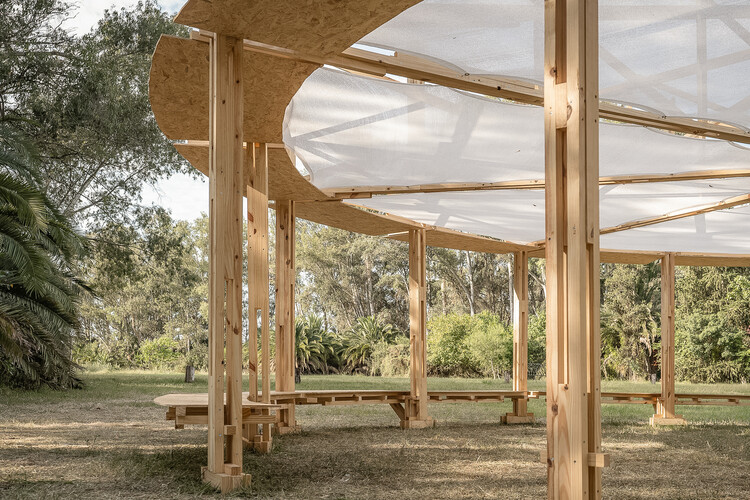
Carpa Itinerante / Fabrizio Pugliese + Gabriel Huarte. Image Cortesía de Fabrizio Pugliese + Gabriel Huarte
Spanning over 20 million square kilometers and featuring nearly all the climates of the world, the Latin American region is home to endemic biological wealth and geographical diversity that ranges from some of the most significant rivers in the world to the mountain range of the Andes, the Amazon rainforests, the plains of Patagonia, the coasts of the Caribbean Sea, and more. In light of a collective effort involving local communities and new generations, the construction of installations and structures in these natural environments is aimed not only at meeting functional needs but also at educational, research, and environmental conservation purposes.
Proposal for the Roof of the Málaga Cathedral. Image Courtesy of Marina Uno Arquitectos
Like a musical composition, there is a particular category of buildings whose history might be compared to an unfinished symphony. Alternating between high notes and moments of silence, these structures are intermittent narratives that have spanned centuries. One of the most emblematic cases is the Sagrada Familia, which has been under construction for over a century and is on track to be completed this decade. While a hundred years of construction is no small feat, another building in this group surpasses that range: the Cathedral of Málaga, located in southern Spain, has been in the making for over five centuries.
Driven by Renaissance influences, the cathedral began construction in 1528. Since then, it has experienced periods of interruption throughout its history, resulting in an unfinished landmark. The cathedral is still missing one of its towers, has incomplete elements on its facade, and its vaults are exposed to the weather due to the absence of a covering structure. Over the years, various works have been undertaken—including the recent adaptation of tourist access to the domes—but one major task remains: the gable roof. Originally proposed in 1764 by Ventura Rodríguez, its design has been reimagined and will now be executed using contemporary wooden construction techniques.
https://www.archdaily.com/1020754/track-to-completing-malaga-cathedral-the-role-of-timber-in-designing-the-new-gable-roofEnrique Tovar
The Roman Colosseum is arguably the most iconic versatile venue in the world. Although this structure was not intended for sporting activities, it hosted various events, from the well-known gladiatorial combats to theatrical performances and the dramatic naumachia (naval battles). This demonstrates that flexible use of space has been relevant since ancient times. Centuries later, in the context of the ever-changing built environment and urban development, sports venues have similarly evolved, becoming outstanding examples of multi-purpose spaces.
These athletic complexes have transformed from highly specialized venues into dynamic, multifunctional structures. Whether hosting major international events such as the Olympic and Paralympic Games or serving as gathering spots for local communities, these spaces strike a delicate balance between addressing the needs of specific sports and maintaining the flexibility to accommodate a range of activities. How do these diverse functions coexist and interconnect? This analysis will explore how sports facilities are configured as flexible hubs for other disciplines and everyday activities.
https://www.archdaily.com/1020243/from-wooden-shells-to-polycarbonate-panels-the-materials-shaping-flexible-sports-spacesEnrique Tovar