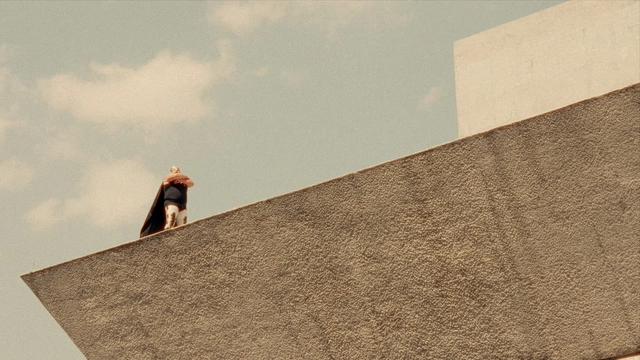
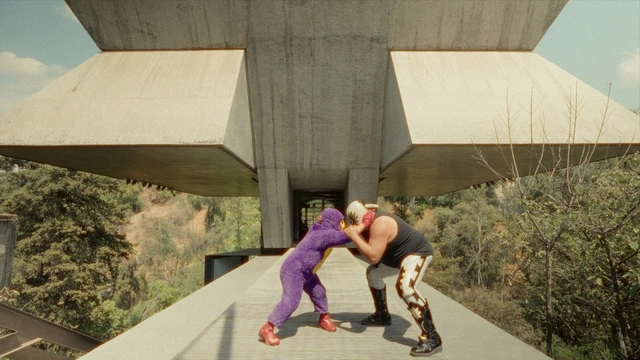
In Mexico City, the iconic Casa Praxis(1975) by the renowned Mexican sculptor, poet, and architect Agustín Hernández Navarro became the main stage in "El Luchador" (The Wrestler), a short film produced by Simon anddirected by RA! Arquitectos alongside filmmakers René Batista and Tito Sánchez. The film marks the launch of the 5th edition of the Living Places-Simon Architecture Prize. Simon, a centennial family-owned company specializing in lighting, energy, and space management, is recognized globally for its commitment to architectural excellence.
The film’s story follows the journey of a young dreamer who enters the house to live out his greatest fantasy: to become a wrestler, while facing unexpected events. It highlights the power of dream spaces to make the wishes of their inhabitants come true, illustrating that behind every living space there is an architect with a story to tell.
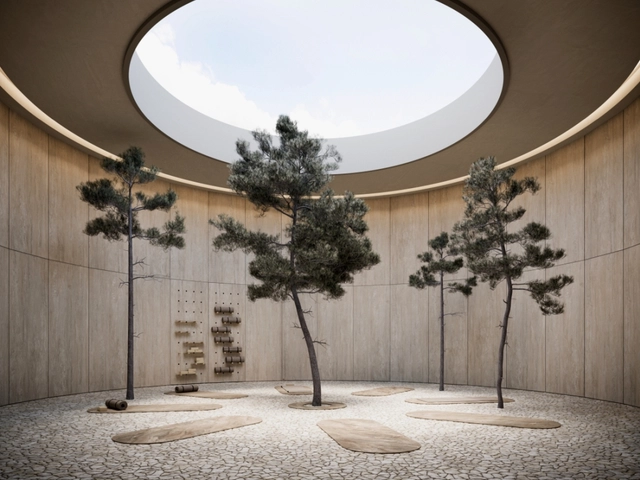
Graduate Thesis 2023 Merit Award project by Mackenzie Champlin with advisor Ramiro Diaz Granados
For over 50 years, SCI-Arc has driven students to advance design stewardship in new directions. Renowned for its avant-garde approach and its commitment to pushing the boundaries of architecture, SCI-Arc's Master of Architecture 1 (M.Arch 1) program exemplifies these qualities through a uniquely structured and forward-thinking curriculum. Fostering technical expertise and critical discourse, the M.Arch 1 program propels graduates to lifelong success in not only architecture but also in leading creative fields like AI, gaming, virtual reality, and film-based world building.
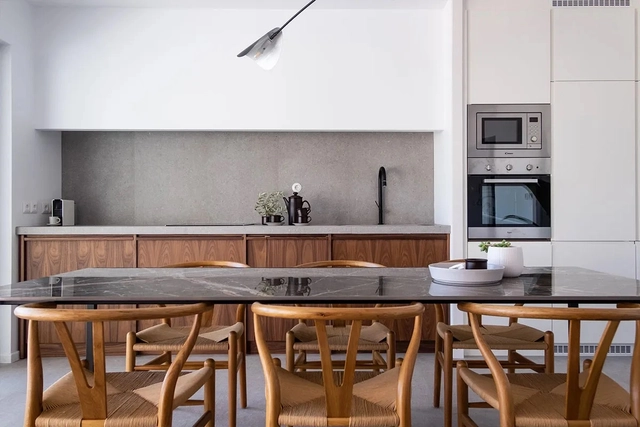
Every fresh design idea needs a unique design solution. Even the greatest concept needs help and support to turn it into something tangible and beautiful, and a fully formed experience.
The 5,500 m2 MODplus facility in Thiva, Greece, incorporates a design studio and state-of-the-art factory, with a team devoted to tailor-making premium furniture for homes, hospitality, retail, and contemporary workspaces internationally. It is a hub for problem-solving and innovative production, with departments devoted to woodwork, vacuum form shaping, industrial paint applications, metalwork, upholstery, and polyurethane molding. The company has spent years developing relationships with customers, creating totally unique experiences through furniture. Each project they have worked on to date has been a dialogue, helping designers bring to fruition something that may start out as an abstract idea.
https://www.archdaily.com/1019145/tailor-made-furniture-for-unique-design-in-hotels-homes-and-retail-spacesMark C. O'Flaherty
How we perceive space is a crucial aspect of architecture and interior design, profoundly influencing our interaction with the environment. Consequently, spatial perception is shaped by elements such as furniture arrangement, lighting, color choices, and materials. The latter is particularly significant, as the same material can be employed in various ways, resulting in atmospheres with unique characteristics.
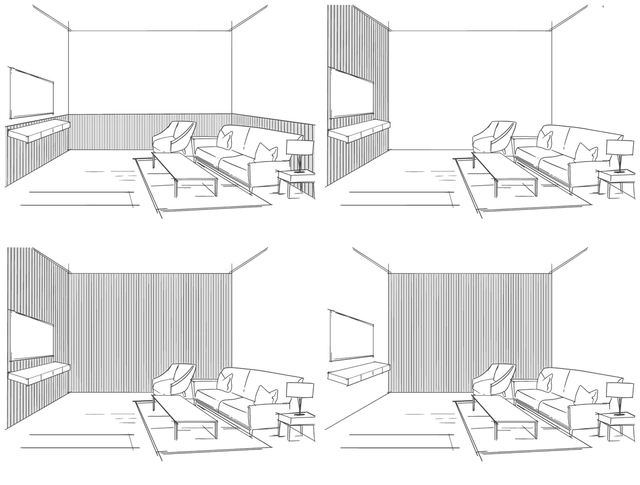
Fluted cladding is a good example of the potential for variations in material use. These are milled MDF surfaces with a linear pattern designed to decorate interior walls and ceilings. They can be applied to a variety of surfaces, though they should only be used in areas not exposed to humidity. The system is notable for its ability to accentuate space through different configurations. Depending on their arrangement and type of fluting, these configurations can modify the spatial experience by highlighting, directing, enveloping, and achieving visual balance in homes, offices, commercial spaces, and more.
https://www.archdaily.com/1019443/how-to-use-fluted-cladding-on-interior-wallsEnrique Tovar
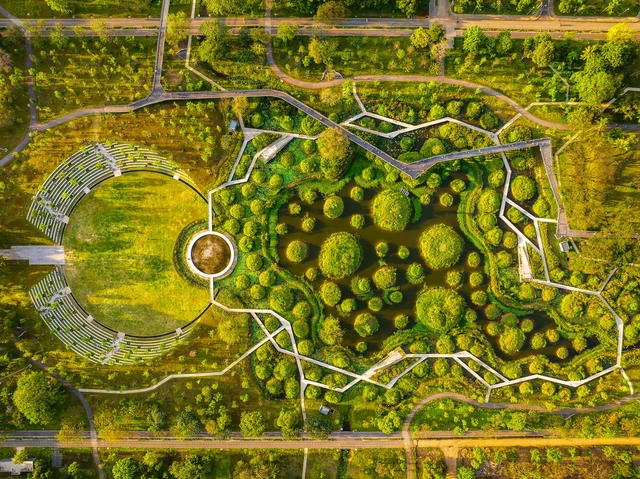
The vibrant heart of the Philippines, Manila, is poised to witness a transformative addition to its urban landscape. The Manila Central Park Challenge, hosted by the international competition organizer Buildner, is an invitation-only architecture competition for an ambitious project set on a 360-hectare reclamation west of SM Mall of Asia, along Seaside Boulevard, Pasay City, Manila.
Renowned for its advanced approach to architectural education, SCI-Arc's Master of Architecture 2 (M.Arch 2) program stands out as a transformative experience for aspiring architects. Tailored for students with a background in architecture, the M.Arch 2 curriculum is a two-year intensive program designed to foster creativity, technical expertise, and critical thinking, preparing graduates for a dynamic and evolving professional landscape. Students in SCI-Arc’s M.Arch 2 program build a worldwide professional network of peers, faculty, and professionals, opening doors to collaboration, mentorship, career opportunities, and meaningful contributions on a global scale. SCI-Arc’s M.Arch 2 alumni have achieved some of the highest honors and recognition possible for architecture and design.
Kazuki Masaki: Culture and Landscape. Image Courtesy of SCI-Arc
SCI-Arc’s Master of Science in Synthetic Landscapes (M.S. Synthetic Landscapes) program offers an innovative and interdisciplinary approach to landscape architecture, blending ecological thinking with advanced design technologies. This one-year postgraduate program prepares students to address complex environmental challenges through creative and sustainable design solutions, helping students to develop the curiosity critical for creativity. It offers a culture of advanced design scholarship that questions traditional models of research and practice. Here's a detailed look at the program's curriculum:
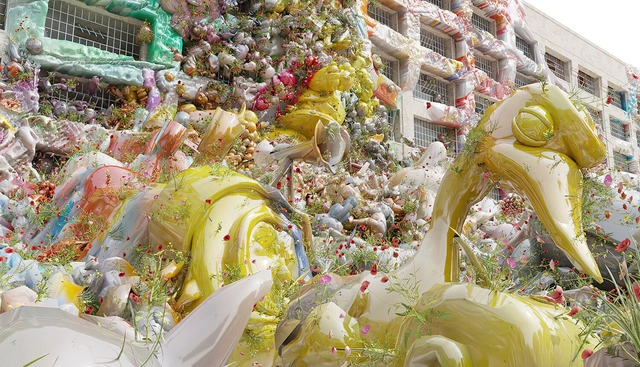
Third prize, Main category: Agata Gała of blank studio, Poland
Awards and prizes are vital to professional ecosystems in supporting talent and new ideas; for the design industry, competitions encourage creative minds to leap beyond the bounds of practicality to imagine the future, solve problems and build new communities. Expanding impact with international breadth and egalitarian opportunities, competitions often provide space for emerging talents and students, providing support, mentorship and experience to develop their careers and process.
For Polish ceramics manufacturer Ceramika Paradyż, hosting the Paradyż Designers Competition brings together all of these values, alongside an innovative way to challenge how its products can function. This year, the third edition challenged architects and designers to craft imaginative digital designs using a new series of sintered stones, TRI-D. The natural product, a baked composite of quartz, feldspars, clays or kaolins, performs as an alternative to natural stone; extraordinarily durable, tiles retain their aesthetic from the surface to the cross section, making them ideal for worktops, windowsills and fireplaces, yet in fact, the possibilities are endless.
Videos
"El Luchador," RA! Arquitectos and filmmakers René Baptista and Tito Sánchez. Image Courtesy of Simon Architecture Prize
The Living Places - Simon Architecture Prize is an initiative of Simon—curated by the Fundació Mies van der Rohe since the prize’s inception—which aims to distinguish those architectural projects (including interiors, public, domestic, and landscape spaces) whose excellence provide comfort to their inhabitants and improve people’s quality of life on a daily basis; while working, learning, sharing, enjoying...in short, architecture to be lived!
The Architectural Engineering and Construction (AEC) industry is on the brink of a technological transformation, largely driven by Artificial Intelligence (AI). Looking forward, there are two significant ways that AI will influence outcomes for industry professionals: as a driver of creativity and a productivity booster.
Professionals who adopt AI technology for either of these outcomes may have an advantage over those who do not, enabling them to outpace competitors with more innovative thinking and quicker project delivery. Let's explore how to stay ahead in this changing technological landscape.
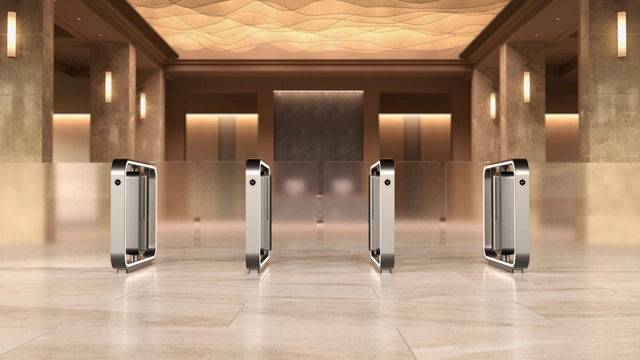
The adoption of advanced access control solutions is essential to maintaining security and safety in various contexts, from businesses and institutions to residences and public spaces. Their main objective is to regulate who can access or use a specific resource, location, or system, ensuring that only authorized individuals have access. In an increasingly interconnected and digital world, the implementation of access control systems has become essential to protect confidential information, ensure the integrity of physical and virtual environments, and prevent unauthorized access that can result in theft, data breaches, or other security incidents. These systems can encompass a variety of methods, including passwords, key cards, biometric scans, and security personnel, all working together to verify and allow entry only to those with permission.
A pivot door is a swinging door that rotates on a vertical axis; a spindle. It is different from regular hinged doors, where the hinges are attached to the side of the door and the adjacent wall. Even though the pivot door is as old as centuries are long, it is still unknown to many people. However, a recent resurgence in its use has put it front and center as an attractive option for architects, designers and homeowners.
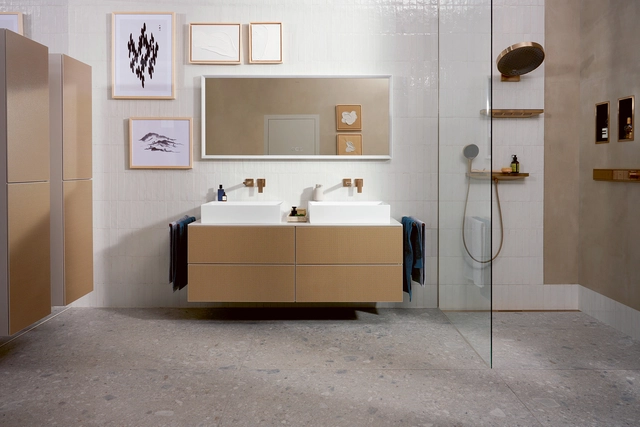
The term "holistic" refers to an approach that considers a system as a whole, rather than focusing on individual components. It emphasizes the interconnectedness of various elements and aims to create something balanced and harmonious that supports overall comfort. The approach is particularly valuable at a time when personal well-being and sustainability are at the forefront of design. This includes the integration of natural elements, such as light and water, to create calm, rejuvenating environments where balance and harmony ensure that all design elements work cohesively to form a unified space. Holistic bathroom spaces go beyond mere functionality by engaging the senses, promoting relaxation, and using resources responsibly, a comprehensive approach embraced by premium bathroom solutions brands like hansgrohe.
Companies, designers, architects and agencies worldwide are invited to submit their products and projects for the German Design Awards 2025. Organized by the German Design Council, the Awards set international standards for original design developments and competitiveness on the global market, whether through digitalization or AI. The platform honors only projects that are pioneering in the German and international design landscape with positive developments in circular design, making success visible, while also opening up a valuable network, international reach and additional market opportunities for the award winners.
Personalization of architectural and design elements has become an important global trend in the creation ofexceptional and individualized spaces. These days, anything that can be personalized is fair game, with both clients and architects eager to stand out and create designs that are a true reflection of their personal tastes and lifestyles. In the realm of porcelain tiles, personalization is a key way to infuse design with personality, which the brand Kaolin has been focusing on through its Customization Program.
Discover the latest issue of Sky-Frame's 'My Point of View' with architect David Montalba.
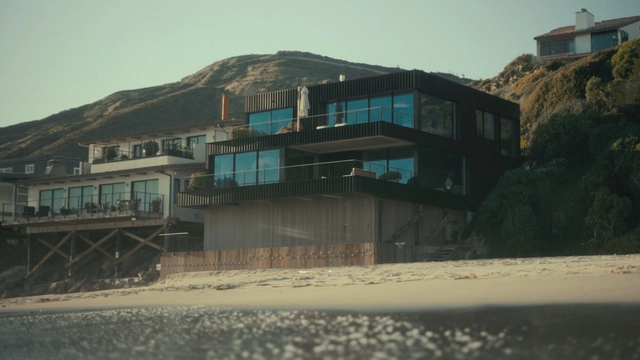
David Montalba was born in Switzerland but grew up in California. He became a passionate surfer, bobbing in the waves of the Pacific, staring at the land, yet always feeling and hearing the ocean around him; profoundly connected to nature.
“I was surfing by the time I was 12 or 13, and it was my driving force probably all the way up to 18 or 19,” he notes. “It brought a kind of spirituality to my life. That was when I felt most connected to nature and I was truly with myself… It’s still a really special thing for me. It’s one of those things that can both ground you and connect you with nature in a unique way.”
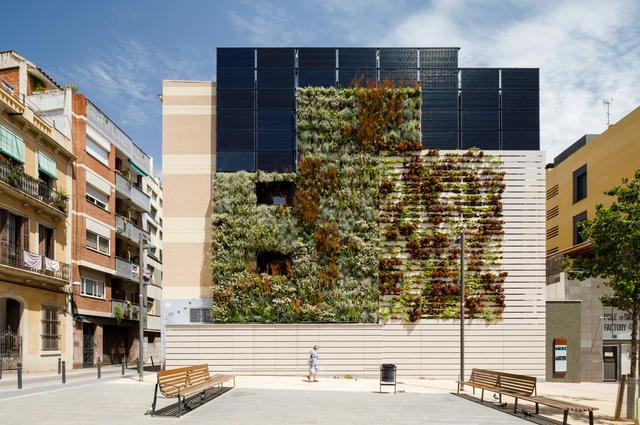
As Barcelona gears up to be the World Capital of Architecture in 2026, it is calling on young architects under 35 to reimagine 10 permanent blind walls, one in each district, and transform them into new facades that will leave a legacy in the city. ThisInternational Ideas Competition for Young Architectsaims to improve the quality of public spacethrough transformation and revitalization. Organized by the Barcelona City Council and the Fundació Mies van der Rohe, made jointly with UNESCOand the International Union of Architects (UIA), it seeks architectural proposals that give meaning to walls that are currently anonymous and without any prominence, exposed in public space in a permanent provisional state.
The A' Design Award, "born out of the desire to underline the best designs and well-designed products," recognizes outstanding and original talent from across the globe. It is both a major achievement for designers and a source of inspiration for award-winning architects, brands, and design agencies. Entry and nomination are open to contestants from around the world. Registration for the A' Design Award & Competition 2024-2025 period is now open. Register and upload your design here.