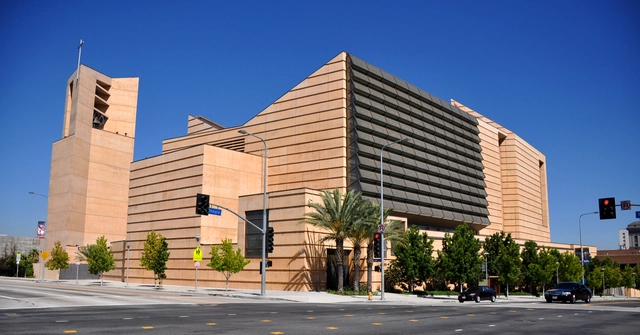
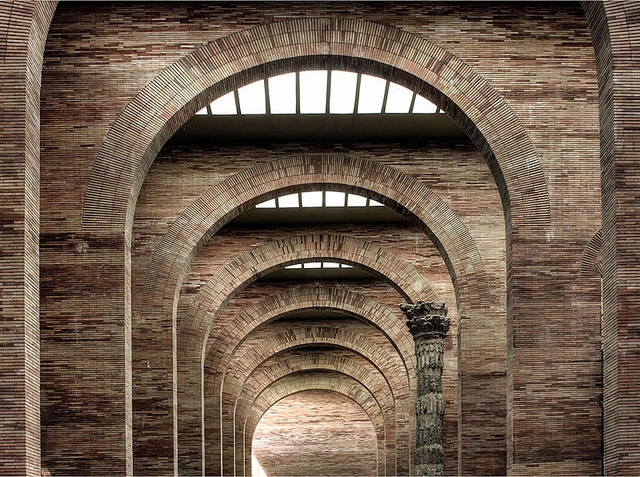
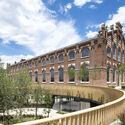
Suzhou Museum of Imperial Kiln Brick. Image Cortesía de Jiakun Architects
The Pritzker Prize is the most important award in the field of architecture, awarded to a living architect whose built work "has produced consistent and significant contributions to humanity through the art of architecture." The Prize rewards individuals, not offices, as happened in 2000 (when the jury selected Rem Koolhaas instead of his firm OMA) or in 2016 (with Alejandro Aravena selected instead of ELEMENTAL); however, the Prize can also be awarded to multiple individuals working together, as was the case in 2001 (Herzog & de Meuron), 2010 (Kazuyo Sejima and Ryue Nishizawa from SANAA), and 2017 (Rafael Aranda, Carme Pigem, and Ramon Vilalta from RCR Arquitectes).
By operating with only five notes, the pentatonic scale establishes a stable and intuitive musical system in which structural clarity allows for variation without the risk of excessive dissonance. From this consolidated structure, which forms the basis of countless musical styles, especially popular music, the blues introduced a decisive inflection by incorporating additional notes into the scale. Without delving into excessive technicalities, these are subtle tonal deviations, small dissonances often associated with a more melancholic sound, known as blue notes. Played fleetingly rather than as emphatic accents, they briefly tension the system, adding expressiveness and depth while keeping the underlying structure intact.
If in music the blues scale operates through a subtle deviation that "seasons" the underlying structure, a similar principle can be identified in architecture. Although comparisons between different artistic languages are always delicate, it is possible to recognize projects that find their expressive strength not in rupture, but in localized inflections introduced within clear systems, whether of modulation, subtraction, materiality, or typology. Localized displacements and asymmetries function as internal tensions that do not compromise the coherence of the whole, revealing how expressiveness can emerge from controlled deviation rather than from permanent exception.
Architecture is shaped not only by buildings, but by the ideas that make them possible. Before the constraints of capital, regulation, and procurement, there is a moment when architecture is allowed to think aloud. The first confrontation with this fertile moment usually takes place in academia, in the thesis. It is not merely a requirement for graduation, but a space of speculative freedom where architecture formulates hypotheses, builds arguments, and tests positions.
For many, it is also the first opportunity to think beyond the structure of academic programs — a first chance to explore something more personal, unresolved, or even unreasonable. While often seen as an endpoint, the thesis is better understood as a beginning: the first engagement with architecture as a form of reasoning, where the project is not yet a response, but a question.
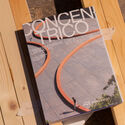
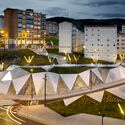
Every June, the Spanish city of Logroño transforms into a space of architectural dialogue, opening its streets, plazas, riverbanks, and traffic islands to temporary structures that redefine how cities are inhabited. For ten editions, Concéntrico has worked not as a specialized fair or an architecture biennale, but as a portable museum — a curatorial gesture that brings a dispersed collection of contemporary architecture into public space. Set in a city suspended between arid plains and distant mountains, far from the circuits of capital cities and cultural institutions, Concéntrico presents itself as a temporary promise. It's a reminder that even cities that are often overlooked can host architecture that is current, diverse, and speculative. In this sense, the festival is less about celebration and more about activation.
But beyond its curatorial logic, Concéntrico operates as a political structure. In the ancient sense of polis, it invites citizens, architects, and institutions to reassess what public space can be. The interventions offer speculative proposals for urban life that reveal what is missing, what is possible, and what should be questioned. A temporary pool over a fountain, a bathhouse in a roundabout, or a shared meal on a major avenue are not just spatial gestures — they are political statements, asking how urban infrastructure might be redirected from control to care, from efficiency to encounter. In that way, the festival becomes not just a reflection of the city, but an instrument for its transformation.
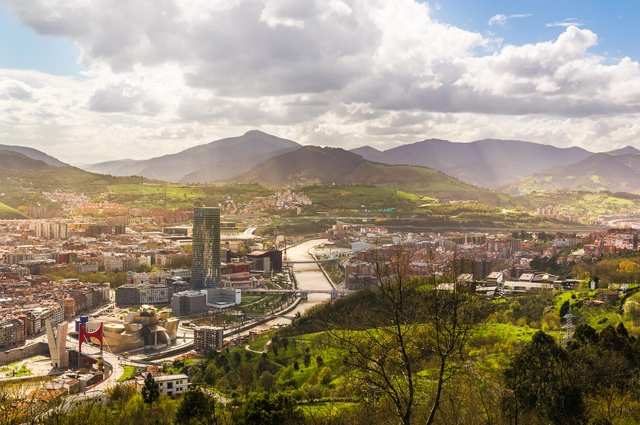
Bilbao, the largest city in Spain's Basque Country, has undergone a remarkable transformation over the past few decades. Once an industrial hub, the city has redefined itself as a center for culture, innovation, and urban regeneration. This evolution has been partly driven by architecture, which plays a central role in shaping Bilbao's identity. From contemporary landmarks to thoughtfully repurposed spaces, the city's built environment reflects a careful balance between honoring its industrial heritage and embracing modernity.
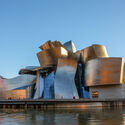
The turning point in Bilbao's architectural narrative came with the inauguration of the Guggenheim Museum Bilbao in 1997. Designed by Gehry Partners, this iconic structure catalyzed the city's renewal, sparking a wave of urban and cultural investments. This transformation became known as the "Bilbao effect," a phenomenon where a single, significant architectural project triggers wider urban regeneration and economic growth. Today, Bilbao is a dynamic architectural landscape, where works by international figures like Santiago Calatrava, Norman Foster, and Arata Isozaki coexist with projects by local studios such as ACXT and Coll-Barreu Arquitectos. Together, these interventions illustrate how architecture can be a powerful social, economic, and cultural revitalization tool.
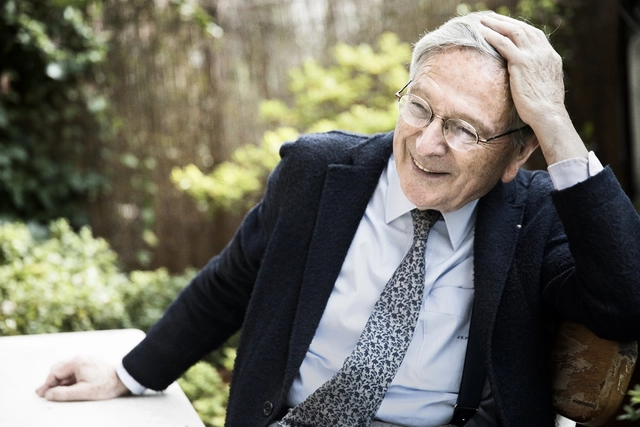
In an interview with Louisiana Channel, Rafael Moneo, the celebrated Spanish architect and 1996 Pritzker Architecture Prize laureate, reflected on his career and philosophy. Born in Tudela, Navarra, Spain, in 1937, Moneo described how his early academic interests and professional experiences shaped his approach to architecture, resulting in a distinguished body of work that integrates historical, cultural, and environmental contexts.
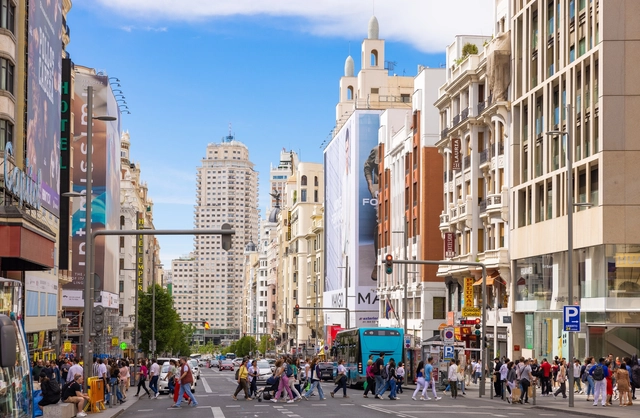
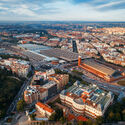
Madrid, the vibrant capital of Spain, offers a blend of tradition and modernity, reflected in its diverse architectural heritage. This rich past is etched into the old façades, expansive public spaces, and historic religious institutions that define much of Madrid’s character today. The city’s continuous architectural renewal, reflected in both respectful restorations and innovative new constructions, highlights Madrid’s commitment to preserving its heritage while embracing modernity.
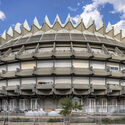
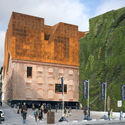
In the 20th century, Madrid embraced modernity, influenced by movements such as Rationalism, the International Style, and Brutalism. Today, Madrid is a showcase for contemporary design, where contemporary projects by renowned architects coexist with its historical legacy. Structures like the CaixaForum by Herzog & de Meuron and Jean Nouvel’s Reina Sofía Museum exemplify the city’s interest in architectural explorations
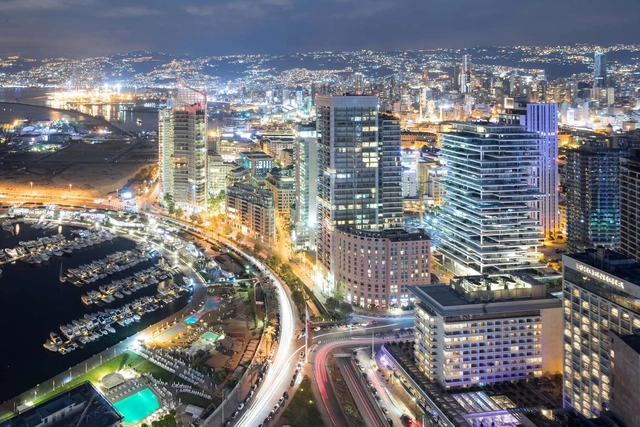
Situated on the coast of the Mediterranean Sea, Beirut is one of the oldest cities in the world that has been shaped throughout its 5,000 year history by Phoenicians, Romans, Greeks, and the Ottomans. The Lebanese capital has been for decades a cosmopolitan city and a focal cultural and geographical link between Europe and the Middle East.
Often labeled as a resilient city, Beirut has been subject to numerous devastating events throughout its history, from a brutal 15-year civil war to one of the biggest non-nuclear blasts in history. Nowadays, the city boasts a skyline full of contrasts, where contemporary buildings rise alongside Ottoman, Roman, and Byzantine ruins. Its architecture, along with its renowned cuisine, distinguished night life, archaeological sites, and hospitable people have reclaimed it as a sought-after touristic destination.
The Golden Lion for Lifetime Achievement of the 17th International Architecture Exhibition of La Biennale di Venezia was awarded to Spanish architect, educator, critic, and theoretician Rafael Moneo. Selected by the Board of Directors of La Biennale di Venezia, upon recommendation of the Curator of the Biennale Architettura 2021, Hashim Sarkis, the acknowledgment will be awarded to the architect on Saturday, May 22nd, 2021 together with the Special Golden Lion for Lifetime Achievement in memoriam to Lina Bo Bardi.
As the first ever Spanish architect to receive the Pritzker Prize, Rafael Moneo (born 9 May 1937) is known for his highly contextual buildings which nonetheless remain committed to modernist stylings. His designs are regularly credited as achieving the elusive quality of "timelessness"; as critic Robert Campbell wrote in his essay about Moneo for the Pritzker Prize, "a Moneo building creates an awareness of time by remembering its antecedents. It then layers this memory against its mission in the contemporary world."
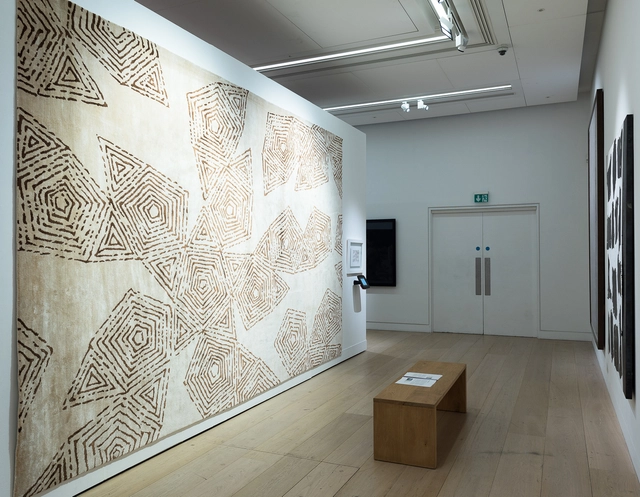
Unique carpet designs by the two visionary architects will be offered at 20th Century & Contemporary Phillips Art Day Sale in London today, on June 28th.
Pritzker Prize-winning architects Toyo Ito and Rafael Moneo have been invited to design silk carpets, inspired by the Golden Ratio as a part of the eponymous project by an auction house Phillips and ARTinD (Art in Design) — a London-based cooperative that seeks to foster greater synergy between art, architecture, and design.
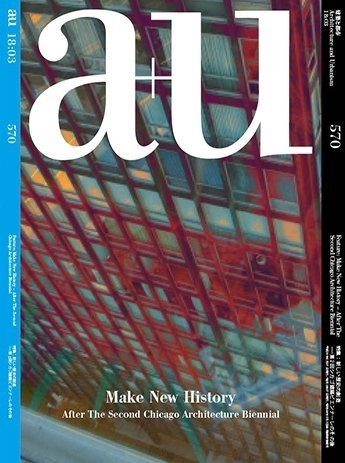
This issue focuses on the second edition of the annual Chicago Architecture Biennial, 2017, that featured the participation of 140 artists from 20 countries, under the theme Make New History. Guest edited by Sharon Johnson and Mark Lee, Artistic Directors of the Biennial, the first part looks back on the Biennial through a conversation with architectural historian, Michael Hays. The second part introduces built work and projects selected with reference to the exhibition's theme by the guest editors and participating architects.
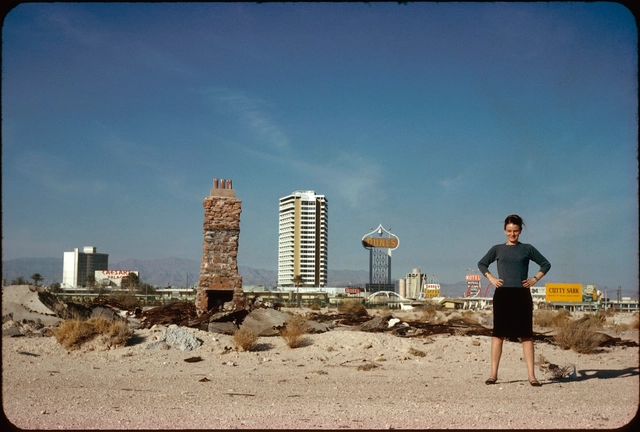
Denise Scott Brown in front of The Strip, Las Vegas, NV, US, 1966, Photo by Robert Venturi, courtesy of Venturi, Scott Brown and Associates, Inc.
Next month, American architect Denise Scott Brown will receive the 2018 Soane Medal, an award given to "architects who have made a major contribution to their field, through their built work, through education, history and theory." A powerhouse jury that included Sir David Chipperfield, Paul Goldberger, Farshid Moussavi, Alice Rawsthorn, Oliver Wainwright selected Scott Brown for the second edition of the award. The 2017 Soane Medal was given to Rafael Moneo.
Sir David Chipperfield, Trustee of Sir John Soane’s Museum, said: ‘The jury considered many outstanding candidates; however Denise Scott Brown stood apart and was the jury’s unanimous choice. Scott Brown’s contribution across architecture, urbanism, theory and education over the last fifty years has been profound and far-reaching. Her example has been an inspiration to many, and we are delighted to honour her with the awarding of the Soane Medal.’
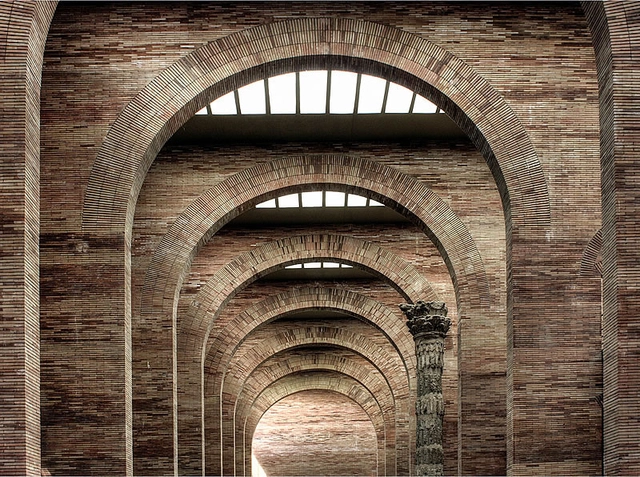
When Spanish architect Rafael Moneo won the Pritzker Prize in 1996, the jury identified his ability to see buildings as lasting built entities—their lives extending beyond architectural drawings—as integral to his success. The South Souks, Moneo’s 2009 project in Beirut, Lebanon, indeed responds to a long history and anticipates a lasting future. After the city’s historic souq (outdoor marketplace) was destroyed during the Lebanese Civil War, developer Solidere began rebuilding the commercial area in 1991. As part of the project, Moneo designed an arcaded shopping district that follows the ancient Hellenistic grid and retains original street names.
Spanish architect Rafael Moneo has been selected as the winner of the 2017 Praemium Imperiale International Arts Award for Architecture by the Japan Art Association (JAA). Known for his timeless, stately designs, the 1996 Pritzker Prize laureate was lauded by the JAA jury for his design approach which “[ensures] that his buildings blend effortlessly into the city landscape while at the same time respecting the environment and establishing a clear identity and a connection to his creative vision.”
Spanish Architect Rafael Moneo has been selected as the recipient of the first-ever Soane Medal for contribution to architecture, presented by Sir John Soane’s Museum in London. As the medal winner, Moneo will be the first speaker to take part in the Soane Annual Lecture, established to “ [recognize] architects, artists, writers and others whose work has broadened and enriched understandings of architecture and the built environment.”
“We are delighted to announce this new Soane Annual Lecture and Medal, and look forward to the significant voices and ideas it will bring to the museum,” Sir David Chipperfield, Trustee of Sir John Soane’s Museum said. “Our aim is to promote architectural culture, as Soane himself worked so tirelessly to do, and we hope it will become an important event in the London calendar.’
Bruce Boucher, Director of Sir John Soane’s Museum, added: ‘We are pleased to inaugurate the Soane Annual Lecture and Medal, and honoured that Rafael Moneo will be the first recipient. His buildings, writings, and teaching have immeasurably enriched the field of architecture, and his lecture promises to be a significant contribution to the contemporary discussion.”
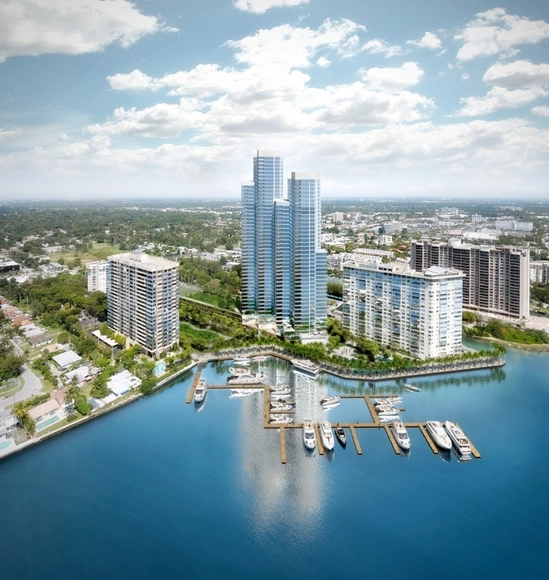
Rafael Moneo has unveiled the design of his first Miami project, a luxury high-rise at the north end of the city. Known as Apeiron at The Jockey Club, or simply Apeiron, the condo project features a pair of towers to be completed in separate stages and will include 240 serviced residential units, a 90-key boutique hotel, a deep-water marina, health and wellness facilities, and outdoor pools. With Apeiron, The Jockey Club hopes to hearken back to its 1970s heydey, when it was a center of Miami’s vibrant social and nightlife scenes. Apeiron, a Greek work meaning ‘limitless’, is at 11111 Biscayne Boulevard, a location with expansive views of the water and surrounding landscape.











.jpg?1619608987 "Columbia University Northwest Corner Building. Image. Image © Michael Moran Studio")

.jpg?1619608951 "Beirut Souks. Image © Bahaa Ghoussainy")

.jpg?1609838112&format=webp&width=640&height=580)



.jpg?1525882270&format=webp&width=640&height=580)
.jpg?1525882675 "© Bahaa Ghoussainy")
.jpg?1525882059 "© Bahaa Ghoussainy")
.jpg?1525882372 "© Bahaa Ghoussainy")
.jpg?1525883388 "© Bahaa Ghoussainy")
.jpg?1525882270)