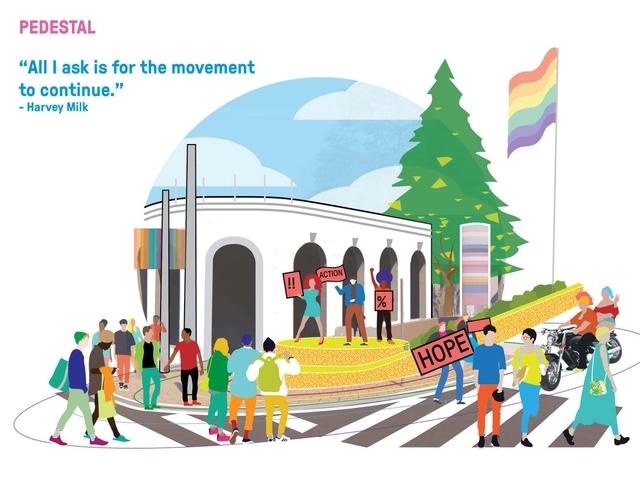
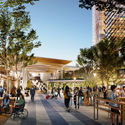
Courtesy of Friends of Harvey Milk Plaza & SWA Group
Matt Hickman reports on San Francisco's latest inclusive memorial, for the Architect's Newspaper, designed by SWA, a firm that operates two Bay Area studios (San Francisco and Sausalito) as well as offices in Texas, Southern California, New York City, and Shanghai. Selected by FHMP from a shortlist of four firms that submitted proposals, out of 17 invited offices, SWA shared their winning conceptual design for the memorial at Harvey Milk Plaza.
Kosovo - Implementation during Covid-19. Image Courtesy of UN-Habitat, Global Public Space Programme
The Un-Habitat or the United Nations agency for human settlements and sustainable urban development, whose primary focus is to deal with the challenges of rapid urbanization, has been developing innovative approaches in the urban design field, centered on the active participation of the community. ArchDaily has teamed up with UN-Habitat to bring you weekly news, article, and interviews that highlight this work, with content straight from the source, developed by our editors.
As the fight against coronavirus keeps on bringing many cities around the world to a standstill, the need to support urban entities and local governments is greater than ever. Although the pandemic has drastically changed our relationship with the public realm, due to all the imposed but necessary restrictions, from physical distancing to limiting access, the demand for public space has not decreased. People still need to go outside, commute, work, study, play, socialize, and maintain a healthy mental state. Discover in this article UN-Habitat’s key areas of focus for an effective urban response for COVID-19 that local and national governments should focus on to prevent the spread of the virus and to develop resilience to and preparedness for events of a similar nature.
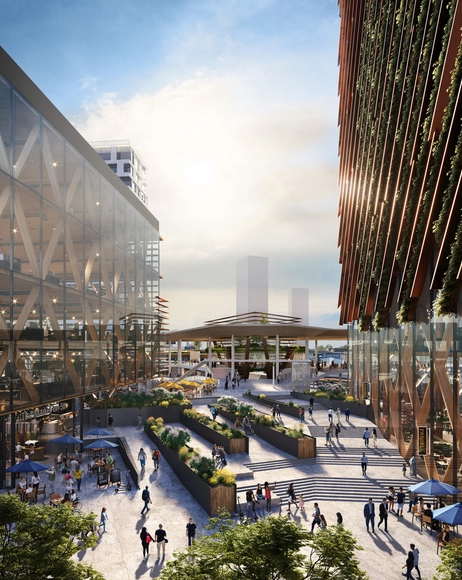
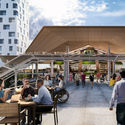
Courtesy of Steelblue for the City of Sacramento / Perkins&Will
Global architecture firm Perkins&Will, in collaboration with ARUP, Grimshaw Architects, EPS , AIM Consulting, and the City of Sacramento, have transformed the city's historic train station into a self-reliant and regenerative transportation hub, making it one of the most sustainable public areas in California. The design team worked alongside the local community to create a people-centric 31-acre master plan that reflects what the community envisions for a public train station and gateway to the city of Sacramento.
The City Prosperity Index, CPI, set by UN-Habitat, evaluates urban prosperity according to five parameters as productivity, infrastructure development, environmental sustainability, quality of life, and equity/social inclusion. To a greater or lesser extent, these five factors are represented in the street pattern of every city in the world. Streets have multiple functions as the mobility of people and goods, the supply of energy, water, and information, the collection of waste, the growth of trees, plants, insects or birds, the shadow and sun radiation, the bench where to sit, the place to salute and talk with your neighbors, a playground, or the access to the bakery where you buy the bread. In this sense, streets are public and vibrant spaces, which can perform multiple functions and activities.
People are the purpose and scale of the city. What does a people-oriented city look like? On April 8, 2021, sponsored by "LIFE WEEK ", the first Sanlian “City for Humanity Award” Ceremony was held in Chengdu. It takes "Rebuilding Connections" as its first theme, and hopes to promote a discussion on social values and humanistic care in Chinese cities through a professional and communicative approach, such as awards at this special moment after the epidemic.
Many of us have already lived, are living, or will live in a shared student house - a good mix of cheap housing and intense socializing with friends and school mates. For a reasonable price, it is possible to have a single private room and share common spaces. In fact, not only university students are living this way nowadays. The concept of co-living is becoming more and more an attractive and effective solution.
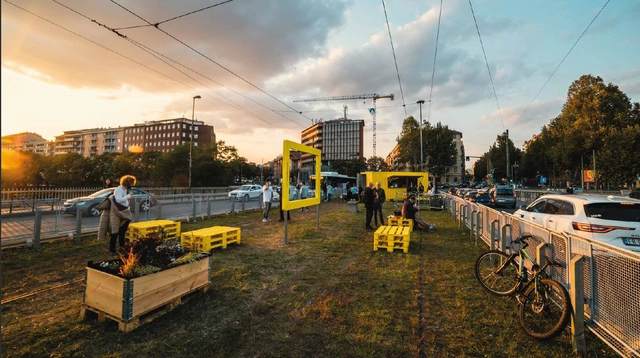
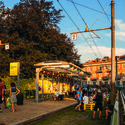
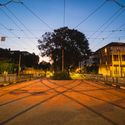
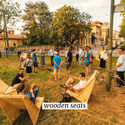
Ever since the tramline’s closure, the 800-meter-long strip in the center of Corso Gabetti and Ponte Regina Margherita in Turin, has been abandoned. To make use of the dead area and give residents an extra space outdoors following Italy's severe pandemic repercussions, non-profit cultural association Torino Stratosferica has transformed the tree-lined strip into Precollinear Park, a temporary public space fit for socially-distanced leisure.
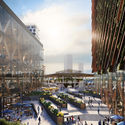
Courtesy of OUTCOMIST, Diller Scofidio + Renfro, PLP Architecture, CRA - Carlo Ratti Associati and Arup
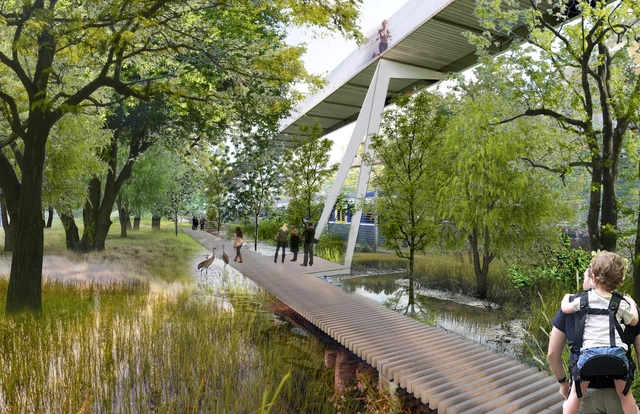
Led by OUTCOMIST, an international design team including Diller Scofidio + Renfro, PLP Architecture, CRA - Carlo Ratti Associati, and Arup won the competition to revitalize the Porta Romana Railway Area, transforming the industrial site into a diverse green neighborhood in Milan. Rehabilitating a disused railway yard into a connective tissue that links the southeast area of the city to the center, the development will generate a rich biodiverse public space, including a large urban park.
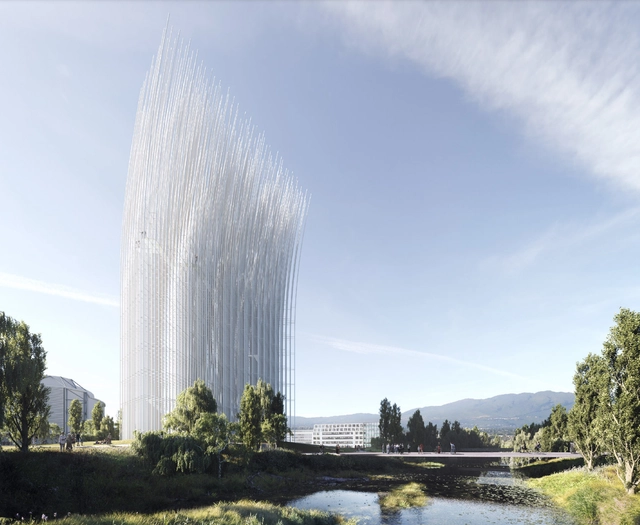
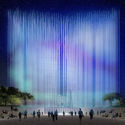
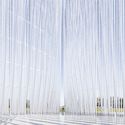
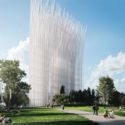
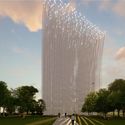
SMAR Architecture Studio has won the Urban Confluence competition to envision a new landmark for Silicon Valley. The Breeze of Innovation project is a forest of kinetic rods swaying in the wind creating a mesmerizing visual effect.
The Estonian Centre for Architecture is presenting the exhibition “Square! Positively shrinking” curated by Jiří Tintěra, Garri Raagmaa, Kalle Vellevoog, Martin Pedanik, and Paulina Pähn, in the Pavilion of Estonia at the 17th International Architecture Exhibition of La Biennale di Venezia. Hosted in the Arsenale complex, the project will “explore the role of high-quality urban space in enhancing the future development of small towns that are in jeopardy of depopulation, […] sparking a debate on the lesser-known facet of urbanization”.
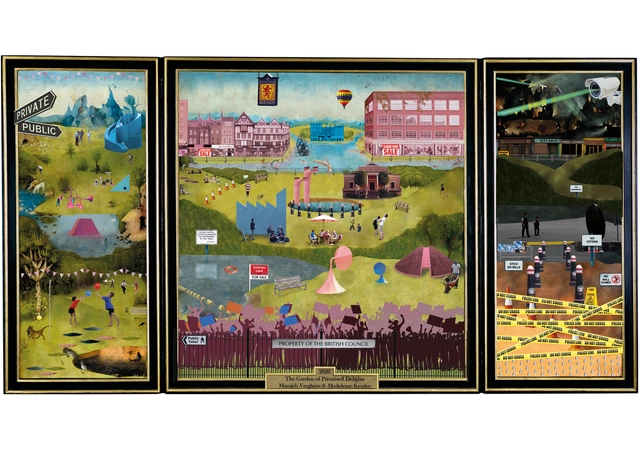
The Garden of Privatised Delights inspired by The Garden of Earthly Delights by Hieronymus Bosch. Madeleine Kessler & Manijeh Verghese, Unscene Architecture. Image Courtesy of The British Council
Curated by Manijeh Verghese and Madeleine Kessler, co-founders of multi-scalar design practice Unscene Architecture, the British Pavilion exhibition entitled The Garden of Privatised Delights, at the 17th International Architecture Exhibition – La Biennale di Venezia, will be open to the public from the 22nd of May until the 21st of November 2021. Commissioned by the British Council, the exhibition “reimagines how to make public space more inclusive, countering the rapid rise of privately-owned public space with an inspiring, alternative vision that urges both sectors to work together to create better-designed spaces for all”.
In recent years, several movements in Brazil and around the world have contributed significantly to society by emphasizing the need to occupy public spaces in the cities to claim quality and freedom of use for the community. The Ocupe Estelita movement in Recife, Brazil, for example, confronted the growing real estate speculation in the region and challenged the aggressive commercial urban planning on the banks of the Capibaribe River. Based on cases like this one, professor, critic, and curator Guilherme Wisnik, in an interview with Fora, addressed the issue of public space as a place of conflict.
HerCity is a platform that involves women in urban development, in order to make better cities for everyone. Turning the tables and putting girls in the expert position, the digital toolbox aims to create more inclusive, equal, and sustainable cities and communities. The initiative makes methods and tools available to urban actors globally, in order to support cities in integrating girls’ participation in their long-term strategies.
Launched on Women’s day 2021, the guide for urban planning and design is a collaborative effort between UN-Habitat and Global Utmaning, the Swedish independent think tank. ArchDaily had the chance to talk with the team behind this digital toolbox, discussing the narratives, the process, and inclusive planning on a worldwide level.
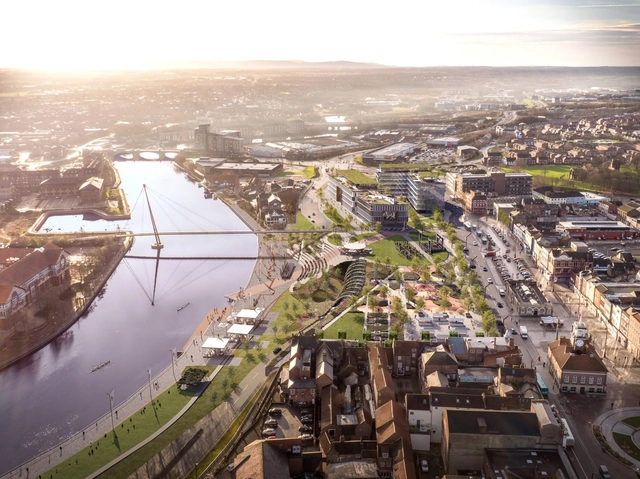
An extensive urban regeneration project is slated to take place in the town of Stockton in the United Kingdom. A 37-million-pound project, the proposal - drawn up by Ryder Architecture and backed by the Stockton Borough Council - will demolish half the high street in Stockton’s town centre and replace it with a riverside park.
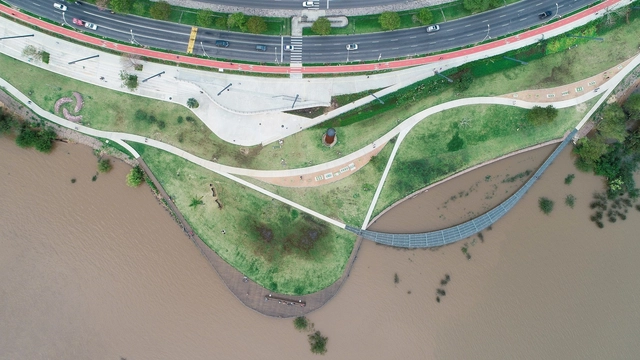
Linear parks exist in many different contexts - along riversides, coastal areas, or inserted in the urban fabric - and represent a very particular type of public space that evokes the idea of a vector and, consequently, the sense of movement. However, they can provide more than just activities and programs associated with mobility, proving to be an appealing solution to the lack of spaces for leisure, contemplation, and relaxation in the most varied urban situations.
Below, we have gathered 12 examples of linear parks built in different parts of the world, illustrated by photographs and floor plans.
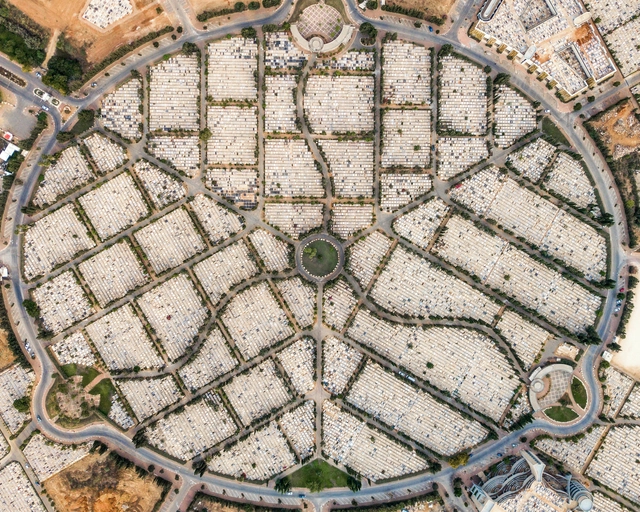
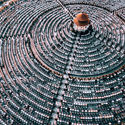
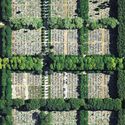
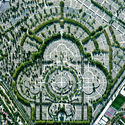
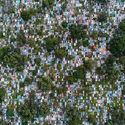
Memento mori is an ancient Latin expression that means "remember that you are mortal." The Roman people used it not to represent a fatalistic approach to death but rather as a way of valuing life.
A few centuries later, as we arrive at our current context and the world reaches the terrifying figure of 2 million deaths as a result of the Covid-19 pandemic, memento mori is more relevant than ever.
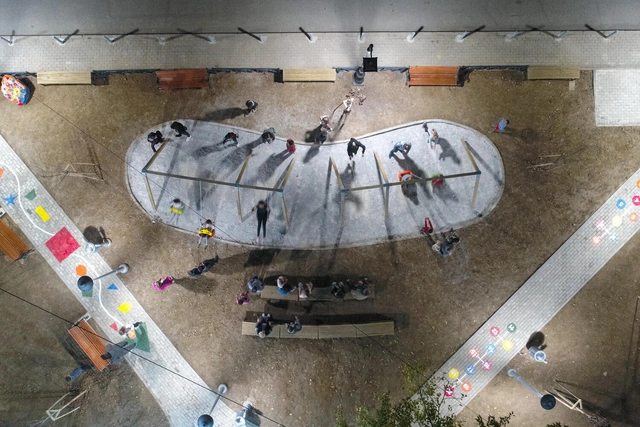
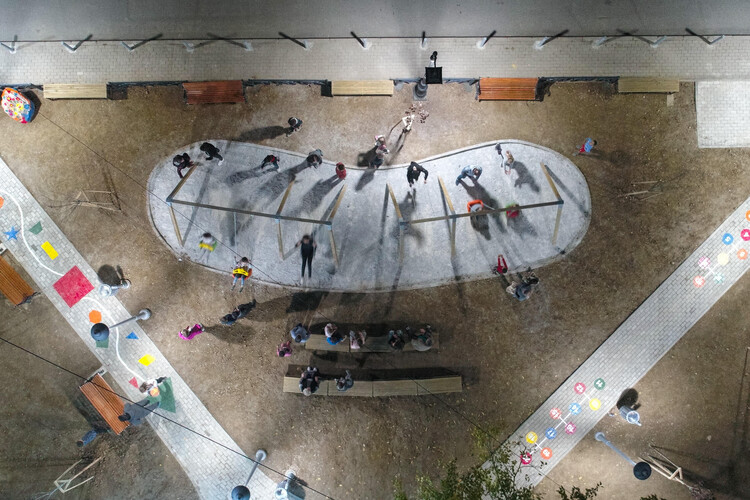
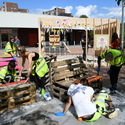
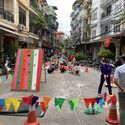
Mobile playground in Vietnam. Image Courtesy of UN-Habitat, Global Public Space Programme
The Un-Habitat or the United Nations agency for human settlements and sustainable urban development, whose primary focus is to deal with the challenges of rapid urbanization, has been developing innovative approaches in the urban design field, centered on the active participation of the community. ArchDaily has teamed up with UN-Habitat to bring you weekly news, article, and interviews that highlight this work, with content straight from the source, developed by our editors.
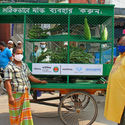
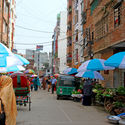
“During this pandemic, public spaces have played a vital role in the health and sustainability of urban communities around the world” states James Delaney, Block by Block chair. In fact, people need to go outside, now more than ever. In order to equip these public spaces to face the challenges of Covid-19, UN-Habitat with the Block by Block Foundation has been supporting ten cities, throughout this past year. With the help of local governments and the community, the initiatives helped covid-proof open urban entities, especially in poor neighborhoods, where there are few shared and green spaces. From creating mobile pop-up playgrounds for children in Hanoi, Vietnam, improving livelihood for street vendors in Dhaka and Khulna, Bangladesh to Covid Proofing of Public Spaces in Bhopalinformal settlements, India, these responses have provided help to those who need it the most.
Sou Fujimoto. Image Courtesy of Sou Fujimoto Architects
After MAD’s Wormhole Library, the city of Haikou revealed a pavilion by Sou Fujimoto Architects. Scheduled for the end of spring, the ribbon-like white pavilion with an accessible roof will be one of the first public waterfront interventions to be completed in the spring of 2021. Shaping the future of Haikou city and Hainan Free Trade Port, the master plan of 16 permanent destinations re-imagines the future of coastal living.














.jpg?1615390051&format=webp&width=640&height=580)
.jpg?1541081334 "Praça das Artes. © Nelson Kon")
.jpg?1541081352 "Image Cortesia de USINA CTAH. ImageVista do Mutirão Paulo Freire")

.jpg?1615390051)






(1).jpg?1614161719&format=webp&width=640&height=580)
.jpg?1614161736 "Mobile playground in Vietnam. Image Courtesy of UN-Habitat, Global Public Space Programme")
(1).jpg?1614161719)
.jpg?1613464686&format=webp&width=640&height=580)
.jpg?1613464615 "Sou Fujimoto. Image Courtesy of Sou Fujimoto Architects")
.jpg?1613464611 "Sou Fujimoto. Image Courtesy of Sou Fujimoto Architects")
.jpg?1613465267 "MAD- Wormhole Library. Image © SAN")
.jpg?1613465249 "MAD- Wormhole Library. Image © SAN")
.jpg?1613464686)