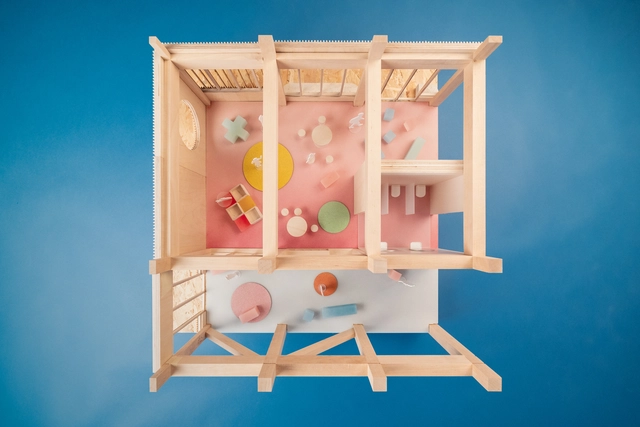
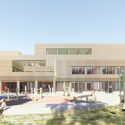
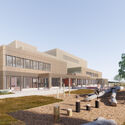
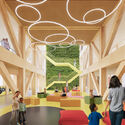
As part of the Circlewood consortium, OMA’s David Gianotten and Michel den Otter have developed a modular system to build schools that can adapt and transform throughout their lifecycle. The system was selected by the City of Amsterdam to be employed to build multiple schools in the coming ten years, as part of the Innovation Partnership School Buildings program. The citywide initiative aims to build nine to thirty “high-quality, flexible, and sustainable” schools as a way to contribute to the city’s goal of becoming fully circular by 2050.
Health Through Water / GROHE SPA. Image Courtesy of GROHE SPA
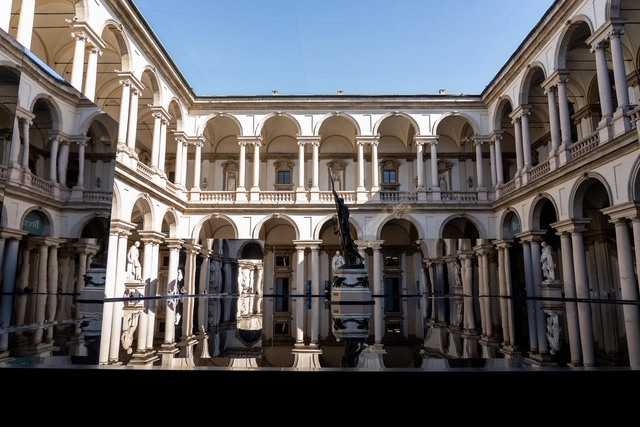
Milan Design Week represents one of the biggest annual design events in the world, bringing together Salone del Mobile.Milan, the largest furniture and design trade fair worldwide, and Furiosalone, along with many other exhibitions, product launches, conferences, and design-related events. This year’s edition, held between April 17th, 2023 and April 21st, 2023, brought together architects, designers, manufacturers and enthusiasts, both Italian and international. Many architectural offices contributed by collaborating with various brands to develop architect-designed products and to create architectural installations to highlight not only furniture and object design but also the larger context of Milanese architecture and culture.
Featuring designs from internationally recognized architecture offices such as OMA, MAD Architects, Stefano Boeri Interiors and CRA-Carlo Ratti Associati, the following selection showcases temporary interventions in both historical and contemporary contexts. The designs present several recurring themes, such as the interest and fascination with the properties of water, be it contained within man-made structures or in its natural state. Many of the participating companies chose to showcase not only their products but also the historical architecture of Milan, by using buildings such as Pinacoteca di Brera, Casa Maveri, or the deconsecrated church of San Vittore e 40 Martiri as a backdrop for their installations.
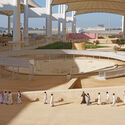
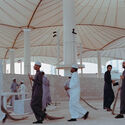
The First Islamic Arts Biennale, artistically directed by Sumayya Vally, opened on January 2023 and is still ongoing until May 23, 2023, in Jeddah, Saudi Arabia. The inaugural event was commissioned and produced by the Diriyah Biennale Foundation and was curated by Vally alongside Dr. Julian Raby, Dr. Omniya Abdel Barr, and Dr. Saad Al-Rashid. The biennale re-imagines the Western Hajj Terminal at King Abdulaziz Airport, designed by Skidmore, Owings & Merrill and winner of the 1983 Aga Khan Award, as a cultural space to redefine Islamic Arts from "within, in a way, that connects some of these art forms and forms of artistic expression to the experience and rituals" of those that live it.
Sumayya Vally is a South African architect, founder, and director of the Johannesburg-based collaborative architectural studio Counterspace. Designer of the Serpentine Pavilion in 2020/2021, she was the youngest architect to get this commission. Part of Time’s 100 emerging leaders who are shaping the future, in 2021, the only architect to make the list at that time, Sumayya started her career as a curator and teacher, and recently she was appointed as artistic director of the first Islamic Arts Biennale in Jeddah. ArchDaily had the chance to talk with Vally about her contribution to this biennale, her vision of the exhibition, the venue, the scenography, and the participating architects. Sumayya also shared some exclusive info about her entry for the 2023 Venice Architecture Biennale, starting on May 20th, in Venice, Italy.
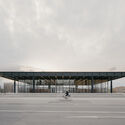
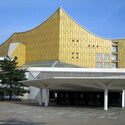
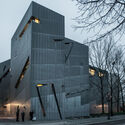
While the city of Berlin has a long history, dating back to the 13th century, its architecture and urban fabric has undergone the most significant changes during the last century, reflecting the impact of major historical events that took place in the German capital. During the early 20th century, Berlin transformed into a modern metropolis, marked through the construction of grand buildings and imposing structures to demonstrate the city’s growing economic and political power. The 1920s and 1930s saw the emergence of the Modernist movement, which, together with the Bauhaus school of architecture founded in 1919, influenced the image and urban fabric of Berlin.
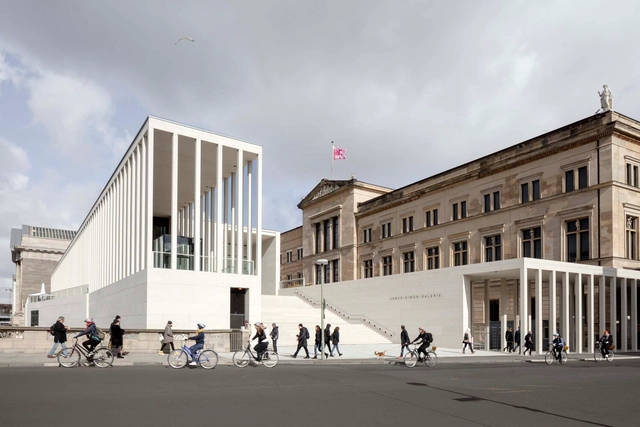
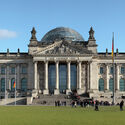
During the Second World War the city was heavily bombed, resulting in the destruction of many historical buildings. During the post-war period, reconstruction efforts focused on rebuilding infrastructure and housing, while the city remained divided until 1989, with the fall of the Berlin wall. After this period, Berlin witnessed a renewed interest in architecture and urban design. Interventions such as David Chipperfield’s Neues Museum aimed to rebuild historical monuments without erasing the markings of their difficult past. Other projects such as the renovation of the Reichstag had a different purpose. Norman Foster’s intervention intended to keep the image of this building but change its symbolism from a structure representative for the Nazi regime to one embracing the ideals of democracy and equality.
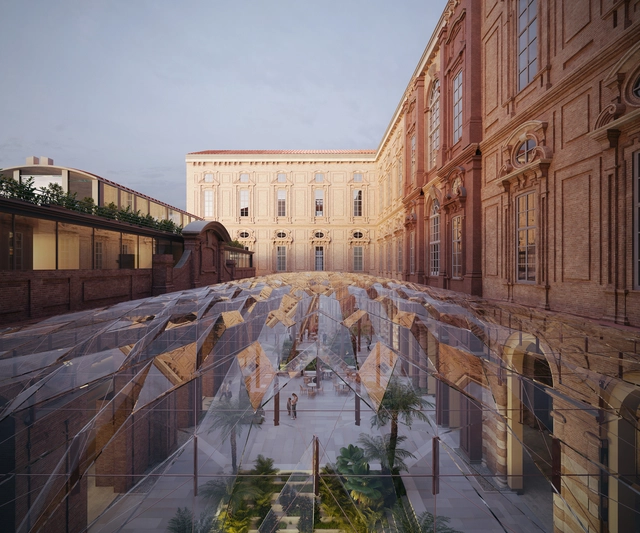
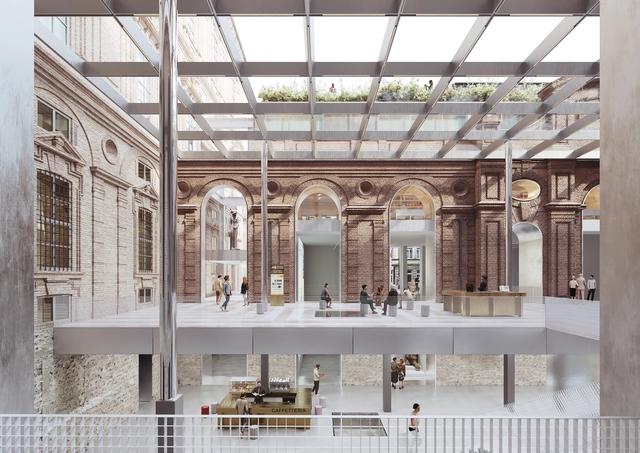
OMA / David Gianotten and Andreas Karavanas have won the competition to renovate the world’s oldest museum for Ancient Egyptian culture, the Museo Egizio founded in 1824 and housed in Collegio dei Nobili in Turin, Italy. The winning project aims to put in place a 2024 vision for the Museo Egizio, transforming the museum into a destination for scholars and a rediscovered public place for all.
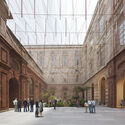
In collaboration with, local architects Andrea Tabocchini Architecture, T-Studio, and historical consultant Professor Andrea Longhi, the proposal seeks to open the cultural space to all by creating a covered courtyard and a series of connected urban rooms within the existing settlement.
As the new year begins, we look forward to the most exciting projects planned to open in 2023. The world's second-tallest tower is currently under construction in Malaysia; Egypt is almost ready to open its largest archeological museum, while MVRDV is currently renovating a large-scale brutalist landmark in Albania. Featuring internationally renown architectural offices such as Snøhetta, OMA, Studio Gang, Zaha Hadid Architects, BIG, along with the latest winner of the Pritzker Prize, Francis Kéré, the following selection presents projects from all around the world. They also range in scale and program, from international airports to sculptural arts galleries or museum expansions.
Several projects presented here have also featured in the previous year's compilation. Resource availability and labor issues generated by the pandemic have also continued to influence opening schedules, but with a diminishing impact. Following the predicted trends for 2023, more and more projects involve the adaptive reuse of existing structures. An underlying theme is visible in the increased interest in expanding artistic and cultural venues and integrating historical heritage into the expression of contemporary architecture.
Cities evolve over countless years, each moment of change building up to larger societal and architectural shifts. Metropolises across the world are constantly subject to social, political, economic, or environmental forces that alter their fundamental identity - a character that is meant to be dynamic. As cities develop in size and impact, advancements in the understanding of cities and urbanism grow more complex.
Cities are formed from a sequence of narratives, characteristics, relations, and socio-spatial values that reflect the identity of the place. The livelihood of the city also depends on its people and a mutual relationship with them. Along with their communities and their circumstances, cities morph to reflect their residents' needs and values.
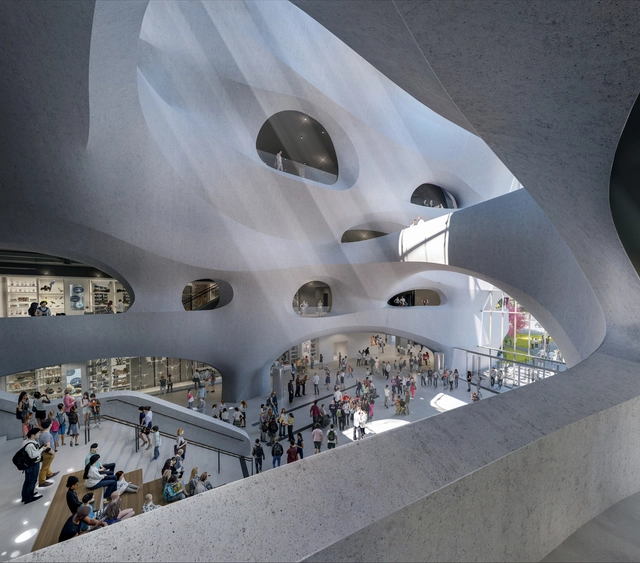
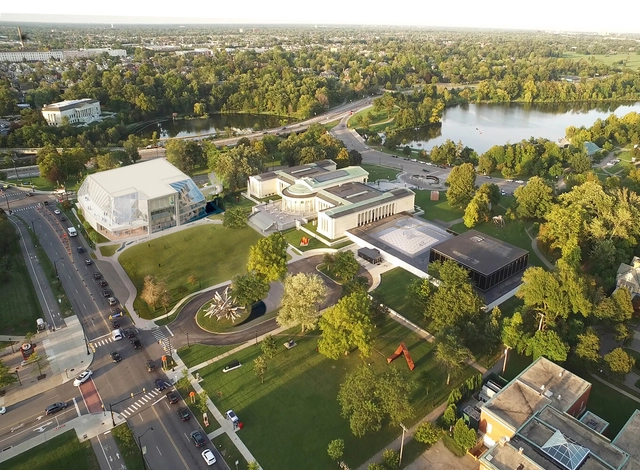
The Buffalo AKG Art Museum (formerly known as the Albright-Knox Art Gallery) has announced that it will welcome its first visitors on the 25th of May, 2023. Revamped and expanded, the new campus designed by OMA/Shohei Shigematsu in collaboration with Cooper Robertson features “new work of signature architecture, the Jeffrey E. Gundlach building, and extensive renovation to existing buildings”.
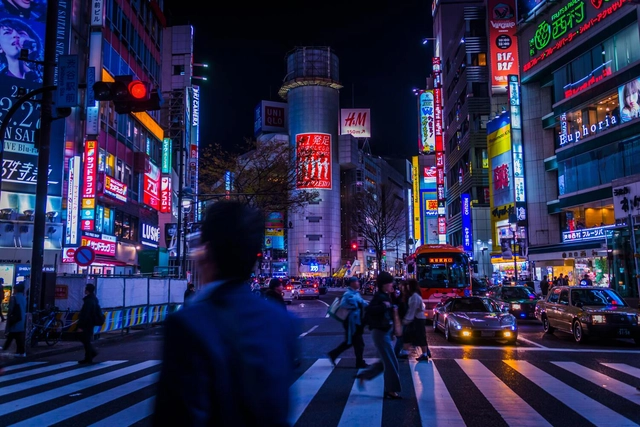
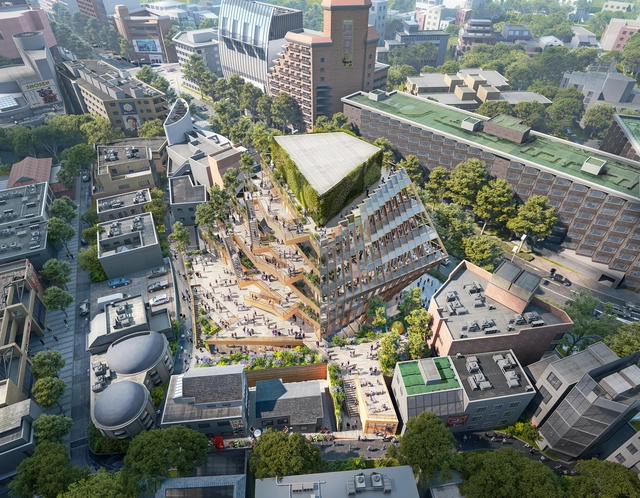
The Harajuku Quest, designed by Shohei Shigematsu and OMA New York, represents a renewed commercial and cultural center in the Harajuku district of Tokyo. Located on a site in between Omotesando and Oku-Harajuku, the building is the newest phase of NTT’s “With Harajuku”, a larger urban development that aims to facilitate the flow of people through a series of squares and commercial areas. Harajuku Quest plans to draw people and activities from both Omotesando and Oku-Harajuku and connect the two areas for the first time. Construction is expected to complete in 2025.
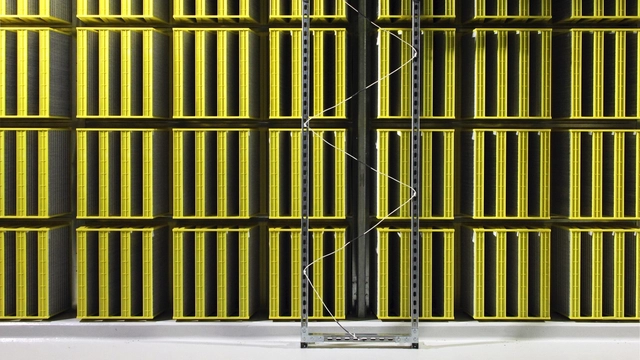
Facebook Data Centre. Image Courtesy of Liam Young
Data centers, automated assembly lines, telecommunications facilities, and warehouses represent a very utilitarian aspect of the built environment, and yet they compose a particular kind of infrastructure within contemporary society, one that is fundamental to the development of everyday life. Rarely discussed within the profession, these new typologies have more recently penetrated the architectural discourse, raising questions about the architectural significance and design potential of the spaces sustaining the mechanics of today's world.
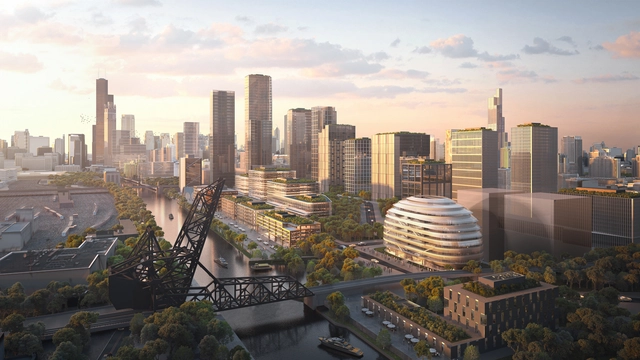
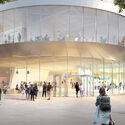
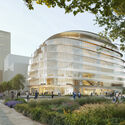
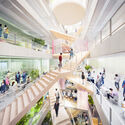
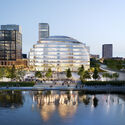
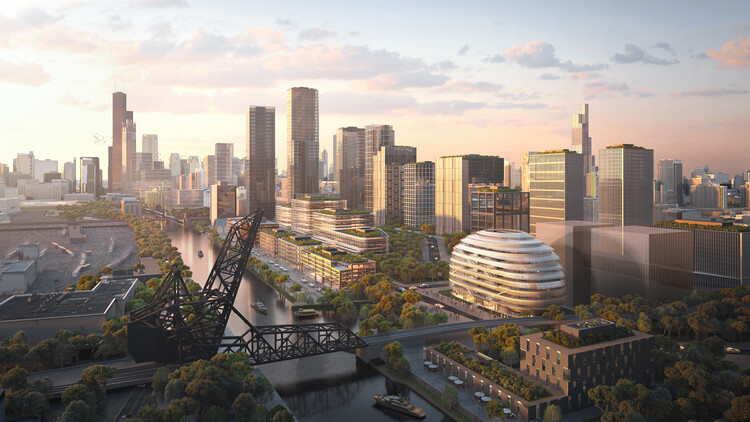
Architecture offices OMA, led by Partner Shohei Shigematsu, and Jacobs have unveiled the design for the new headquarters for the Discovery Partners Institute, part of the University of Illinois System. The building is planned to anchor an innovation district at “The 78”, along the Chicago River. The eight-story building, located on a one-acre site southwest of the Loop, will provide more than 200,000 square feet of office, classroom, lab, and event space for DPI and its university and industry partners.
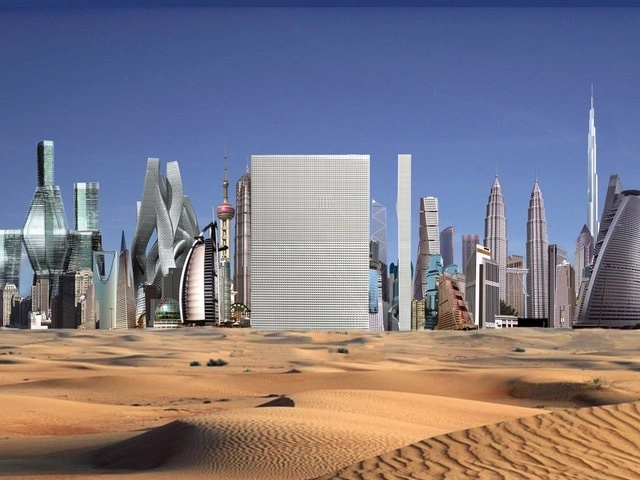
Rem Koolhaas, co-founder of Office for Metropolitan Architecture (OMA), receiver of the Pritzker Prize Award in 2000, and leading urban theorist, was one of the first to question the high-rise phenomenon and its influence on city transformation. Particularly intrigued by the Gulf region and the urban ambitions of this area, in 2009, during the 9th edition of the Sharjah Biennial, he delivered a lecture on the potential of re-inventing urbanization in the Emirates.
On the occasion of the golden jubilee of UAE, marking 50 years since the Emirates were founded in 1971, 50U, published by Archis explores the different developments in the Gulf, this region that “witnessed the transformation of a partly nomadic, partly town-based community into a globally active metropolitan society”. After Al Manakh, in 2007, followed in 2010 by Al Manakh Cont’d, 50U tells the story of the UAE through 50 portraits of people, plants, and places. The book also shares an excerpt of Koolhaas’ 2009 talk that reflects on contemporary conditions, focusing specifically on his reading of Dubai, his architectural involvement as well as his future urban predictions.
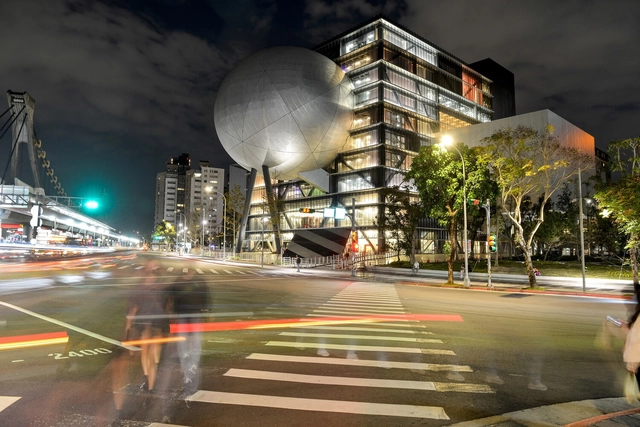
Taipei Performing Arts Center designed by OMA has opened to the public. The project jointly led by Rem Koolhaas and David Gianotten is located at Taipei’s Shilin Night Market. The contemporary performance theatre generated debates among architects when it was first announced in 2009 due to its unusual shape. Morphed by a series of programmatic operations, the form intersects three types of theater in order to accommodate a variety of performances. Now this place for cultural creatives is open, allowing the public to explore new possibilities in performing arts and experience different aspects of the theater.
This year's architectural contributions, which were on display across the busy streets of Milan, Brera design district and botanical garden, Alcova, BASE, and other cultural venues, highlighted this year's Milan Design Week theme of sustainability and environmental awareness with respect to furniture production.
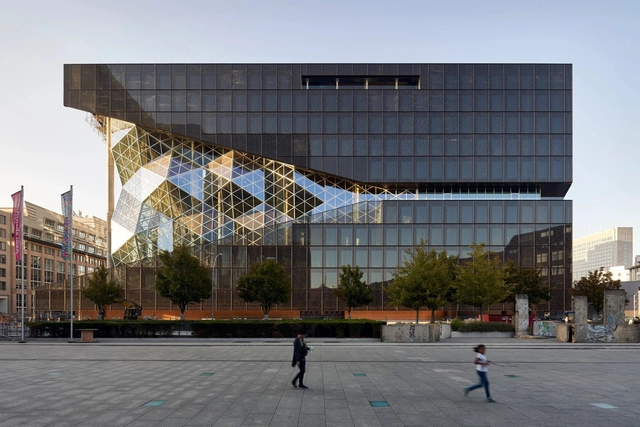
Berlin is a city defined by an eclectic mix of style and a rich history. It's built environment has been dramatically shaped by a series of municipal construction programs, and in turn, a past of extensive demolition, planned residential areas, and diverse new cultural projects. Combined with influences across Europe, Berlin's contemporary architecture showcases new ideas on building concepts, forms and facades.
Only a few days left until the annual inauguration of Milan Design Week 2022, one of the biggest international design events which features the Fuorisalone and Salone del Mobile. From the 7th till the 12th of June 2022, the streets of Milan will be hosting an array of architectural interventions and exhibitions curated by local and international designers as part of the Fuorisalone. And at the Fiera Milano | Rho, Salone del Mobile 2022, the awaited furniture and interior design event of the year, will be celebrating its 60th anniversary with themes and projects that reflect on “inclusive” design, fostering "autonomy, comfort, movement, usability, interaction and safety for all".
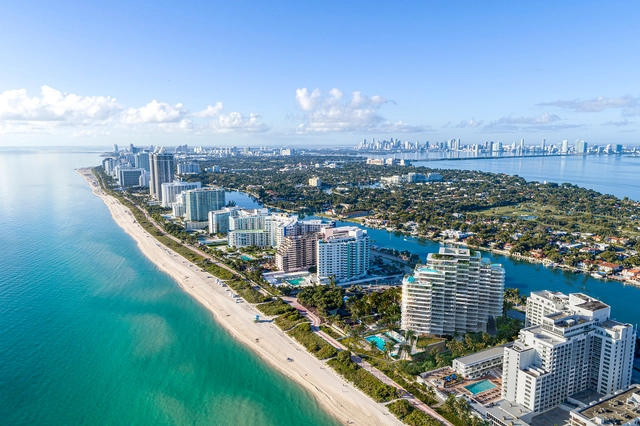
Led by Partner Jason Long, OMA have unveiled the design of a 17-storey residential tower in Miami’s Mid Beach neighborhood. Dubbed The Perigon, the project is designed as a series of towers rotated to orient views away from neighbors and towards the Atlantic Ocean and Biscayne Bay. The towers are merged and lifted 45-feet above the flood line to form a singular structure that offers panoramic views and liberates the ground-plane.