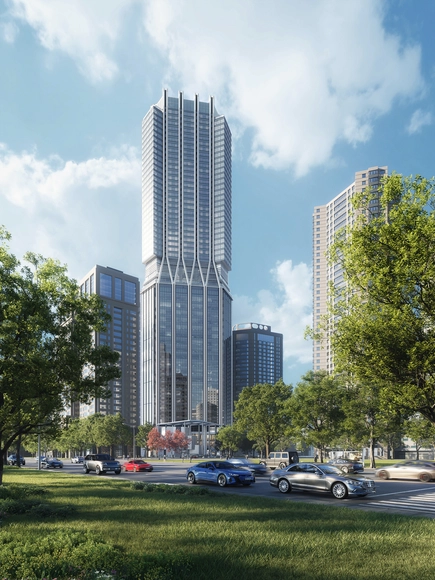
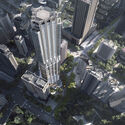
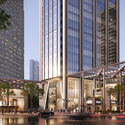
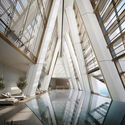
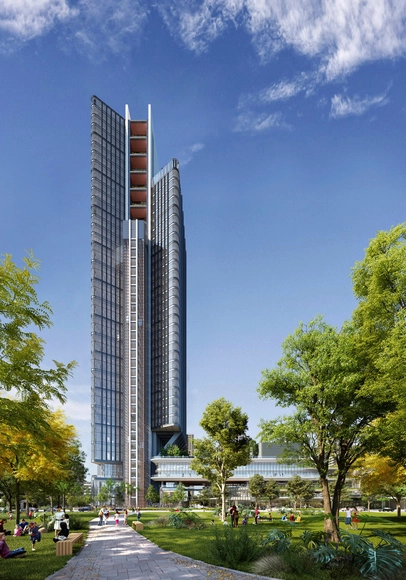
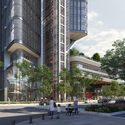
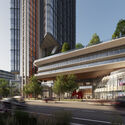
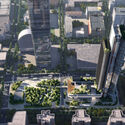
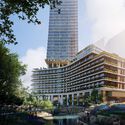
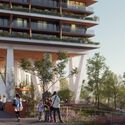
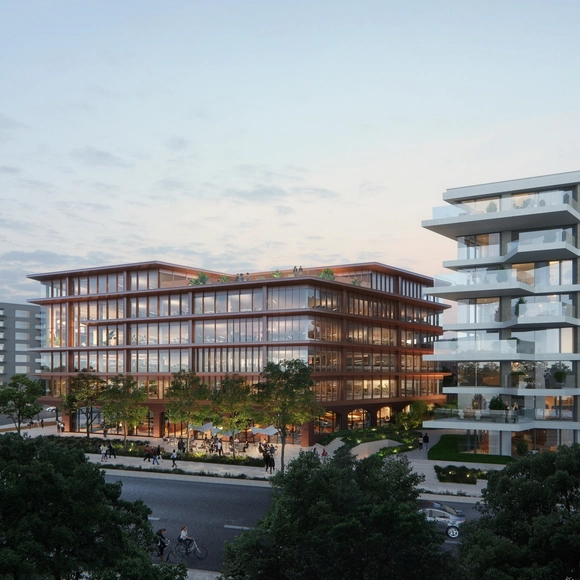
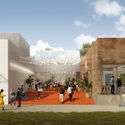
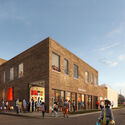
Foster + Partners has just revealed their first project in Qingdao, a major seaport and financial hub in the Shandong Province of China. 1 Nanjing Road is a mixed-use development in the city’s southern district. From office space to luxury apartments, the studio’s mixed-use design integrates into the existing urban fabric.
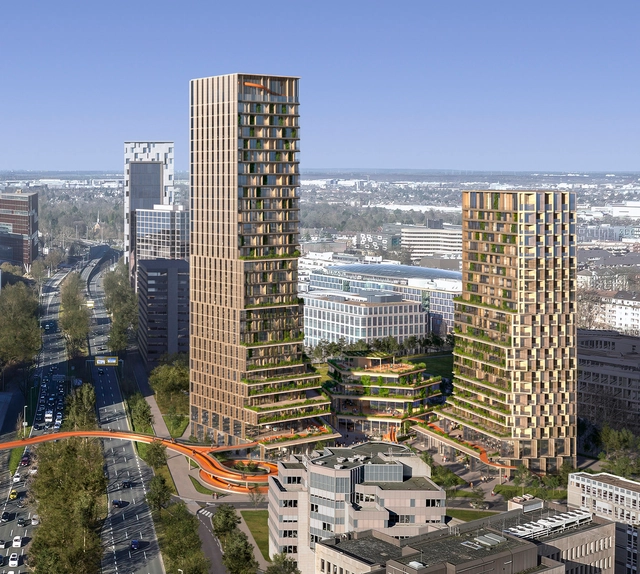
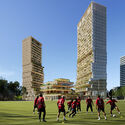
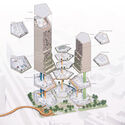
UNStudio has been selected as the winner of the international competition for the design of a mixed-use development in Düsseldorf, Germany, surpassing other internationally recognized participant offices, including 3XN, BIG, David Chipperfield Architect, and finalists Hadi Teherani Architects, HPP Architekten, and Ingenhoven. UNStudio’s proposal features two mixed-use towers measuring up to 120 meters, surrounded by a low-rise community pavilion. In addition to the office and residential spaces, the scheme also includes multifunctional uses and services such as sports, fitness, medical facilities, gastronomy spaces, a mobility hub, a daycare center, and opportunities for cultural events.
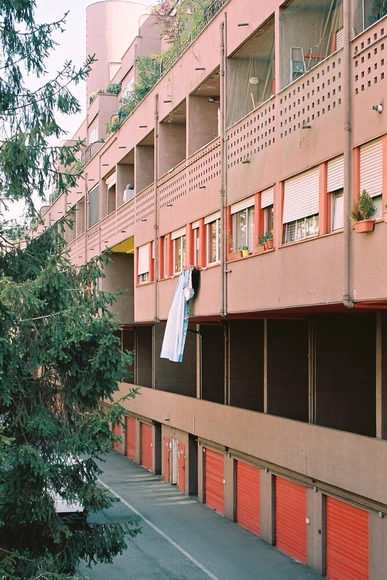
In the aftermath of the Second World War, a drastic housing shortage spread across Europe, and Milan was no exception. Various plans and solutions were conceived to address this crisis, outlining satellite communities for the city to accommodate between 50,000 and 130,000 residents each. The first of these communities began construction in 1946, just one year after the war's end: the Gallaratese project.
Let’s talk. Good communication is key to building and maintaining working relationships, be they personal, romantic, business, or geopolitical. The importance of communication with and respect for one’s neighbors is a lesson that has featured heavily in many texts and teachings from all religions and cultures for millennia, possibly sparking civilization itself.
Some of the fastest growing economies are keen to shout from their garden rooftops about their growing environmentalism, infrastructure, attractive investment opportunities, and rising architectural scene, but also to keep alive the history and culture of their past, and build socially active environments.
These four building projects from across East Asia and Europe both visually and symbolically invite guests inside to see how they operate, building positive relationships with residents of the building and the city, and visitors from beyond.
Toranomon Hills Station Tower. Image Courtesy of OMA and The Boundary
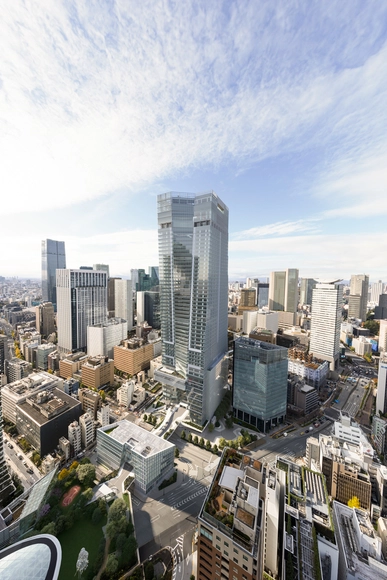
OMA’S inaugural tower in Tokyo and Japan, designed by Shohei Shigematsu and OMA New York, the Toranomon Hills Station Tower, will open this fall, 2023. The inauguration of the Toranomon Hills Station Tower will mark a significant milestone in Mori Building's Toranomon Hills development, an emerging global business center, and urban hub. A multi-layered transportation node integrated into the tower will establish a new gateway linking Central Tokyo with the rest of the world.
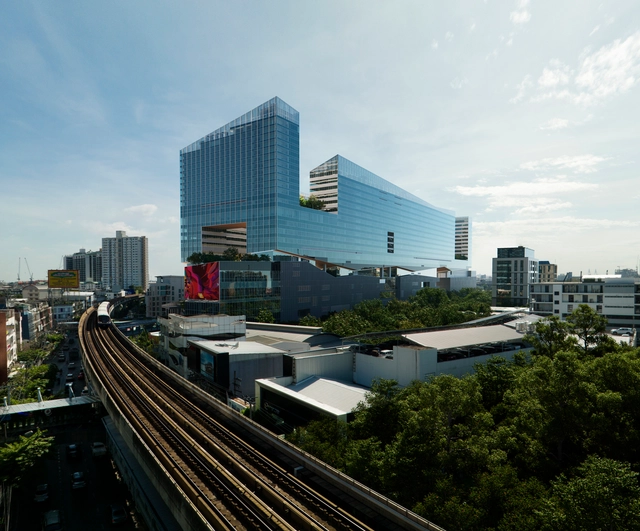
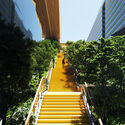
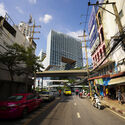
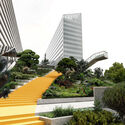
Snøhetta, in collaboration with MQDC, has released the design for Cloud 11, a large-scale mixed-use complex in the South Sukhumvit district in Bangkok, Thailand. The new development addresses the pressing need for urban green spaces in the densely built neighborhood. The project, measuring a total of 250.000 square meters, also aims to help transform the Sukhumvit into a hub for innovation and tech companies in the city while providing the area with a large, green public space and spaces for artists, makers, and tech entrepreneurs. Construction has already started, and the project is expected to be completed by the end of 2024.
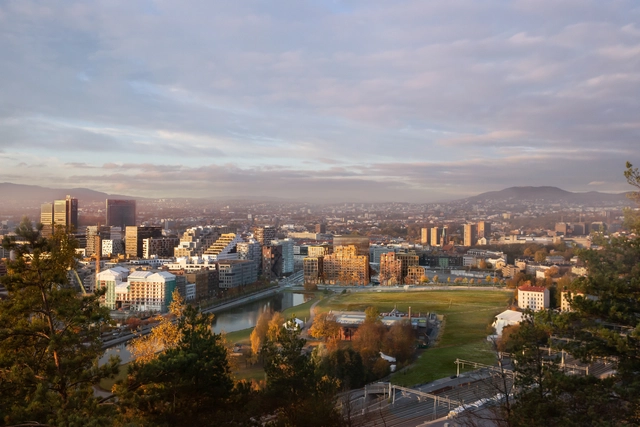
Norwegian architecture offices A-lab and LPO revealed the plan to develop the last remaining plot in Bispevika, part of the Fjord City, a large-scale waterfront urban renewal project in the center of Oslo, Norway. The intervention strengthens the connection between the historic medieval city of Oslo to the new Fjord City while also introducing cultural, creative, and commercial activities to the area. The project comprises five buildings forming a quarter. The proposed massing and height take a contextual approach as they are reduced toward important local monuments such as the baroque residence “Ladegården” with its baroque garden “Barokkhagen." The project is developed by Oslo S Utvikling (OSU), the same client behind the Barcode project, and in collaboration with landscape architects SLA.
MVRDV and GRAS announced the completion of five of the seven buildings of Project Gomila in Palma de Mallorca, Spain. The residential complex was originally comprised of four existing buildings, adding three new ones for a total of 60 new dwellings and new commercial spaces. The project aligns with revamping the historic neighborhood "El Terreno" as a vibrant and sustainable residential site, home of bohemian nightclubs that hosted iconic musicians such as Jimi Hendrix, Ray Charles, and Tom Jones.
Architecture office RSHP has unveiled the design for the Shenzhen - Hong Kong Innovation Integrated Service Centre, a 45-storey tower in the Futian Free Trade Zone in south Shenzhen. The building features an integrated floating podium which provides spaces for retail, cultural events, and green roof gardens. It also connects to the existing metro station and articulates the street-level plaza. The design results from a negotiation between two distinct briefs asking for a tower and a mixed-use podium on neighboring plots. RSHP’s proposal was to merge the briefs by integrating the podium into the south side of the tower, thus creating a distinct identity and creating a better relationship with the surrounding public space.
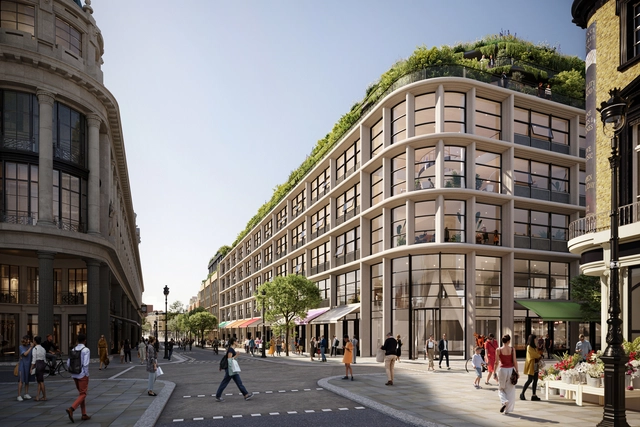
Foster + Partners has revealed the design for a new mixed-use development in the northern end of the central London high street. The building is located on Queensway, opposite the Whitley, the famous department store, which is also being transformed by Foster + Partners as part of a larger redevelopment scheme. Named The William, after William Whiteley, the eponymous founder of the famous Whiteleys, the project includes six floors of office space, shops, and 32 new homes, 11 of which will be affordable.
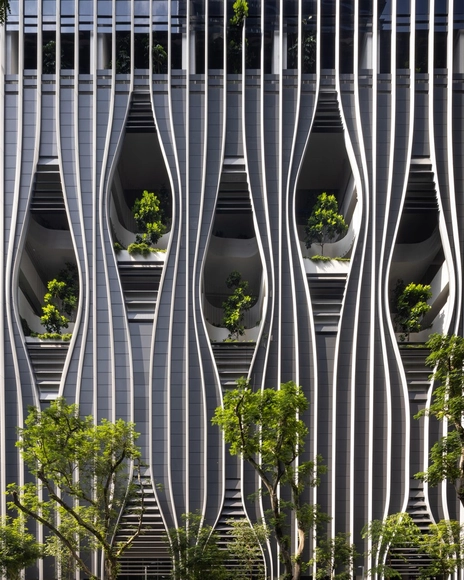
Designed by BIG-Bjarke Ingels Group and CRA-Carlo Ratti Associati, CapitaSpring is Singapore’s latest addition to its skyline. Recently completed after four years of construction, the 280-meter-tall high-rise oasis, considered among the city’s tallest structures, is a mixed-use high-rise with abundant sky gardens and rooftop park, office space, a serviced residence, a hawker center, restaurants, and public spaces.
The biophilic skyscraper, aligned with “the city’s pioneering vertical urbanism” and Singapore’s reputation as a garden city, is located at the heart of the financial district on the site of a former public car park and a hawker center. Comprising 80,000 plants, translating to a total landscaped area of more than 140% of its site area, the tower puts in place a “new green breathing space in the high-density CBD for the neighboring tenants and passersby”.
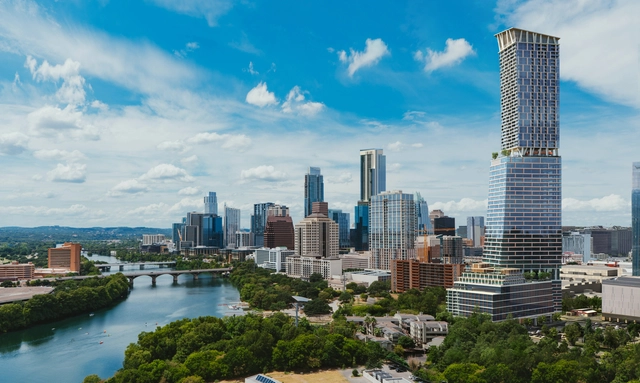
The 311-meter-high Mixed-Use Tower in Downtown Austin designed by Kohn Pedersen Fox (KPF), will become Texas' tallest when it opens in late 2026. Called Waterline, this skyscraper is intended to define the skyline of one of the U.S.A.'s most dynamic and growing cities. Targeting LEED Gold certification, the 74-story project will include apartments, offices, hotel rooms, and a ground-floor paseo. The development will also add two new pedestrian bridges and three additional public pedestrian and bike access points.
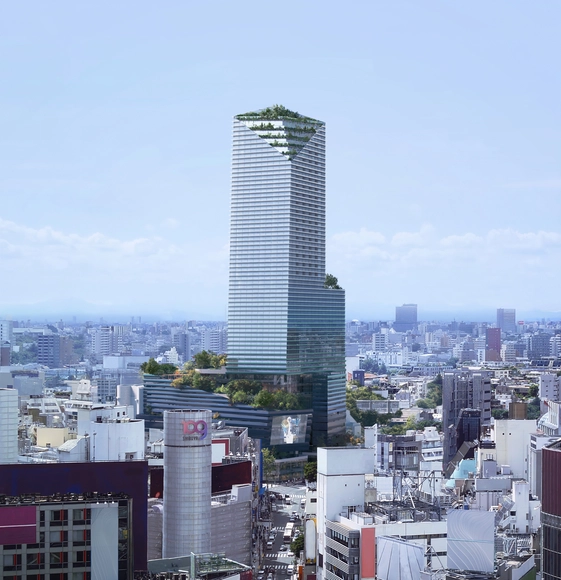
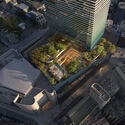
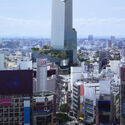
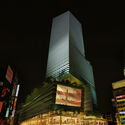
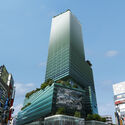
Snøhetta has unveiled the design of its largest project in Japan to date, the Shibuya Upper West Project for Tokyu Corporation, L Catterton Real Estate, and Tokyu Department Store. The project aims to offer cultural experiences in tune with the vibrant Shibuya district of Tokyo, known for its bustling crowds, big screens, and the crossing in front of the Shibuya Station Hachikō. The 36-story tower will include a cultural complex, retail spaces, a contemporary hotel, and rental residencies.
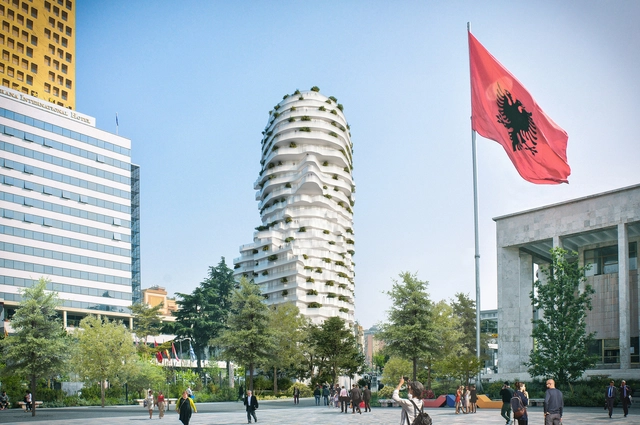
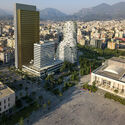
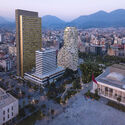
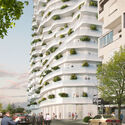
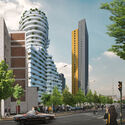
MVRDV has begun construction on Skanderbeg Building, officially known as Tirana’s Rock, a mixed-use project that is sculpted into the shape of Albania’s national hero. The building is wrapped in curved balconies that form the shape of Skanderbeg's head, serving as an iconic landmark at the Skanderbeg Square in the center of Tirana. Once complete, the project will be one the world’s largest buildings that doubles as a figurative sculpture, celebrating the country’s cultural history while giving the Albanian capital a unique identity.
As engines of the economy and production, cities are home to the largest masses of people and it is estimated that by 2050, they will be home to 70% of the world's population. In this context, architects are incorporating the articulation of mixed uses in their buildings on a daily basis, seeking to encourage diversification and avoid mono-functionalisation.
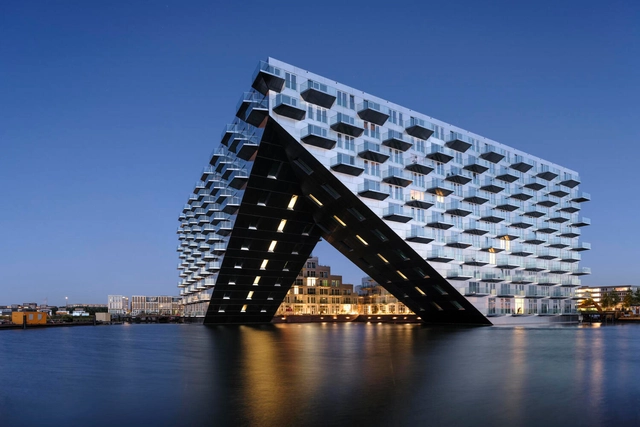
Powerhouse Company has revealed a new design for THIS., a new mixed-use development in Amsterdam’s North District. Overlooking the waterfront of the IJ river, the complex offers the necessary amenities for both working and living in an area close to the city center. The ensemble includes a new office building, two waterfront private sector residential buildings, and two social housing blocks containing a total of 2017 homes. A Hidden Garden, designed by Delva Landscape Architecture and Urbanism, connects the residential and office buildings, creating a space for leisure and social activities.
OMA /Jason Long revealed its latest adaptive reuse project in Detroit, transforming a former bakery and warehouse into mixed-use art, education and community space. Developed in collaboration with Library Street Collective, the project provides new headquarters for two local non-profits, PASC and Signal-Return, while creating a mix of artist studios, galleries, community-serving retail and gathering spaces. Dubbed “LANTERN”, the development is set to become an “activity condenser.”
As the city continues to evolve and transform, dead edges in the cityscape begin to emerge, subsequently reducing the level of activity in our built environment. These 'dead edges' refer to the areas that lack active engagement, they remain empty and deprived of people, since they no longer present themselves as useful or appealing. As the Covid-19 pandemic draws to an ultimate close, the first issue we may face post-pandemic is to revive our urban environment. A kiss of life into a tired and outdated cityscape...
The focal element in creating an active and healthy urban environment is by increasing vitality through placemaking. Creating diverse and interesting places to reside, thrive, and work. Here are five regenerative strategies that animate the cityscape and ultimately produce resilient, attractive, and flexible environments.