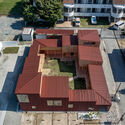
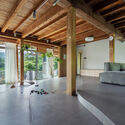
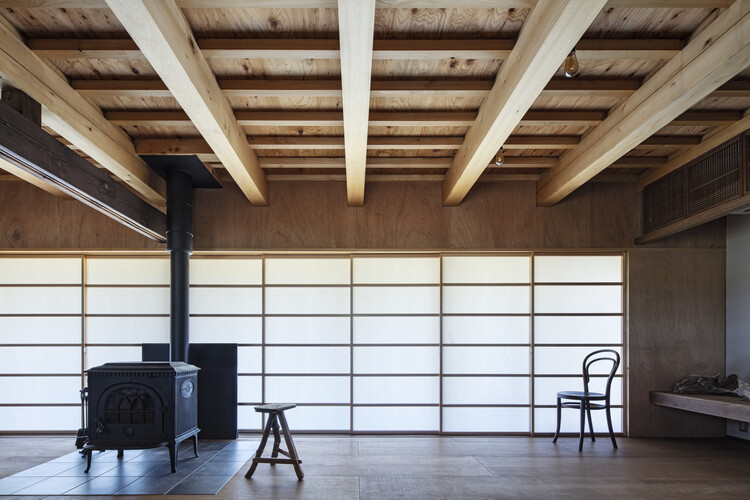
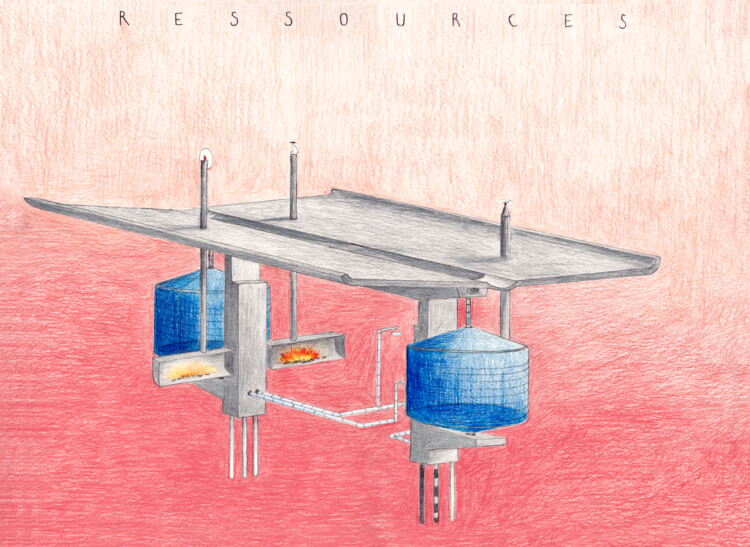
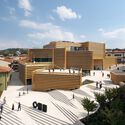
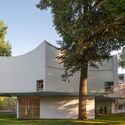
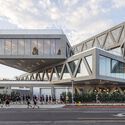
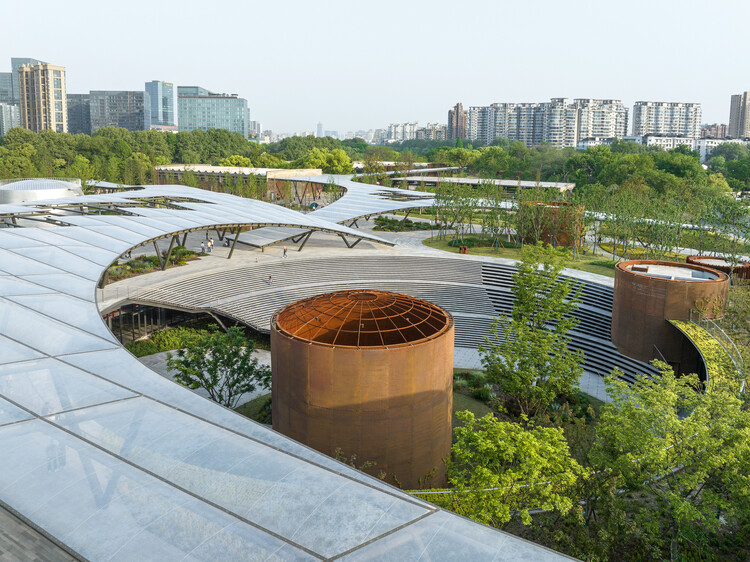
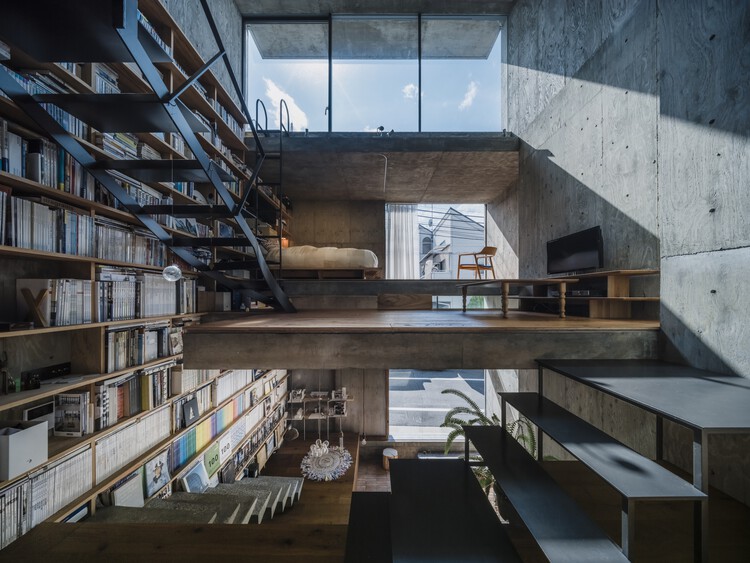
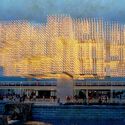
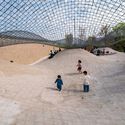
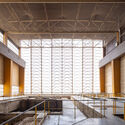
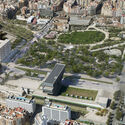
In a shifting societal and environmental landscape, how can architectural design respond to transformation while meaningfully engaging with what endures? 1110 Office for Architecture, based in Osaka, Japan, approaches this question through a body of work defined by careful residential renovations and precise spatial interventions.
Named a winner of the ArchDaily 2025 Next Practices Awards, the practice represents an emerging voice in redefining architecture's role within conditions of change.
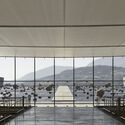
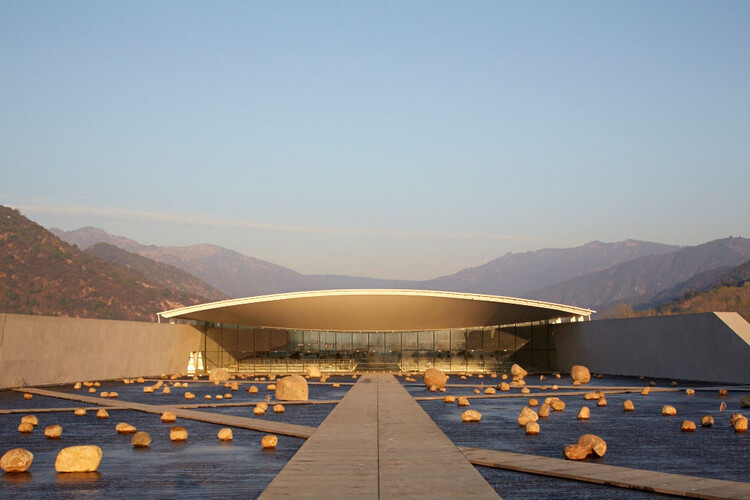
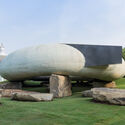
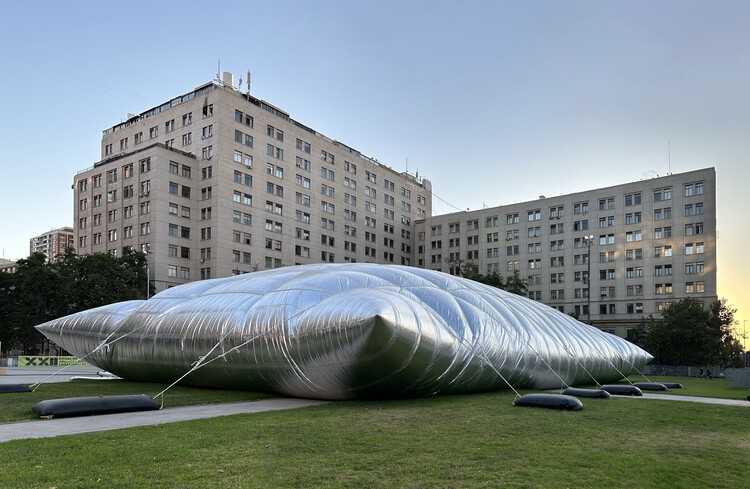
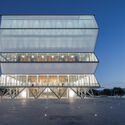
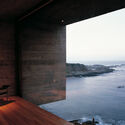
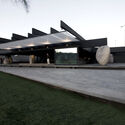
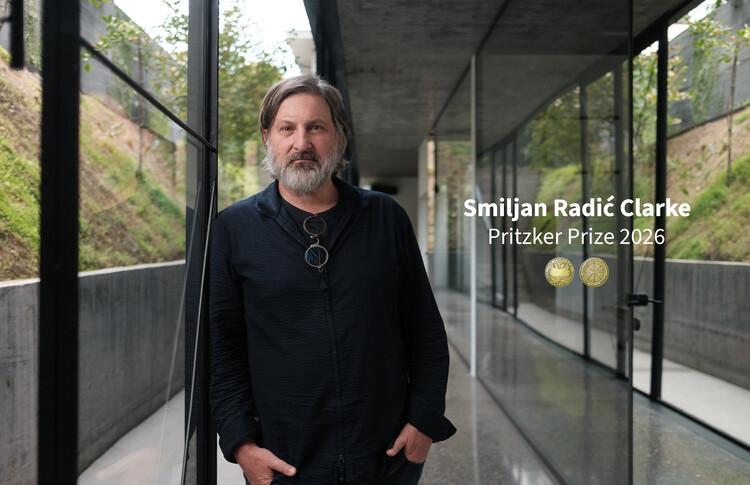
The 2026 Pritzker Price Award has been awarded this year to the Chilean architect of Croatian descent, Smiljan Radić Clarke. Born in Santiago, Chile, in 1965, his practice evokes a geography of extremes, shaped by the tectonic tension between the staggering weight of the Andes and the seismic instability of the territory. After graduating from the Pontifical Catholic University of Chile and pursuing further studies in aesthetics in Venice, Smiljan Radić Clarke established his base in Santiago. From there, he has developed one of the most singular visions in contemporary architecture. His work privileges the intensity of the moment through a fragile architecture. Within it, the building operates as a temporary and tactile refuge that places the spectator in a state of aesthetic uncertainty, oscillating between ancestral ruin and avant-garde artefact.
Smiljan Radić Clarke, the 2026 Pritzker Prize winner, is a contemporary Chilean architect known for his experimental approach to design, with a practice that balances the elemental with the intimate, the monumental with the fragile. Over the course of more than three decades, Radić has developed an architecture that resists repetition and conventional stylistic categorization, favoring instead deeply site-specific, materially attuned, and culturally reflective interventions.
His work negotiates between permanence and impermanence, memory and imagination, creating buildings that are as much about human experience and emotion as they are about structure and form. Across residences, cultural institutions, and temporary installations, Radić's architecture foregrounds the interplay between context, materials, and the subtle gestures that shape how spaces are inhabited and perceived.
Courtesy of Tom Welsh for The Pritzker Architecture Prize
Chilean architect Smiljan Radić Clarke has been announced as the laureate of the 2026 Pritzker Architecture Prize, regarded as one of the highest honors in the field of architecture. The award recognizes Radić for a body of work that explores architecture through material experimentation, spatial perception, and a careful engagement with landscape and context. Born in Santiago, Chile, where he continues to live and work, Radić leads the practice Smiljan Radić Clarke, established in 1995. As the second Chilean to receive the prize, after Alejandro Aravena in 2016, he joins a distinguished list of previous laureates, including Liu Jiakun in 2025, Riken Yamamoto in 2024, David Chipperfield in 2023, and Diébédo Francis Kéré in 2022.
Radić's architecture operates within a territory where the phenomenological experience of space precedes explanation. His buildings often appear quiet, elemental, and resistant to easy verbal interpretation, encouraging visitors to experience them through movement, atmosphere, and perception rather than through formal expression.
House with Seven Gardens / Civil Architecture. Image Courtesy of Civil Architecture
For centuries, domestic architecture throughout the Gulf has been organized around the courtyard. Houses presented thick exterior walls and limited openings to the street, turning inward toward a shaded garden that structured everyday life. This spatial arrangement responded to both climate and culture. The courtyard brought daylight into deep plans, enabled cross-ventilation, and provided a protected outdoor environment within dense urban fabrics. In the House with Seven Gardens, in Diyar Al Muharraq, Bahrain, the Bahrain-based practice Civil Architecture, one of the winners of the ArchDaily 2025 Next Practices Awards, revisits this spatial tradition through the conditions of contemporary suburban housing. Rather than reproducing the courtyard house as a historical model, the project reinterprets its environmental logic within the regulatory frameworks and spatial conditions that shape much of today's urban development in the Gulf.
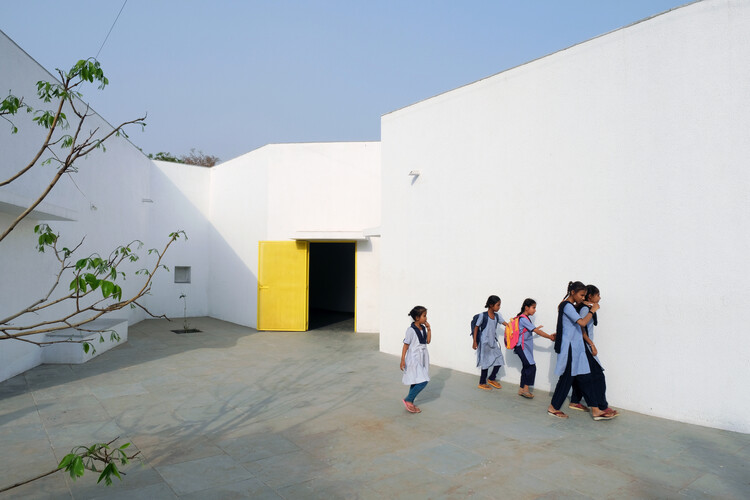
Founded in 2015 in Ahmedabad by Anand Sonecha, SEAlab is a practice shaped by a slow, contemplative engagement with place, proportion, and participation. Recognized as one of the winners of the ArchDaily 2025 Next Practices Awards, the studio builds with simple materials and local techniques, pursuing environments that are experienced as much as they are seen. This ethos became particularly tangible in Gandhinagar, where the School for Blind and Visually Impaired Children did not begin as a purpose-built institution. The school had been operating from an existing primary school building, with classrooms stacked above dormitories and twelve children sharing a single room. Space was limited, and so were growth opportunities. The new academic building was required to expand capacity, improve living conditions, and support greater student independence.
Diagram of the services in Barba Jupiter. Image Courtesy of Géométral
Founded in 2022 by Clément Masurier and based in Paris, France, Géométral is an architectural practice defined by design strategies that are linked to the landscape, which it treats as a primary determinant of form. The studio, one of the winners of the ArchDaily 2025 Next Practices Awards, approaches each project as a small universe that combines program, atmosphere, and spatial narratives. Rather than a single signature style, they focus on crafting moods and situations tailored to each context and user.
In its early stages, the studio lacked a built portfolio and responded by developing "fictional architectures" situated on real topographies. This exercise was not merely an aesthetic pursuit but a methodological anchor, as it allowed the firm to establish a rigorous process of site analysis and typological testing before receiving physical commissions. By treating imaginary projects with the same technical scrutiny as real ones, the studio developed a library of formal responses to environmental constraints that now dictate their built work.
As the architecture community looks ahead to the announcement of the 2026 laureate of the Pritzker Architecture Prize, anticipation once again gathers around what is widely regarded as the profession's highest honor. Founded in 1979 by Jay Pritzker and administered by the Hyatt Foundation, the prize recognizes a living architect whose body of work demonstrates a consistent and significant contribution to humanity and the built environment.
Architecture is often evaluated through finished forms, yet some practices operate in a different register, one where design unfolds through relationships, time, and use rather than through a single outcome. For CatalyticAction, participation is not a parallel social activity, but the means through which spaces are conceived, constructed, and sustained over time.
Based between Beirut and London, the practice has worked across the Middle East and Europe, developing public spaces, schools, playgrounds, and everyday urban infrastructures through long-term collaboration with local communities. Grounded in participatory research and collective decision-making, this approach was recognized through ArchDaily's 2025 Next Practices Awards, highlighting a mode of practice where architecture is understood as a shared, evolving process rather than a fixed object. In this context, architectural value is measured through continuity, use, and collective ownership, rather than through form alone.
The Renovation of Tianbao Cave District of Erlang Town by Liu Jiakun, the 2025 Pritzker Architecture Prize laureate. Image Courtesy of Arch-Exist
As the architecture community looks ahead to the announcement of the 2026 Pritzker Architecture Prize, anticipation is once again building around who will be named this year's laureate. While the official date has yet to be confirmed, the annual reveal traditionally takes place in early March, marking one of the most closely watched moments in the architectural calendar. Established in 1979 by the Hyatt Foundation, the Pritzker Architecture Prize is widely regarded as "the profession's highest honor." Each year, it recognizes a living architect, or architects, whose work demonstrates a consistent and significant contribution to humanity and the built environment. Over the decades, the award has reflected shifting priorities within the discipline, highlighting practices engaged with social equity, environmental responsibility, material experimentation, and cultural continuity.
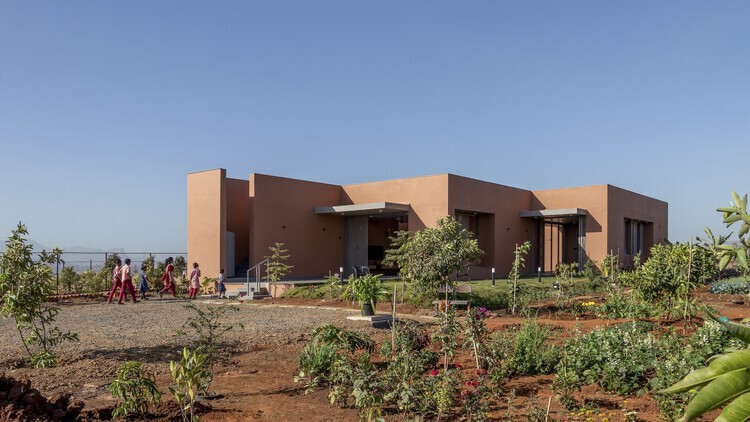
Founded as a practice working across architecture and community-focused projects, pk_iNCEPTiON is based in Maharashtra, India. The studio, one of the winners of the ArchDaily 2025 Next Practices Awards, works on rural schools, houses, libraries, and public buildings, with a focus on spatial organization and adaptability. Operating across varied social and climatic contexts, pk_iNCEPTiON approaches design through careful attention to movement, scale, and the relationship between built form and open space.
Selected as one of the winners of ArchDaily 2025 Next Practices Awards, NAAW represents a new generation of architectural studios reshaping contemporary practice in Central Asia. Founded in 2019 by Elvira Bakubayeva and Aisulu Uali, the studio operates at the intersection of research, interdisciplinary collaboration, and spatial experimentation, positioning architecture as a tool for reflection and an active agent in shaping contemporary Kazakhstani identity.
Building Frame of the House. Image Courtesy of IGArchitects
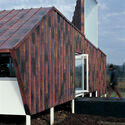
Founded in 2020 by Masato Igarashi, IGArchitects is an architectural practice based in Tokyo and Saitama, Japan. The studio, one of the winners of the ArchDaily 2025 Next Practices Awards, explores enduring architecture through a careful yet assertive treatment of structure, scale, and materiality. Prior to establishing his own practice, Igarashi worked at the large-scale firm Shimizu Sekkei as well as the Suppose Design Office, gaining experience across projects ranging from major developments to smaller, concept-driven works. This breadth of experience continues to inform IGArchitects' current focus on residential and commercial architecture across Japan.
The 2025 Osaka Expo has captured widespread attention—not only for its architectural ambition and spectacle, but also for breaking records and generating controversy. Its most iconic feature, a monumental timber ring designed by Sou Fujimoto, has already made headlines as a Guinness World Record-breaking wooden structure. Built on the reclaimed island of Yumeshima, the site has attracted praise and critique in equal measure. Beyond its awe-inspiring 2-kilometer circumference—parts of which extend dramatically over the water—the structure has also drawn concerns, including questions about health & safety, extreme heat, and swarms of insects that may affect the visitor experience.
This year also marks a significant anniversary: the 55th year since the 1970 Osaka Expo, held under drastically different socio-economic conditions. Comparing these two expos—both hosted in the same city—offers a rare opportunity to reflect on how the rhetoric, curatorial themes, and architectural ambitions of world expos have evolved over time. From "Progress and Harmony for Mankind" in 1970 to "Designing Future Society for Our Lives" in 2025, the shift in thematic focus reveals changing global priorities. Meanwhile, the scale and nature of architectural involvement have also transformed, from the futuristic visions of Japanese Metabolism to a more internationally dispersed group of designers concerned with sustainability, technology, and civic engagement.
The UIA World Congress of Architects is an international event for architectural dialogue organised by the International Union of Architects (UIA, by its French acronym), a non-governmental organisation that unites national associations of architects from over 100 countries, representing more than one million professionals. The first UIA Congress of Architects, which also marked the institution's founding, was held in Lausanne in 1948 during the post-war reconstruction period. Since then, UIA congresses have been held every three years in a different city within a member country, serving as the organisation's main recurring event. In 2026, the Congress will be held in Barcelona, and UNESCO has consequently designated the city as the World Capital of Architecture 2026. Each Congress focuses on a key topic relevant to the profession, articulated through a central theme. Recent themes include Copenhagen 2023: "Sustainable Futures. Leave no one behind." and Rio 2020–2021: "All the worlds. Just one World." The topic for 2026 is "Becoming. Architectures for a Planet in Transition," welcoming renowned figures in contemporary architectural thought and practice for a broad and critical overview of the possible futures of architecture.
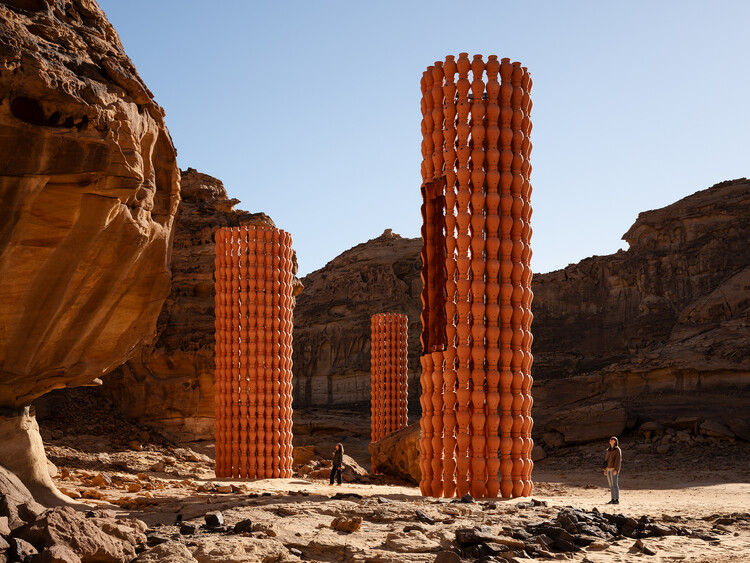
Courtesy of The Royal Commission for AlUla | Rana Haddad + Pascal Hachem Reveries, Desert X AlUla 2024
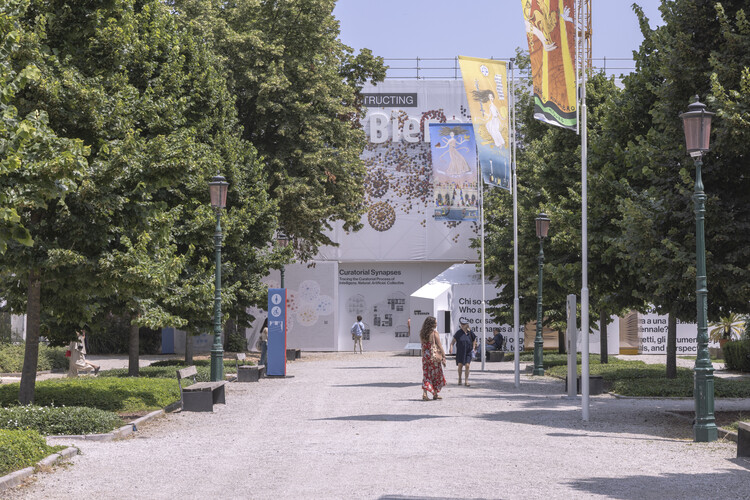
Architecture and design enter 2026 in a moment of renewed experimentation, urgent environmental reflection, and an expanded global dialogue on the built environment. As cities confront the pressures of climate adaptation, demographic shifts, and technological transformation, this year's international calendar offers a lens into how the discipline is responding, creatively, critically, and collectively. From long-standing biennials to newly established platforms, the events of 2026 spotlight architecture's evolving role as both a record of our changing world and a driver of more equitable, sustainable futures.