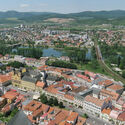
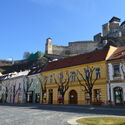
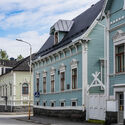
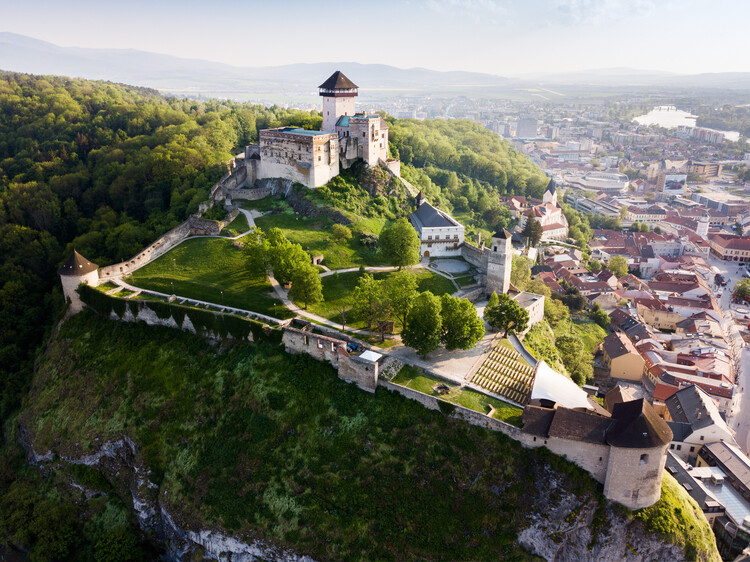
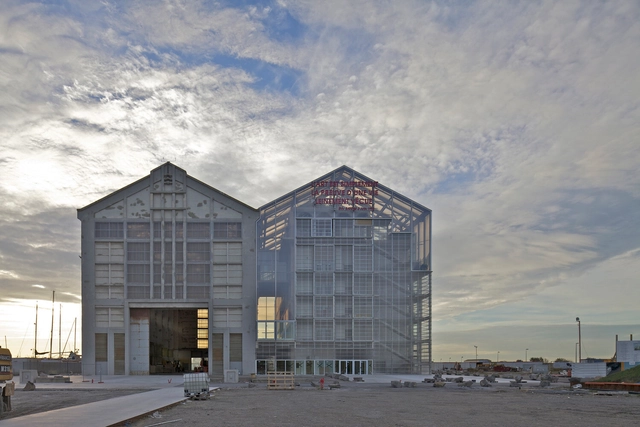
The European Capital of Culture (ECoC) initiative was launched in 1985 and has, to date, been awarded to more than 60 cities across Europe. It is designed to celebrate and promote cultural diversity on the continent, strengthen European citizens' sense of belonging to a shared cultural space, and foster culture's contribution to urban development. In practice, the designation has proven to be a catalyst for urban regeneration, tourism growth, the strengthening of cities' international profiles, and the improvement of how they are perceived by their own residents. European Capitals of Culture are formally designated four years before the title year, allowing time to plan, prepare, and embed the program within a long-term cultural strategy, establish European partnerships, and ensure that appropriate infrastructure is in place. In 2025, the European Capitals of Culture are the German city of Chemnitz and the Slovenian city of Nova Gorica. For 2026, the designated cities are Oulu in Finland and Trenčín in Slovakia.
As 2025 approaches its end, we look back at an eventful year in the world of interior design. Last year, designers favored reserved, modest approaches, a trend that continued from previous years. The emergence of artificial intelligence generated intense discussions on digital equity and misinformation, which continued into 2025, especially with the topic of the Venice Architecture Biennale, Intelligens. This opened the conversation to the opportunities of digital technologies, attempting a more hopeful outlook. On the other hand, completed interior design projects over the year focused more on the tangible and the pragmatic, with expressed raw materials and an appreciation of history.
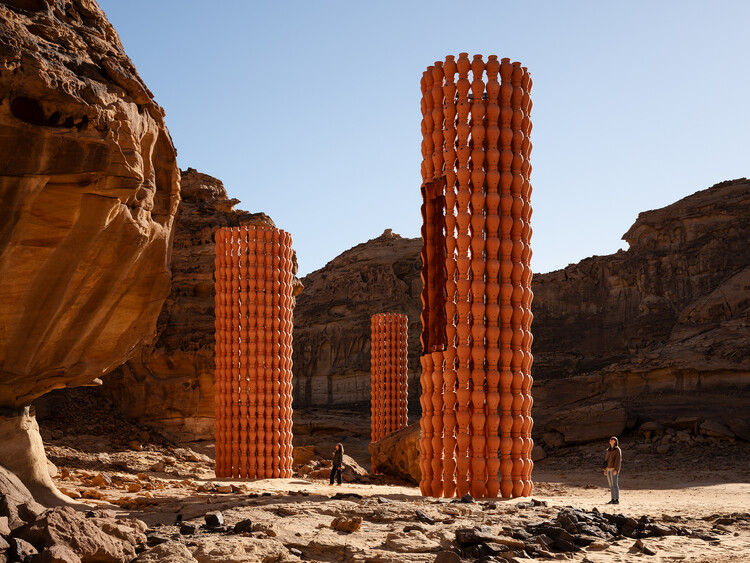
Courtesy of The Royal Commission for AlUla | Rana Haddad + Pascal Hachem Reveries, Desert X AlUla 2024
Architecture and design enter 2026 in a moment of renewed experimentation, urgent environmental reflection, and an expanded global dialogue on the built environment. As cities confront the pressures of climate adaptation, demographic shifts, and technological transformation, this year's international calendar offers a lens into how the discipline is responding, creatively, critically, and collectively. From long-standing biennials to newly established platforms, the events of 2026 spotlight architecture's evolving role as both a record of our changing world and a driver of more equitable, sustainable futures.
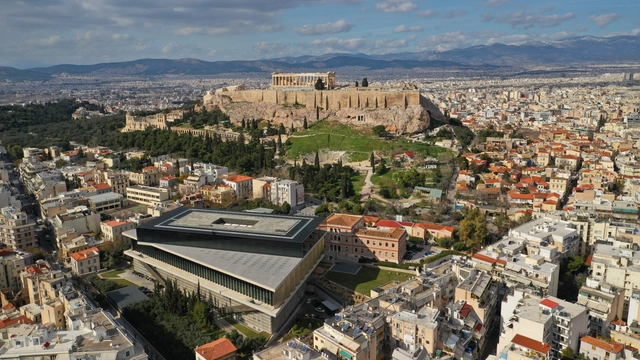
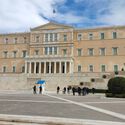
Athens stands as a city where the legacy of Antiquity is woven into its modern and vibrant urban landscape. World-renowned landmarks of Ancient Greece like the Acropolis and the Parthenon stand as enduring symbols of classical architecture and the city's storied past. These structures reflect the foundational principles of symmetry and balance that have influenced generations of architects and continue to attract scholars from around the world. Yet, Athens is also a thriving metropolis where contemporary architecture coexists with its historical counterparts. Recent developments, led by international firms and local architects, focus on sustainability and innovation while respecting Athens' rich cultural heritage. This duality—preserving the old while embracing the new—reflects Greece's broader urban aspirations, making Athens a focal point in global architectural discourse. The city's architectural evolution also extends to its contemporary architecture and interior design scene, which is gaining international recognition.
To celebrate this architectural evolution, this city guide features Athens's historical landmarks alongside ArchDaily's selection of projects focusing on contemporary architecture, and Designboom's curation of innovative interior designs. Together, they highlight Athens' role as a hub of design innovation.
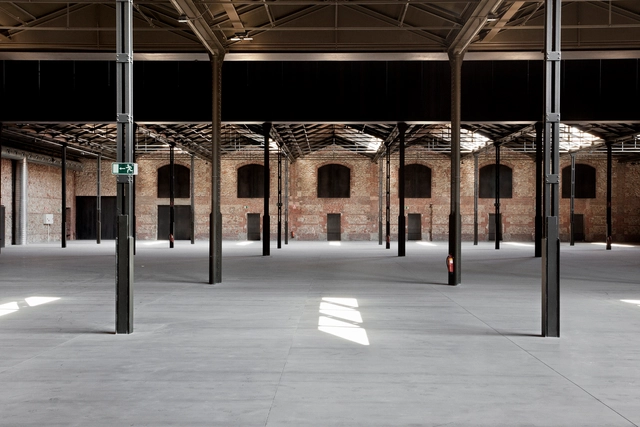
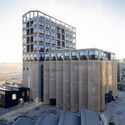
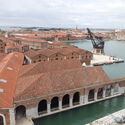
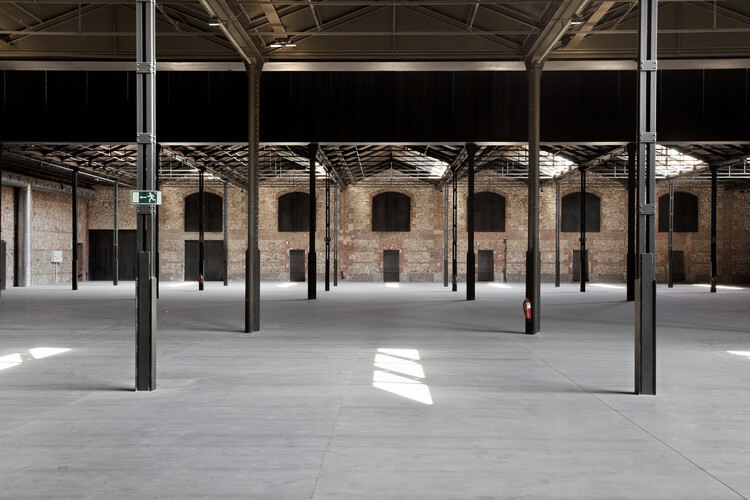
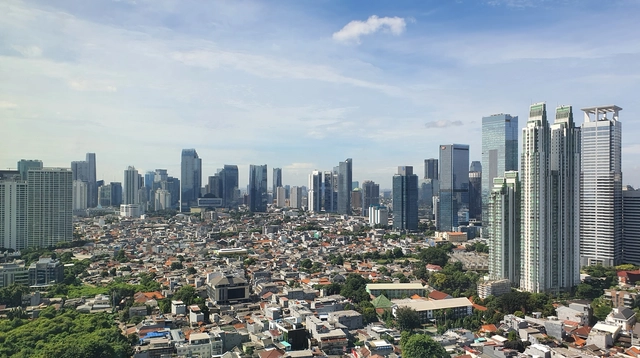
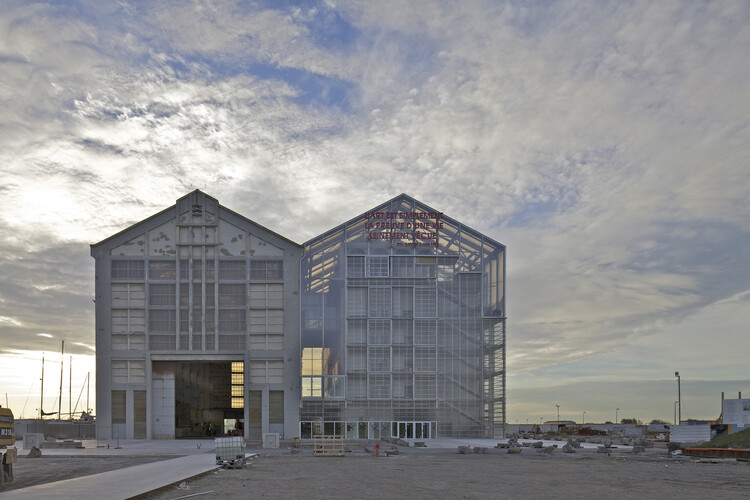
In cities across the world, the relics of industrial production have become the laboratories of a new urban condition. Warehouses, power plants, and shipyards, once symbols of labor and progress, now stand as vast empty shells, waiting to be reimagined. Rather than erasing these structures, architects are finding creative ways to adapt them to contemporary needs, transforming spaces of manufacture into spaces of culture, education, and community life.
This shift reflects a broader change in architectural priorities: building less and reusing more. The practice of adaptive reuse responds simultaneously to environmental urgency and to the need for cultural continuity in urban environments.
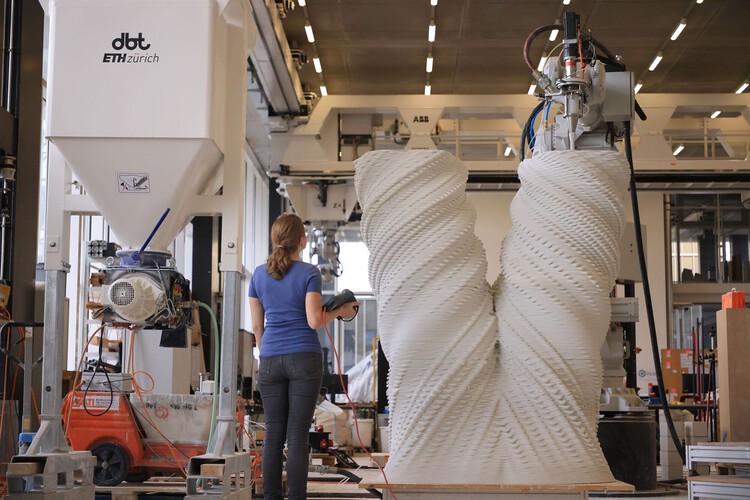
Architectural ornamentation has been a recurrent subject of debate across the industry for decades. A practice that was largely abandoned during the Modernist movement could now be standing on a platform that might, again, allow its resurgence, due to the current convergence of robotics, artificial intelligence (AI), and digital fabrication. Technology has seemingly removed the primary obstacle to decorative detail: the high cost of skilled manual labor. However, this new technical capacity demands a critical examination: What does ornamentation truly represent, and what do we gain or lose by resurrecting it through algorithmic design?
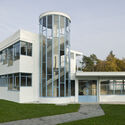
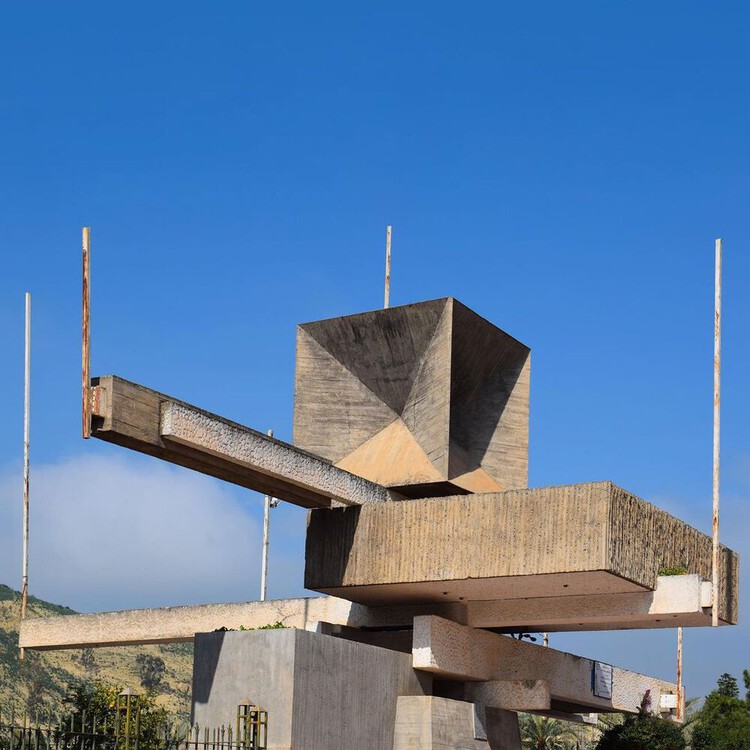
Modernism has a long history in Morocco. Being close to Europe and under French Protectorate rule, it kept pace with architectural developments in the movement. Its relative peace after the Second World War further strengthened its role as some European architects sought a hub for new ideas. Architects in independent Morocco adopted Modernism as they were tasked to build the infrastructure of a new nation. The architect Jean-François Zevaco, born in Morocco to French parents, practiced across these formative periods, developing his own expressive version of modern architecture.
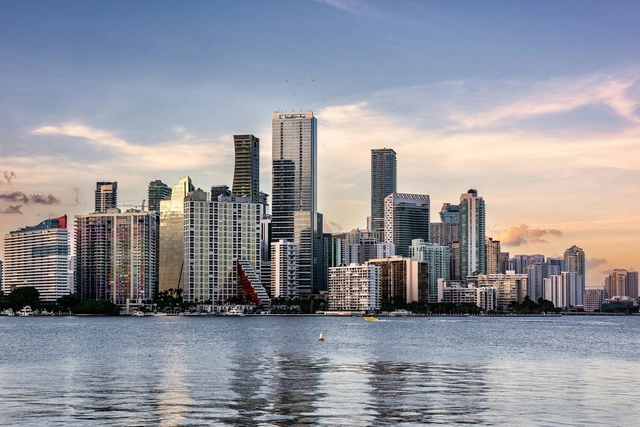
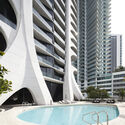
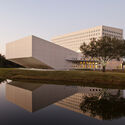
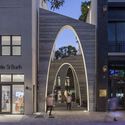
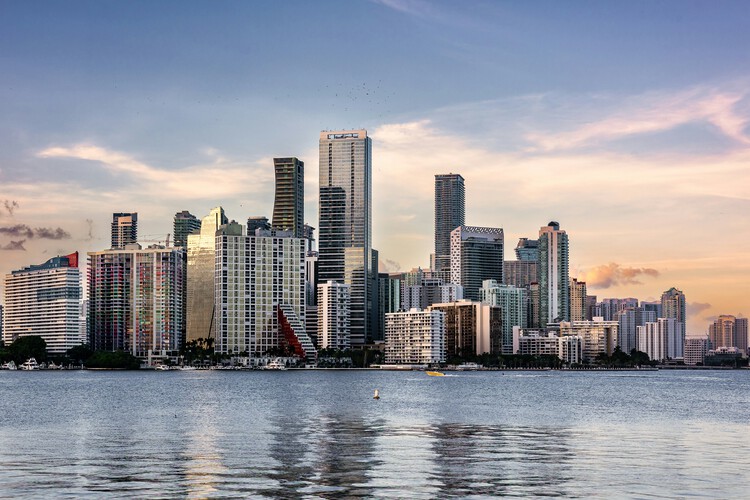
Stretching along the Atlantic coast at the southern tip of Florida, Miami is often introduced through postcard views of beaches, palm trees, and glass towers facing the water. Yet, behind this familiar image lies a city shaped by migration, tourism, and real estate cycles, where architecture has repeatedly been used to project new identities and reinvent the urban landscape. From early resort hotels and the Art Deco façades of South Beach to experimental high-rises and cultural institutions on the bay, the built environment offers a way to read how Miami negotiates climate, economy, and everyday life.
Over the past century, the city has grown through successive layers of development that remain visible in its streets and skylines. The streamlined geometry and pastel colors of the historic Art Deco District coexist with the exuberant forms of Miami Modern (MiMo) motels and postwar infrastructure along Biscayne Boulevard. Downtown and Brickell have transformed from low-rise business districts into dense clusters of residential and office towers, many designed by international firms working alongside local practices. At the same time, neighborhoods such as Little Havana, Allapattah, and Wynwood reveal how diasporic communities, industrial heritage, and creative industries occupy and adapt existing fabrics, often in contrast with the image-driven waterfront.
In a world facing ecological exhaustion and spatial saturation, the act of building has come to represent both creation and consumption. For decades, architectural progress was measured by the new: new materials, new technologies, new monuments of ambition. Yet today, the discipline is increasingly shaped by another form of intelligence, one that values what already exists. Architects are learning that doing less can mean designing more, and this shift marks the emergence of what might be called an architecture of restraint: a practice defined by care, maintenance, and the deliberate choice not to build.
The principle recognizes that the most sustainable building is often the one that already stands, and that transformation can occur through preservation, repair, or even absence. Choosing not to build becomes a political and creative act, a response to the material limits of the planet and to the ethical limits of endless growth. That Architecture moves beyond the production of new forms to embrace continuity, extending the life of structures, materials, and memories that already inhabit the world.
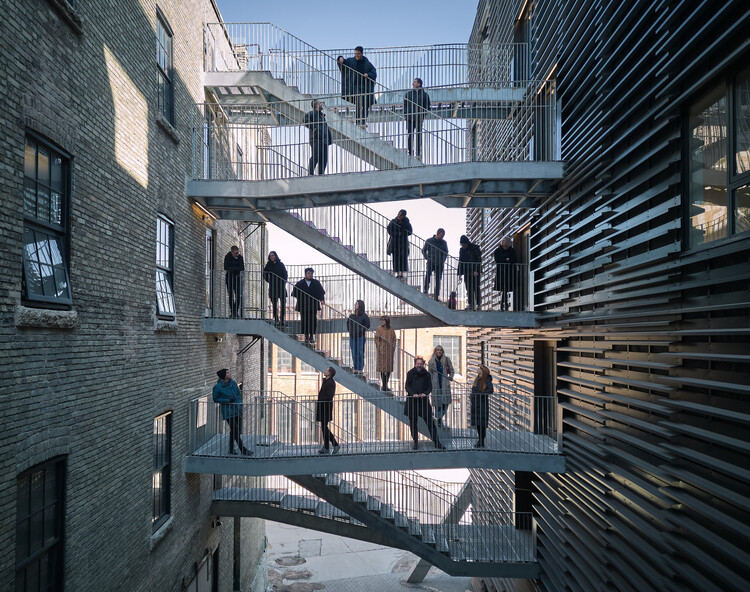
Founded in Winnipeg, Manitoba, in 2007 by Johanna Hurme and Sasa Radulovic, and shortly afterward joined by its third partner, Colin Neufeld, 5468796 Architecture was established as an architecture firm whose early work explored the current state of housing in North America. The Canadian studio operates as a collaborative group of approximately 20 designers, where they prioritize the collective value of ideas over individual authorship.
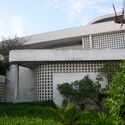
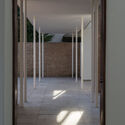
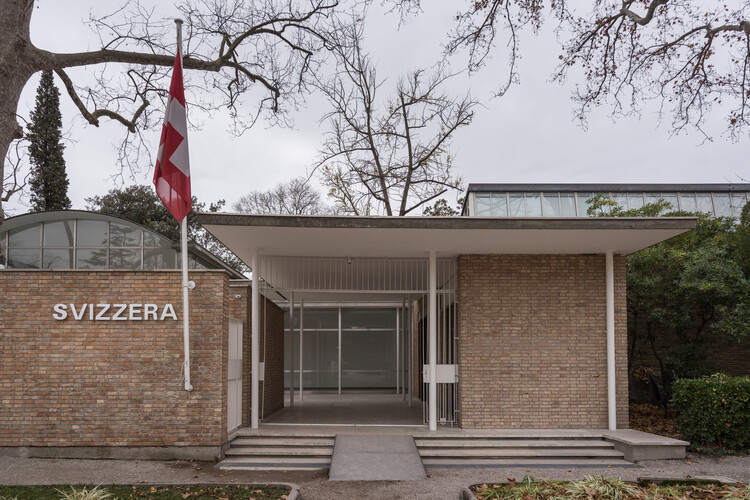
Amid the orderly grid of the Giardini della Biennale, the Swiss Pavilion appears almost reticent. Its low white volumes, completed in 1952 by Bruno Giacometti, seem to withdraw from the surrounding display of national pride. The building embodies a form of modernism that resists monumentality, where precision and restraint replace spectacle, and architecture becomes less an object than a framework for encounter.
Emerging from a Europe rebuilding itself, the pavilion reflects a time when nations were reimagining how to appear in the world. For Switzerland, neutrality had long been both a political stance and a cultural condition, and Giacometti translated this identity into a sequence of measured rooms arranged around an open courtyard, defined not by what they contain but by how they hold light, movement, and pause. The result is an architecture that does not speak loudly of belonging but invites attention through balance and care.
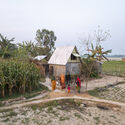
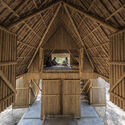
In the low-lying deltas of Bangladesh, water defines both life and loss. Every year, millions are forced to rebuild after floods wash away their homes, crops, and livelihoods. In these precarious territories, the act of building has become an act of resilience. It is here that Khudi Bari emerges as a modest yet radical proposal. Designed by Marina Tabassum Architects, the project provides a lightweight, modular, and affordable dwelling for communities displaced by climate change. Recognized as one of the winners of the 2025 Aga Khan Award for Architecture, it represents a form of architecture that empowers rather than imposes.
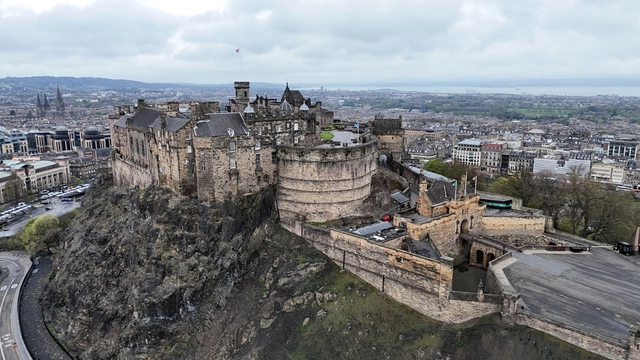
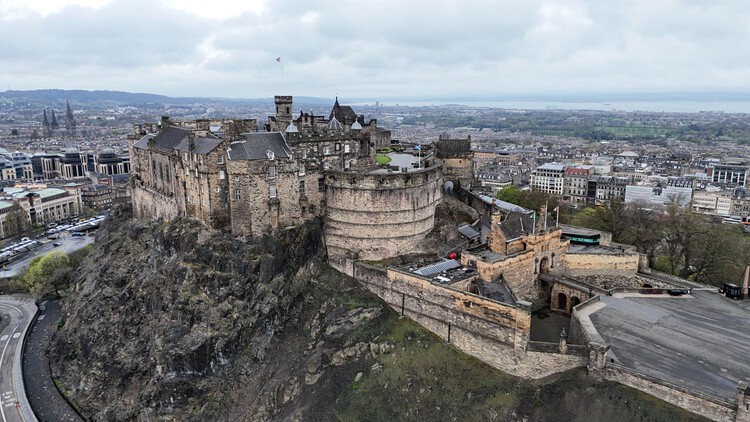
Edinburgh Castle in Scotland’s Capital. Image by 瑞丽江的河水, via Wikimedia Commons (CC BY-SA 4.0)
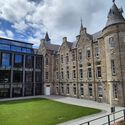
Edinburgh, Scotland's capital, has long been recognized for its rich cultural history and intricate urban fabric. The city thrives within its museums, tenement housing, and shops nestled in Georgian buildings. In 2022, Time Out ranked Edinburgh as the world's best city, citing its efficiency across community building and urban systems such as public transport. However, as climate change makes its effects progressively visible at an urban level, the city inevitably runs into a pressing dilemma: how to sustain this quality of life in increasingly difficult conditions.
The journey toward this balance unfolds through several interconnected strategies, such as retrofitting, adaptive reuse, circular design, and community collaboration, each contributing to Edinburgh's evolving vision of a sustainable urban future.
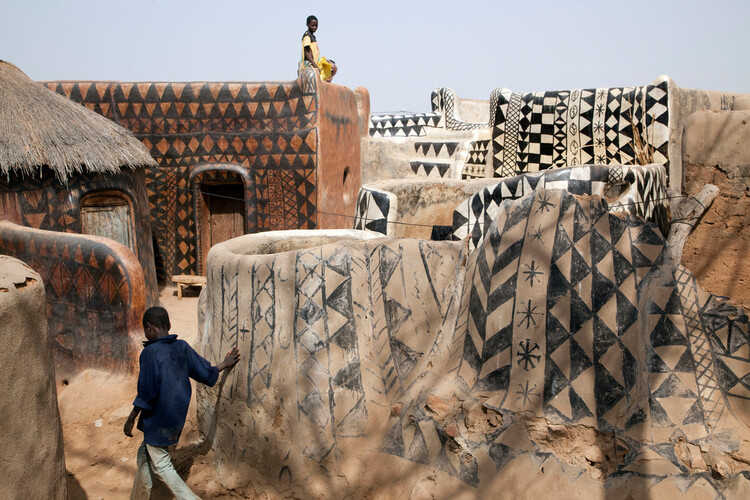
Vernacular architecture is often referred to as harboring lessons for creating low-energy buildings and the fight against climate change. Yet, as weather patterns are changing, there are cases where traditional building techniques are themselves becoming at risk. As well as changes in temperature, different regions have faced becoming wetter or drier, experiencing increased risk of droughts, flooding, storms, and changes to local flora. The painted houses of Tiébélé in Burkina Faso, recognized as a UNESCO World Heritage Site, are one example.
Theaters serve as cultural and social institutions, shaping society by providing spaces where stories of identity, race, and justice are brought to life. These venues foster community through shared, live experiences, sparking conversations that resonate beyond the stage. Architecturally, theaters are more than performance spaces—they are landmarks that embody both the history and future of the arts. Their design often reflects the cultural importance of storytelling, while their refurbishments ensure they remain relevant in a modern context.
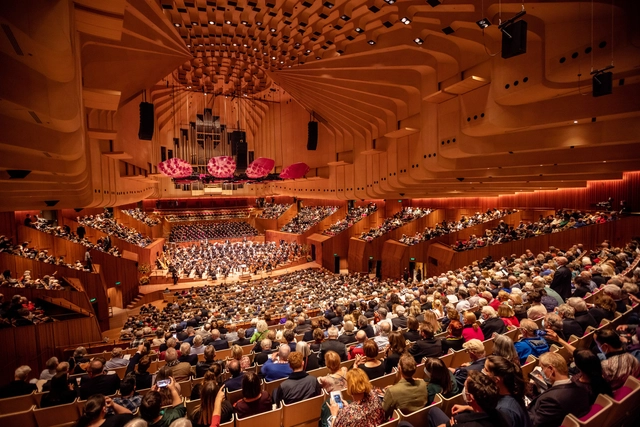
In this week's AD Interior Focus, ArchDaily explores how the refurbishment of iconic theaters like the Royal Opera House in London, United Kingdom, and Sydney Opera House in Australia goes beyond modernizing comfort and accessibility. It delves into how these projects preserve the architectural integrity of these historic landmarks, ensuring their design continues to serve as a backdrop for both artistic expression and social discourse.
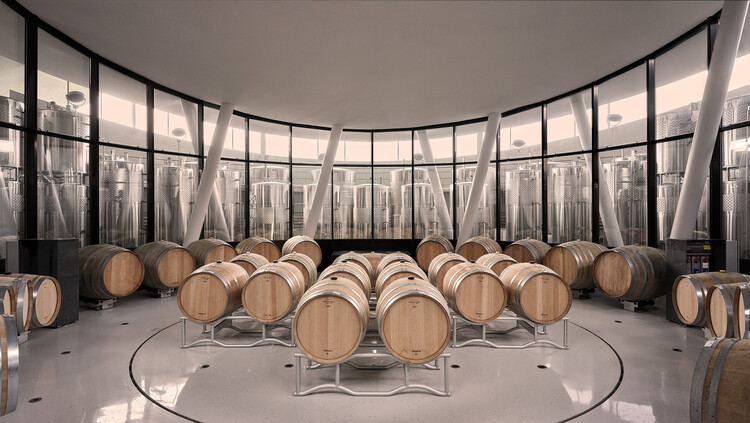
Wine production has long been tied to place, climate, and culture, and in recent decades, architecture has become a central part of this relationship. Wineries are no longer understood only as functional facilities for fermentation, storage, and distribution, but also as spaces where landscape, materiality, and visitor experience intersect. From subterranean cellars hidden beneath fields to sculptural landmarks rising in rural territories, these buildings shape the identity of winemaking regions while offering visitors a carefully choreographed encounter with the process of production.
At the intersection of agriculture, tourism, and culture, wineries present architects with unique opportunities to merge technical requirements with a spatial narrative. They must respond to environmental conditions, manage temperature and humidity with precision, and integrate with delicate ecosystems, while also providing spaces for tasting, gathering, and celebration. As a result, the typology has given rise to a wide range of architectural solutions. Some are rooted in tradition and local craft, others are exploring advanced technologies and contemporary forms.
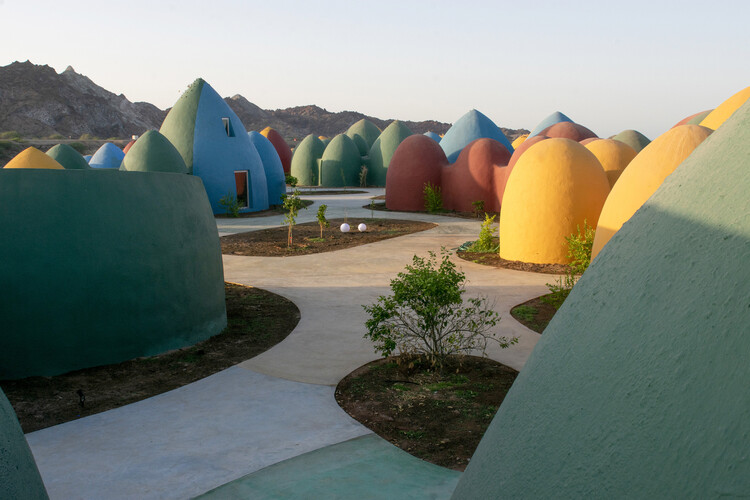
Hormuz Island, located in Iran, was a strategically significant port in the Persian Gulf, characterized by its landscape of colorful mountains. Despite its tourist appeal, the island faces significant socio-economic problems, with the local population having historically faced economic hardship. In response, the Majara Complex by ZAV Architects was conceived not merely as a building but as a deliberate architectural intervention designed to give control, opportunity, and economic benefit directly to the local community. To do this, the project channeled investment into local human resources and prioritized accessible construction techniques, creating a pathway for localized wealth creation. This allowed the Majara Complex to be one of the recipients of the Aga Khan Award for Architecture in 2025.