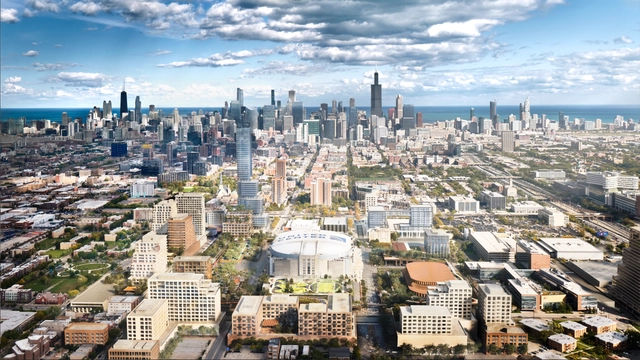
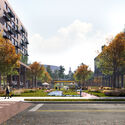
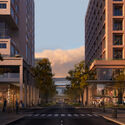
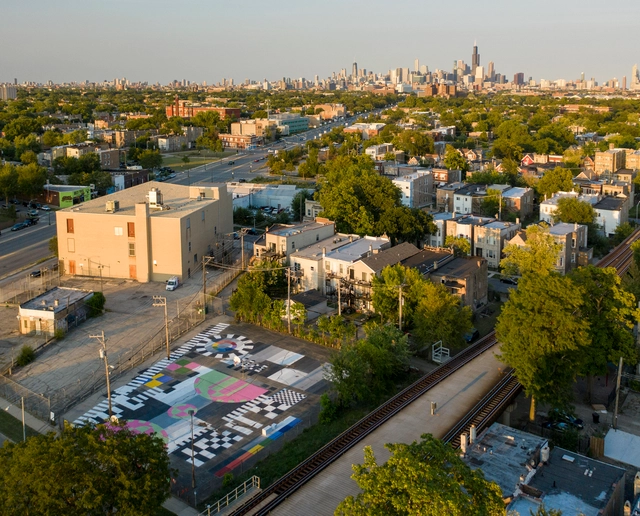
The United Center arena in Chicago, designed by HOK Sport (now Populous), Marmon Mok, and W.E. Simpson Company, was built between 1992 and 1994. With a capacity of over 20,000 seats for sports and general events, it includes more than 6,000 parking spaces in lots surrounding the arena. These parking lots span approximately 55 acres (over 22 hectares) in Chicago's West Side (1901 W. Madison Street). A new master plan, named the 1901 Project, aims to transform this space into a mixed-use neighborhood. Led by design collective RIOS, with contributions from landscape architecture studio Field Operations, this long-term, multi-phase project aims to connect neighborhoods by creating new public spaces and infrastructure on a metropolitan scale. The proposal recently received approval from the Chicago Plan Commission.
2025 promises to be a landmark in architecture, heralding a vibrant renaissance of creativity and exploration. As societies confront challenges such as climate change, rapid urbanization, and technological evolution, architecture is both a mirror to these dynamics and a compass pointing toward a sustainable and inclusive future. This year's architectural calendar offers abundant opportunities to celebrate the discipline's transformative power — from boundary-pushing festivals to thought-provoking exhibitions that explore pressing cultural and environmental narratives.
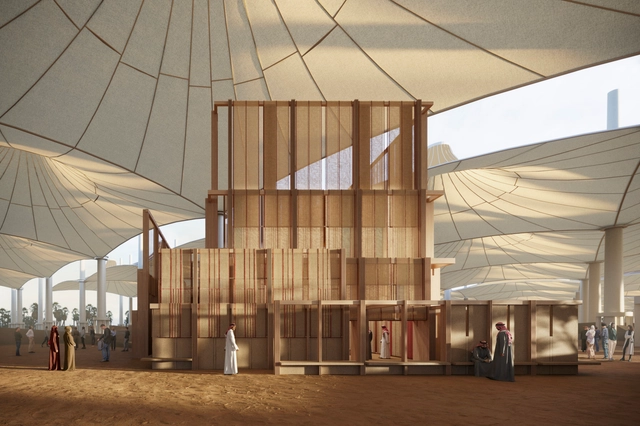
From well-established biennials to inaugural gatherings, including the World Architecture Festival 2025, Desert X Al Ula, and the COP Climate Conference, the 2025 calendar highlights themes such as sustainability, heritage, and community. These events underscore architecture's unique ability to shape a better future, addressing global challenges while honoring cultural diversity and design ingenuity.
Humanity has become obsessed with breaking its limits, creating new records only to break them again and again. In fact, our cities’ skylines have always been defined by those in power during every period in history. At one point churches left their mark, followed by public institutions and in the last few decades, it's commercial skyscrapers that continue to stretch taller and taller.
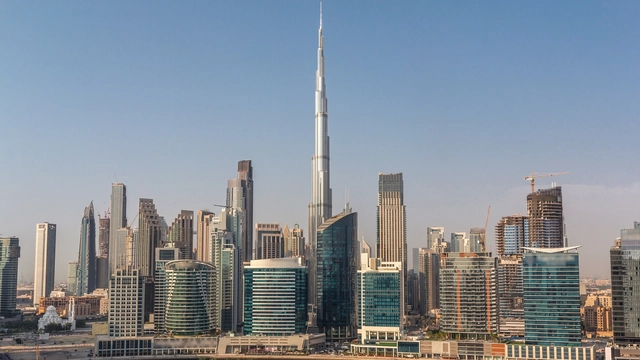
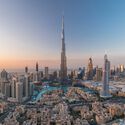
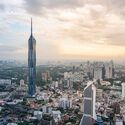
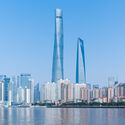
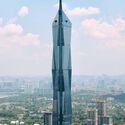
The Council on Tall Buildings and Urban Habitat (CTBUH) has developed its own system for classifying tall buildings, stating that the Burj Khalifa (828 m.) is the world’s tallest building right now. Read on for the 25 tallest buildings in the world today.
The new headquarters of the Chicago Park District showcases how thoughtful architecture can bring communities together while prioritizing sustainability. Featured in the latest episode of the Design Matters series by the Chicago Architecture Center, this project exemplifies how innovative design can positively shape daily life.
https://www.archdaily.com/1024097/inside-the-new-chicago-park-district-headquartersArchDaily Team
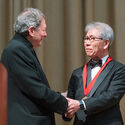
The Pritzker Architecture Prize has released a special video honoring Riken Yamamoto, the 2024 Laureate. Presented in a documentary-style format, the film celebrates Yamamoto's distinguished architectural career and his contributions as the 53rd Laureate, honored earlier this year in Chicago. This milestone coincided with the 100th birthday of Cindy Pritzker, co-founder of the Prize with her late husband, Jay A. Pritzker.
The Chicago Architecture Biennial (CAB) has announced its sixth edition, marking the tenth anniversary of the renowned event, to take place from September 12, 2025, to February 28, 2026. The event will be titled CAB 6: Shift: Architecture in Times of Radical Change and will be directed by Florencia Rodriguez, an esteemed architect, writer, and educator. As the first female Latin American Director to lead CAB, Rodriguez brings a fresh perspective to the Biennial, which is set to continue its tradition as North America's largest exhibition of contemporary architecture, held biennially in Chicago.
Architectural grafting, a concept recently popularized by Jeanne Gang inThe Art of Architectural Grafting, presents a transformative approach to urban regeneration and sustainability. Drawing inspiration from botanical and horticultural practices — where new growth is added to existing plants for enhanced resilience — this architectural method integrates new structures with existing ones, allowing them to coexist and adapt. Rather than pursuing demolition, grafting prioritizes adaptation, extending the life of buildings while safeguarding their cultural and historical significance.
While Studio Gang has played a pivotal role in advancing this method, architectural grafting embodies a broader principle that architects have long used to enhance sustainability, conserve resources, and honor heritage. Across scales — from individual buildings to urban landscapes —grafting reshapes the relationship between past and present, adapting existing structures for contemporary needs while addressing environmental demands. By reimagining historic buildings for modern use, this approach fosters a sustainable evolution of cityscapes.
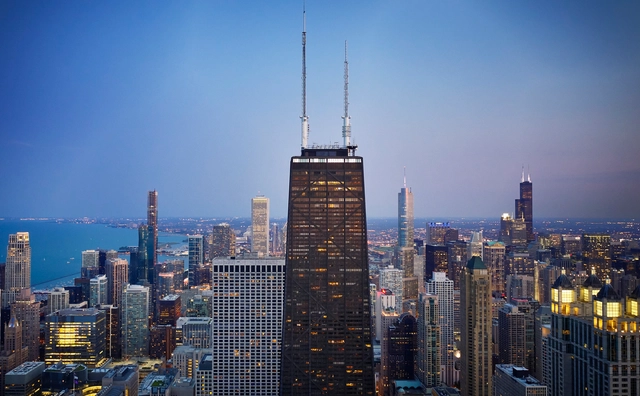
Skidmore, Owings & Merrill (SOM) have announced plans to redevelop the 95th and 96th floors of the iconic 875 N. Michigan Avenue, formally named the John Hancock Center. The building, originally designed by SOM in 1967 and completed in 1970, is recognized as the world's first mixed-use skyscraper, having become a recognizable feature of Chicago's skyline. The redesign endeavor aims to reimagine the two floors, measuring 30,000 square feet, into an observation deck and an attractive destination in the city.
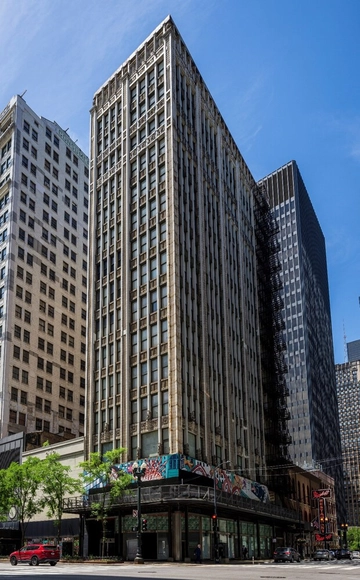
In a significant win for historic preservation, two landmark Chicagoskyscrapers, the Century and Consumers Buildings, have been saved from demolition. These iconic structures, located on State Street, were initially set for destruction due to security concerns, given their proximity to the Dirksen U.S. Courthouse. However, after extensive advocacy and public pressure, the U.S. General Services Administration (GSA) has shifted toward an adaptive reuse plan, ensuring the preservation of these architectural landmarks.
The office building typology emerged from the need to unite thousands of people within a relatively strict working environment. In major cities, these structures clustered into Central Business Districts (CBDs), which became dedicated neighborhoods accommodating commerce and businesses. However, the COVID-19 pandemic disrupted this model, leading to the rise of remote and hybrid work. Now, nearly four years later, occupancy rates in these urban centers remain lower than pre-pandemic levels, signaling a long-term shift in the work environment. To address this challenge, developers have been increasingly looking into “repositioning” their projects, seeking to redefine their image by adapting them to contemporary demands. This typology considers the surrounding urban fabric, aiming to expand the building’s use beyond its original purpose and attract people back to the CBDs.
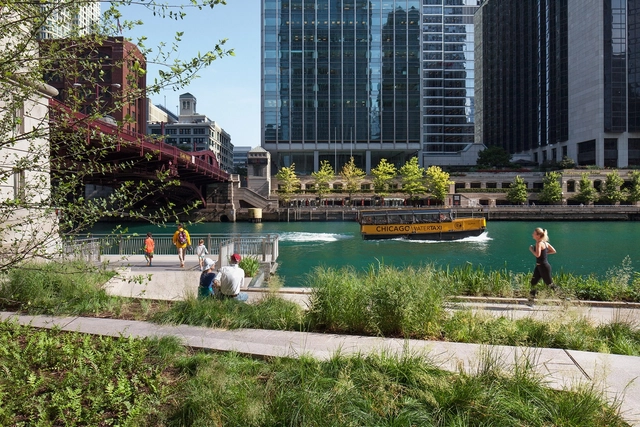
Chicago's urban history is a dynamic saga of innovation, resilience, and architectural prowess. From its early days as a bustling trade hub on Lake Michigan's shores to its transformation into a global metropolis, the Windy City has continually reinvented itself. Iconic events like the Great Chicago Fire of 1871 catalyzed a wave of architectural ingenuity and today, contemporary architects like the city’s own Jeanne Gang and SOM continue to shape its skyline with groundbreaking designs, while sustainable projects and adaptive reuse of historic buildings showcase the city's commitment to blending heritage with forward-thinking urban development. Whether it's the sleek Aqua Tower or the vibrant Riverwalk, Chicago continues to stand as a testament to the endless possibilities of urban innovation and design.
One of the city's most notable achievements is its role as the birthplace of the skyscraper. In the late 19th century, architects like Louis Sullivan and Daniel Burnham pioneered the use of steel-frame construction, allowing buildings to reach unprecedented heights. This innovation not only transformed Chicago's skyline, but also set a precedent for urban centers worldwide, positioning the city as a global leader in architectural design.
The format for Blair Kamin’ latest book, Who Is the City For? is slightly different from typical compilations. Kamin groups his columns thematically (all 55 appeared in the Chicago Tribune, when he served as architecture critic), and then, more often than not, adds a postscript updating or reframing the story for our fraught new normal. One of the recurring themes, both in the stories and in the postscripts, is the issue of design equity. As income inequality, systemic racism, and climate change became central to the cultural and political debates, equity became the critical lens for much design criticism. In our recent conversation, Kamin advocated for a broader definition of the term.
https://www.archdaily.com/1019288/blair-kamin-on-reframing-the-crucial-issue-of-design-equityMartin C. Pedersen
The Skidmore Owings & Merril (SOM) two-tower development in Downtown Chicago has just started construction. Situated at the intersection of Lake Michigan and the Chicago River, the new residential development seeks to redefine Chicago’s skyline. Composed of 635 residential units in its first phase, 20% of which are designated as affordable housing, the scheme also outlines the design of DuSable Park. Phase one of the project has officially commenced, occupying the last undeveloped waterfront parcel in the Streeterville neighborhood.