Blank Space has announced the winners of the second annual Outer Space competition. The competition asked architects and designers to leverage real scientific advances in robotics, AI, rocketry and autonomous spacecraft to create visions for the near future in outer space.The competition attracted thousands of participants, with winning entries showcasing narratives and images of architecture beyond the planet Earth.
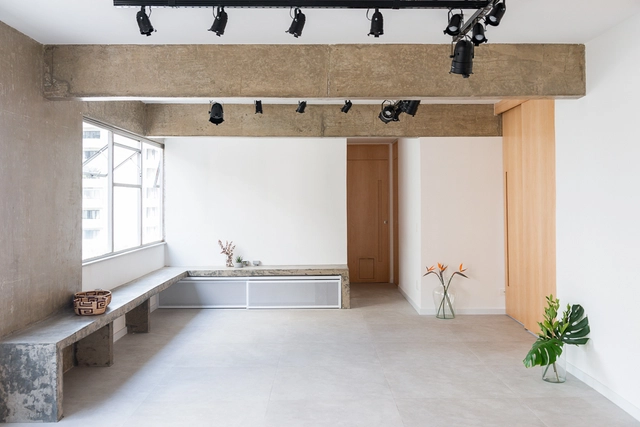
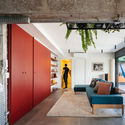
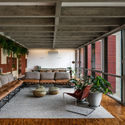
Many architects tend to prefer using materials and architectural elements in their natural or raw state. It is common to remove ceilings and finishings, especially in renovation projects, to expose a building's structure. This process of reclaiming the natural materials of construction - without incorporating elements to cover the framework, pipes, tubes, and cables - transforms these spaces into places that have nothing to hide.
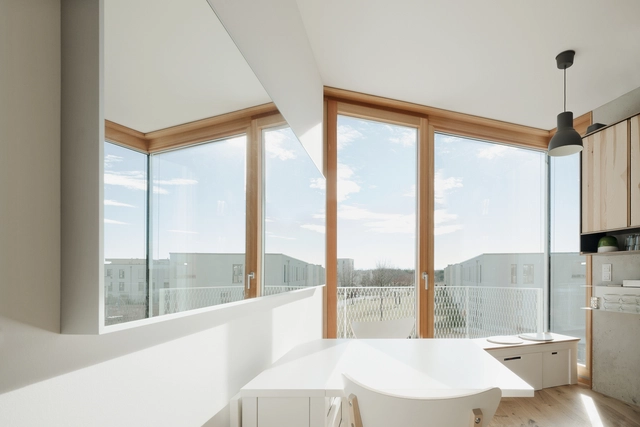
"And a window that looks out on Corcovado. Oh, how lovely." Tom Jobim's lyrics, immortalized by João Gilberto and Astrud Gilberto's voices and a soft guitar, was one of the early songs that introduced the world to the idea of a paradisaical Rio de Janeiro and a promising Brazil, with an increasingly urban population and a modern capital being built from nothing. Almost 60 years later, Paulo Mendes da Rocha casually quotes this song in an interview and points out that for him, in this scene, the most important element is the window, not Corcovado or Christ the Redeemer. That's because it frames the view and directs our eyes to what matters. It is a phrase that goes almost unnoticed, but that carries enormous poetic and artistic significance to the craft of architecture.
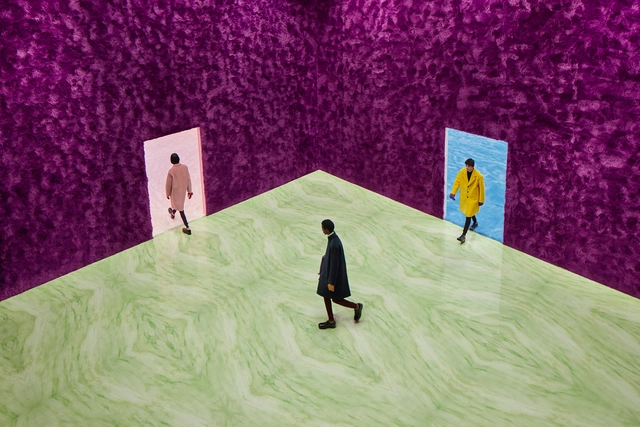
Responding to the challenge of designing a space for the launch of the Prada FW Menswear 2021 Collection by Miuccia Prada and Raf Simons, Rem Koolhaas and AMO have designed four connected geometric rooms that allow for the continuous circulation of the models showcasing their different garments. The general theme of the design centers sensory stimulation. Like the designs presented, the materials used and their distribution throughout the space speak of a more intimate connection with our surroundings, reminding us that fashion and architecture are more than just a functional container; they are an opportunity to actively excite and provoke our senses.
Courtesy of ir Richard Rogers and Graham Stirk of Rogers Stirk Harbour + Partners
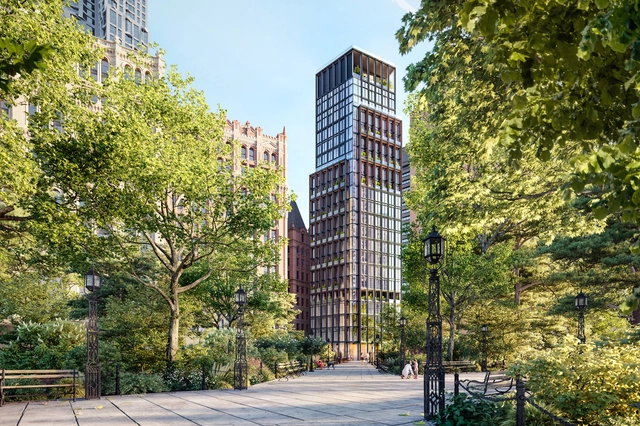
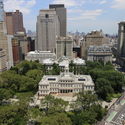
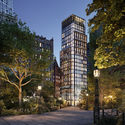
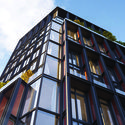
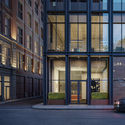
Rogers Stirk Harbour + Partners have unveiled images of their latest venture, No. 33 Park Row in New York City. Located across the street from City Hall Park in Downtown Manhattan, the project, nearing completion and set to officially launch in the spring of 2021, is the city’s first residential project designed by Sir Richard Rogers and Graham Stirk of Rogers Stirk Harbour + Partners.
German design practice Barkow Leibinger has finally received a building permit for the Estrel Tower in Berlin, Germany. Set to become the city's tallest high-rise at 175 meters, the tower comes seven years after winning the initial competition. Construction is now set to start, and the project will be built on Sonnenallee in Neukölln. The design references the existing Estrel hotel und connects both into one unit.
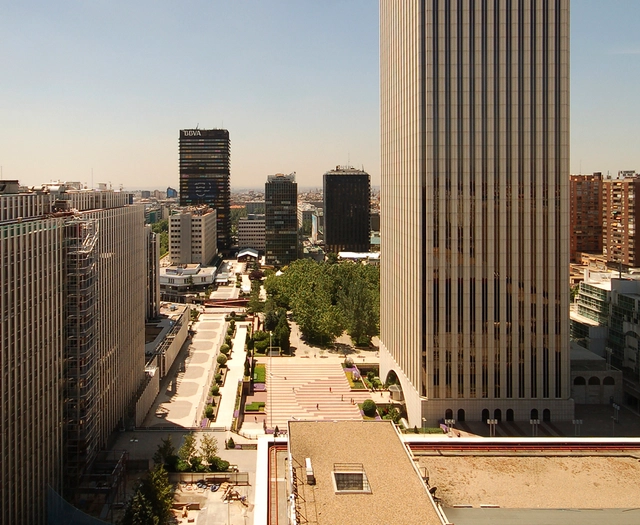
The RENAZCA international competition has released a shortlist for the design of the financial district of Azca in Madrid, Spain, according to El Pais. Directed by IE School of Architecture and Design Martha Thorne and Edgar González, the competition aims to transform the district into the most important economic and cultural node in the Spanish capital. The winning team will be chosen at the end of January 2021 and will have the task of transforming the sector into a "new, open, sustainable urban space connected to the city."
Polycarbonate has become an alluring alternative to glass in facades, as it has different levels of translucency and can provide optimal transmission and diffusion of light. Moreover, it is light, flexible, recyclable, durable, resistant to impact, and includes UV protection, in addition to resisting temperatures between -40°C and 115°C. But beyond its functional properties, this thermoplastic also provides wide-ranging aesthetic opportunities, allowing architects to create unusually dynamic and expressive facades.
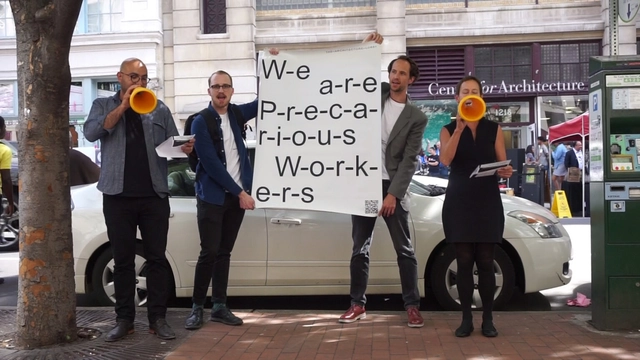
Most of the practicing architecture is drudgery, and this is rather unfair. As students, architects are given thoughtful prompts about the built environment and its big questions, as well as sole creative reign to answer those questions. That is the only time in the architect’s life when this is the case, and in many ways, this does not adequately prepare the architecture student for the world of architecture, which is a world of drudgery. In reality, architects are not heroes.
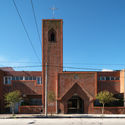
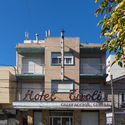
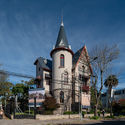
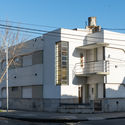
Mar del Plata is Argentina's second-largest tourist hub, just behind the capital, Buenos Aires, and sees its population swell by nearly 300% in the summer months. To accommodate this influx of visitors, a large portion of the city's real estate is dedicated to hotels and short-term rentals and this had led to a colorful and varied architectural landscape.
To illustrate, as well as celebrate, this diverse and ever-changing architectural tradition, audiovisual media producer Obralinda initiated the Arqmardelplata project, a visual compilation of Mar del Plata's architecture that allows viewers to discover the wide range of styles found throughout the city—from the historic, to the sacred, to the residential, to the everyday, and to the anonymous.
Think about the city or town where you live. How long does it take you to get to the grocery store on foot? Is your school or work close enough to walk to? What about a public park, a doctor’s office, a daycare, or any other places that you visit on a daily basis? While some cities have already considered what it means to live near all of these necessities, others are revamping their urban planning strategies and designing their neighborhoods to be more pedestrian-friendly with the concept of a “15-Minute City”.
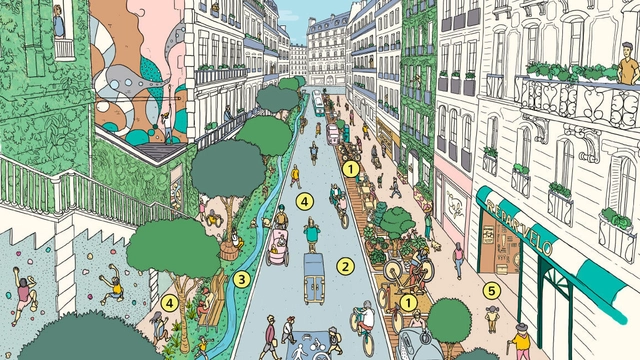
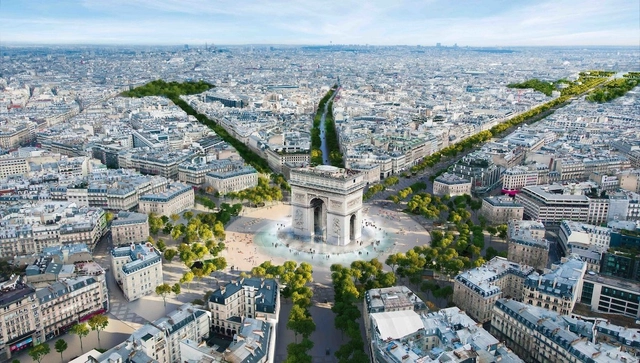
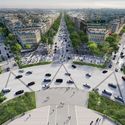
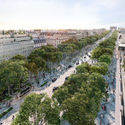
Paris Mayor Anne Hidalgo has approved a comprehensive plan to transform Champs-Élysées, the city's most famous avenue. Though the €250m makeover will not happen before the French capital hosts the 2024 Summer Olympics, the proposal aims to turn a 1.2 mile stretch of central Paris into an expansive garden. The proposal includes reducing space for vehicles, turning roads into pedestrian green areas, and creating tunnels of trees to improve air quality.
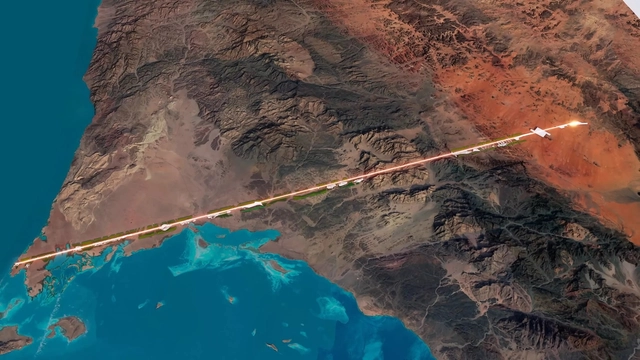
Mohammed bin Salman, Crown Prince of Saudi Arabia, has unveiled plans for a 100-mile long linear city called The Line. Announcing the project in a new video, the city would include a series of walkable communities for a million people with no cars or streets. The project locates essential facilities within a five-minute walk of housing, connected "modules" linking the Red Sea coast with north-west Saudi Arabia as part of the NEOM city-state.
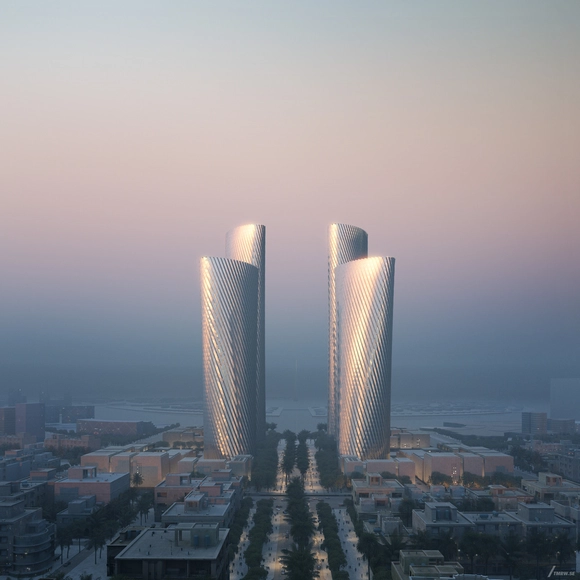
Foster + Partners has revealed its latest project for Qatar, a 1.1 million-square-meter landmark development consisting of four high-rise buildings. Part of a larger masterplan also designed by the architects, to be completed ahead of the 2022 Football World Cup in Qatar, Lusail Towers is envisioned as a “catalyst for a new central business district in the city”.
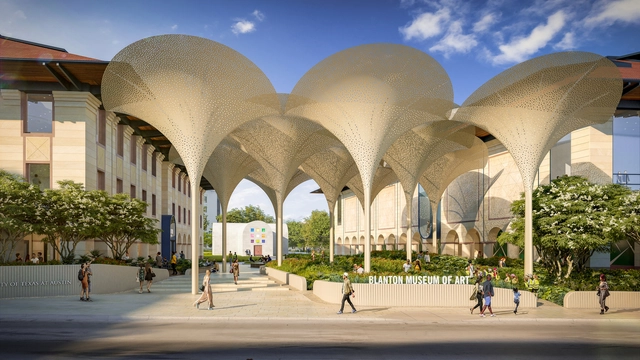
Transforming the typical artistic experience, Snøhetta proposed a design to renovate the Blanton Museum of Art at The University of Texas at Austin. The comprehensive grounds remodeling seeks to “unify and revitalize the museum campus, […] through architectural and landscape improvements”. Construction is scheduled to begin in early 2021 and conclude by late 2022.
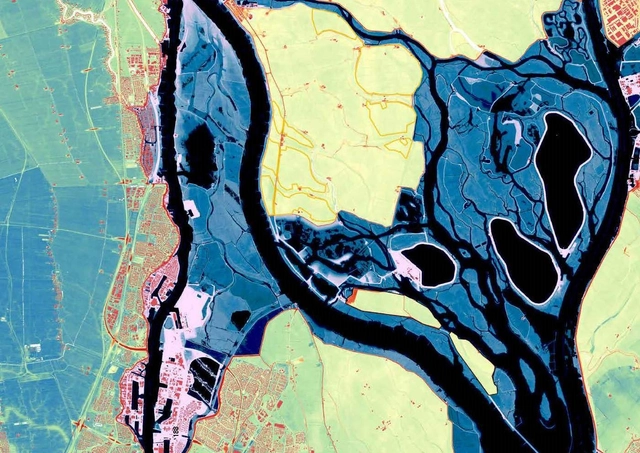
A “floodscape” could be seen as a contradiction in terms: Flood spreads wherever gravity leads it, covering the familiar topography with a dark, gray, and uniform blanket. In that regard, flood is amorphous, as it can distort and temporarily erase forms and features from the visible landscape—nothing that could be described as a “scape” in the sense of articulated and meaningful scenery.
But when the boundaries of a flood are not just defined by the quantity or the velocity of water but also by landforms and structures carefully designed and placed to influence and shape the “disaster,” the result can be considered as a landscape, physically and culturally defined by flood.
The Un-Habitat or the United Nations agency for human settlements and sustainable urban development, whose primary focus is to deal with the challenges of rapid urbanization, has been developing innovative approaches in the urban design field, centered on the active participation of the community. ArchDaily has teamed up with UN-Habitat to bring you weekly news, article, and interviews that highlight this work, with content straight from the source, developed by our editors.
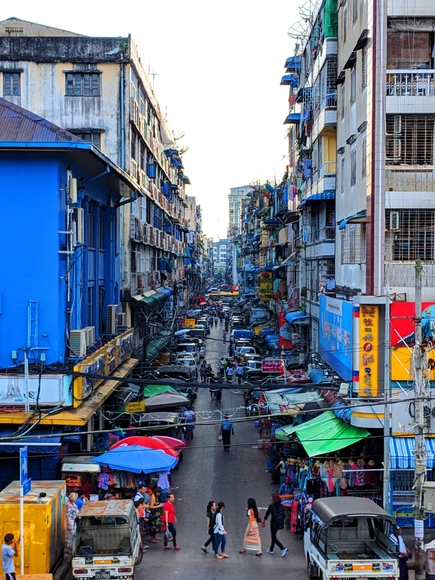
Around 440 fast-growing cities in emerging economies will contribute by 2025, to nearly half of global economic growth. If given the right planning and management tools, this urbanization “can be transformative, creating jobs, reducing poverty, and improving citizens’ quality of life”. As a matter of fact, the Global Future Cities Programme (GFCP) aims to deliver this required support. Based on urban planning, transport, and resilience principles, the program provides “technical assistance for a set of targeted interventions to encourage sustainable development and increase prosperity while alleviating high levels of urban poverty”.
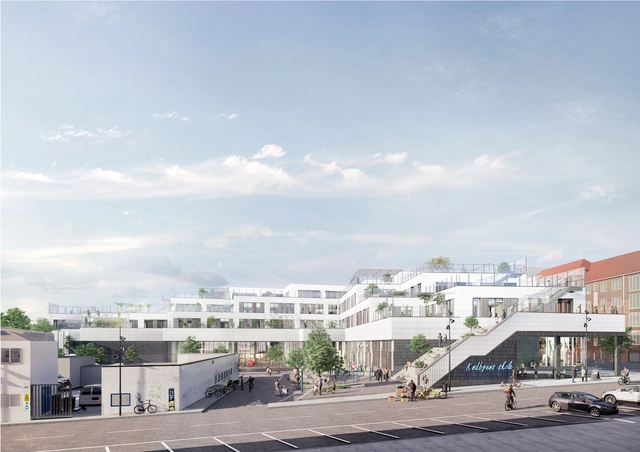
Courtesy of NORD Architects, BBP Arkitekter and BOGL
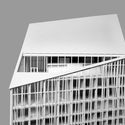
NORD Architects and BBP Arkitekter recently won the competition to design and build a new public school in one of Copenhagen's most dense urban districts. The challenge of the design was to create a structure that properly fits in the already complex context, complementing the district's "high urban density, postindustrial heritage, and vital infrastructure".












.jpg?1593490133&format=webp&width=640&height=580)
.jpg?1593490133)