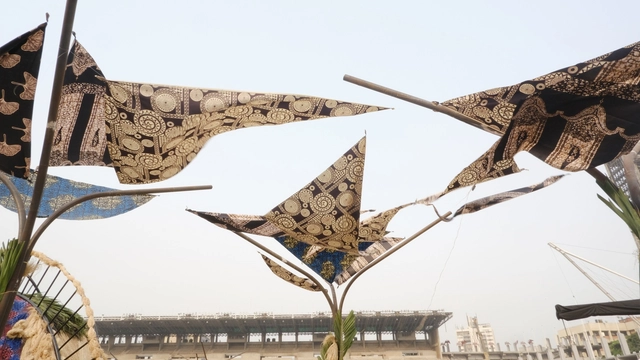
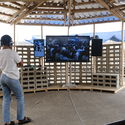
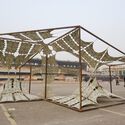
On the 3rd of February, this year's Lagos Biennial opened at the Tafawa Balewa Square, Lagos, an emblematic venue that was once the site of Nigerian independence celebrations in 1960. As the 4th edition of the art fair, it continues with its objective of using art to activate historic landmarks that have lost significance either through functional use or symbolic meaning to the residents of the former capital city.
The previous editions of the Biennial have explored various aspects of the city's architecture, its symbolic significance, political implications, sovereignty, ownership, notions of belonging, and its relationship with the public. This year, the theme of "Refuge" at the Tafawa Balewa Square takes this exploration even further. Curators Kathryn Weir and Folakunle Oshun highlight that this theme prompts the square to address the concept of a nation-state. It also brings together artists and architects from different disciplines to explore alternative approaches to constructing renewable communities and promoting climate justice.
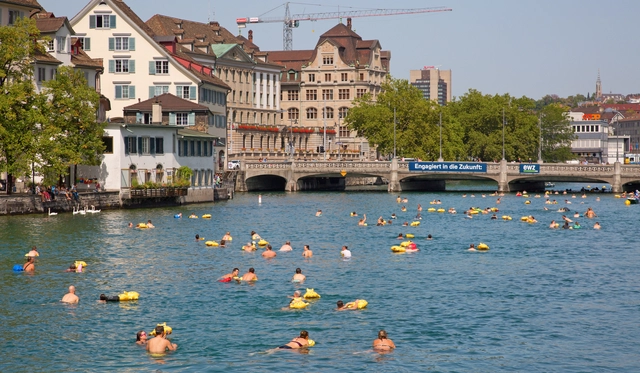
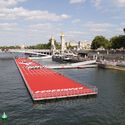
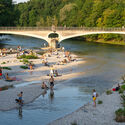
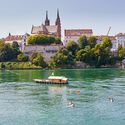
Throughout history, rivers played a crucial role in the social structures of cities. Along riverbanks, communities often congregated for socializing, swimming, and fishing. Swimming in rivers was a popular summertime activity enjoyed by people of all ages. Whether it was the Thames in London or the Seine in Paris, rivers were bustling with swimmers; integrated into urban lifestyles.
The Second Studio (formerly The Midnight Charette) is an explicit podcast about design, architecture, and the everyday. Hosted by Architects David Lee and Marina Bourderonnet, it features different creative professionals in unscripted conversations that allow for thoughtful takes and personal discussions.
A variety of subjects are covered with honesty and humor: some episodes are interviews, while others are tips for fellow designers, reviews of buildings and other projects, or casual explorations of everyday life and design. The Second Studio is also available on iTunes, Spotify, and YouTube.
This week David and Marina of FAME Architecture & Design share advice and tips for clients with a project that is small and/or has a tight budget. The two discuss the things to look out for when hiring an architect/designer, a contractor, and engineer; material and design constraints; client involvement; workflows; and more.
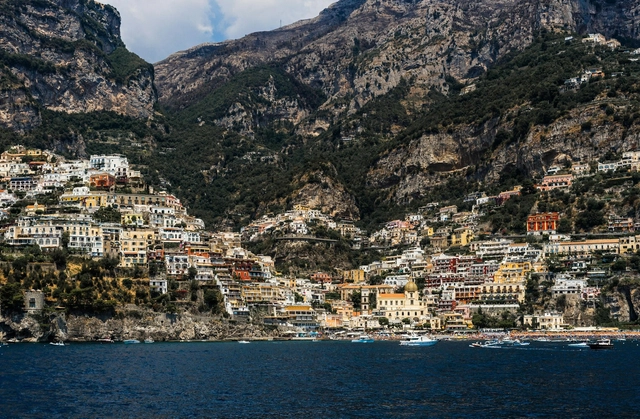
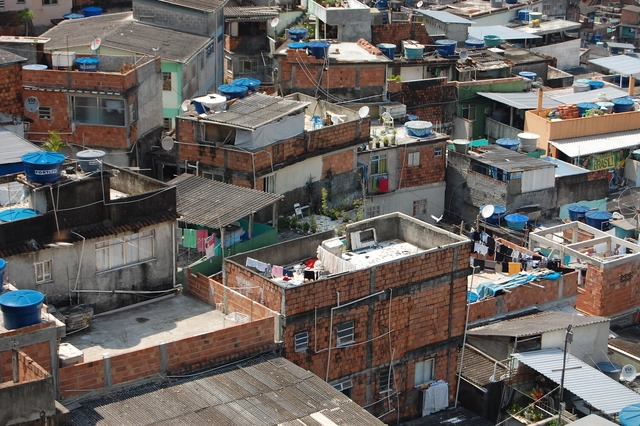
Living in cities built on geographical slopes is a unique and challenging experience. While these areas can offer panoramic views and impressive landscapes, the steep topography presents a series of challenges in terms of urban planning, structural safety, and socio-environmental risks. These cities require special care and solutions in the design of streets, buildings, and infrastructure, as well as an understanding that, for reasons of environmental safety and population well-being, not all areas should be occupied.
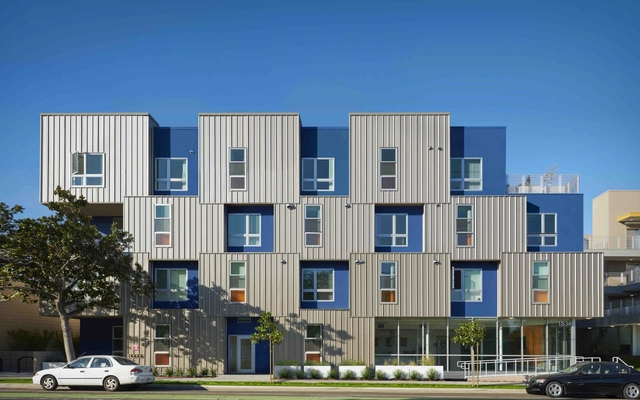
When Brenda Mendoza told an NPR reporter about her commute to work, she became the face of the housing crisis in Los Angeles today. Mendoza, a uniform attendant at a Marriott hotel, was living with her family in an apartment in Koreatown, where she had grown up, 10 minutes from her job. The landlord raised the rent, so she moved to a less costly place in Downey. When that rent also rose out of reach, she moved to Apple Valley, and now gets up at 3:30 a.m. to drive 100 miles to her job, dropping off her husband and son at their jobs on the way. She did not move to Apple Valley to invest in a house she could love. She simply found an equally unstable, but slightly more affordable, rental hours from her workplace.
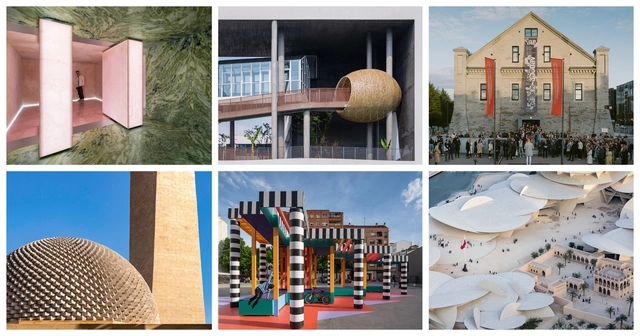
Spanning continents and cultures, architecture-focused events serve as platforms for the gathering of diverse groups of professionals to share innovations and embark on dialogues regarding some of the most pressing matters faced by our profession. Embodying the spirit of collaboration, highlighting local cultures and practices, and fostering open debates, this year’s list of events covers a diverse range of biennales, forums, city-wide celebrations, international fairs, and awards.
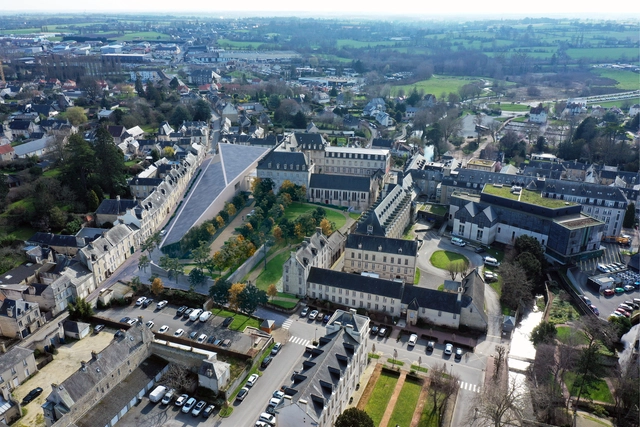
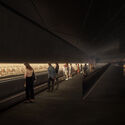
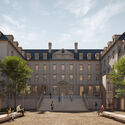
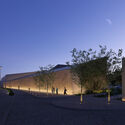
RSHP has unveiled the urban and architectural design for the new Bayeux Tapestry Museum. The intervention is created to house and display the Bayeux Tapestry, an embroidered cloth measuring 70 meters in length and depicting the events leading up to the Norman Conquest of England in 1066 and culminating in the Battle of Hastings. The almost 1000 years-old artifact is also included in UNESCO’s “Memory of the World” list. The project proposes a contemporary extension of the 17th-century seminary where the Musée de la Tapisserie de Bayeux is located.
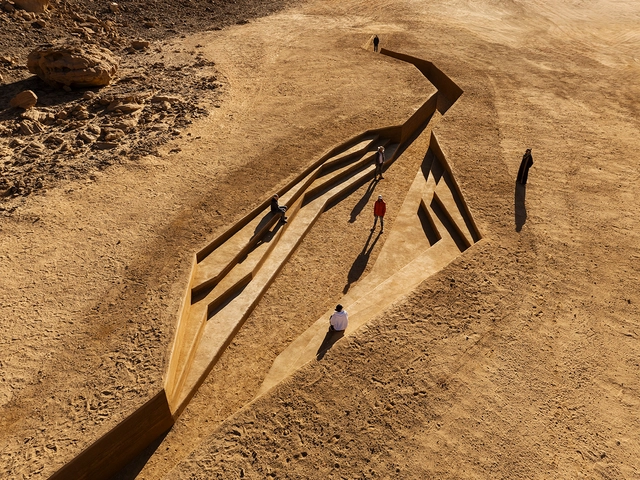
Returning for its third edition, Desert X AlUla 2024 invites artists to engage with the landscape, nature, and heritage of AlUla. The exhibition aims to position AlUla as the hub for monumental art experiences in the region. This year’s theme, “In the Presence of Absence,” challenges the concept of deserts as “empty spaces.” Artists worldwide are encouraged to investigate conceptual ideas of the invisible, engaging in a dialogue with AlUla’s environment.
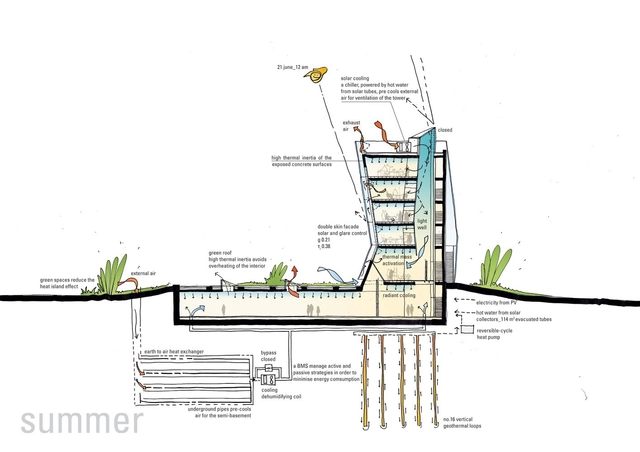
Unlike the air, the temperature in the subsoil varies very little during the year or according to geographical position. A few meters below the surface, the ground temperature is between about 10 to 21°C (50 to 70°F) depending on the region. Dig deeper, and the temperature increases between 20 to 40 degrees centigrade per km, reaching the Earth's core, which approaches 5000 °C. In fact, thinking about how we inhabit a sphere that is orbiting through space with a glowing center can be distressing for some. However, it may be helpful to learn that using Earth's forming energy to generate electricity is a sustainable and efficient way that is already common in some countries. At the same time, we can also take advantage of the mild temperature found a few meters under the ground to acclimatize buildings, whether in hot or cold climates.
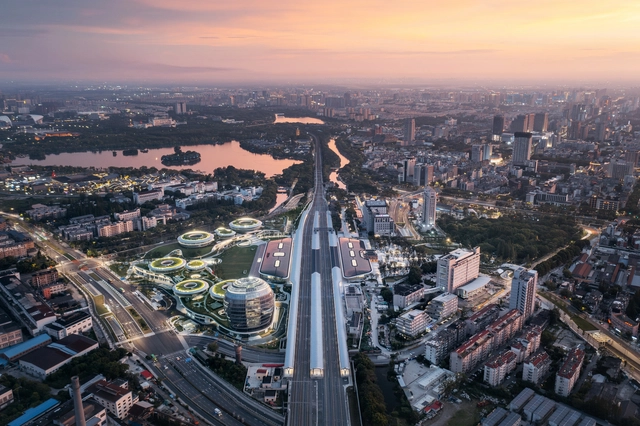
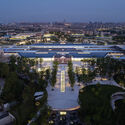
MAD Architects has announced the completion of the Jiaxing Train Station, the first transportation infrastructure project developed by the architecture office. Located in the historic city of Jiaxing, 100 kilometers southwest of Shanghai, the project involves the replacement of a dysfunctional station that had stood at the site between 1995 and 2019. As China has developed significantly in terms of urbanization, its train stations have grown into complicated, widespread, and uninviting infrastructures. Through their project, MAD Architects strive to return to a human scale, to create a facility that responds to the newest developments in transportation technology, while creating spaces that are comfortable and easy to navigate for its users.
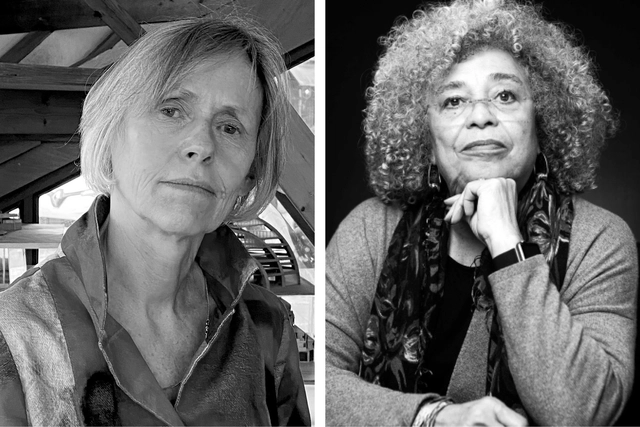
In early 2018, spatial practitioner and Bartlett lecturer Neba Sere hosted a panel discussion at London's Architecture Foundation, where she was one of six young trustees. The topic: beginnings. How to go about them, move ahead, and transform them into something that lasts. Six years later, she looks back on the event as a beginning in itself: that day marked the creation of a WhatsApp group that would turn into Black Females in Architecture (BFA). BFA is now a 500-strong global membership network co-directed by Sere and fellow architects Selasi Setufe and Akua Danso.
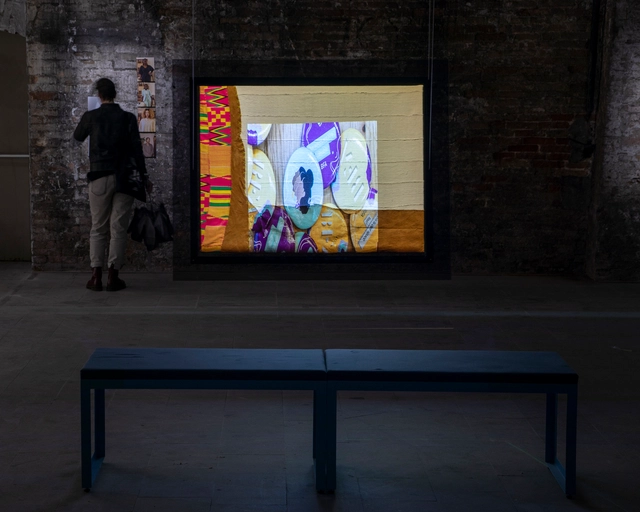
BFA was initiated in response to the need for visibility of black women and female-identifying people with black heritage in architecture and the built environment. Last year, the group celebrated its fifth anniversary with the showing of a short film and a panel discussion at the Venice Architecture Biennale. Now, after putting in the groundwork of spreading information about the lack of diversity and equality in the industry and increasing their numbers, BFA is gearing up to drive physical change.
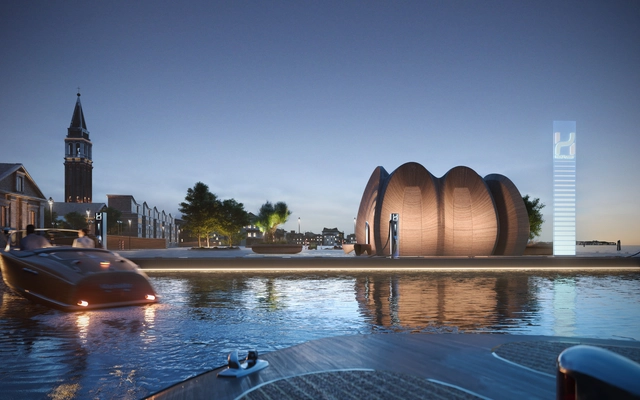
Zaha Hadid Architects have released images of their design for the world’s first hydrogen refueling infrastructure for recreational boating. Continuing ZHA’s experience in maritime designs, the stations are to be installed in 25 Italian marinas and ports. Launched by NatPower H, the stations will begin to be implemented in the summer of 2024, with plans to expand to over 100 locations throughout the Mediterranean Sea in the next six years.
As architectural theory undergoes a process of review and updating, there is a rejection of prevailing binary distinctions found both in common perception and in architectural education. Traditional dichotomies such as center versus periphery, the 'formal' versus 'informal' city, and design as a rigid technique versus construction as improvisation have been persistent architectural themes, with a history of ongoing debates. Despite the dominance of global northern perspectives on what constitutes good architecture or how it should be approached, reality consistently reveals itself to be more intricate, diverse, and multidimensional.
The discipline of architecture has undergone considerable change, primarily driven by advancements in the application of technology. Architects, long viewed as the futurists of the constructed world, are now utilizing progressive techniques and resources and expanding the use cases of technologies such as Augmented Reality (AR) and Virtual Reality (VR). This transition extends beyond professional practices into architectural education, bringing opportunities to redefine the approach of architects toward their craft.