This year's selection of Best Latin American Houses brings together both renovations and ground-up projects, covering reinterpretations of local construction techniques and innovative architectural responses. The works are set in a wide range of contexts, from dense urban environments to rural and coastal landscapes.
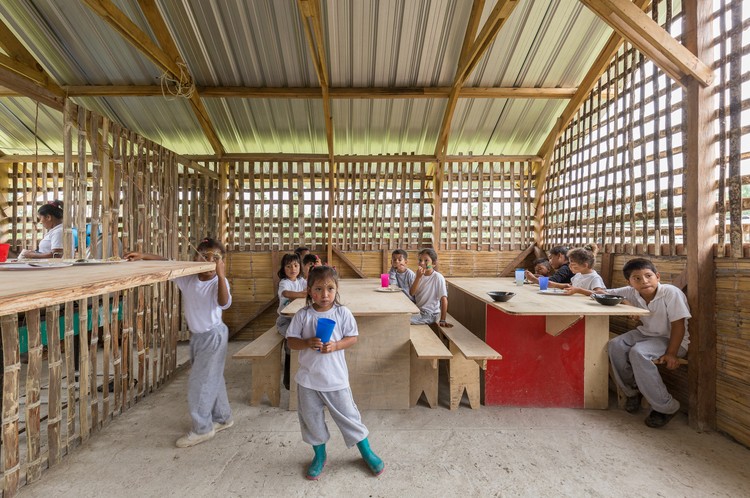
Between the Andes, the coast, and the Amazon, Ecuador's architecture has evolved as a reflection of its layered geography, a place where climate, topography, and culture unite. Throughout the territory, architecture has been an act of adaptation: from vernacular traditions rooted in collective labor and local materials to the colonial and modernist influences that reshaped its cities. This diversity has produced distinct constructive systems, from bamboo and cane structures along the coast to earth and stone constructions in the Andes, forming an archive of adaptive design that continues to influence contemporary practice.
Yet in the past decade, Ecuadorian architecture has undergone a quiet but deep transformation. New academic programs and international references have encouraged a growing awareness of climate and social justice. Emerging architects are redefining practice through workshops, collective studios, and on-site experimentation that blurs the line between design and activism. No longer focused on architecture as an object, a new generation of architects is approaching design as a process. One focused on collaboration, sustainability, and cultural identity. Their questions have shifted the design language from what to build to with whom.
In many parts of the world, remoteness is not only defined by distance. It may describe a mountain settlement far from infrastructure or an urban and suburban neighborhood on the margins of visibility and opportunity. Across these diverse contexts, the library has been one of the most vital typologies—a space where architecture embodies the modes of accessibility, inclusivity, and community care.
The countryside—long underestimated—is now emerging as fertile ground for possibility. More than a “marginalized space,” rural Latin America today asserts itself as a true laboratory for architectural, social, and ecological experimentation. From agroecological communities to low-impact technologies, from relationships between humans, machines, and other living beings to locally grounded solutions for global challenges—such as the climate crisis, food security, and migration—the rural world is actively and inventively reshaping its own future.
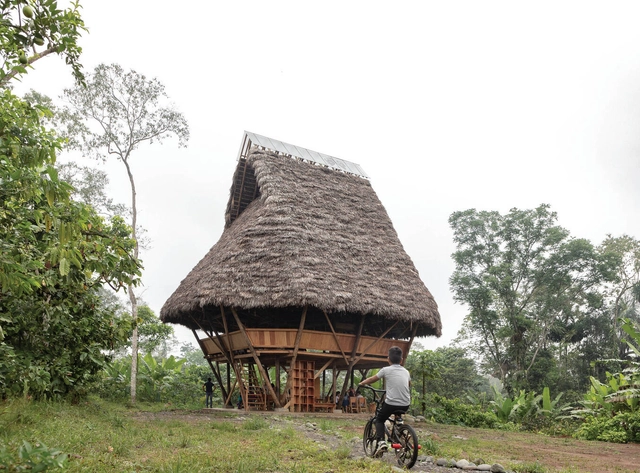
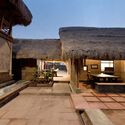
Thatching is a traditional building technique that has been reinterpreted in different ways in contemporary projects, allowing its value to continue to endure over time. As well as being a culturally and historically valuable technique, given its presence in humanity for centuries, it also has a number of other constructive advantages, such as its great environmental value, as it is an accessible renewable material.
The technique consists of grouping, intertwining, and overlapping dry vegetation, creating light surfaces with excellent thermal and sound insulation and which are cheap and relatively simple to build. In addition, flexibility is one of the technique's most prominent features, and it is particularly popular in roofing applications.
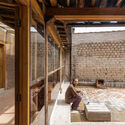
Ecuador, though a relatively small country in terms of land area, boasts a vast and diverse range of ecosystems and natural landscapes, including the Andes mountains, the Pacific coastline, and the Amazon rainforest. This makes the natural environment a key player, shaping its relationship with the built environment and demanding that architecture seamlessly integrate with and respect its context.
Over the years, Ecuadorian architecture has developed its own identity, successfully adapting to these diverse settings. Various construction techniques have been implemented, relying on locally sourced materials to create spaces and shelters in complete harmony with the landscape. Amid the growing trend of seeking a closer connection with nature, architecture in different regions of Ecuador has had to adjust to these conditions.
Landscape architecture has traditionally been associated with lush greenery, rooted in the historical development of gardens and parks as spaces that bring nature into urban areas. This connection to greenery is deeply ingrained in the origins of the field, where the creation of verdant retreats was seen as both aesthetically pleasing and beneficial to human well-being. However, in regions like the Middle East, where water scarcity and harsh climates are more prevalent, there is a growing trend toward using local materials such as sand, stone, minerals, and indigenous plants. This shift reflects a more sustainable approach, reimagining landscape architecture to align with the environmental and cultural contexts of the region.
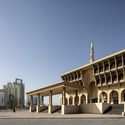
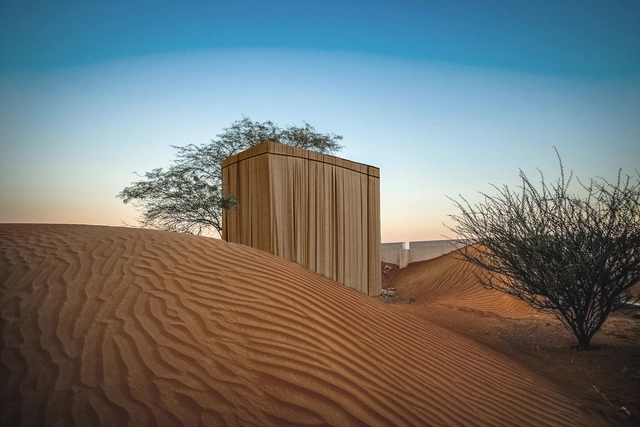
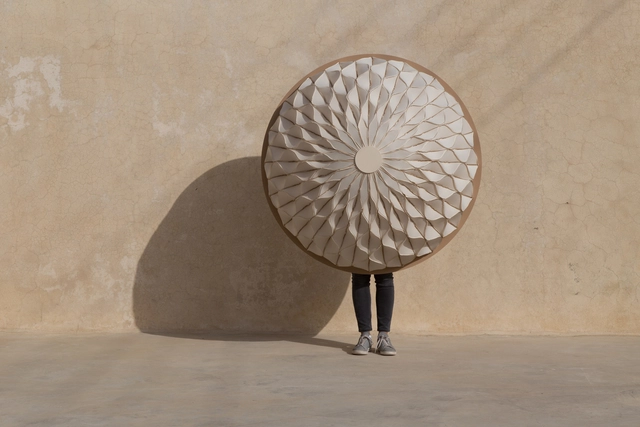
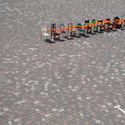
Arquitectos, Play You Are in Sharjah, 2023. Photo by Danko Stjepanovic. Image Courtesy of Sharjah Architecture Triennial
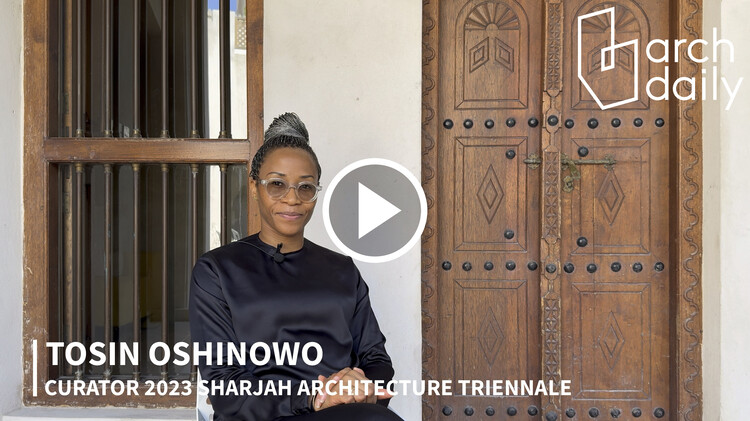
Inaugurated on November 11, 2023, and running until March 10, 2024, the Sharjah Architecture Triennial serves as a metaphor drawing attention to the design and technological innovations within the built environment, particularly in the global south. The exhibition features contributions from 29 architects and studios spanning 25 countries. Building upon Venice's global platform for experimentation at the 18th International Architecture Exhibition, the 2023 Triennial embarks on a similar journey, creating space for voices and discussions often overlooked in global exhibitions and unveiling elements that have long existed but remained unseen. With a keen awareness of the global south, but also of the global north, and an understanding of the polarities between them, as articulated by curator Tosin Oshinowo, this second edition of the exhibition focuses on "The Beauty of Impermanence: An Architecture of Adaptability."
Celebrating everything that exists, especially in the global south where places thrive amidst scarcity, the triennial adopts an optimistic approach, drawing lessons from current situations and revealing the value and sophistication of alternative responses that have emerged due to resource constraints. “We're able to celebrate them. We're able to learn from them”, adds the curator. The triennial aims to comprehend a more sustainable, accessible, and equitable future—a collective effort to address the challenges of climate change, explore the built environment, and embrace under-celebrated regional traditions. Highlighting solutions that have endured the course of time and others responding to contemporary difficulties, "The Beauty of Impermanence" emphasizes the necessity of nuanced hybridity essential for our urbanized world.
Copenhagen-based philanthropic association re:arc institute has announced the cohort of nonprofit organizations, people, and practices they will support throughout 2024. The organization founded in 2022 works at the intersection of climate action and architectural philanthropy, aiming to support the development of solutions that address the root causes and consequences of climate change.
The architectural field often adheres to conventional industry models, either client-based or competition-based, which can perpetuate problematic or extractive motivations. The re:arc institute hopes to rethink the architecture discipline’s potential for addressing social and environmental concerns by providing a blueprint for pioneering philanthropic projects. To do so, they provide funding to nonprofits, individuals, and community-led projects exploring innovative approaches that prioritize planetary well-being. Their focus is on hyper-local, grassroots initiatives that address climate crises with a strong emphasis on the unique needs of specific places and communities.
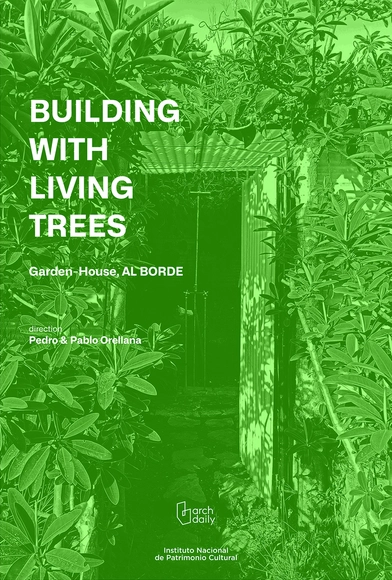
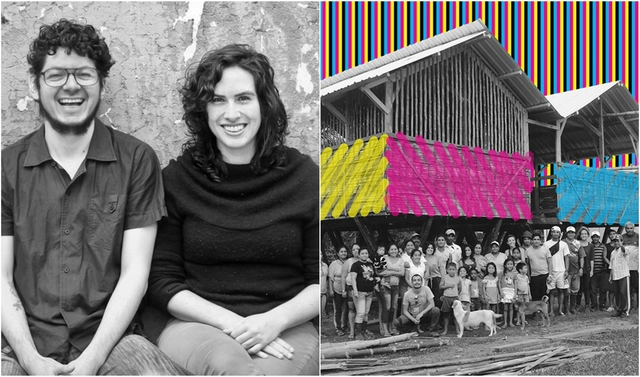
Today is the premiere of the first episode of a new documentary series that explores the projects of Al Borde. Titled "Building with Living Trees", this first instalment highlights the stories behind Casa Jardín (Garden House), a single-family home located in the suburban area of Quito, Ecuador.
Designed for an ecologist named José, the residence is developed into three small independent pavilions with hybrid structures that combine living trees with various construction systems. These structures utilize a vernacular technique of living fences that has been employed in the Andes since ancient times, showcasing a genuine pursuit of coexistence between architecture and nature.
On Wednesday, August 23, the first episode of the new documentary series that explores the projects of Al Borde will be released. "Building with living trees", immerses itself in the stories of the Garden House, a single-family house located in the suburban area of the city of Quito.
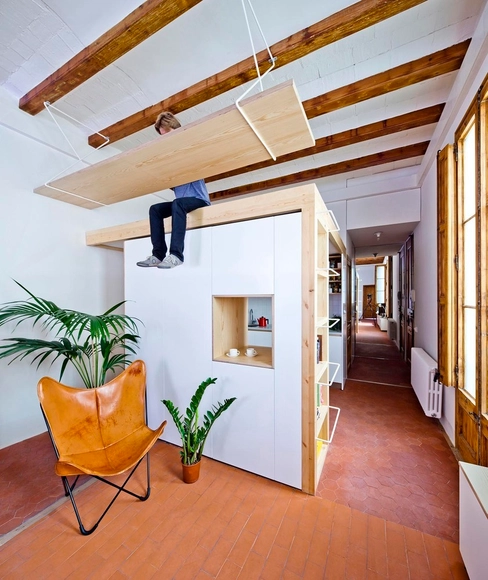
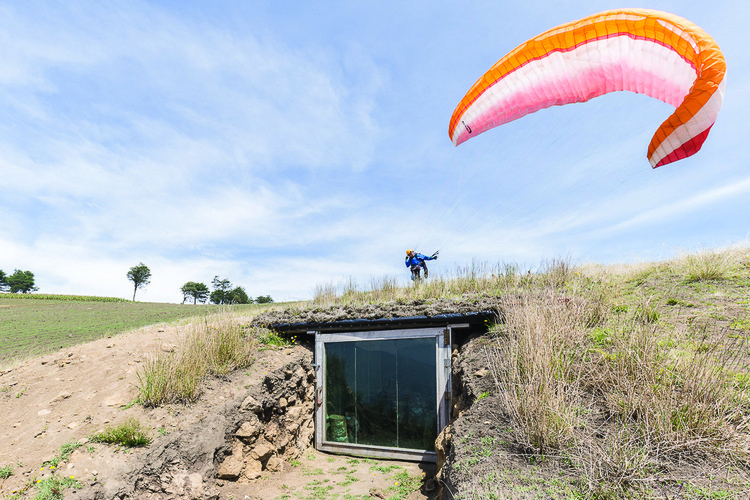
House of the Flying Beds . Image Courtesy of Al Borde
The 2023 Sharjah Architecture Triennial (SAT) will take place from November 11th, 2023 to March 10th, 2024, under the theme "The Beauty of Impermanence: An Architecture of Adaptability". Focusing on how scarcity in the Global South has led to a culture of re-use, re-appropriation, innovation, collaboration, and adaptation, the second edition of the architectural exhibition, curated by Tosin Oshinowo, aims to shift global conversations towards creating a more sustainable, resilient, and equitable future.
In recent years Ecuadorian architecture has been producing interesting concepts that are characterized by high standard design outcomes based on the conscious use of local resources. This type of practice is led by a generation that puts collective work and social values above individualities, in order to develop a "do a lot with little" style of architecture.
https://www.archdaily.com/877589/ecuadorian-document-captures-emerging-trend-characterized-by-conscious-use-of-local-resourcesPola Mora