Past, Present, Future is an interview project by Itinerant Office, asking acclaimed architects to share their perspectives on the constantly evolving world of architecture. Each interview is split into three video segments: Past, Present, and Future, in which interviewees discuss their thoughts and experiences of architecture through each of those lenses. The first episode of the project featured 11 architects from Italy and the Netherlands and Episode II is comprised of interviews with 13 architects from Spain, Portugal, France, and Belgium.
The goal of the series is to research these successful firms and attempt to understand their methods and approaches. By hopefully gaining a clearer picture of what it means to be an architect in the 21st century, the videos can also serve as inspiration for the next generation of up-and-coming architects and students as they enter the field.
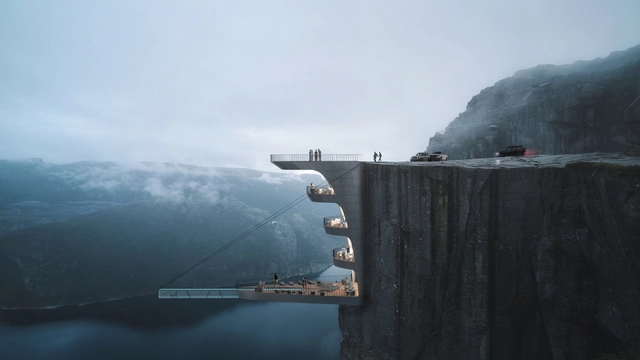
Courtesy of Hayri Atak Architectural Design Studio
Hayri Atak’s Cliff Concept Hotel is designed to be built into Norway’s famous cliff Preikestolen. With its entrance on its rooftop, as well as a stretched terrace and hanging glass pool on its bottom floor, the design and user experience of the hotel are unconventional and unique.
https://www.archdaily.com/921134/hayri-ataks-conceptual-hotel-hangs-precariously-from-a-cliffLilly Cao
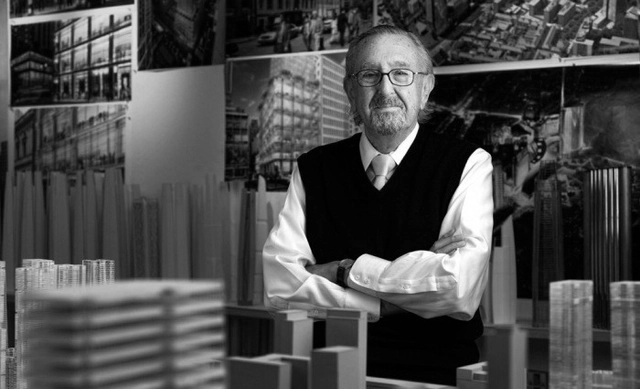
Argentine-American architect César Pelli, known for designing some of the tallest buildings in the world, such as the Petronas Towers in Kuala Lumpur, the Torre de Cristal in Madrid, and the Costanera Center Building in Santiago de Chile, died today at the age of 92 years, according to Juan Manzurel, governor of the province of Tucumán.
https://www.archdaily.com/921522/cesar-pelli-dies-aged-92Niall Patrick Walsh
Modern architecture emerged during the late 19th - early 20th century to break away from historical styles and create structures based on functionality and novelty. Regardless of the style's prominence, post-modernist architecture emerged a few decades later as a reaction to modernism's uniformity and formality, adding complexity, asymmetry, and color into architecture.





.jpg?1563475598)




.jpg?1563456909)
.jpg?1563468257 "Courtesy of Stéphane Beel Architects")
.jpg?1563464422 "Courtesy of Stéphane Beel Architects")

.jpg?1563467060 "Courtesy of Stéphane Beel Architects")
.jpg?1563475598)








.jpg?1445484899&format=webp&width=640&height=580)
.jpg?1445485496 "© Anne Sophie Maestracci")
.jpg?1445485411 "© Anne Sophie Maestracci")
.jpg?1445484862 "© Anne Sophie Maestracci")
.jpg?1445485161 "© Anne Sophie Maestracci")
.jpg?1445484899)
















.jpg?1563456956 "© Christopher Frederick Jones")
.jpg?1563457428 "© Christopher Frederick Jones")
.jpg?1563457177 "© Christopher Frederick Jones")
.jpg?1563457587 "© Christopher Frederick Jones")
_copy.jpg?1563467916)