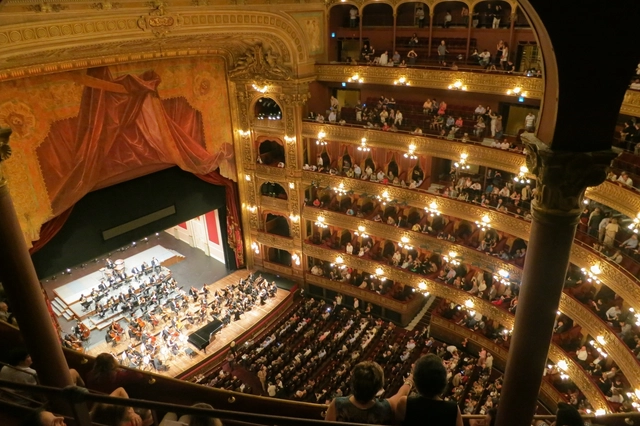
Considered as one of best buildings for opera in the world, the Colón Theatre in Buenos Aires is internationally renowned for its acoustics and its heritage value, showcasing the Italian and French influence on cultural architecture in Argentina. It is situated in a privileged location of the city´s downtown, between the streets Cerrito, Viamonte, Tucumán, and Libertad.
Inaugurated on the 25th of May in 1908, it had a significant impact and is considered one of the most emblematic historical monuments of the country.
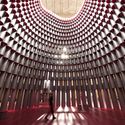
Argentine artist Marta Minujín has created a full-scale replica of one of the world’s most famous structures, the Parthenon in Athens, constructed out of censored books as a symbol of resistance to political repression. Currently on display at the Documenta 14 art festival in Kassel, Germany, the 100,000 books that make up the monument have been sourced entirely from donations, allowing people from all over the world to contribute titles they feel a personal connection to.
Collaborating with students from Kassel University, Minujín selected more than 170 titles banned in various countries across the world. These books were then strapped to the steel structure with plastic sheeting, protecting them from the elements and allowing sunlight to filter through the building.
https://www.archdaily.com/875525/parthenon-of-books-constructed-from-100000-banned-books-rises-at-nazi-book-burning-site-in-germanyAD Editorial Team
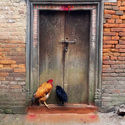
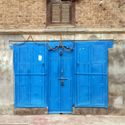
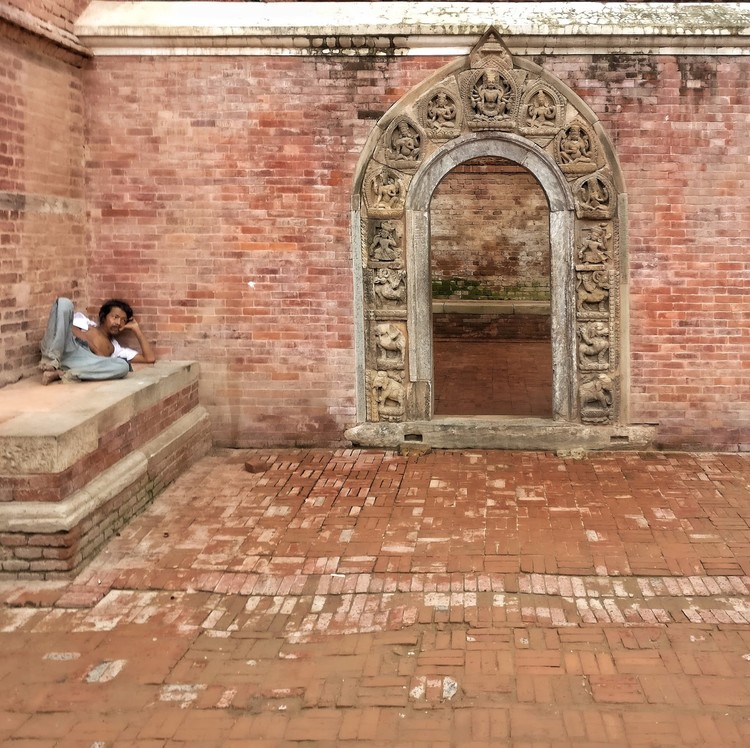
In this series, architect and photographer Nipun Prabhakar captures the uniquely expressive doors of the city of Kathmandu, Nepal. More than just passageways between spaces, doorways in Kathmandu are used as social spaces where people regularly meet and as a physical representation of the building owner’s interests.
Prabhakar explains:
“The most versatile piece in a building, [the door] has been a mode of expression [for] ages. The door in apartments and modern societies is just a mode of a transition from outside to inside. In traditional cities and neighborhoods, like that of Kathmandu, it’s much more than that. It’s the place where people spend most of their time. Sitting at the Chaukhat, socializing and chatting. The door is not just a tangible unit, it’s the respect you give to your building.”
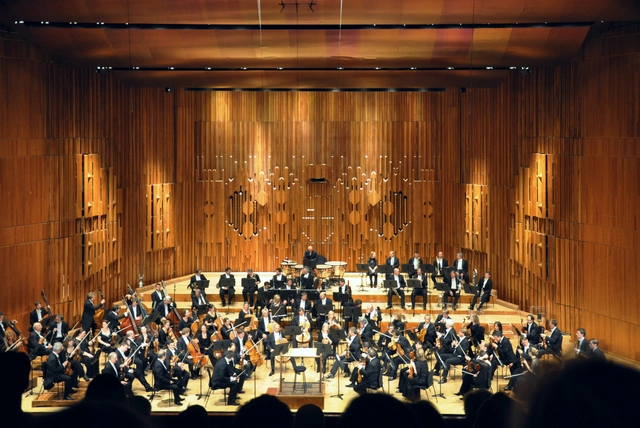
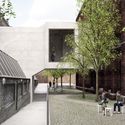
Six internationally-acclaimed teams have been selected as finalists in a competition to design a new home for London Symphony Orchestra and Guildhall School of Music & Drama to be known as the Centre for Music London.
Planned to contain a world-class concert hall, education, training and digital spaces, top-grade facilities for audiences and performers, and a number of supporting commercial areas, the Centre for Music building will become a new landmark within the heart of London, aimed at becoming “a place of welcome, participation, discovery and learning fit for the digital age.”
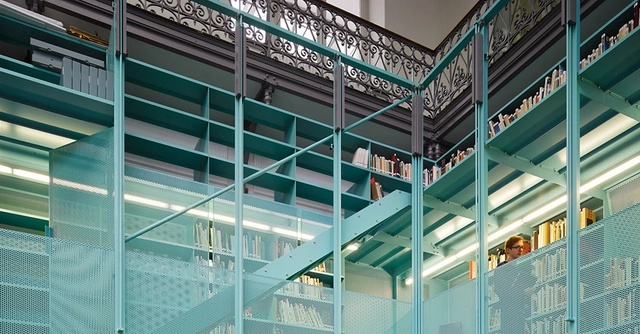
Courtesy of OFFICE Kersten Geers David Van Severen
In this episode of GSAPP Conversations, Kersten Geers—co-founder of OFFICE KGDVS—and Amale Andraos discuss their shared obsession with books, and the integral role that book-making plays in their professional offices and teaching. In this podcast, Geers echoes Aldo Rossi’s call to evaluate architecture within a cultural context, positioning books as the best tool to create a place in which architectural work acquires value and meaning; a device to establish a context of ideas.
https://www.archdaily.com/875464/kersten-geers-office-kgdvs-on-the-role-of-book-making-in-architectural-practice-amale-andraos-gsapp-conversationsAD Editorial Team
This article was originally published on Brandon Hubbard's blog, The Architect's Guide.
According to a new study released by TheLadders, recruiters spend only six seconds on average looking at your resume. This proves the importance of having a concise, well-formatted resume that emphasizes your greatest skills and experience.
I have the "benefit" of reading hundreds, if not thousands, of architecture resumes throughout the year. This gives me a unique opportunity to see a range of good and bad examples. Often the weaker samples come from younger candidates who haven't been in the job market for very long. If you are just starting out in your career the task of creating a resume can be daunting.
Creative, expressive, visual, a little bit edgy – tattoos convey many of the same qualities we as architects strive to achieve both in designing buildings and crafting our own personal identities. Whether it’s a small geometric motif or a full-back masterpiece, a tattoo is an immediate statement of who you are and what interests you.
Luckily for architects, the subjects of our affections just so happen to also make great source material for tattoos, from your favorite Miesian plan to a simple city skyline to the elaborate facade of a gothic cathedral.
Here, we’ve rounded up 118 of the most impressive architectural tattoos from across the internet and from submissions by our own ArchDaily readers. Each tattoo has its own story to tell (one reader even shared that his tattoos were inspired by scars obtained through model making mishaps).
Feeling inspired for some ink? Check out the list below!
https://www.archdaily.com/875208/118-impressive-architecture-tattoo-designsAD Editorial Team
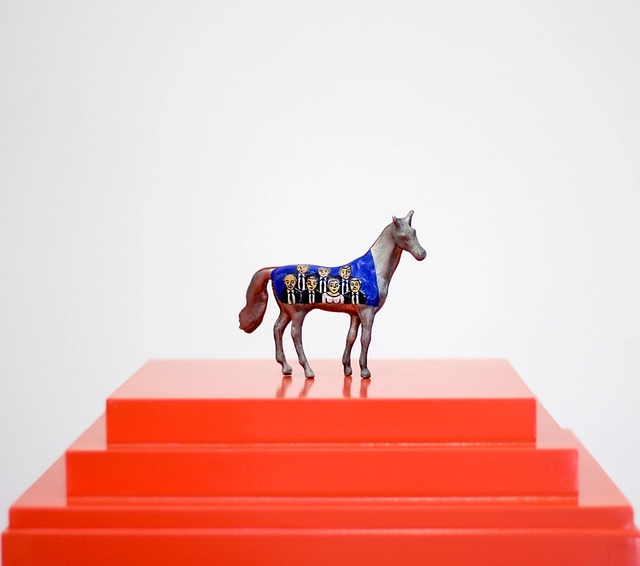
Una pieza de la exposición. Image Cortesía de Museo Universitario de Arte Contemporáneo
In a somewhat poetic proposal, Jill Magid, the American artist, offered Federica Zano, owner and archivist of the Barragan Foundation in Switzerland, a two-carat diamond ring made from ashes from Barragan’s cremation, in exchange for returning Barragan’s professional archive to Mexico.
This gesture was the pinnacle of an art project that “posed fundamental questions about the consequences and implications of converting cultural legacy into private corporate property.” Magid’s work, titled “A Letter Always Arrives at its Destination,” held an exhibition at the University Museum of Contemporary Art at the UNAM.
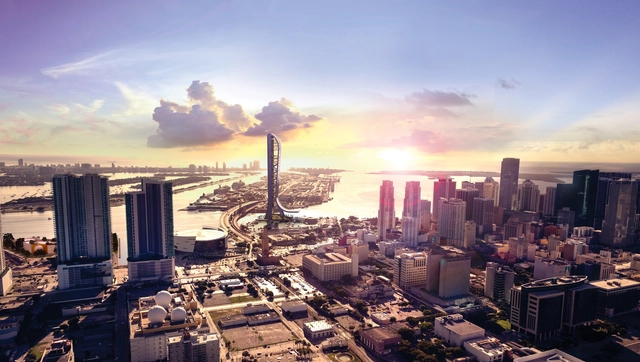
Currently under construction, new renderings of SkyRise Miami have been released, showcasing the 1,000-foot tower’s numerous mixed-use entertainment facilities from its prime location at the heart of Miami’s downtown core. Designed by local heavyweight Arquitectonica, the city’s tallest tower is being developed by Berkowitz Development Group, since the project’s inception in 2013.
As a firm believer in the importance of making good design accessible to the public, Michael Graves (July 9, 1934 – March 12, 2015) produced an enormous body of work that included product design alongside his architecture. Graves brought Postmodernism to the public eye through his emphasis on ornament and aesthetics, and stood firmly behind his design philosophy even as it went out of vogue.
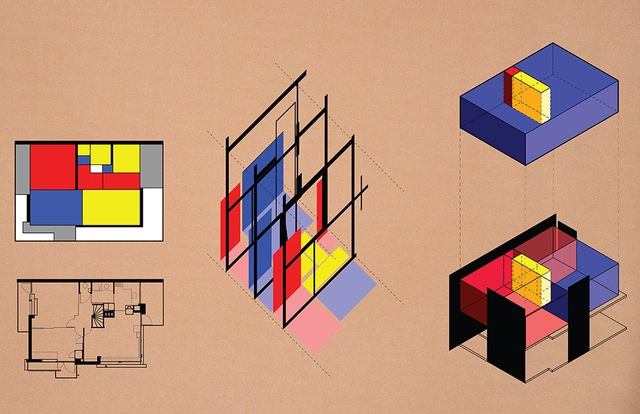
As one of the most prominent examples of the De Stijl movement, the 1925 Rietveld Schroder House represents a radical moment in modern architecture. Categorized by refining components to their geometric forms and primary paint hues, characteristics of the movement are evident in the architect Gerrit Rietveld's approach to residential design. Located in Utrecht, the house experiments with modular elements such as collapsible walls that provide a transformable way of living that still influences design to this day.
Because of its significance, the Schroder House has been the subject of study for many architects, artists, and historians. Inspired by its revolutionary design, aspiring architect and visual artist Yun Frank Zhang created a series of analytical diagrams and an accompanying video in order to understand the functionality, dimensions, and programmatic elements of the house. Below is a sample of Zhang’s exploration.
Picking up on the debate surrounding digitization in fabrication and its impact on traditional crafts, Copenhagen-based SPACE10, the future-living laboratory created by IKEA, recently invited three architects—Yuan Chieh Yang, Benas Burdulis, and Emil Froege—to explore the potentials of CNC milling for traditional craft techniques. The architects came up with three divergent yet equally innovative solutions to address the fundamental issue that plagues digital production: an apparent lack of a "human touch." In a Post-Fordist world increasingly dominated by customization, this investigation holds obvious importance for a company which deals primarily in mass-produced ready-to-assemble products; however, with its advocation for the infusion of dying classical craft techniques into the digital manufacturing process, the experiment could be meaningful for many other reasons.
Architecture, as both a profession and the built environment, currently finds itself at a crossroads in trying to adapt to a world in constant flux. Cities and its people face continuous socio-economic, political and environmental change on a daily basis, prompting a necessary rethink in the evolution of sustainableurbanization. With a focus on housing, society and cultural heritage, RIBA’s International Conference, Change in the City, aims to offer insight into the “New Urban Agenda” and how architects can play an interdisciplinary role in future urban development.
Speaking in an interview ahead of the conference, Norman Foster is a strong advocate for a careful consideration of what aspects of urban life need to be prioritized when designing cities of the future. For an increasingly global society, Foster stresses the need for architecture to surpass buildings and tackle its greatest obstacle – global warming, honing in on its roots and factors involved to create viable urban solutions.
https://www.archdaily.com/875169/norman-foster-stresses-the-importance-of-interdisciplinary-architecture-in-creating-future-citiesOsman Bari
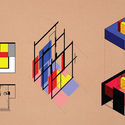
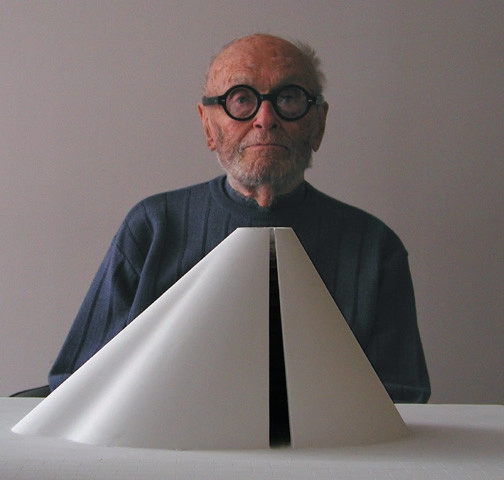
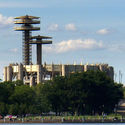
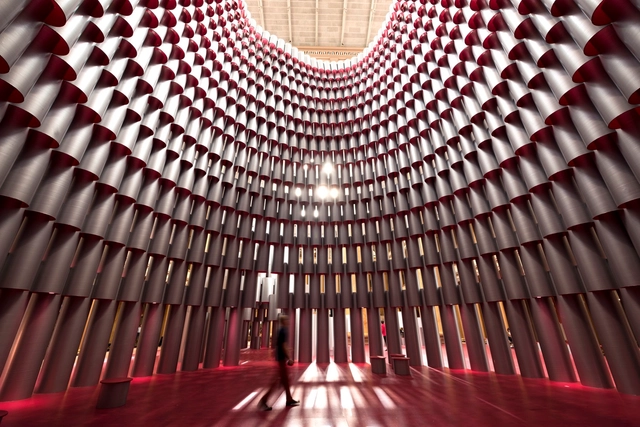
When he was awarded the first ever Pritzker Architecture Prize in 1979, the jury described Philip Johnson (July 8, 1906 – January 25, 2005) as someone who “produced consistent and significant contributions to humanity and the environment," adding that "as a critic and historian, he championed the cause of modern architecture and then went on to design some of his greatest buildings.” However, even after winning the Pritzker Prize at age 73, Johnson still had so much more of his legacy to build: in the years after 1979, Johnson almost completely redefined his style, adding another chapter to his influence over the architecture world.
The Royal Institute of British Architects (RIBA) has released an official statement on design for fire safety following the tragic Grenfell Tower fire on June 14. The causes and aftermath of the catastrophic fire, which ravaged 27 storeys of the council estate in the London borough of North Kensington are currently under investigation, with a team of 250+ working on operations including recovering and identifying victims (the death toll has risen to 80+) according to recent reports from the BBC and the Met Police. The aluminium-composite cladding Reynobond PE - identified as one of the main reasons for the fire’s spread up the building’s façade has sparked outrage over failed safety regulations and debate over the lack of responsibility behind the building’s (and many others) construction overall. Further fire safety tests revealed the cladding to be present in up to 60 similar council estates with more being urged to submit samples for testing.
For a quick summary, we’ve covered some key points from each of the 3 sections addressed RIBA's statement below:
In this visual essay, Greek filmmaker Yiannis Biliris documents the all-pervasive pall of glass that covers the modern city. The three-and-a-half-minute-long film, produced by Visual Suspect and shot entirely in Hong Kong, captures the vivid reflections seen in the facades of the city’s buildings, as Biliris selectively pans and zooms his camera to instill a strong sense of urgency in the viewer’s mind.
The essay, beautifully haunting in its imagery, might be seen as a reflective commentary on the state of our built environment today. Inspired by Albert Einstein’s general theory of relativity, which states that mass causes a distortion in space and time, it seems to subtly ask if our understanding of reality is warped itself. Describing the video as "a visual essay about perception and knowledge as [a] reflection of our reality," Biliris comments that "mass curves space and time, while the observer has his own perspective."
Coined by Robert Venturi and Denise Scott Brown in Learning from Las Vegas, “Ducks” are buildings that project their meaning in a literal way [1]. No architectural metaphors here - they are exactly what they look like. Many emerged alongside interstate highways, a lone doughnut or dinosaur punctuating the road trip across America. Places like Las Vegas and Macau have built their identity in the kitsch and literal language of architecture – with the duck a strong contributor. Though they get relegated to one of the weird forays of the postmodern era, ducks still make current-day appearances (like the Chicago Apple Store’s recent Macbook roof). Are they fun, kitschy, or just plain ugly? Love them or hate them, ducks have a light-hearted presence in our architectural history. Below are 9 weird and wonderful examples of buildings that make no apologies for being exactly what they are:
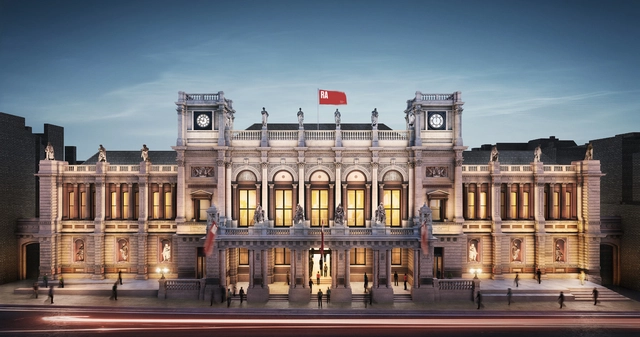
London’s Royal Academy of Arts has announced plans for a new permanent architecture-specific gallery and the creation of two new international architecture awards as part of the RA’s mission to “garner a wider appreciation and understanding of architecture, bringing to the fore its vital relationship to culture and society.”
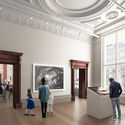
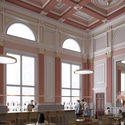
The new architecture space, along with a cafe, will be housed within the Dorfman Senate Rooms in Burlington Gardens, allowing the academy to show architectural exhibition year-round. The architecture rooms join wider renovation plans led by David Chipperfield Architects that will also include a new naturally-lit theater.
Facebook has announced plans for a new mixed-use neighborhood adjoining their existing headquarters in Menlo Park, California to be led by the New York office of OMA and Partner Shohei Shigematsu. Known as Willow Campus, the campus masterplan seeks to further invest in Facebook’s home community, joining the original campus designed by Frank Gehry.
“It’s exciting to collaborate with Facebook, whose innovation in networking and social media extends to urban ambitions for connectivity in the Bay Area,” commented Shigematsu. “The Willow Campus masterplan creates a sense of place with diverse programming that responds to the needs of the Menlo Park community. The site has the potential to impact the future of regional transportation, housing, and environment.”
Of the Pritzker Prize’s illustrious list of laureates, the 1994 winner Christian de Portzamparc is perhaps the least covered by the media. However, this relatively low profile belies the subtle and insightful understanding of architectural and urban issues that in many ways puts him decades ahead of the curve – with the sociologically-led principles he has been developing since the early 1980s now becoming widely popular in architectural circles. In this interview, the latest in Vladimir Belogolovsky’s “City of Ideas” column, Portzamparc explains the journey that led to this unique take on architecture.
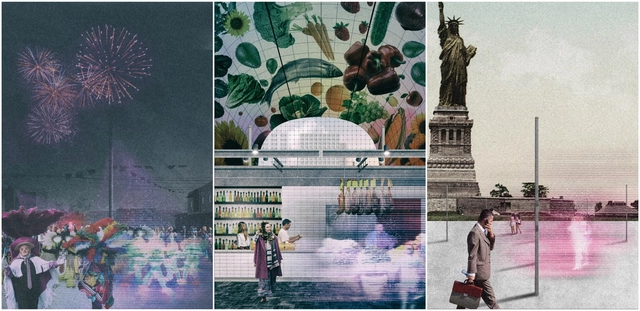
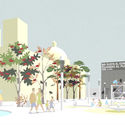
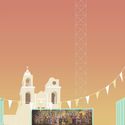
Architectural research initiative Arch Out Loud has released the winners of the Tenancingo Square Mediascape international open-ideas competition aimed to engage architects with the topic of human trafficking. The competition challenged participants to reimagine the town square of Tenancingo, Mexico in response to the prevalent issues of sex trafficking existing in the area. “With proposals from both regional designers and designers from other parts of the world, the competition brought forth a large variety of approaches to an extremely sensitive, but immediate, societal problem” Arch Out Loud said in a statement. “Being the first architectural competition to address human and sex trafficking, Arch Out Loud hopes that the culmination of this exploration is only the beginning of the field’s examination of its’ role in the matter.”
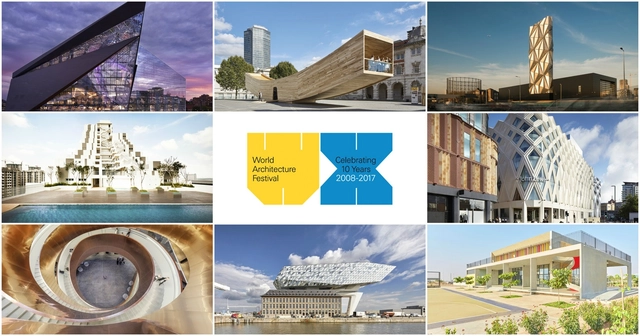
The World Architecture Festival has announced the shortlist for their 2017 awards slate, featuring 434 projects ranging from small family homes, to schools, stations, museums, large infrastructure and landscape projects. The world’s largest architectural award program, the WAF Awards year saw more participation this year than ever before, with a total of 924 entries received from projects located in 68 countries across the world.
https://www.archdaily.com/875217/shortlist-revealed-for-world-architecture-festival-awards-2017AD Editorial Team


.jpg?1499719299)














.jpg?1499302315&format=webp&width=640&height=580)


.jpg?1499456785 "© Tim Schenck")
.jpg?1499456766 "© Tim Schenck")
.jpg?1499456816 "© Tim Schenck")



Wade_ZIMMERMAN_15nb_p325.jpg?1499405889)
Nicolas_BOREL_100.jpg?1499404690 "Paris Opera Ballet School, Nanterre, 1987. Image © Nicolas Borel")
Wade_ZIMMERMAN_2008_07_7983REC_p242.jpg?1499405668 "Credit Lyonnais Tower, Lille, 1995. Image © Wade Zimmerman")
Hufton_Crow_005-P399.jpg?1499406792 "Cidade das Artes, Rio de Janeiro, 2013. Image © Hufton + Crow")
CDP.jpg?1499408011 "Suzhou Cultural Center Proposal, Suzhou, 2017. Image Courtesy of Christian de Portzamparc")
Wade_ZIMMERMAN_15nb_p325.jpg?1499405889)