

This guide outlines how to implement structured templates effectively, maintain design quality, and support firm-wide governance.
News
How to Create Board Templates for Architecture Teams
| Sponsored Content
https://www.archdaily.comhttps://www.archdaily.com/catalog/us/products/38861/how-to-create-board-templates-for-architecture-teams-rundiffusion
MVRDV Wins Competition for Bay-Window-Inspired Mixed-Use Towers in Rotterdam
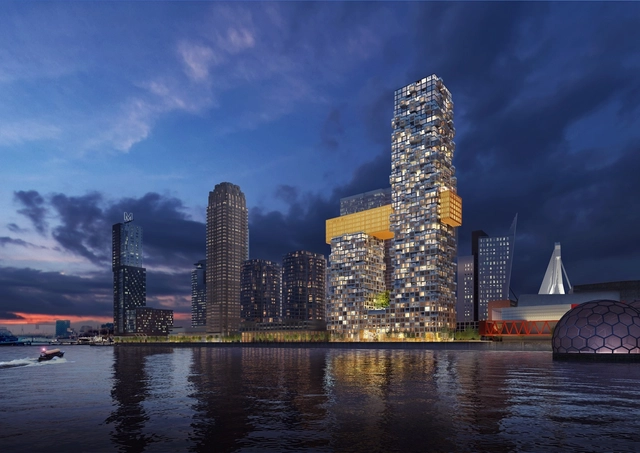
MVRDV has been selected as the winner of a competition for The Sax, a 51-story mixed-use tower in Rotterdam’s Wilhelminapier port development. The building will add a total of 82,000 square meters (882,000 square feet) of residences, retail spaces and commercial facilities across two towers, the Philadelphia & the Havana, connected halfway up by a bridge containing a 150-room hotel.
Located on the south side of Wilhelminapier, the Sax will become one of the last residential buildings to rise within a new development on the historic harbor, one of the city’s most popular areas. The building’s recognizable pixelated silhouette and waterfront siting will give the building an immediate presence on the Rotterdam skyline, recently coined the “Manhattan On the Maas.”





https://www.archdaily.com/875667/mvrdv-wins-competition-for-bay-window-inspired-mixed-use-towers-in-rotterdamPatrick Lynch
The One Big Problem That Advocates of Copenhagen-Style Urbanism Often Overlook

This article was originally published on Common Edge as "What We Can (and Can’t) Learn from Copenhagen."
I spent four glorious days in Copenhagen recently and left with an acute case of urban envy. (I kept thinking: It’s like... an American Portland—except better.) Why can’t we do cities like this in the US? That’s the question an urban nerd like me asks while strolling the famously pedestrian-friendly streets, as hordes of impossibly blond and fit Danes bicycle briskly past.
Copenhagen is one of the most civilized cities on the planet. The world’s “most livable,” it’s often called, with some justification. (Although a Danish relative did caution me, “Spend a few weeks here in January before you make that pronouncement.”) But the seemingly effortless civility, Copenhagen’s amazing level of grace, is not an accident of place or happenstance. It’s the product of a shared belief that transcends urban design, even though the city is a veritable laboratory for pretty much all of the best practices in the field.

https://www.archdaily.com/875622/the-one-big-problem-that-advocates-of-copenhagen-style-urbanism-often-overlookMartin Pedersen
Is This the World's Largest Mural?
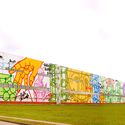
Street Artist Misha Most have finished a gargantuan project – a 10,800 square meter mural set to be the world's largest in Vyska, Russia. The giant mural, titled “Evolution-2” covers the facade of the "Stan-5000" industrial complex from the oldest Russian manufacturer, Vyksa Steel Works. The mural project was chosen in the course of the "Vyksa 10000" open competition and is part of the ArtOvrag urban art festival curated by Sabina Changina and Russian creative studio Artmossphere. Artmossphere is known for curating various art projects, exhibitions, and festivals connected with street art with both established and upcoming street artists.

.jpg?1499375393 "© Kirill Makarov")


https://www.archdaily.com/875309/is-this-the-worlds-largest-muralSabrina Syed

Paris and Los Angeles Selected as 2024 and 2028 Olympic Hosts

Paris and Los Angeles will become the next Olympic host cities, after the International Olympic Committee (IOC) voted unanimously to approve a plan simultaneously awarding the 2024 and 2028 Olympic Games to the competing cities.
Which city will host each year, however, is still on the table – the two bid cities and the IOC will have until a September 13 conference in Lima to reach an agreement. If they cannot agree, solely the 2024 Olympics will be awarded, though this outcome seems unlikely after recent collaborations by Los Angeles Mayor Eric Garcetti and Paris Mayor Anne Hidalgo.


.jpg?1499789165 "Main Stadium - Future home of the NFL's LA Rams. Image Courtesy of LA 2024")


https://www.archdaily.com/875587/paris-and-los-angeles-selected-as-2024-and-2028-olympic-hostsAD Editorial Team
Bauhaus Houses, Eritrea's Capital and Ahmedabad's Walled City Among 20 Cultural Sites Added to UNESCO's World Heritage List
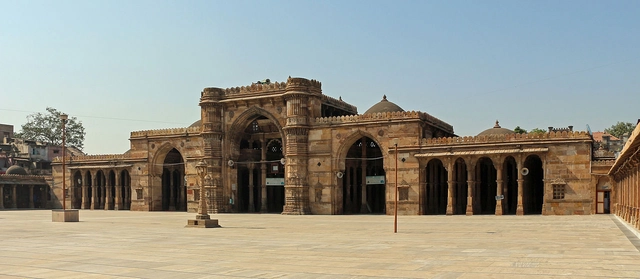
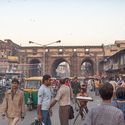
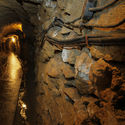
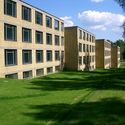
UNESCO’s World Heritage Committee, currently holding its forty-first annual session in the Polish city of Krakow, inscribed twenty new cultural sites on its World Heritage List, including the historic city of Ahmedabad in India, archaeological sites in Cambodia and Brazil, and a “cultural landscape” in South Africa. The Committee also added extensions to two sites already on the list: Strasbourg in France, and the Bauhaus in Germany. On the other hand, the historic center of Vienna was inscribed on the List of World Heritage in Danger as the Committee examined the state of conservation of one-hundred-and-fifty-four of its listed sites.
.jpg?1499781753 "Asmara. Image© <a href='https://commons.wikimedia.org/wiki/File:Asmara_(8351468351).jpg'>Wikimedia user David Stanley</a> licensed under <a href='https://creativecommons.org/licenses/by/2.0/deed.en'>CC BY 2.0</a>")

https://www.archdaily.com/875568/bauhaus-houses-eritreas-capital-and-ahmadabads-walled-city-among-20-cultural-sites-added-to-unescos-world-heritage-listSuneet Zishan Langar
Decades After the Rise of CAD, Architecture Is Going “Paperless”—For Real This Time
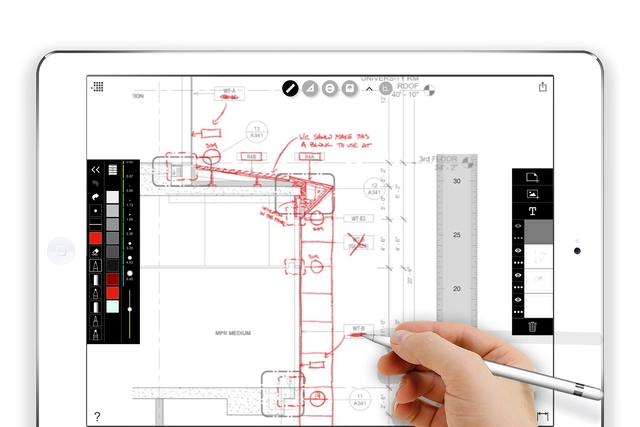
If you visit an architecture office today, you may sense a slight change. The days of bulky desktops, ergonomic mouse pads and tower-high stacks of drawing sets are slowly giving way to digital pencils, tablets, and tons of architects’ hand-drawings—both physical and digital. Architects across the globe are clearing their desks, literally, and utilizing emerging touchscreen tools and software for designing, sharing and collaborating. It seems possible that, for the first time in years, the architecture profession could revisit Bernard Tschumi’s “paperless” studio which formed a key part of his tenure as dean of Columbia University’s GSAPP in the mid-1990s. However, this time, “paperless” starts with a pencil, instead of a click.
https://www.archdaily.com/875532/decades-after-the-rise-of-cad-architecture-is-going-paperless-for-real-this-timeAnna Kenoff, Morpholio
7 Abandoned and Deteriorating Latin American Architectural Classics
_13.24.02.jpg?1499192828&format=webp&width=640&height=580)
How many lives does a great work of architecture have? The first begins when it is built and inhabited, judged based on the quality of life it provides for its residents. The second comes generations later when it becomes historically significant and perhaps its original function no longer suits the demands of society. The value of such buildings is that they inform us about the past and for that reason their conservation is necessary.
However, in Latin America, there are countless cases of buildings of great architectural value that are in tragic states of neglect and deterioration. Seven such examples are:
https://www.archdaily.com/875132/7-abandoned-and-deteriorating-latin-american-architectural-classicsKarina Zatarain
The History of One of the Best Theaters in the World: Teatro Colón in Buenos Aires
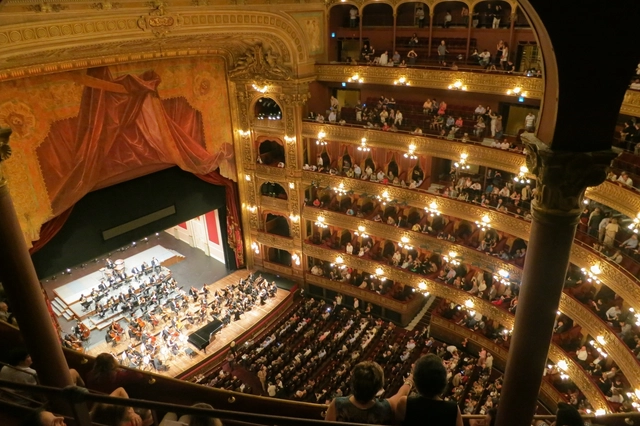
Considered as one of best buildings for opera in the world, the Colón Theatre in Buenos Aires is internationally renowned for its acoustics and its heritage value, showcasing the Italian and French influence on cultural architecture in Argentina. It is situated in a privileged location of the city´s downtown, between the streets Cerrito, Viamonte, Tucumán, and Libertad.
Inaugurated on the 25th of May in 1908, it had a significant impact and is considered one of the most emblematic historical monuments of the country.
https://www.archdaily.com/875370/the-history-of-one-of-the-best-theaters-in-the-world-teatro-colon-in-buenos-airesFabian Dejtiar
Jan Boelen Appointed As Curator of the 2018 Istanbul Design Biennial
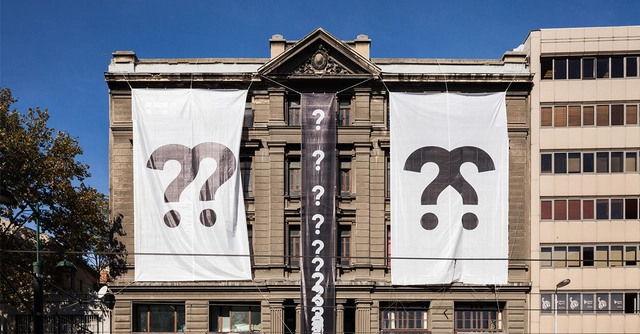
The Istanbul Foundation for Culture and Arts have announced that Jan Boelen has been appointed as Curator of the 4th Istanbul Design Biennale. This follows the 3rd—Are We Human?—which opened in September 2016 and was curated by Mark Wigley and Beatriz Colomina with a powerful, wide-reaching exploration of design and architecture in relation "the design of the species."
https://www.archdaily.com/875564/jan-boelen-appointed-as-curator-of-the-2018-istanbul-design-biennialAD Editorial Team
"Parthenon of Books" Constructed from 100,000 Banned Books Rises at Nazi Book Burning Site in Germany
.jpg?1499719299&format=webp&width=640&height=580)
Argentine artist Marta Minujín has created a full-scale replica of one of the world’s most famous structures, the Parthenon in Athens, constructed out of censored books as a symbol of resistance to political repression. Currently on display at the Documenta 14 art festival in Kassel, Germany, the 100,000 books that make up the monument have been sourced entirely from donations, allowing people from all over the world to contribute titles they feel a personal connection to.
Collaborating with students from Kassel University, Minujín selected more than 170 titles banned in various countries across the world. These books were then strapped to the steel structure with plastic sheeting, protecting them from the elements and allowing sunlight to filter through the building.
https://www.archdaily.com/875525/parthenon-of-books-constructed-from-100000-banned-books-rises-at-nazi-book-burning-site-in-germanyAD Editorial Team
"Doors of Kathmandu" Captures the Vital Social Spaces of Nepal's Capital City
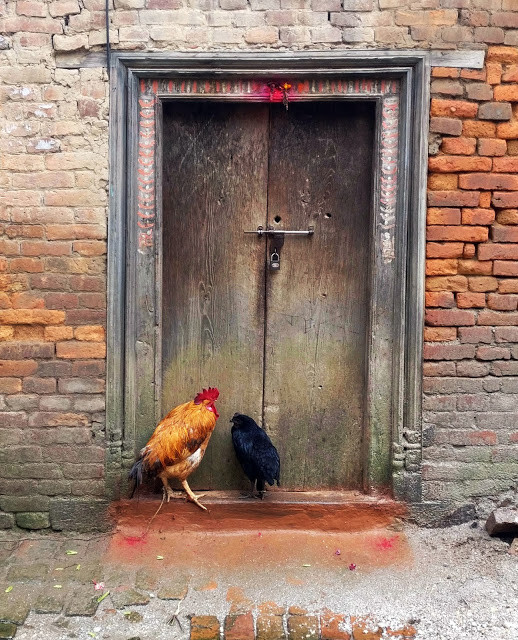
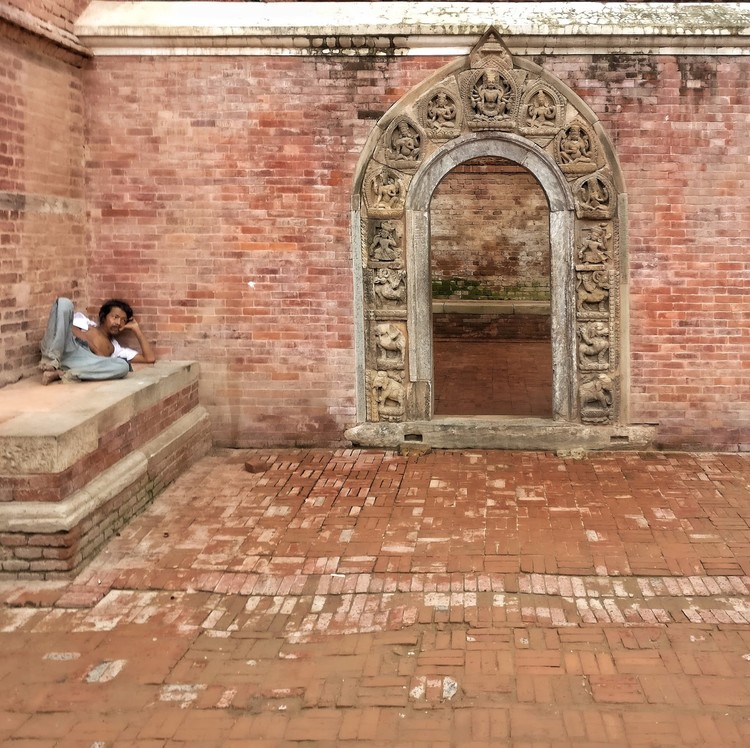
In this series, architect and photographer Nipun Prabhakar captures the uniquely expressive doors of the city of Kathmandu, Nepal. More than just passageways between spaces, doorways in Kathmandu are used as social spaces where people regularly meet and as a physical representation of the building owner’s interests.
Prabhakar explains:
“The most versatile piece in a building, [the door] has been a mode of expression [for] ages. The door in apartments and modern societies is just a mode of a transition from outside to inside. In traditional cities and neighborhoods, like that of Kathmandu, it’s much more than that. It’s the place where people spend most of their time. Sitting at the Chaukhat, socializing and chatting. The door is not just a tangible unit, it’s the respect you give to your building.”




https://www.archdaily.com/875514/doors-of-kathmandu-captures-the-vital-social-spaces-of-nepals-capital-cityAD Editorial Team
Gehry, Foster, Piano Lead Star-Studded Shortlist in London Centre for Music Competition
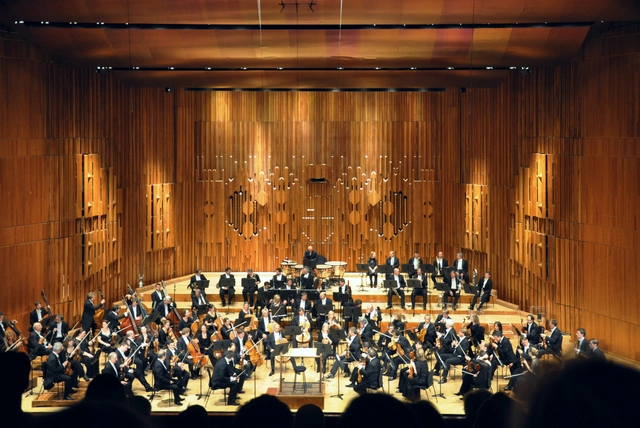
Six internationally-acclaimed teams have been selected as finalists in a competition to design a new home for London Symphony Orchestra and Guildhall School of Music & Drama to be known as the Centre for Music London.
Planned to contain a world-class concert hall, education, training and digital spaces, top-grade facilities for audiences and performers, and a number of supporting commercial areas, the Centre for Music building will become a new landmark within the heart of London, aimed at becoming “a place of welcome, participation, discovery and learning fit for the digital age.”
https://www.archdaily.com/875507/gehry-foster-piano-lead-star-studded-shortlist-in-london-centre-for-music-competitionPatrick Lynch
Kersten Geers of OFFICE KGDVS on the Role of Book-Making in Architectural Practice
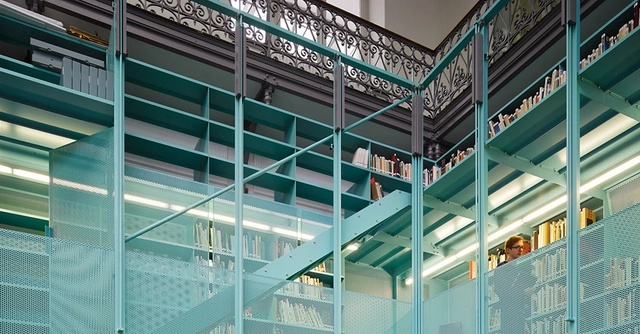
In this episode of GSAPP Conversations, Kersten Geers—co-founder of OFFICE KGDVS—and Amale Andraos discuss their shared obsession with books, and the integral role that book-making plays in their professional offices and teaching. In this podcast, Geers echoes Aldo Rossi’s call to evaluate architecture within a cultural context, positioning books as the best tool to create a place in which architectural work acquires value and meaning; a device to establish a context of ideas.

https://www.archdaily.com/875464/kersten-geers-office-kgdvs-on-the-role-of-book-making-in-architectural-practice-amale-andraos-gsapp-conversationsAD Editorial Team
7 Mistakes That Will Destroy A Successful Architecture Resume/CV

This article was originally published on Brandon Hubbard's blog, The Architect's Guide.
According to a new study released by TheLadders, recruiters spend only six seconds on average looking at your resume. This proves the importance of having a concise, well-formatted resume that emphasizes your greatest skills and experience.
I have the "benefit" of reading hundreds, if not thousands, of architecture resumes throughout the year. This gives me a unique opportunity to see a range of good and bad examples. Often the weaker samples come from younger candidates who haven't been in the job market for very long. If you are just starting out in your career the task of creating a resume can be daunting.

https://www.archdaily.com/875389/7-mistakes-that-will-destroy-a-successful-architecture-resume-cvBrandon Hubbard
118 Impressive Architecture Tattoo Designs

Creative, expressive, visual, a little bit edgy – tattoos convey many of the same qualities we as architects strive to achieve both in designing buildings and crafting our own personal identities. Whether it’s a small geometric motif or a full-back masterpiece, a tattoo is an immediate statement of who you are and what interests you.
Luckily for architects, the subjects of our affections just so happen to also make great source material for tattoos, from your favorite Miesian plan to a simple city skyline to the elaborate facade of a gothic cathedral.
Here, we’ve rounded up 118 of the most impressive architectural tattoos from across the internet and from submissions by our own ArchDaily readers. Each tattoo has its own story to tell (one reader even shared that his tattoos were inspired by scars obtained through model making mishaps).
Feeling inspired for some ink? Check out the list below!
https://www.archdaily.com/875208/118-impressive-architecture-tattoo-designsAD Editorial Team
Are Luis Barragán's Ashes More Important Than His Life's Work?

In a somewhat poetic proposal, Jill Magid, the American artist, offered Federica Zano, owner and archivist of the Barragan Foundation in Switzerland, a two-carat diamond ring made from ashes from Barragan’s cremation, in exchange for returning Barragan’s professional archive to Mexico.
This gesture was the pinnacle of an art project that “posed fundamental questions about the consequences and implications of converting cultural legacy into private corporate property.” Magid’s work, titled “A Letter Always Arrives at its Destination,” held an exhibition at the University Museum of Contemporary Art at the UNAM.
https://www.archdaily.com/875306/luis-barragans-ashes-arent-more-important-than-his-lifes-workKarina Zatarain
New Renderings Showcase Extreme Attractions of Arquitectonica's Future SkyRise in Miami

Currently under construction, new renderings of SkyRise Miami have been released, showcasing the 1,000-foot tower’s numerous mixed-use entertainment facilities from its prime location at the heart of Miami’s downtown core. Designed by local heavyweight Arquitectonica, the city’s tallest tower is being developed by Berkowitz Development Group, since the project’s inception in 2013.


https://www.archdaily.com/875320/new-renderings-showcase-extreme-attractions-of-arquitectonicas-future-skyrise-in-miamiOsman Bari
Spotlight: Michael Graves

As a firm believer in the importance of making good design accessible to the public, Michael Graves (July 9, 1934 – March 12, 2015) produced an enormous body of work that included product design alongside his architecture. Graves brought Postmodernism to the public eye through his emphasis on ornament and aesthetics, and stood firmly behind his design philosophy even as it went out of vogue.
https://www.archdaily.com/769621/spotlight-michael-gravesPatrick Kunkel
Diagrams of the Rietveld Schroder House Reveal its Graphic and Geometric Brilliance
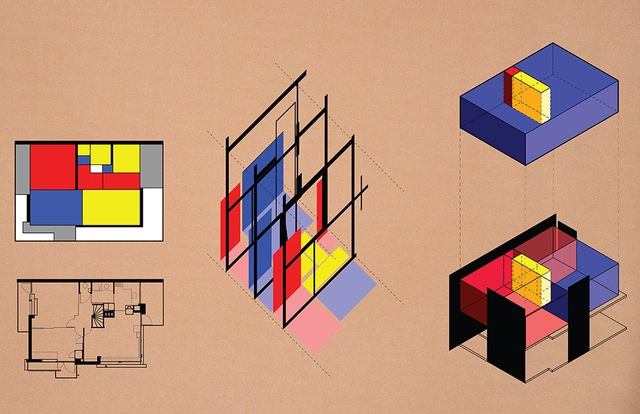
As one of the most prominent examples of the De Stijl movement, the 1925 Rietveld Schroder House represents a radical moment in modern architecture. Categorized by refining components to their geometric forms and primary paint hues, characteristics of the movement are evident in the architect Gerrit Rietveld's approach to residential design. Located in Utrecht, the house experiments with modular elements such as collapsible walls that provide a transformable way of living that still influences design to this day.
Because of its significance, the Schroder House has been the subject of study for many architects, artists, and historians. Inspired by its revolutionary design, aspiring architect and visual artist Yun Frank Zhang created a series of analytical diagrams and an accompanying video in order to understand the functionality, dimensions, and programmatic elements of the house. Below is a sample of Zhang’s exploration.





https://www.archdaily.com/875223/diagrams-of-the-rietveld-schroder-house-reveal-its-graphic-and-geometric-brillianceAnnalise Zorn
IKEA's SPACE10 Lab Reimagines Craftsmanship Through Digital Techniques
Picking up on the debate surrounding digitization in fabrication and its impact on traditional crafts, Copenhagen-based SPACE10, the future-living laboratory created by IKEA, recently invited three architects—Yuan Chieh Yang, Benas Burdulis, and Emil Froege—to explore the potentials of CNC milling for traditional craft techniques. The architects came up with three divergent yet equally innovative solutions to address the fundamental issue that plagues digital production: an apparent lack of a "human touch." In a Post-Fordist world increasingly dominated by customization, this investigation holds obvious importance for a company which deals primarily in mass-produced ready-to-assemble products; however, with its advocation for the infusion of dying classical craft techniques into the digital manufacturing process, the experiment could be meaningful for many other reasons.


https://www.archdaily.com/875312/ikeas-space10-lab-reimagines-craftsmanship-through-digital-techniquesSuneet Zishan Langar
Norman Foster Stresses the Importance of Interdisciplinary Architecture in Creating Future Cities
Architecture, as both a profession and the built environment, currently finds itself at a crossroads in trying to adapt to a world in constant flux. Cities and its people face continuous socio-economic, political and environmental change on a daily basis, prompting a necessary rethink in the evolution of sustainable urbanization. With a focus on housing, society and cultural heritage, RIBA’s International Conference, Change in the City, aims to offer insight into the “New Urban Agenda” and how architects can play an interdisciplinary role in future urban development.
Speaking in an interview ahead of the conference, Norman Foster is a strong advocate for a careful consideration of what aspects of urban life need to be prioritized when designing cities of the future. For an increasingly global society, Foster stresses the need for architecture to surpass buildings and tackle its greatest obstacle – global warming, honing in on its roots and factors involved to create viable urban solutions.
https://www.archdaily.com/875169/norman-foster-stresses-the-importance-of-interdisciplinary-architecture-in-creating-future-citiesOsman Bari
Spotlight: Philip Johnson
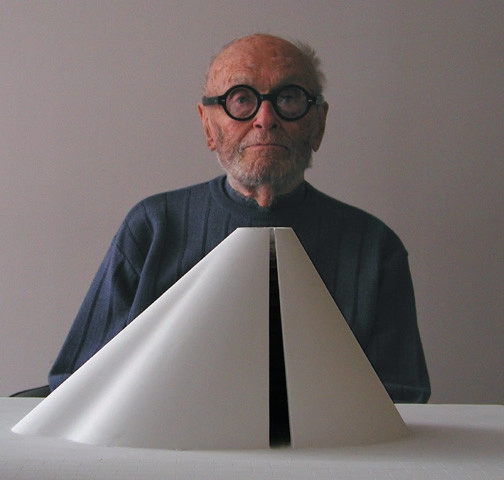
When he was awarded the first ever Pritzker Architecture Prize in 1979, the jury described Philip Johnson (July 8, 1906 – January 25, 2005) as someone who “produced consistent and significant contributions to humanity and the environment," adding that "as a critic and historian, he championed the cause of modern architecture and then went on to design some of his greatest buildings.” However, even after winning the Pritzker Prize at age 73, Johnson still had so much more of his legacy to build: in the years after 1979, Johnson almost completely redefined his style, adding another chapter to his influence over the architecture world.



https://www.archdaily.com/398631/happy-107th-birthday-philip-johnsonRory Stott
RIBA Releases Statement Addressing Grenfell Fire Tragedy
.jpg?1499302315&format=webp&width=640&height=580)
The Royal Institute of British Architects (RIBA) has released an official statement on design for fire safety following the tragic Grenfell Tower fire on June 14. The causes and aftermath of the catastrophic fire, which ravaged 27 storeys of the council estate in the London borough of North Kensington are currently under investigation, with a team of 250+ working on operations including recovering and identifying victims (the death toll has risen to 80+) according to recent reports from the BBC and the Met Police. The aluminium-composite cladding Reynobond PE - identified as one of the main reasons for the fire’s spread up the building’s façade has sparked outrage over failed safety regulations and debate over the lack of responsibility behind the building’s (and many others) construction overall. Further fire safety tests revealed the cladding to be present in up to 60 similar council estates with more being urged to submit samples for testing.
For a quick summary, we’ve covered some key points from each of the 3 sections addressed RIBA's statement below:
https://www.archdaily.com/875234/riba-releases-statement-addressing-grenfell-fire-tragedySabrina Syed
Oops! We don't have this page.
But you can browse the last one: 417