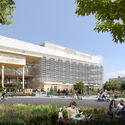
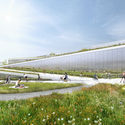
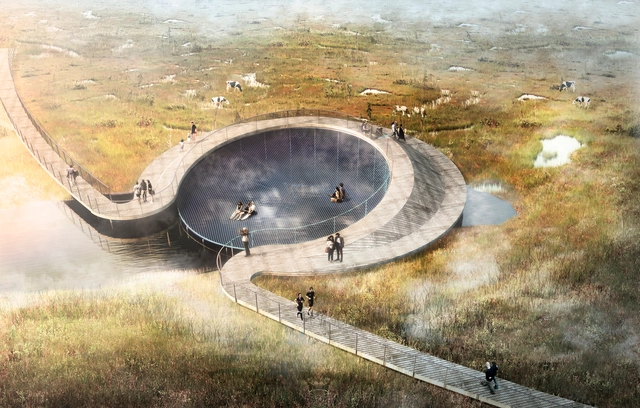
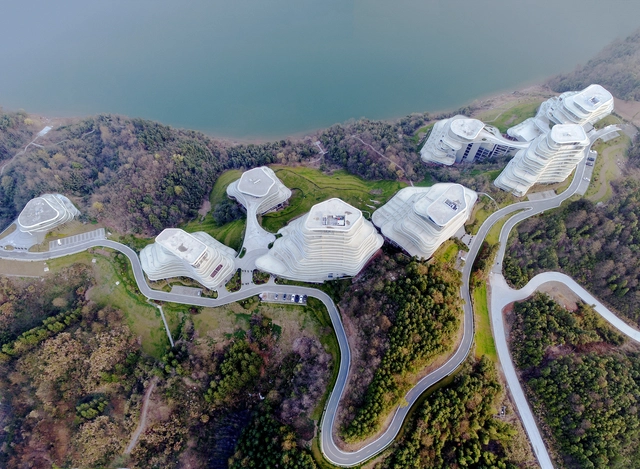
CF Møller’s Storkeengen (Stork Meadow) is a landscape solution, bringing the town of Randers closer to the longest river in Denmark, the Gudenå River to prevent the threat of flooding. The storm protection uses the wetland meadows as an attractive nature park to handle the raised stormwater level, whilst a recreational pathway increases accessibility with the nature areas across the river.
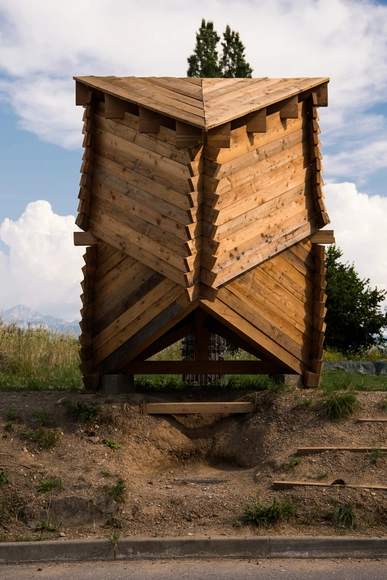
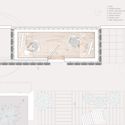
At an altitude of 2735m, architecture students at the École Polytechnique Fédérale de Lausanne (EPFL) in Switzerland have built The Bonatti Bivouac, a temporary refuge for the A Neuve’s glacier. The shelter uses the envelope as a structural object, eradicating the need for metal, screws, or nails. Informed by theoretical architect Semper, their design uses the joints to form a piece of architecture.
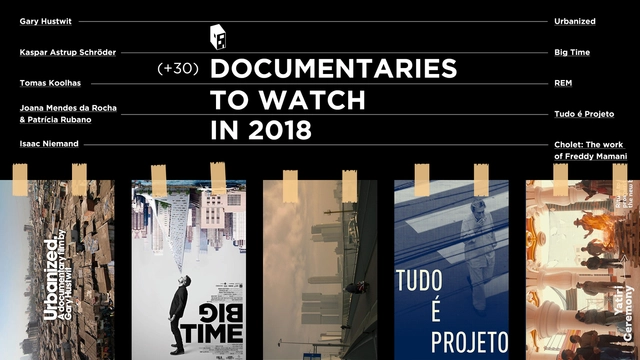
The new year is here! And with it, a new slate of documentaries we're dying to see.
Of all the media forms, film seems to be the most adept at making a personal connection with viewers, offering a behind-the-scenes look into the lives of a great architect, the construction, and performance of a project or an issue that is confronting the entire architecture community. This year's films are no exception, as we get the chance to learn about the daily routines of Bjarke Ingels and Paulo Mendes da Rocha, projects by Tadao Ando and Glenn Murcutt, and the troubles of urbanization and gentrification.
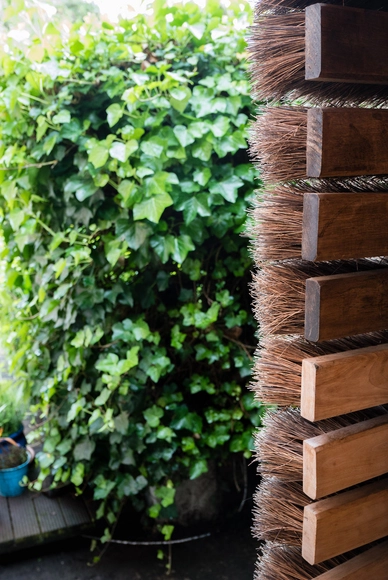
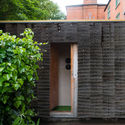
“Hairy” isn’t typically a term used to describe architecture. However, a “hairy” exterior is perhaps the defining characteristic of this micro-office by 2hD Architecture Workshop in the UK—the outer facades are entirely clad in natural coco-fiber broom heads.
The details and junctions of the broom heads are largely concealed as to let the broom bristles interlock, providing a continuous and visually diffuse surface. This hides any clue as to what is occurring on the interior—the structure existing merely as an object of intrigue.
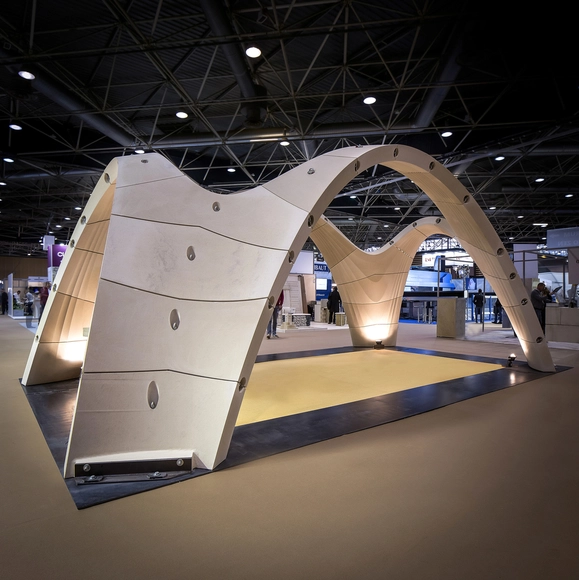
New Fundamentals Research Group, in partnership with S.N.B.R., designed and fabricated a stone vaulted pavilion for Rocalia, a natural stone fair held in Lyon last month. At a total area of 36 square meters and 3.20 meters in height, Flux reconnects the past to the present by combining traditional sculptural design with contemporary fabrication processes.
At ArchDaily, we're lucky enough to know a fantastic network of architecture professionals, allowing us to share the world's best architecture with our audience. But our articles wouldn't be the same without the many photographers who dedicate themselves to making incredible, inspiring images. For that reason, here we present the 50 most popular architecture images of 2017.
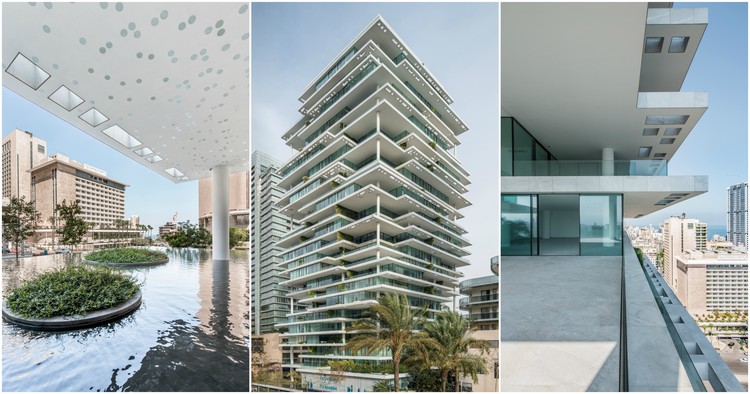
In the rapidly burgeoning city of Beirut, the post-war building boom is far from over. Much like its middle-eastern neighbors, it boasts of a plump share of designer architecture—as critic Oliver Wainwright refers to it, “a diverse shopping list”. It is here that the Beirut Terraces, a residential complex designed by Herzog & De Meuron, rises up to 119 meters, occupying a prominent place in the city’s skyline. In this collection of photographs by Bahaa Ghoussainy, one sees the Beirut Terraces from within, getting a glimpse of both the interior, as well as the multiple, unique views offered from inside the building.
These are interesting times. There is in the English language a curse, purported to have been translated from the Chinese, but most likely of British origin: “May you live in interesting times.” The meaning, of course, is that it is better to live in uninteresting times of peace and stability than to experience the curse of living in “interesting” times of conflict and flux. Such a fate would only be wished on one’s enemies. So, yes, it might indeed seem that we have had the misfortune to live in very interesting times. We are confronted with multiple, intertwined crises of great complexity: climate change, political instability, mass migrations, hunger, and social polarization, just to name a few.
There are no easy solutions to these complex problems, but there are many energetic, talented, and intelligent people trying to address them, from a range of academic backgrounds. Architects, however, have largely been excluded from the conversation, or have, in fact, chosen to exclude themselves. The general public cannot be expected to turn to architects for solutions to today’s complex problems if we, ourselves, do not insert ourselves into the conversation. Following the examples of heroic figures in architecture, both past and present, we often understand the legitimate path of the architect to be a narrow one, limited to the built environment. After all, one might reason, that is what we’ve been trained to do. Isn’t it?
Site models: they are intriguing and playful things by nature, making you feel like a giant looking down on a city. These miniature neighborhoods, however, are often large and bulky and only suited for architecture schools or offices. Imagine being able to have a site model in your home or office. Microscape has launched a Kickstarter to produce 1:5000 scale models of America’s Windy City, Chicago.
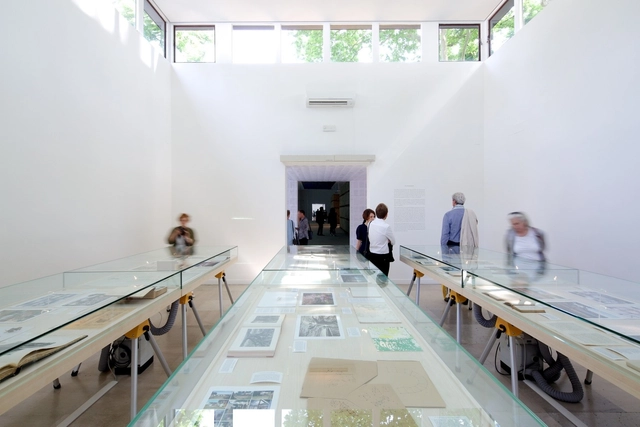
The Danishpavilion at the 2018 Venice Architecture Biennale will demonstrate the power of collaborative innovation through large-scale installations. Architect and Head of Institute of Architecture & Technology at The Royal Danish Academy of Fine Arts, Natalie Mossin was selected to be the Danish pavilion curator by several prestigious organizations including The Danish Architecture Centre, The Danish Ministry of Culture, Realdania and the Danish Arts Foundation.
If you are missing the capacity to create emotion, then it doesn’t work, it’s not enough. – Renzo Piano
In this in-depth biographical video by the Louisiana Channel, Renzo Piano talks about his earliest influences, why traveling is essential, the pleasures of drawing, what creativity really means, how “computers are a bit stupid,” the way “beauty can change the world,” and more.
https://www.archdaily.com/886603/renzo-piano-creativity-is-only-possible-when-you-share-creativityZoya Gul Hasan
With over 10,000 followers, Juan Cristóbal Lara's (@eljuancri) Instagram account has become a go-to photographic essay of Chile's capital city, Santiago. His images show an urban area in which the giant Andes mountains, the city's hills, and the Mapocho River are the stars of the show. As the buildings and natural elements harness and reflect the changing light of the sun, Santiago has certified itself as one of the most photogenic cities around.
To commemorate the end of 2017, Lara published his first timelapse—a video filmed over a period of days that shows the Santiago sunset from the San Critóbal and Calán hills.
https://www.archdaily.com/886612/astoundingly-colorful-chilean-sunset-captured-in-timelapse-photo-seriesArchDaily Team
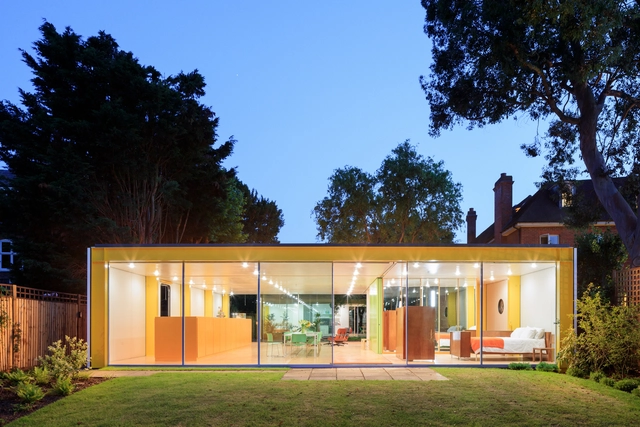
Harvard Graduate School of Design (GSD) has announced the six recipients of their 2018 Richard Rogers Fellowship program. Inspired by Lord Richard Rogers’ “commitment to cross-disciplinary investigation and engagement,” the Fellowship established last year to support individuals “whose research will be enhanced by access to London’s extraordinary institutions, libraries, practices, professionals, and other unique resources.”
The six winners will be given the opportunity to live and research at the Wimbledon House in London, which was designed by Rogers for his parents in the late 1960s. In 2015, Rogers gifted the home to Harvard for Fellowship use. This year’s winners will receive a three-month residency as well as travel expenses to London and $10,000 cash.
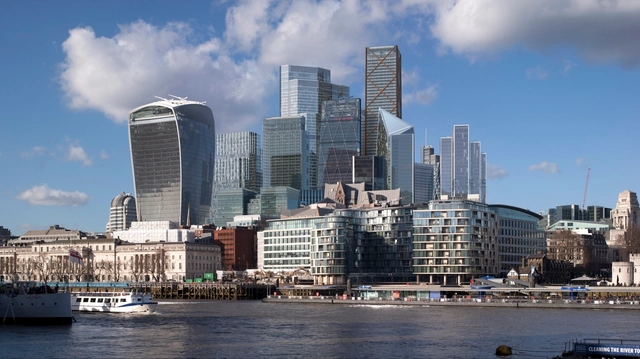
View from City Hall. Image Courtesy of City of London
The City of London has released new visualizations showing how its fast-changing skyline will look by 2026, as 13 schemes are currently under construction or due to begin construction in London’s Financial District.
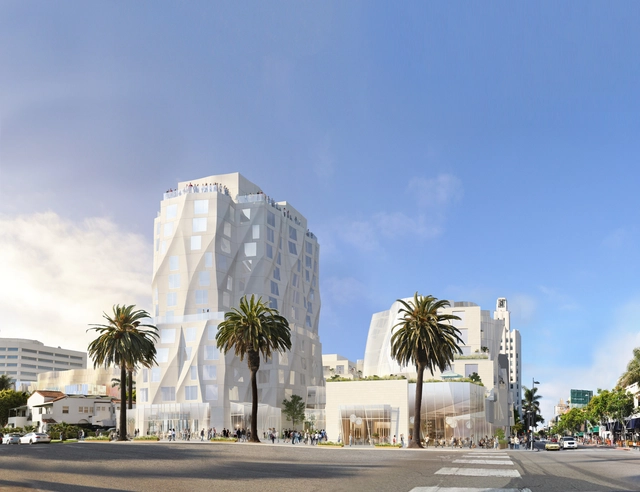
Originally conceived as as 22-story hotel and residential tower, the project has now been shortened to 12 stories (130 feet) to meet restrictions imposed by the city’s Downtown Community Plan, which calls for “aggressively slow growth” and a “lower scale downtown” of mainly 4-5 story tall buildings.
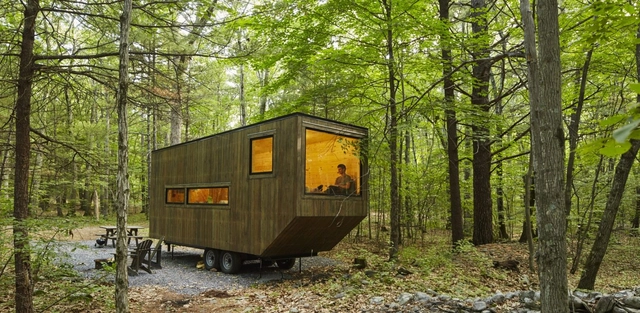
The tiny house movement is taking the housing market by storm, with small homes appearing all over rural and urban areas across the world. They are an affordable and eco-conscious solution to the narrowing housing supply and can offer mobility to an increasing population of young professionals. Tiny houses come in many forms and sizes—from micro-apartments and office spaces, to cabins on wheels and trailers. Similarly, the financing models vary, depending on function, local building codes, size requirements and whether they’re made as commercial products or private housing solutions.
The best option is to design and build the house yourself, using savings instead of worrying about interest rates and debt. Some tiny house manufacturers offer in-house payment solutions to their customers. Other options are RV loans, peer-to-peer lending and crowdfunding. We assembled a list of 5 beautiful tiny houses built for different purposes.
https://www.archdaily.com/886620/5-very-different-ways-to-finance-the-construction-of-tiny-housesLidija Grozdanic for Archipreneur.com
“As soon as we were able to get into the space we wrote the entire menu in basically a day. It was being in the building itself that had this creative charge about it,” said chef Jordan Kahn.
At LA chef Jordan Kahn’s new fine dining adventure, it was the architecture which informed the menu.
The second edition of the workshop organized by the School of Architecture (EA) of Universidad San Sebastián (Chile) had as main guest the Spanish architect Alberto Veiga, founding partner of Barozzi / Veiga and author of projects such as the Philharmonic Hall in Szczecin and Ribera del Duero Headquarters. In addition to engaging in a series of debates with the participants of the workshop, Veiga had a public conversation with the Chilean architect Pedro Alonso (winner of the Silver Lion at the Venice Biennale 2014) and shared the studio’s work and reflections on architecture in a master lecture.
A total of 10 teams from different schools of architecture in the country came together for the 2017 version of this initiative, reaching a total of 67 participants among students and instructors. Seeking to favor the production of projects capable of promoting debate, each day of the workshop dealt with a different topic featuring guest scholars: Ernesto Silva, director of the School of Architecture (strategies), Pedro Alonso, renowned professor and researcher (arguments) and Albert Tidy, dean of the Faculty of Architecture (materialization of the project). For the closing day, on Friday, October 13, there was a joint display with the final projects produced by the different teams (which remained open to the public for the next couple of weeks), and a camaraderie activity to celebrate both the gathering of the schools and the quality of the experience and its results.
https://www.archdaily.com/886503/archetypal-landscapes-meet-the-10-projects-of-the-ea-uss-workshop-with-barozzi-veigaArchDaily Team
The new three-story building, designed by Foster + Partners, would require the demolition of the existing Yarra Building, and would change the character of Federation Square, a popular public location for gatherings and events. But before being announced, the project was already fast-tracked through the first stage of planning approval, thanks to a partnership with the city.
https://www.archdaily.com/886618/melbournites-protest-plans-for-apples-first-southern-hemisphere-flagship-store-over-secrecy-of-approval-processAD Editorial Team
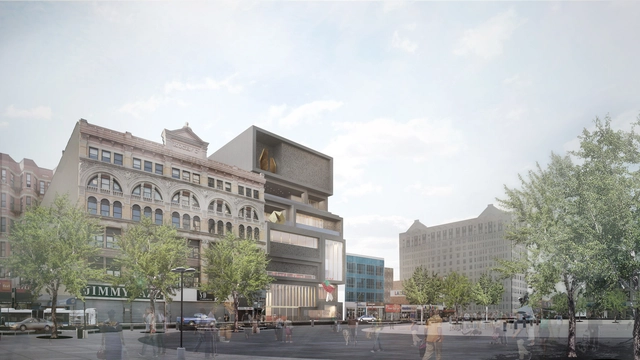
Exterior View. Image Courtesy of Adjaye Associates
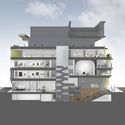
Plans for Adjaye Associates’ new home for the Studio Museum in Harlem are moving forward, as permits for the project have been filed with the city.
Replacing the museum’s current home, an existing century-old building repurposed in the 1980s by architect J. Max Bond Jr, the new building at 144 West 125th Street will rise 122 feet to become a new stand-out on the historic 125th Street Corridor.
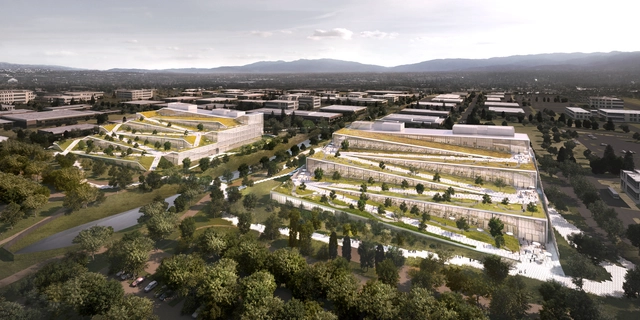
Google has unveiled plans for a new campus in the Moffett Park area of Sunnyvale, California that will be located just a few miles from its long-awaited ‘Googleplex’ headquarters in Mountain View. And just like the company’s Mountain View and London campuses in the works, the building has been designed by Bjarke Ingels Group (BIG).
Located at 100 and 200 W. Caribbean Drive, the complex will consist of two terracing buildings containing over 1 million square feet of office space and room for up to 4,500 employees.
Even with tech like virtual reality, augmented reality, 3D printing, computational design and robotics already reshaping architecture practice, the design community is just scratching the surface of the potential of new technologies. Designers who recognize this and invest in building skills and expertise to maximize the use of these tools in the future will inherently become better architects, and position themselves for entirely new career paths as our profession evolves. It is a uniquely exciting moment for architecture to advance through innovative use of technology. Even just a decade ago, designers with interests in both architecture and technology were essentially required to pursue one or the other. Now, with architecture beginning to harness the power of cutting-edge technologies, these fields are no longer mutually exclusive. Rather than choose a preferred path, today’s architects are encouraged to embrace technology to become sought-out talent.
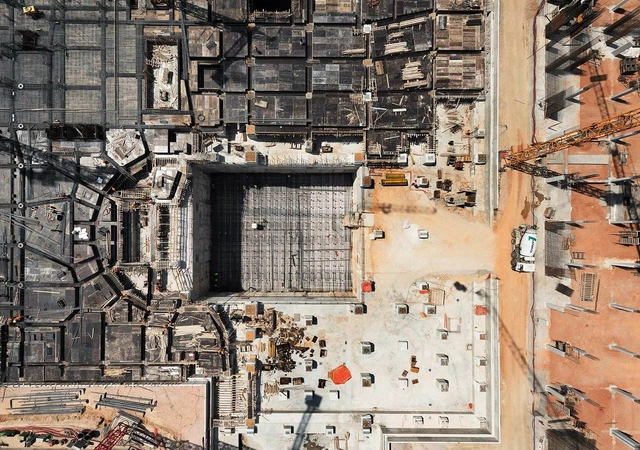
From Greek architect and photographer, Yiorgis Yerolymbos comes a book which captures the construction process of Renzo Piano’s Stavros Niarchos Foundation Cultural Centre in Athens, Greece. Yerolymbos carefully documented every moment where the superfluous Olympic parking lot became a cultural center and sloping park with waterfront views. For almost a decade, and from every angle, the photographer watched the site transform. Birds-eye imagery proved to be some of the most captivating. As photographs, they manage to possess the characteristics of an architectural drawing.
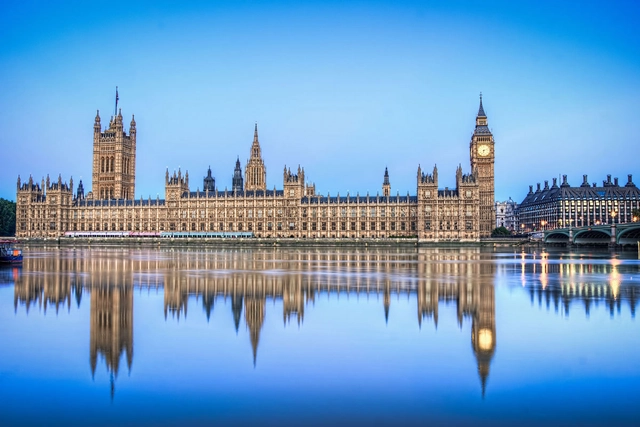
For those who want to become a citizen of the UK, they must fulfill all the citizenship process requirements which include passing the seemingly difficult Life in the UK Test. Many of the British population themselves would struggle with some of the questions posed despite living in the UK from birth as they demand historical, geographical and literary knowledge.
The test contains 24 multiple choice questions that can cover anything from the British political system all the way to Glastonbury and a roast beef dinner. As architecture and art take up a large part of British culture, knowledge of such topics is considered necessary for anyone who wants to become a UK citizen. Have a go yourself, and see how well you know British architecture:







.jpg?1515170830)
.jpg?1515171598 "© Bahaa Ghoussainy")
.jpg?1515171343 "© Bahaa Ghoussainy")
.jpg?1515170657 "© Bahaa Ghoussainy")
.jpg?1515171187 "© Bahaa Ghoussainy")








.jpg?1515101128)