Danish Architecture

  1. ArchDaily
  2. Countries
  3. Denmark

Latest projects in Denmark

Latest news in Denmark

Kengo Kuma & Associates’ Water Culture House to Open in Copenhagen on December 5, 2026

Audio available

Designed by Kengo Kuma & Associates in collaboration with Cornelius Vöge Atelier for Architecture and Vilhelm Lauritzen Architects, KAI Water Culture House is set to open on December 5, 2026, on Papirøen (Paper Island) in Copenhagen, Denmark. The 5,800 m² public facility combines ten indoor and outdoor pools, wellness facilities, cultural spaces, and access to Copenhagen Harbour. Comprising five brick towers above a glazed base, the project brings together swimming, recreation, and cultural programming as part of the ongoing transformation of the city's waterfront.

From Hiding to Civic Presence: How Wastewater Plants Entered the City

Audio available

When London's main drainage was completed north of the Thames in 1868, the Metropolitan Board of Works marked the occasion with a banquet held inside a sewage pumping station. Abbey Mills had been built over the previous three years by the engineer Joseph Bazalgette, working with the architect Charles Driver, laid out on a cruciform plan with eight beam engines, two on each arm. Its style has been read as Byzantine, Italian Medieval, Russian, Ruskinian Gothic and Moorish, and its twin ventilation chimneys, richly ornamented, rose more than sixty meters. The builder called it an elegant structure in a swamp and thought it might pass for a mosque or a temple.

Urban Agoras: How Skateparks Can Give Public Space Back to the City

Audio available

Created by California surfers who wanted to bring the lines of surfing onto asphalt, skateboarding soon outgrew its role as a simple alternative for flat days. It established itself as a practice that reads the city through a different logic, reinterpreting steps, handrails, walls, and interstitial spaces as possible lines, challenges, and opportunities. Over time, it evolved into a global urban culture, a way of inhabiting and transforming public space through movement. What was once marginal has become a catalyst for community building and new uses for overlooked spaces. At its core, skateboarding reveals how many cities coexist within the same city, depending on who moves through them and how each person is able to reinterpret their surroundings.

The Copenhagen Architecture Biennial Announces Theme and Dates for Its Second Edition

Audio available

The origins of the Copenhagen Architecture Biennial trace back to the establishment of the CAFx yearly festival in 2014, which was renamed Copenhagen Architecture Forum in 2024 to lead new projects focused on architecture and urbanism, such as the shift from festival to biennial, with a first edition in 2025. Today, the details of the second edition are being announced: it will take place from September 9 to October 15, 2027, under the theme "Elements." After the Biennial's inaugural call to Slow Down, the event is turning its attention to the planetary elemental forces that architecture has sought to master and prepare to inhabit, questioning one of modernity's most persistent promises: control over the environment. Activities will be dedicated to and organized around each of the four elements: fire, earth, air, and water, including an open call for pavilions, exhibitions, and a symposium.

Danish Architecture Center Celebrates Urbanist Jan Gehl's 90th Birthday with a Calendar of Activities and an Exhibition

Audio available

For the second year running, Copenhagen was named the world's most livable city in the 2026 Economist Intelligence Unit's Global Liveability Index. According to the Danish Architecture Center, part of this progress in urban quality of life is due to the work of Danish architect and urban planner Jan Gehl, who celebrates his 90th birthday this year. Jan Gehl has dedicated his professional career to the field of city life and people-centered urban development, founding Gehl Architects (now Gehl Studio) in 2000 and publishing extensively on urban design methodologies to create lively, healthy, and human-centric urban environments. In honor of his birthday, the Danish Architecture Center is presenting an exhibition and a series of activities centered on the role he has played in urban development worldwide.

Stories as a Resource: How Narrative Design Builds Resilience

Audio available

This article is part of "Thresholds", a special edition printed newspaper by Cobe Notes x ArchDaily.

There are two unique things about being human that made us survive the early years and spread over the whole planet: sweating and storytelling. Sweating helps cool down the body when running long distances. Stories help us collaborate in big numbers and share knowledge across groups and generations. As architects, we still rely on the same tools to make visions become reality.

SAGA Space Architects and 3DCP Group Complete 36-Unit 3D-Printed Student Village in Denmark

Audio available

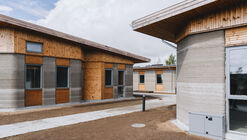
3DCP Group has completed Skovsporet, a 3D-printed student housing development in Holstebro, Denmark, designed by SAGA Space Architects in collaboration with MS+. Located near VIA University College, the project comprises 36 ground-level apartments distributed across six building clusters, covering a total area of 1,650 square meters. Constructed over 12 months, Skovsporet applies large-scale 3D concrete printing at the scale of a residential development, combining printed structural elements with conventional construction methods. The project was developed for NordVestBO and is scheduled to receive its first students this month.

World’s Most Liveable Cities in 2026: Copenhagen Holds First Place as Asia Rises

Audio available

Global city rankings offer one way of looking at how urban environments support everyday life. The Economist Intelligence Unit's (EIU) Global Liveability Index evaluates 173 cities across stability, healthcare, culture and environment, education, and infrastructure, highlighting both long-term patterns and changes from one year to the next. In the 2026 edition, Copenhagen has been named the world's most liveable city for the second consecutive year, followed by Vienna and Melbourne. The Danish capital scored 98 out of 100 overall, receiving perfect scores in stability, education, and infrastructure. The global average remains unchanged at 76.1, with improvements in healthcare, education, and infrastructure offsetting continued declines in stability.

AART Wins Competition for Underground Royal Treasury at Rosenborg Castle in Copenhagen

Audio available

Danish architecture practice AART has won the international competition for Rigets Skatkammer (The Royal Treasury), a new 1,300-square-meter underground extension to the museum at Rosenborg Castle in Copenhagen. Developed in collaboration with VEGA Landskab, Fogh & Følner, and Artelia, the proposal places approximately 600 square meters of new exhibition space beneath the historic moat, while partially re-establishing the water surrounding Christian IV's Renaissance castle. The project is intended to provide new visitor facilities and exhibition spaces for the Royal Danish Collection, which includes the Danish Crown Jewels and historic costume collections and currently attracts more than 500,000 visitors annually.

MAD’s Shenzhen Bay Culture Square and Dorte Mandrup’s PLACE Exhibition: This Week’s Review

Audio available

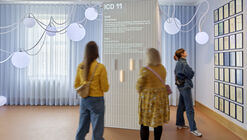
This week, architecture's relationship with culture took center stage through exhibitions, public projects, and new cultural infrastructure that extend architectural discourse beyond the building itself. While major exhibitions from Australia, Shanghai, Barcelona, and Copenhagen examined themes of housing, landscape, and place through research and design, newly unveiled projects in China and Italy demonstrate how museums, performance venues, and mixed-use projects are increasingly conceived as open public landscapes rather than isolated institutions, while new exhibitions and construction milestones reflect ongoing experimentation in adaptive reuse, context-responsive design, and flexible urban environments.