Rory Stott

Former ArchDaily's Managing Editor. BA in Architecture from Newcastle University, and interested in how overlooked elements of architectural culture —from the media to competitions to procurement processes can alter the designs we end up with.

BROWSE ALL FROM THIS AUTHOR HERE
↓

Is There a 'Perfect' Density for Cities?

In a compelling opinion piece on the Guardian, Lloyd Alter argues that our current obsession with increasing the density of our cities - mostly by building ever-taller skyscrapers - might be severely misguided. Alter believes that, without tall buildings, cities can achieve a "Goldilocks Density" - just dense enough to support lively streets, but not so dense that they become inhabitable. You can read the full article here.

Subscriber Access

Rodrigo Nino: In Defense of Crowdsourcing and Crowdfunding

Rodrigo Nino: In Defense of Crowdsourcing and Crowdfunding - Image 4 of 4
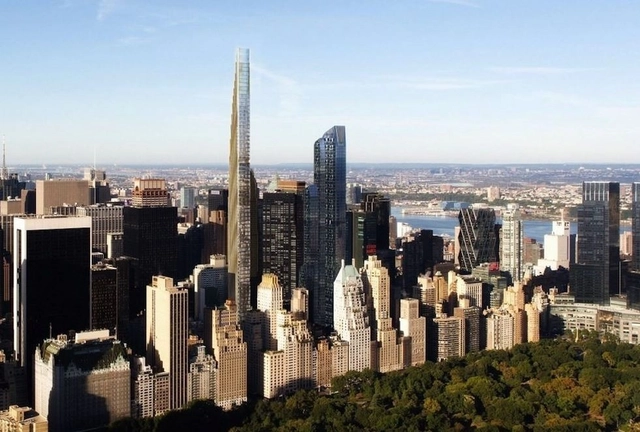
The 17John Building in New York. Image Courtesy of Prodigy Network

As both crowdsourcing and crowdfunding gather momentum in the architecture world, they also gather criticism. The crowdsourcing design website Arcbazar, for example, has recently attracted critics who label it as “the worst thing to happen to architecture since the internet started.” A few months ago, I myself strongly criticized the 17John apartment-hotel in New York for stretching the definition of "crowdfunding" to the point where it lost validity, essentially becoming a meaningless buzzword.

In response to this criticism, I spoke to Rodrigo Nino, the founder of Prodigy Network, the company behind 17 John, who offered to counter my argument. Read on after the break for his take on the benefits of tapping into the 'wisdom of crowds.'

AD Round Up: The Photography of Iwan Baan

AD Round Up: The Photography of Iwan Baan - Featured Image
Torre David in Caracas, Venezuela. Image © Iwan Baan, Image courtesy of Perry Rubenstein Gallery

After reading this great profile in the Wall Street Journal, we thought now would be a great time to round-up the iconic shots of "the Indiana Jones of Architecture Photography", Iwan Baan. From his first commission, documenting the construction of OMA's CCTV Headquarters, to projects such as Herzog & de Meuron's VitraHaus, he has brought us some of the most enduring images in contemporary architecture. But he is also known for certain trademarks: taking time for lesser-known humanitarian projects, such as MASS Design Group's Butaro Doctors' Housing; focusing on human interaction with buildings, as seen in his photographs of the Torre David in Caracas for the Venice Biennale in 2012; and his penchant for helicopter shots - which resulted in the stunning photo of Manhattan in the aftermath of Hurricane Sandy (read the story behind the shot here).

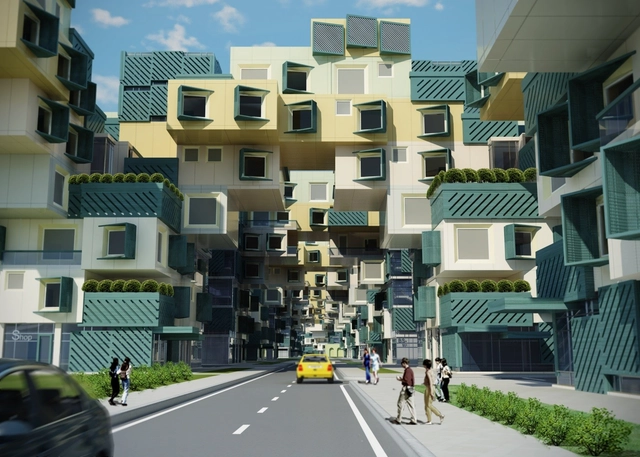
UN-Habitat Announces Winners of Mass Housing Competition

A universal problem facing cities worldwide today is mass social housing. This issue manifests differently in different places: in some cases, housing built on modernist principles has proven unsustainable and socially problematic; in others, the challenge is to replace informal construction with safe, universal housing schemes -- without repeating the mistakes of modernism.

To address these issues, UN Habitat launched a student competition in September to provide designs for local, specific social housing solutions for cities around the globe. We've collected the winners in the overall competition, as well as some of our favorites from the 6 regional and 38 national winners, after the break.

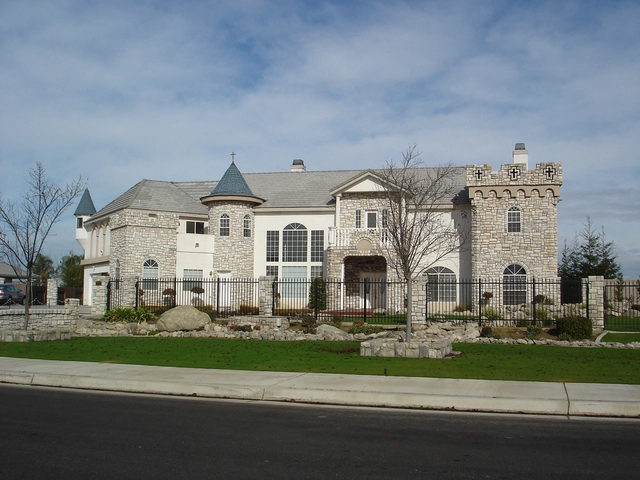
McMansions: The Ultimate Symbol of American Inequality

In this fascinating post for Salon, Thomas Frank holds nothing back on the topic of so-called "McMansions". Charting their history from the 1980s to today, he reveals the economics and government policies which made them possible, concluding that they are not just a symptom of the inequality in modern US society, but the very cause of it: "Everything we do seems designed to make this thing possible... This stupendous, staring banality is the final outcome for which we have sacrificed everything else." You can read the full article here.

How Kiev's Independence Square Helped Spur an Uprising

In a fascinating article for the Guardian, Owen Hatherley visits Maidan Nezalezhnosti (Independence Square) in Kiev, the public square at the heart of the Ukranian revolution that ironically was designed under Stalin as a Baron Hausmann-style weapon against uprisings. Hatherley examines how elements of the public space were utilized by protesters, and how different areas of the square are now hosting a variety of political factions. You can read the full article here.
Applications Now Open for ManTownHuman's Summer School

Building on the success of their first Winter school in 2010, ManTownHuman's "Critical Subjects" school returns this summer. The week-long event that will serve as a platform to debate vital architectural questions as diverse as "what is 'nature'?"; "whatever happened to the avant garde?"; and "what is architecture for?" Applications are currently open - 30 of the UK's keenest architecture students will be chosen for their critical and innovative thought.

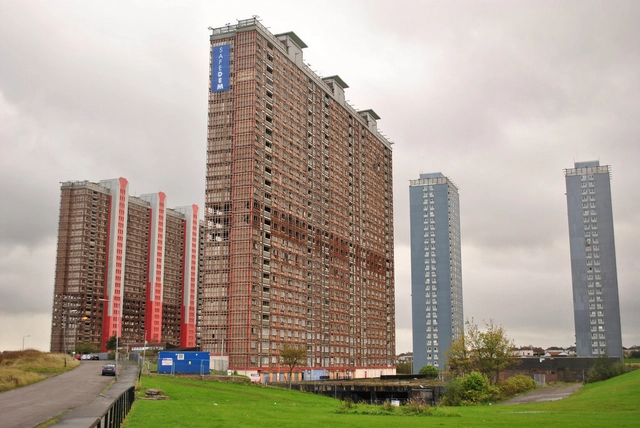
Glasgow Scraps Plan for Europe's Largest Demolition

UPDATE: The Guardian reports that the plans to demolish the Red Road Flats during the Commonwealth Games have been scrapped due to concerns over public safety. The following news was originally published as "Glasgow to Demolish Iconic Modern Towers in Europe's Largest Demolition" on April 10th, 2014.

To mark the arrival of the Commonwealth Games in July, Glasgow is planning a twist on the usual opening ceremony: the customary fireworks are going to be replaced with explosives of an altogether different kind, as the demolition of all but one of the remaining Red Road Flats buildings will be broadcast live into the stadium.

The demolition of the five 30-story buildings will take 15 seconds and will be the largest ever attempted in Europe, according to the organizers. According to Games Organizer Eileen Gallagher, including the demolition as part of the opening ceremony shows that Glasgow is "a city that is proud of its history but doesn't stand still, a city that is constantly regenerating, renewing and re-inventing itself."

Subscriber Access

Prisons and Human Rights Violations: What Can Architects Do?

Originally published by the Architectural Review as "Discipline and Punish: the Architecture of Human Rights", this article by the founder of Architects Designers and Planners for Social Responsibility Raphael Sperry outlines how prison design in the US and elsewhere is violating fundamental human rights, and how some architects have come to be complicit in these designs.

We think of architectural regulations as being there to ensure that buildings are safe for the public. But what if a building’s harm is not caused by unexpected structural failure but by the building performing exactly as intended? Can a building designed to facilitate human rights violations amount to a violation in itself? And what is the responsibility of the architects involved? These are the questions at the centre of the current debate in America around the architectural profession’s involvement in prison design.

Read on for more on the ethics of prison design after the break

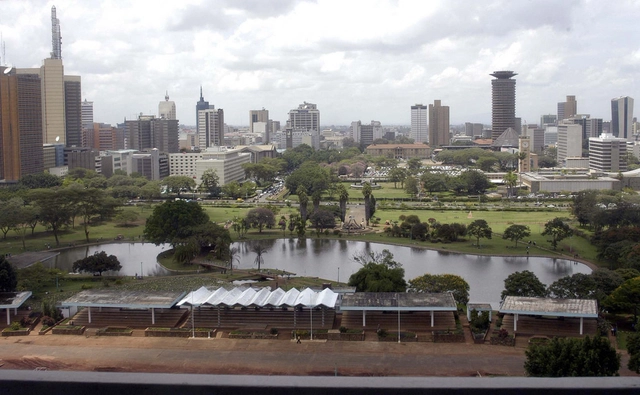
Chinese to Build "Dubai 2.0" in Kenya

As reported by Kenya's Daily Nation newspaper, a group of Chinese investors has revealed plans for a new city in Kenya that will "match the splendour of Dubai". Though the investors are still resolving details with the Kenyan government, the city is planned for an area in Athi River, around 30km south-east of Nairobi, and is billed as a Chinese-controlled economic zone. At this early stage, the plans feature at least 20 skyscrapers. You can find more details of the proposal here.

Subscriber Access

The Depreciating Value of Form in the Age of Digital Fabrication

In this article, originally appearing on the Australian Design Review as "Tolerance and Customisation: a Question of Value", Michael Parsons argues that the complex forms made possible by digital fabrication may soon be victims of their own popularity, losing their intrinsic value as they become more common and the skill required to make them decreases.

The idea of tolerance in architecture has become a popular point of discussion due to the recent mainstreaming of digital fabrication. The improvements in digital fabrication methods are allowing for two major advancements: firstly, the idea of reducing the tolerance required in construction to a minimum (and ultimately zero) and secondly, mass customisation as a physical reality. Digital fabrication has made the broad-brushstroke approach to fabrication tolerance obsolete and now allows for unique elements and tolerance specific to each element. The accuracy that digital fabrication affords the designer, allows for the creation of more complex forms with greater ease and control. So far, this has had great and far reaching implications for design.

Read on to find out how this ease of form-making could diminish the success of complex forms. 

Subscriber Access

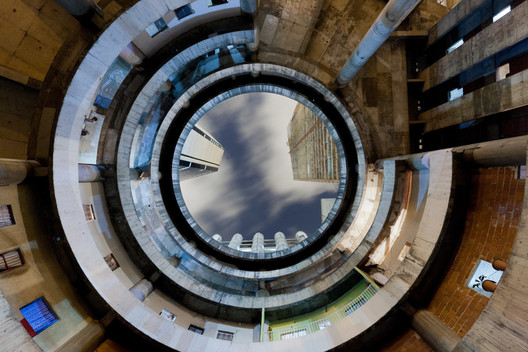
Inside Johannesburg's Infamous Ponte City Tower

The history of Johannesburg's Ponte City Apartments is a provocative one: built in 1975 and designed by Manfred Hermer as the height of luxurious (white-only) living in South Africa, the continent's tallest residential building soon became a notorious vertical slum, filled with crime and poverty, its signature hollow core re-purposed as a trash dump and a suicide drop.

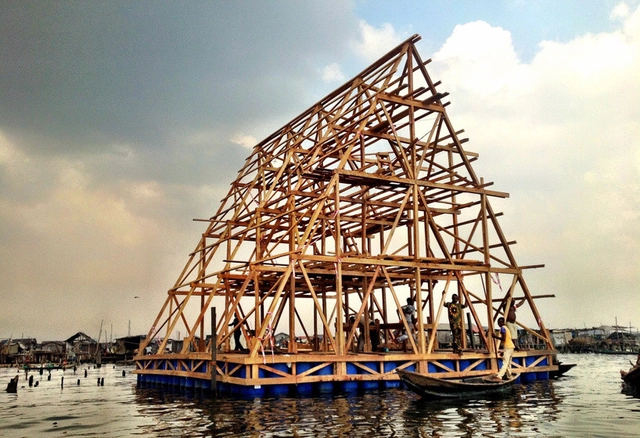
Round-Up: Floating Architecture

If a Ted Talk by Koen Olthius, this article in the Guardian, and Brazil's pioneering plan (currently in the pipeline) are anything to go by, now may be the time for futuristic, floating cities to become a reality. With that in mind, we've taken the opportunity to gather the best examples of floating architecture already constructed, including: a low-cost floating school in Lagos; an entire floating neighborhood in Ijburg, Amsterdam; a trio of cultural buildings in Seoul's Han River; a set of hotels in a remote area of Cisnes, Chile; and finally a beautiful home on Lake Union in Seattle. Enjoy!

Designing for Sound In Our Everyday Spaces

In this interesting article in the New York Times, Allison Arieff highlights the often unconsidered importance of sound in architecture (outside of theaters and museums at least). She profiles the work of Acoustic Engineers at ARUP who have begun to work inschools and hospitals, taking into account the effects poor sound environments can have on us in our everyday lives. You can read the full article here.
Subscriber Access

Inside the Cool Offices of Manhattan's Tech Companies

With an emphasis on collaborative environments, relaxing atmospheres, and quirky branding, it's always interesting to take a peek into the offices of tech companies, often found in the sprawling, multi-colored campuses of Silicon Valley. But how does this particular brand of interior design transfer to the more cramped spaces of a Manhattan office block? This video by Internet Week NY takes us behind the scenes at Tumblr, About.com and Fueled Collective to find out.

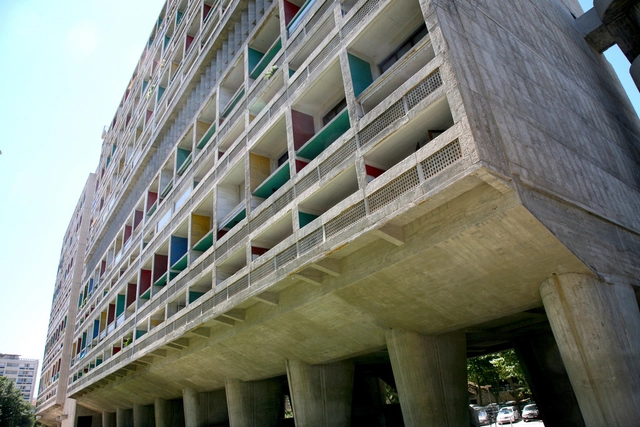
Venice Biennale 2014: French Pavilion to Debate Modernism's Successes and Failures

With Le Corbusier casting a long shadow over the last century of France's architectural history, it is not surprising that, faced with Rem Koolhaas's theme of 'absorbing modernity' at the 2014 Venice Biennale, the country might have a unique reaction.

Jean-Louis Cohen's initial proposal for the French Pavilion, titled "Modernity: Promise or Menace?" reflects this history: “since 1914 France has not so much 'absorbed' modernity as it has shaped it with significant contributions made by French architects and engineers in order to meet the requirements of different segments of society. As is the case in many countries, modernity has had to come face to face with social reform and by doing so it has made great dreams such as quality housing and community services for all partially come to fruition. But this encounter has come about in a original way, also generating considerable anxiety.”

Read on after the break for more about the themes explored by the French Pavilion

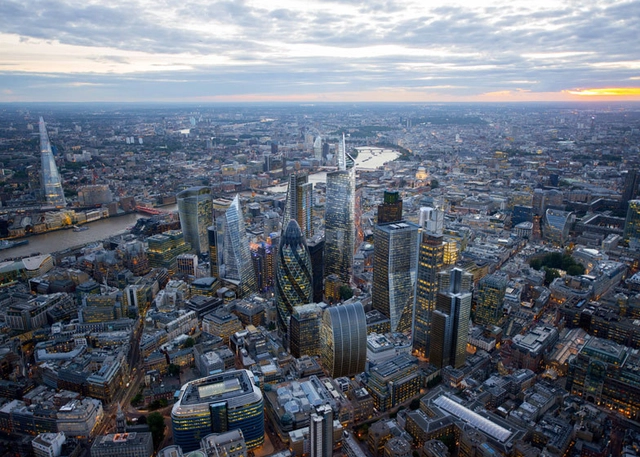
The Battle for the Skies Over London

In response to the recent study by New London Architecture, which found that there are currently over 230 tall buildings either planned or under construction in London, an argument is brewing over the UK capital's sudden, seemingly uncontrolled, growth.

The most vocal reaction to all of this has come from Rowan Moore, architecture critic for The Observer, who has teamed up with the Architects' Journal to launch a campaign calling for more rigorous planning and public consultation when it comes to tall buildings. The campaign has support from 80 signatories, a list that reads like a 'who's who' of British architecture, including architects, planners, politicians, developers and artists as well as a range of civic societies.

Read on for more reaction to London's tall building boom.

Farrell's Architecture Review: 60 Ways to Improve the UK

After a year of gathering evidence and consultation, Sir Terry Farrell's review of UK architecture has finally been released. The review, commissioned by Culture Minister Ed Vaizey, includes 60 proposals to improve the quality of the UK's built environment, targeting a wide range of groups including education, planning, government and developers.

Vaizey has urged everyone involved in the construction industry to get behind the report, saying that it "needs to kick-start a national debate" in order to achieve its aims.

Read on for some of the recommendations from the report