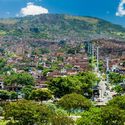
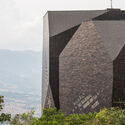
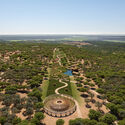
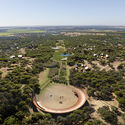
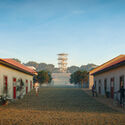
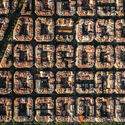
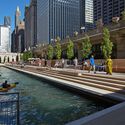
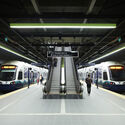
The Museum of Temporal Delight. This image was created, in Midjourney, using 7 language prompts and a few small refinements.. Image Courtesy of John Marx/ Form4 Architecture
Since their introduction to the wider public, artificial intelligence technologies seem prone to change the working landscape for professionals across all fields, and architecture and urban planning are no different. While many fear their negative impact, AI technologies can also be viewed as a different set of tools in the arsenal of architects and designers. As revolutionary as they are, there is a plethora of applications and platforms being developed not to replace, but to aid, offload repetitive tasks, and help visualize ideas or large data sets, all to provide a basis for the architect’s decision-making process.
Cuaderno de surcos / ji arquitectos + Blas Antón. Image Courtesy of Concéntrico
From April 25th to May 1st, 2024, in the Spanish city of Logroño, Concéntrico prepares for its 10th anniversary edition. Envisioned as a contemplation of changing urban environments and an opportunity to share insights about these processes, this year’s International Festival of Architecture and Design incorporates new formats to engage a wider audience and explore time as a catalyst for change in urban and social design. The festival expands its program, featuring 21 installations by designers of 20 different nationalities, in addition to several other initiatives and explorations.
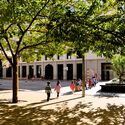
I am by no means an expert on public-private partnerships. But for about 10 years, as the University of California Berkeley’s campus planner and then campus architect, I watched these developments play out in higher education—sometimes from a front-row seat, sometimes as a participant. During that time, this strategy, promoted with great enthusiasm and optimism, was touted as the answer to whatever problem arose. And yet the definition of a public-private partnership was slippery. The concept itself seemed to be all things for all people, depending on what was needed, who was recommending it, and what equivalents (if any) existed outside the university. The bandwagon continues to play today, making it ever more important to nail down the pros and cons of this development strategy, not only for colleges and universities, but for all public decision-making.
https://www.archdaily.com/1015830/are-for-profit-developments-consistent-with-the-values-of-a-public-universityEmily B. Marthinsen
Airbnb has undoubtedly disrupted the hospitality industry, inspiring an ecosystem of companies leveraging the sharing economy such as co-living startups. While these companies have achieved impressive financial success, they have been purported to produce problematic effects at the scale of the city. Airbnb, in particular, is alleged to have driven an increase in rental prices in cities already grappling with housing affordability challenges. Much like the case of Uber's impact on urban mobility, Airbnb's rapid growth has caused significant challenges for local governments, demanding comprehensive regulation and a re-evaluation of its functioning at the city scale.
“The Mindfulness City will be a sustainable city. To be mindful is to be aware — to perform best,” said Giulia Frittoli, partner and head of landscape at BIG. The Kingdom of Bhutan is a landlocked Buddhist country in the eastern Himalayas, nestled between China and India. It covers 14,000 square miles and has a population of nearly 800,000.
The Royal Office of Bhutan asked BIG, Arup, and Cistri to develop a plan for a new Mindfulness City in Gelephu in southern Bhutan, near the border with India. The city will span 386 square miles and include a new international airport, railway connections, hydroelectric dam, university, spiritual center, and public spaces.
CityMakers, The Global Community of Architects Who Learn from Exemplary Cities and Their Makers, is working with Archdaily to publish a series of articles about Barcelona, Medellin, and Rotterdam. The authors are the architects, urban planners, and/or strategists behind the projects that have transformed these three cities and are studied in the "Schools of Cities" and "Documentary Courses" made by CityMakers. On this occasion, Victor Restrepo, Coordinator of CityMakers in Medellin, presents his article "Medellin: A Case Study".
Medellín stands as an inspiring example for many cities worldwide. It is a city that transitioned from deep collective fear to hopeful enthusiasm for urban and social life characterized by quality and coexistence. The city's crisis has always been associated with violence and drug trafficking. However, this crisis is more structural and profound, it responds to many more factors, some of which are associated with the accelerated growth of its population, as in many Latin American cities.
In collaboration with MassLab, OODA has been awarded first place in the Barrosinha Agricultural Company competition, aimed at creating a 2,000-hectare development seamlessly integrated into the agro-forestry heritage of Alcácer do Sal, Portugal. The master plan, covering a variety of functions for tourism, housing, commerce, and leisure, is designed in harmony with the United Nations Sustainable Development Goals, striving to transform Herdade da Barrosinha into a model of sustainable renewal.
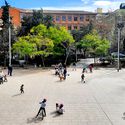
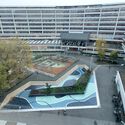
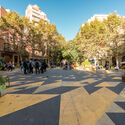
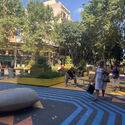
CityMakers, The Global Community of Architects Who Learn from Exemplary Cities and Their Makers, is working with Archdaily to publish a series of articles about Barcelona, Medellin, and Rotterdam. The authors are the architects, urban planners, and/or strategists behind the projects that have transformed these three cities and are studied in the "Schools of Cities" and "Documentary Courses" made by CityMakers. On this occasion, Jaume Barnada, coordinator of the award-winning Climate Shelters project in Barcelona schools and speaker at the "Schools of Cities", presents his article "Barcelona, the public place as a synonym for the adaptation of the built city."
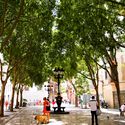
Cities are dense, built spaces in which pavements have been efficiently imposed on the natural soil. Cities like Barcelona have almost 75% of the land paved and waterproof. Without a doubt, it is an excess to reverse at a time of climate emergency, where we must reconnect with nature. Oriol Bohigas [1] told us that good urbanization had paved the squares of Mediterranean cities and that no one wanted to live in a mudhole. I'm sure he was right. Also, he taught us that the green and, consequently, the natural soil had to have dimension and especially an urban position. Squares are squares and parks are parks, and each space has a type of project. Today, concepts are too frequently confused when urbanizing public places and consequently, we find projects that blur the model.
Al Khuwair Muscat Downtown - ZHA . Image Courtesy of Oman Ministry of Housing and Urban Planning
Zaha Hadid Architects have unveiled a large-scale project for the redevelopment of the Al Khuwair waterfront in downtown Muscat, the capital of Oman. The $1.3bn project covers an area of 3.3 million square meters. It aims to revitalize the area through sustainability-led design principles to accommodate the expected population growth, which is expected to almost double by 2040. The plans are developed in collaboration with Buro Happold to incorporate and transform the existing buildings on site, introduce coastal and climate resilience measures, and create an efficient transit-oriented infrastructure.
Comuna 13 of Medellín_via Shutterstock. Image Courtesy of CityMakers
CityMakers, The Global Community of Architects Learning from Model Cities and Their Makers is working with Archdaily to publish a series of articles about Barcelona, Medellin, and Rotterdam. The authors are the architects, urban planners, and/or strategists behind the projects that have transformed these three cities and are known in the "Schools of Cities" and "Documentary Courses" made by CityMakers.
There is currently a broad consensus on the importance of public space in the city. Although it may seem quite logical, its significance is not as old as human settlements, which have existed for millennia. The Athens Charter, written just 91 years ago, did not speak so much about the city as a place to live but as a functional machine. Almost a century later, the paradigm has shifted: the city is, above all, its public space. But what happens when public space is threatened by car proliferation, insecurity, or even water?
Los Angeles Aerial. Image via trekandshoot / Shutterstock
Cities in the United States are short of millions of housing units. Compounded by other factors, this shortage is radically increasing the cost of both renting and buying houses. Los Angeles is no exception; with 74% of its land zoned exclusively for single-family homes, multifamily housing construction is limited to an extremely small swath of the city, making the construction of new affordable housing difficult. Complex multi-year permit approval processes often make these projects even less feasible.
That's why, in December 2022, Mayor Karen Bass took a drastic approach by declaring a state of emergency to speed up approval for affordable housing projects, allowing developers to expedite rent-stabilized projects through fast permitting times and exemptions from zoning rules. Executive Direction (ED1) created a surge of affordable housing applications, surprisingly not just from developers using public money but from private ones.
The Indonesian parliament has approved a bill to relocate the capital from the city of Jakarta to a completely new city to be built on the island of Borneo, 1,300 kilometers from the current capital. The decision, first announced in 2019, comes as a reaction to the myriad of challenges faced by Jakarta, including pollution, traffic congestion, and, perhaps the most threatening, rising sea waters. As a consequence of excessive groundwater extraction, rapid urbanization, and rising sea levels, 40% of the city is currently below sea level, making it increasingly difficult for the infrastructure to protect the residents. President Joko Widodo proposes an alternative: relocating the administrative center of the country to a new green metropolis, to be named Nunsantara, meaning ‘archipelago’ in ancient Javanese.
During the period 1925–1975, Danish society underwent significant changes. As a result, the architects were called upon to help shape the daily lives of the citizens in modern Denmark. The role of women was also changing, following the 1915 constitutional amendment that gave women the right to vote. In the following years, the first generations of women completed their educations within the design disciplines. During 1925-1975, women have had an important, if other overlooked impact, shaping the everyday environment by designing and reimagining kitchens, public buildings, housing, landscapes, and urban areas, among other things.
The Women in Danish Architecture project aims to offer a more complete understanding of Danish architecture history and to present it in a more engaging and inclusive way. The aim is to contribute to an understanding of architectural history as not created by great individuals but through mutual and creative collaborations. The project is anchored in the Section for Landscape Architecture and Planning at the Department of Geosciences and Natural Resource Management, University of Copenhagen.
Urban mobility in the United States has seen a radical transformation with the introduction of ridesharing services in the late 2000s. The widespread adoption of services such as Uber and Lyft has altered the way citizens move around cities, offering convenience, flexibility, and accessibility like never before. The innovative business model that excels at designing for individual users failed to foresee larger implications at the scale of the city - congestion, public transit systems, and car ownership. While European countries such as Brussels have pledged to encourage public transportation to curb traffic congestion issues, American cities hunt for solutions of their own.
The project for implementing a fourth metro line in the Greek capital began in 2021, with the purpose of reducing the need for automobiles in the crowded city. As the 15-station new line is estimated to transport 340,000 passengers a day, up to 53,000 cars could be taken off the roads each day. While the opening of the line may be five years away, work has now begun to refurbish seven urban squares which will become stations. Despite public support for the initiative, the project has also led to some controversy, with residents fearing gentrification.
Living in cities built on geographical slopes is a unique and challenging experience. While these areas can offer panoramic views and impressive landscapes, the steep topography presents a series of challenges in terms of urban planning, structural safety, and socio-environmental risks. These cities require special care and solutions in the design of streets, buildings, and infrastructure, as well as an understanding that, for reasons of environmental safety and population well-being, not all areas should be occupied.
When Brenda Mendoza told an NPR reporter about her commute to work, she became the face of the housing crisis in Los Angeles today. Mendoza, a uniform attendant at a Marriott hotel, was living with her family in an apartment in Koreatown, where she had grown up, 10 minutes from her job. The landlord raised the rent, so she moved to a less costly place in Downey. When that rent also rose out of reach, she moved to Apple Valley, and now gets up at 3:30 a.m. to drive 100 miles to her job, dropping off her husband and son at their jobs on the way. She did not move to Apple Valley to invest in a house she could love. She simply found an equally unstable, but slightly more affordable, rental hours from her workplace.