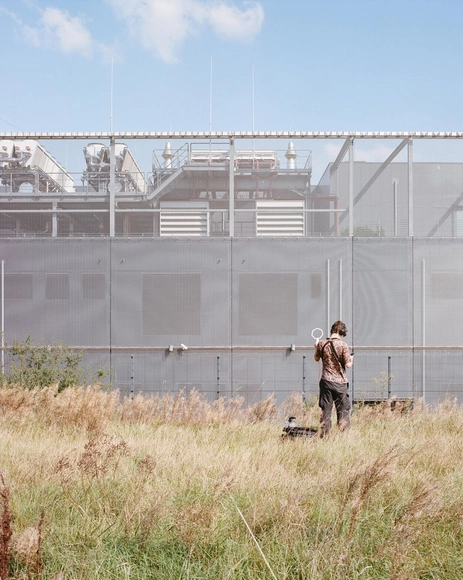
Acoustic design is often associated with permanent building elements, such as walls, roofs, ceilings, and insulation systems, which help control how sound travels through a space. However, not all noise sources or environments are permanent. A construction site changes as work progresses; machinery is replaced or relocated from one area to another; an industrial space may incorporate new equipment; and a temporary work area may emerge in a space that was never designed to accommodate it. Acoustic conditions are not static—they change over time and require solutions that can respond to these transformations. So, what happens when acoustic control becomes a flexible strategy?
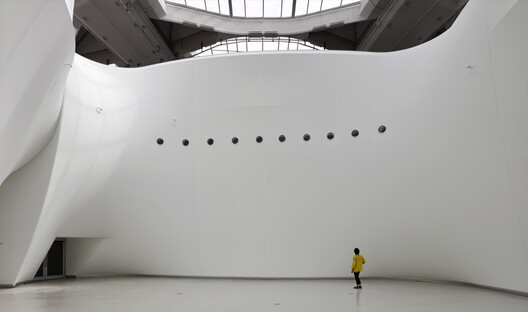
What can a textile do that glass, wood, concrete, or metal cannot? Architectural composite fabrics don't replace conventional building materials. Instead, they can complement them and often add another layer of performance to the building envelope. Their application changes with context. A composite membrane can become an exterior shading system for a tropical conservatory, an interior skin that shapes acoustics and spatial experience in a museum, or part of a facade strategy that improves the environmental performance of an existing building.
What defines the atmosphere of a home? Beyond material palettes and natural light, sound plays a defining role in how spaces are perceived and inhabited. The reverberation of footsteps across stone, the muted calm of a textile-lined room, or the way music carries through an open-plan interior all shape the sensory identity of domestic space. Architecture is experienced not only visually, but acoustically.
The concept of the "soundscape" describes this relationship between people, sound, and the built environment. In residential architecture, sound is more than background noise or technical performance; it influences privacy, concentration, rest, and emotional comfort. Geometry and materiality act as the primary acoustic conductors: while concrete, glass, and stone reflect and amplify, timber and upholstery soften and absorb. Ceiling heights, circulation paths, and room proportions further shape how sound travels and settles across a space.
For most of human history, night arrived as a planetary certainty. Darkness spread across landscapes, and the sky revealed thousands of stars. Today, that sky is disappearing. Artificial light spills upward from cities, scattering through the atmosphere and turning night into a permanent haze. Research mapping global sky brightness shows that more than 80 percent of humanity now lives under light-polluted skies, and the Milky Way has vanished from view for over a third of the world's population. The disappearance of dark skies is usually discussed within astronomy, but the sources of that change are deeply embedded in the built environment. Buildings emit light, reflect it through glass façades, and extend illumination far beyond their walls. In the technosphere, the vast system of infrastructures and materials humans have constructed, architecture now shapes both physical space and the sensory conditions surrounding it.
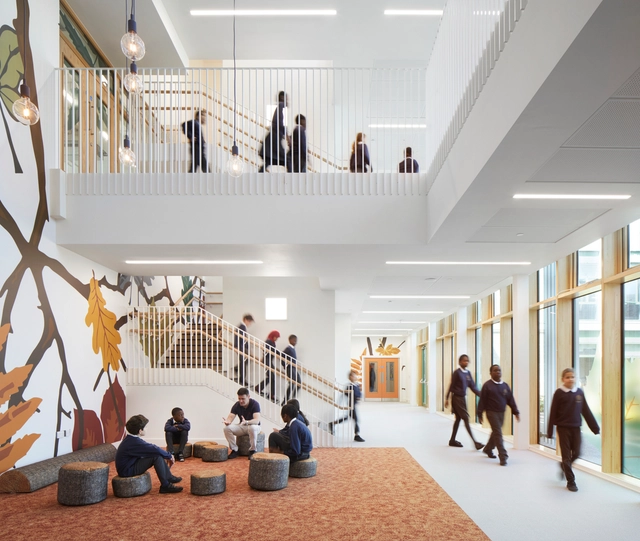
Does design guide usage, or does usage guide design? Students struggle to maintain focus, employees flinch under harsh lighting, and occupants withdraw from rigid spaces, often in response to environmental conditions that only become visible once a space is occupied. Light falling across a room, the resonance of sound, the texture of surfaces, or the rhythm of circulation can support focus, calm, or inspire creativity, but each can also inadvertently heighten stress and distraction. Architects and designers are exploring and questioning: how are design decisions informed, and whose knowledge is considered essential in shaping space?
The internal environment is the focus of this second article about designing for noise to improve well-being. According to several recent studies, noise in cities has become an increasing hazard to health. Environmental noise, that is, noise from traffic, industrial activities, or amplified music, which reaches internal spaces, is not merely an annoyance. It has been linked to cardiovascular disease, diabetes, dementia, and mental health issues. As the world urbanizes, more people are exposed to excessive levels of noise. In medium- and high-density housing, in office buildings, and in schools, noise pollution can emanate from internal as well as external sources.
According to several recent studies, noise in cities has become an increasing hazard to health. Environmental noise, that is, noise from traffic, industrial activities, or amplified music, which reaches internal spaces, is not merely an annoyance. It has been linked to cardiovascular disease, diabetes, dementia, and mental health. As the world urbanizes, more people are exposed to excessive levels of noise. How can urban design and architectural strategies help to prevent this?
Videos
Courtesy of Katia Sei Fong, Ken Sei Fong, Luis Sei Fong
The national exhibition of Uruguay at the 2025 Venice Architecture Biennale, titled "53.86% Uruguay, Land of Water," explores the intrinsic relationship between architecture, territory, and water. Curated by architects Katia Sei Fong and Ken Sei Fong, along with visual artist Luis Sei Fong, the exhibition proposes that we may be entering the age of water, the "Hydrocene", and that the way humanity manages and conserves this resource will shape its future. In this context, the project highlights that Uruguay's maritime territory (53.86%) is larger than its land territory. Water, therefore, is not only a natural resource but a fundamental element of the country's history and culture, essential to its development.
The Luxembourg pavilion at the 19th Venice Architecture Biennale will offer visitors an experience focused entirely on sound. Sonic Investigations, curated by architects Valentin Bansac, Mike Fritsch, and Alice Loumeau, is an immersive invitation to shift focus from the visual to the sonic. The sound installation, located in the Arsenale's Sale d'Armi, is based on a practical and theoretical investigation that re-examines the country's territory through field recordings capturing a range of sounds from biological, geological, and anthropogenic sources woven into the landscape. The installation creates an embodied experience of space, emphasizing the value of sensorial approaches in spatial practices and exploring the question: How can we reveal the entangled character of specific contemporary situations in Luxembourg?
The Swiss Arts Council Pro Helvetia, represented by Sandi Paucic and Rachele Giudici Legittimo, has announced that the Swiss Pavilion at the Venice Architecture Biennale 2025 will host the exhibition "The final form is determined by the architect on site," curated by Elena Chiavi, Kathrin Füglister, Amy Perkins, Axelle Stiefel, and Myriam Uzor. This all-female team poses the question: What if Lisbeth Sachs, rather than Bruno Giacometti, had designed the Swiss Pavilion? The exhibition will explore this question by reviving one of the iconic works of Lisbeth Sachs, one of the first registered female architects in Switzerland and a contemporary of Giacometti.
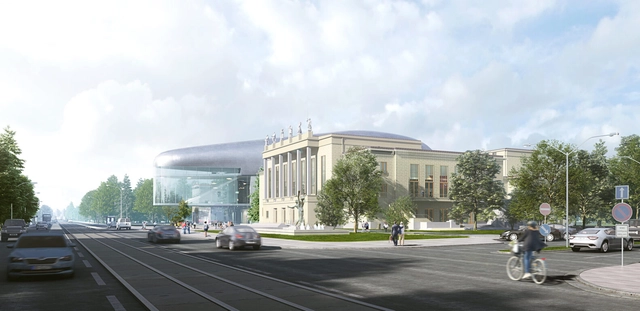
Ostrava Concert Hall . Image Courtesy of Steven Holl Architects
The Ostrava Concert Hall, designed by Steven Holl Architects, has just broken ground in the Czech Republic. Commemorating the start of construction, the concert hall “promises to be an inspiring venue for both locals and internationals who cherish Ostrava’s rich music heritage.” Designed for the Janacek Philharmonic Orchestra, it creates a dramatic contrast between old and new, aiming to create a cultural landmark.
Heatherwick Studio has just won the global competition to transform Seoul’s uninhabited Nodeul Island on the Han River into a lively public park. Titled “Soundscape,” the winning project “creates a trail of dramatic spaces on different levels that can host musical performances and artistic interventions.” Situated within a green and biodiverse landscape, the design echoes Seoul's mountainous terrain and the patterns of sound waves.
Finnish architect Juhani Pallasmaa once said that "architecture is essentially an extension of nature into the man-made realm, providing the ground for perception and the horizon of experiencing and understanding the world."
In the constant hustle and bustle of the modern surroundings, it is more than needed to take a step back and listen to the sounds of something as calmly powerful as nature. Moreover, listening to the beautiful harmonies created by birds chirping and sound waves can make our inner voice louder as well.
What is the role of sound and acoustics in the work of leading architecture practices? In February this year, reSITE and MAAT in collaboration with Meyer Sound hosted RESONATE: Thinking Sound and Space, a conference focused exclusively on the intersection of architecture and sound.
RESONATE A Conference on Architecture, Art and Sound by MAAT and reSITE in collaboration with Meyer Sound
MAAT Museum and reSITE partner on a Conference on Architecture, Art and Sound and will bring world’s best creators of sound spaces and acoustic experiences to Lisbon. During a one-day international event in collaboration with Berkeley, California’s Meyer Sound, we will be thinking about sound and space with architects of the most fascinating contemporary music and culture venues and designers of intriguing sound environments. Artist-led tours, innovative technologies, demonstrations and performances will be part of the event, on top of keynote lectures and discussions with editors from leading global media. Early Bird registrations are open until January 15 for this one-of-a-kind event for architects, artists, engineers and anyone interested in how sound interacts with architecture.
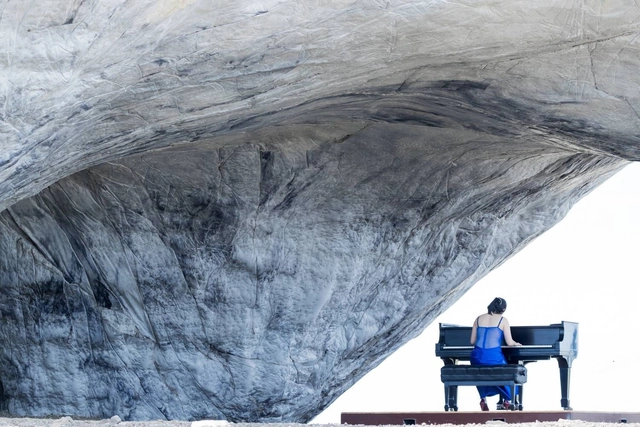
Jenny Chen performing under Domo at the Tippet Rise Art Center, 2016. Design by Ensamble Studio (Anton Garcia-Abril and Debora Mesa). Photograph by Iwan Baan.
With Argeo Ascani, Anne Guthrie, Zev Greenfield, Margaret Anne Schedel, Elaine Sisman, Emily Thompson, and Peter Zuspan
Progeny is an International Collaborative Project, featuring the work of Luke Aaron Clark (UK) and Bryce Hammond (USA). The exhibition focuses on an immersive architectural sound installation modeled after a Langstroth Beehive. There are ten partitions covered in acoustic paneling, with 48 microphones, 9 intelligent microphones and 36 speakers that transmit every single sound originated in the space.
Buildings and cityscapes – or the lack thereof – change the way we hear significantly. Acousticians and acoustic engineers are often hired to solve problems with sound leakage, but few people consider the difference between a shout across a city block and the same shout down a closed hallway. In this video, the differences in sound quality in various environments are compared, as the “Wikisinger” performs the same song in 15 places.
Cycling between places like a cathedral, a field in front of oil naves, a concrete tunnel, an abandoned attic and a silence chamber, the acoustic differences between each space are made clear as the song reverberates or lands flatly against the walls surrounding it. Splicing and augmenting the different sounds of each place, the singer creates a kind of orchestra of architecture, inviting listeners to take a second to hear the buildings around them.