In architectural discourse, much is discussed regarding the influence of the site where a building is situated, whether through the incorporation of surrounding elements during the design process, or through the negation or overcoming of its undesirable characteristics. Some situations make this negotiation more evident than others, especially when the natural environment is dominant. In these cases, one constantly observes the tension between natural preexistence and human intervention, as well as the possible ways to achieve harmony between the two.
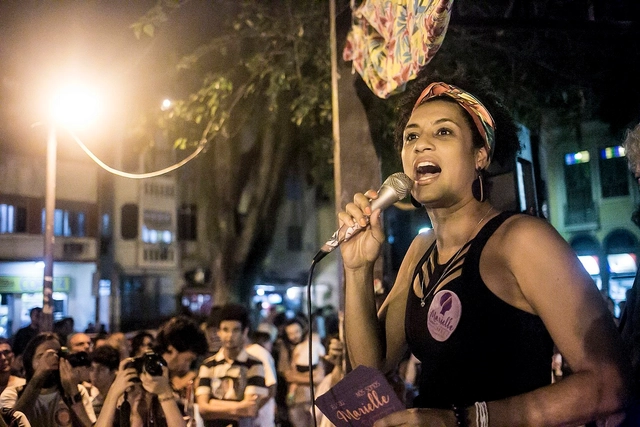
Today marks one year since the brutal assassination of Rio de Janeiro sociologist and city councilwoman Marielle Franco. The week before her death, Marielle took part in a series of debates organized by CAU/RJ called "Architecture - Feminine Noun," aimed at strengthening mobilizations for International Women's Day.
https://www.archdaily.com/1122060/watch-marielle-franco-in-the-debate-architecture-feminine-nounPedro Vada
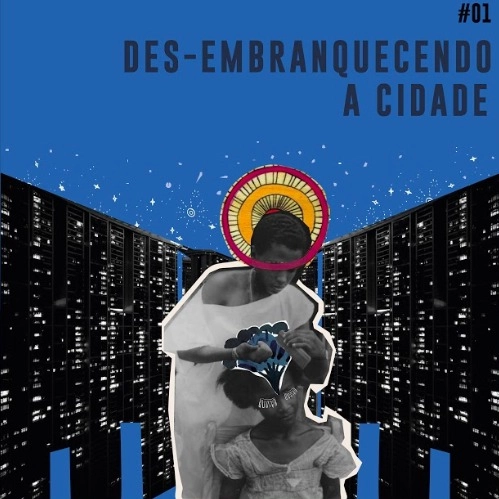
The “De-whitening the City” Podcast is a space invented from the desire of five Black women residing in Salvador, São Paulo, Rio de Janeiro, and Belo Horizonte to circumvent geographic distance in order to foster and celebrate connection. Emmily Leandro, Gabriela Gaia, Luciana Mayrink, Malu de Barros, and Natalia Alves make up the Terra Preta collective, giving shape and voice to this exercise in creating a shared virtual territory—both a political and aesthetic commitment—now made public for the first time.
https://www.archdaily.com/1122076/de-whitening-the-cityTerra Preta Cidade
Projeto Tercer Sonido, Madri, Espanha. Image Cortesia de CicloVivo
C40 Cities, a global coalition of cities, launched a competition to select the best solutions for transforming underutilized urban spaces into resilient, carbon-neutral developments. Named Reinventing Cities, the competition selected 15 innovative ideas poised to "reinvent" the future of cities.
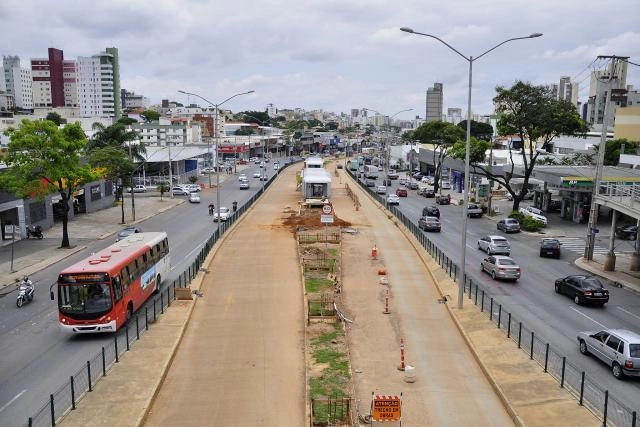
Accessibility is still a challenge for Belo Horizonte's BRT. In the image, the system is still under construction. Photo: Mariana Gil/WRI Brasil
Improving public transit requires close attention not only to vehicles and routes, but to how people access and exit them. All too often, urban planning fails to account for the diverse needs of all individuals and how they navigate a transit system.
https://www.archdaily.com/1121928/a-section-of-belo-horizontes-brt-highlights-the-importance-of-accessibilityPaula Manoela dos Santos
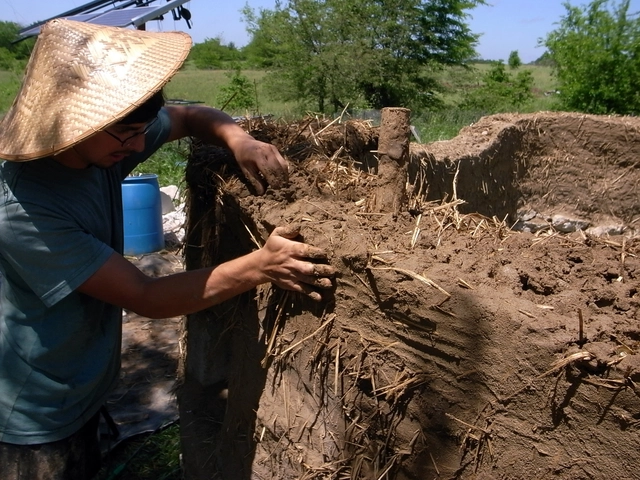
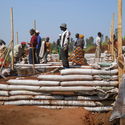
Bioconstruction refers to a building process utilizing materials and techniques with low environmental impact, alongside adapting architecture to local conditions and managing waste during the building's lifecycle. Consequently, building according to these principles does not necessarily mean using so-called sustainable materials—which often must be transported over long distances or undergo prefabrication before use—but rather utilizing local materials, techniques, and labor, drawing on vernacular strategies that address these very factors.
From revitalizing degraded green spaces to hosting collaborative games, events, and workshops, there are numerous volunteer initiatives capable of transforming a city's landscape and the lives of its residents.
In addition to serving as vital forms of social participation, community collectives and volunteer-driven initiatives facilitate dialogue between public authorities and local communities. This collaboration yields numerous benefits, particularly in reshaping how we interact with our cities.
Architects, urbanists, and students in the field have much to learn from the construction models of the first inhabitants of the Brazilian territory, who have long built shelters adapted to their local contexts. Establishing a common set of characteristics for indigenous architectural solutions proves to be a highly superficial approach, as the shapes and dimensions of indigenous ocas or malocas vary depending on the community and the number of people living there. However, by studying the diverse examples of indigenous architecture, it is possible to rethink the notion of “advanced technology” and assimilate sustainable solutions adapted to environmental conditions.
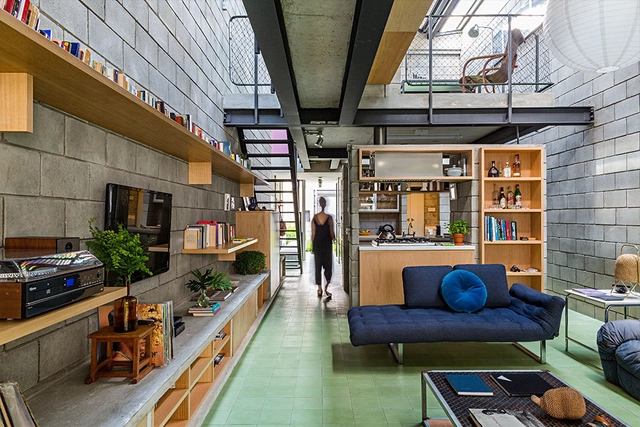
One of the constant considerations in residential design is how to divide spaces or define zones based on daily uses and dynamics without compromising the spatial quality of the building. While this exercise is inherent to architectural practice as a whole, when it comes to residential projects—particularly houses—the pursuit of comfort elements like natural light, ventilation, noise control, and privacy gains layers of complexity tied to the wide range of situations a home must accommodate.
Photography Otto Stupakoff via Felipe SS Rodrigues Archive. ImageInstituto Moreira Salles Poços de Caldas - MG, 1990
The research project Aurelio Martinez Flores: The Work of the Mexican Architect in Brazil (1960-2015) investigates the life and architectural career of Mexican architect Aurelio Martinez Flores (1929–2015) from 1960 to 2015, aligning with Latin American architectural history and the growing interest in recovering architects whose careers ran parallel to the mainstream movements in Brazil over the last several decades. Although little known, his work exerts a significant influence on one of the most successful currents of contemporary Brazilian architecture.
https://www.archdaily.com/1121711/do-you-know-the-architect-aurelio-martinez-floresFelipe SS Rodrigues
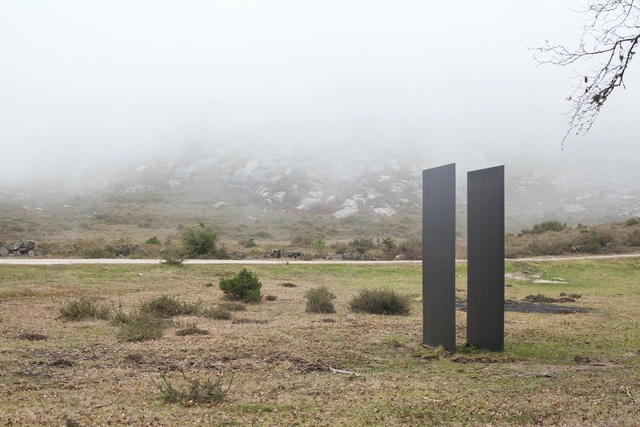
The Alto Minho region in northern Portugal had its landscape transformed by a series of site-specific artistic interventions that were part of the DESENCAMINHARTE program. The initiative aimed to promote artistic creation in the region through a collaborative network designed to foster recognition of its local identity.
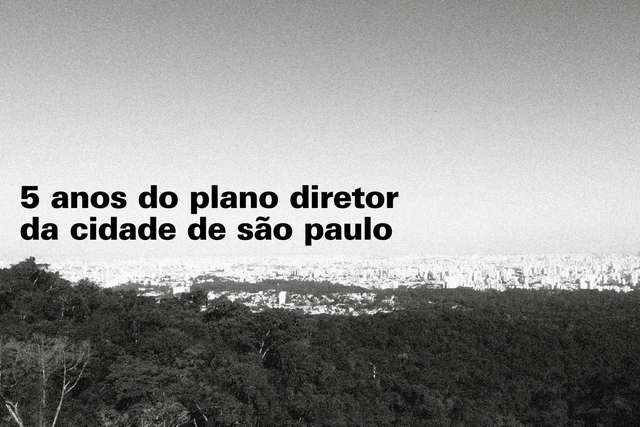
Five years ago, São Paulo approved its Master Plan, a social pact to transform the city by 2029. While a significant portion of the planned actions have been carried out or are currently underway, just as many remain on paper. Assessing this period is essential to achieving the ultimate goal of this entire process: improving the quality of life for its residents, especially those who need it most.
At least two major avenues (23 de Maio and 9 de Julho) mark the footprint of the 1932 Constitutionalist Revolution in the city. Yet, across the capital's landscape, numerous other sites evoke the memory of an armed conflict that became the defining myth of São Paulo's history, commemorated as a state holiday since 1997.
"I Saw a Brazil on TV" was the theme of the debate that, on November 8, 2018, brought together a group of architects participating in the exhibition "Infinite Span - 90 Years of Brazilian Architecture" at the Instituto Moreira Salles in São Paulo.
https://www.archdaily.com/1121655/i-saw-a-brazil-on-tv-with-jo-vasconcellos-gustavo-penna-and-francesco-perrotta-boschCasa da Arquitectura
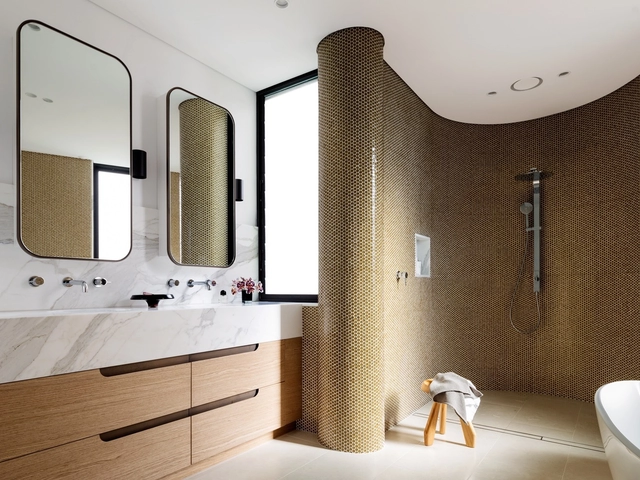
Because bathrooms are wet areas with highly specific uses, choosing floor and wall finishes can often feel daunting. In this guide, we round up some of the most widely used materials, outlining their advantages and disadvantages.
Few historical events have been as pivotal to the history of architecture and urbanism as the Industrial Revolution. To accommodate the productive framework that transformed capitalism starting in the 18th century, an entire spatial system was created. Beyond factories, this network included raw material processing plants, power generation and distribution hubs, warehouses, and transport terminals. In urban terms, this process did not merely allocate large swaths of land to industrial activities; it triggered a multisystemic transformation that reshaped how people lived, occupied, and moved within the urban environment.
https://www.archdaily.com/1122136/de-industrial-architecture-8-projects-that-redefine-the-space-of-the-machineIsabel Martin
Tamboré. Image Cortesia de Leonardo Loyolla Coelho
The formal configuration of open space systems in Brazilian cities—whether qualified or not—derives a significant contribution from private developments, since public urban planning and design have historically been the exception.
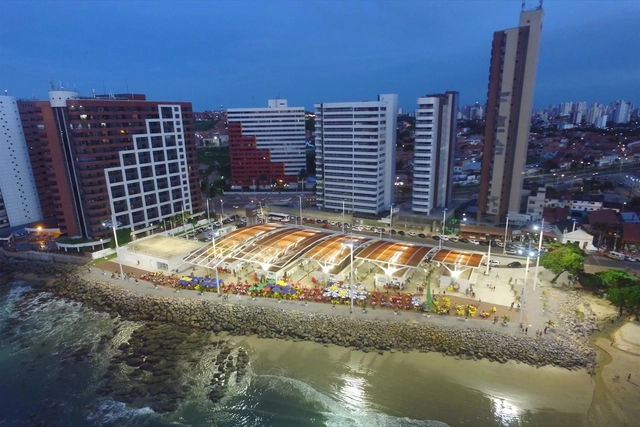
Mercado dos Peixes, Fortaleza (CE), vencedor do 10º Prêmio AsBEA de Arquitetura, na categoria Edifícios Comerciais. Projeto dos escritórios Arcosanti Arquitetura, Esdras Santos Arquitetura e Fausto Nilo Arquitetura.. Image Cortesia de CAU/BR
Architects and urban planners evaluated the services offered by CAU/BR and the state-level CAU/UFs. Out of nine services analyzed by the professionals, seven received an average score above 7 on a scale of zero to 10. These and other findings are part of the CAU Evaluation Survey conducted by the Datafolha Institute in May. The study interviewed 1,500 architects and urban planners and 500 architecture and urban planning firms by telephone to assess the effectiveness of the Council's communication channels with professionals and society, as well as to gather information to support initiatives ensuring access to the entity's information.
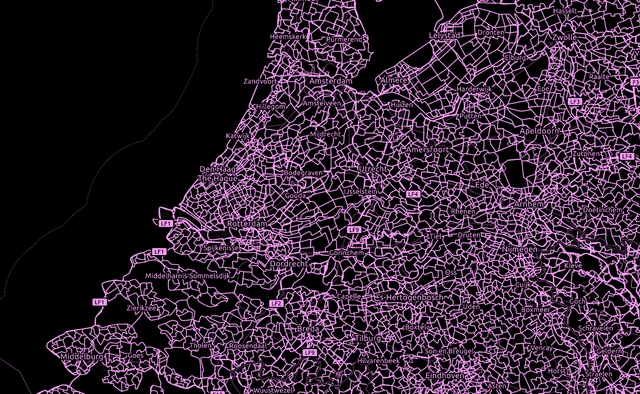
For some time now, cycling infrastructure planning has become a priority for several countries around the world seeking to seriously mitigate the challenges of rapid urbanization. In this regard, it is worth looking at which countries are expanding their cycling networks and understanding the development patterns established for each of them. OpenCycleMap is a project that makes it possible to clearly identify these countries and analyze their networks in great detail.
https://www.archdaily.com/1121824/bike-paths-of-the-world-discover-opencyclemapPedro Vada
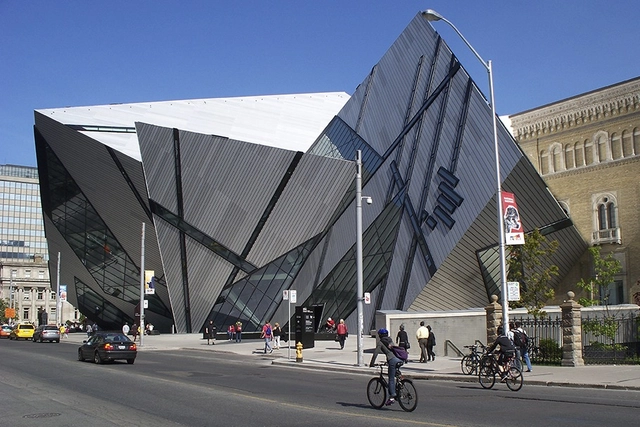
Deconstructivist architecture by Daniel Libeskind. Royal Ontario Museum, Toronto, Canada. Image: Alexandre Kozoubsky/Flickr
Modernism has ceased to exist as a movement in architecture and urbanism since at least the 1980s. In architecture, movements such as Japanese Metabolism and deconstructivism helped to move past the remnants of modern architecture. In urban planning, figures like Jane Jacobs and Christopher Alexander, as early as the 1960s, helped bury the premises of modern urbanism.
https://www.archdaily.com/1121820/after-all-why-do-we-still-talk-about-modernismPaulo Sa Vale
Acervo do grupo de pesquisa Pioneiros da Habitação Social. Image Cortesia de PC3 - Pensamento Crítico e Cidade Contemporânea
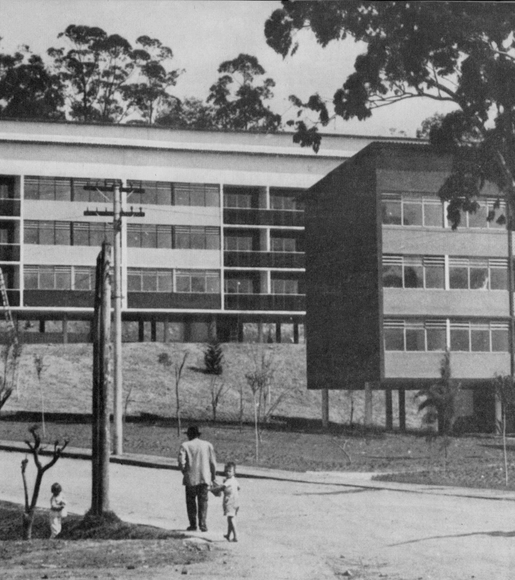
After studying civil engineering at the Escola de Minas de Ouro Preto, Carlos Frederico Ferreira returned to his native city of Rio de Janeiro and enrolled in the Escola Nacional de Belas Artes, graduating in architecture in 1935. In 1939, he was hired by the IAPI as an engineer-architect and soon rose to the position of head of the institute's Engineering Department. By 1943, having overseen the partial completion of the first major housing development, the Conjunto Residencial Operário in Realengo, he was able to begin expanding the model to other locations. The designs for Vila Guiomar in Santo André and Piratininga in Osasco, as well as the apartment building and IAPI Regional Office headquarters in Recife—all designed by him—demonstrate how, through his position, he sought to shape the direction of the institute's future developments.
https://www.archdaily.com/1121836/collective-housing-notebooks-vila-guiomar-housing-complexPC3 - Pensamento Crítico e Cidade Contemporânea
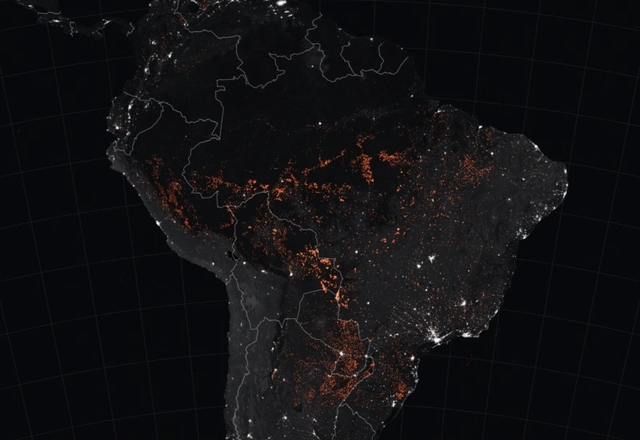
Over the past week, thousands of active fires in the Brazilian Amazon captured global attention in the press and on social media, where the hashtag #PrayForAmazonia was mentioned more than 150,000 times in a single day. But what can satellite data tell us about what is actually happening in Brazil's forests?
https://www.archdaily.com/1122027/what-maps-reveal-about-fires-in-the-amazonMikaela Weisse e Sarah Ruiz
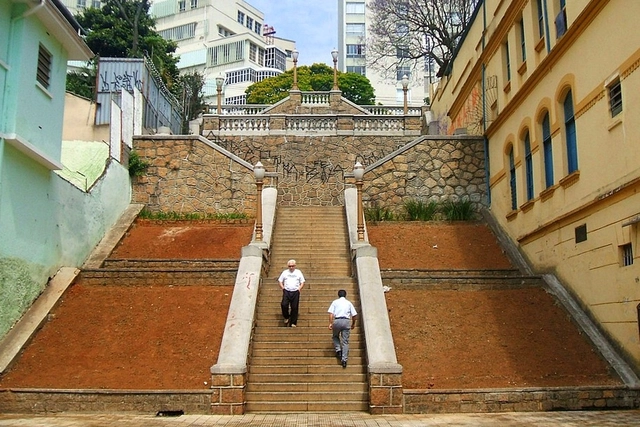
Bixiga staircase, a heritage-listed area in São Paulo. Image: Dornicke/Wikimedia
There is no doubt that preserving historical, artistic, and architectural heritage is a fundamental goal for building a just city. It is the right of all citizens, both present and future generations, to know and enjoy our collective memory and culture. However, for this to actually happen, both a discerning eye and a comprehensive vision of the city are essential.
An adequate system would be capable of collecting, storing, and treating all rainwater. Courtesy of CicloVivo
Cities that absorb rainwater and allow it to follow its natural course. It should be simple, yet we chose to channel our waterways, preventing nature from doing its part: absorbing and purifying. For Chinese architect Kongjian Yu, this is the key to solving one of the greatest challenges facing contemporary major urban centers: flooding.
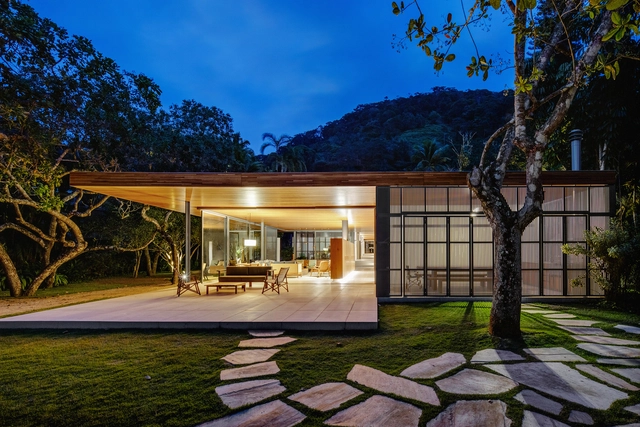
.jpg?1562845563 "House in Prumirim Beach / brro arquitetos. Image: © André Scarpa")


_(Custom).jpg?1559915700&format=webp&width=640&height=580)

.jpg?1577129635 "Catenarius / Ramiro Meyer. Image © Federico Cairoli")


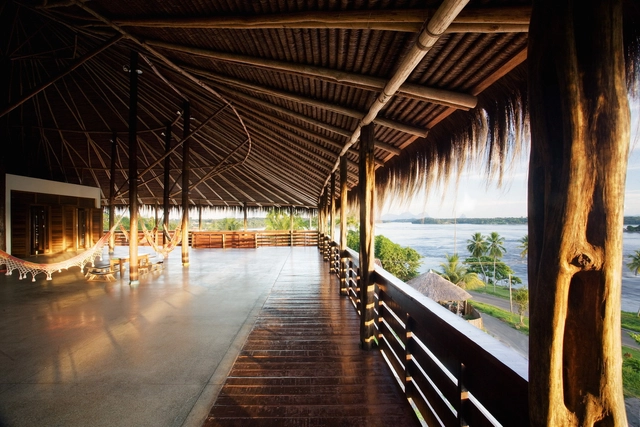


.jpg?1571925498 "Roof of the Socio-Environmental Institute - ISA / Brasil Arquitetura. © Daniel Ducci")










.jpg?1571160713&format=webp&width=640&height=580)


.jpg?1567697293&format=webp&width=640&height=580)