In the modern age of sensationalism, consumerism, and widespread fake news, it's easy to understand why we feel the need to express ourselves through memes—the abstract photographs, video clips, and gifs that are manipulated in various ways to express thoughts on certain matters or situations that are relatable to people across the globe. Memes often expound complex yet concise sentiments which, in a way, closely resemble the way that we communicate in real life.
In the world of architecture, communication is often represented through critical essays, stunning renders and photographs, and hand-drawn analytical diagrams. In fact, architecture communication as we know it has mostly been a literal representation of the thing itself: Ideas are translated into plans, sections, elevations, details, form diagrams. But with the rise of memes and abstract expressions, why aren’t we popularizing our own personal thoughts with this form of widespread social media?
As self-driven cars are being introduced to our city streets and tech companies have expanded their influence far beyond the boundaries of our computer and smartphone displays, a new generation of architects are charged with imagining how to employ the technology of tomorrow in ways that will advance and improve the world’s built environments. With autonomous transportation, virtual and augmented reality and artificial intelligence promising unprecedented tools for revolutionizing human infrastructure in a future that no longer feels particularly distant, present-day data gathering and analysis capabilities have already transformed our ability to understand trends on an unforeseen scale.
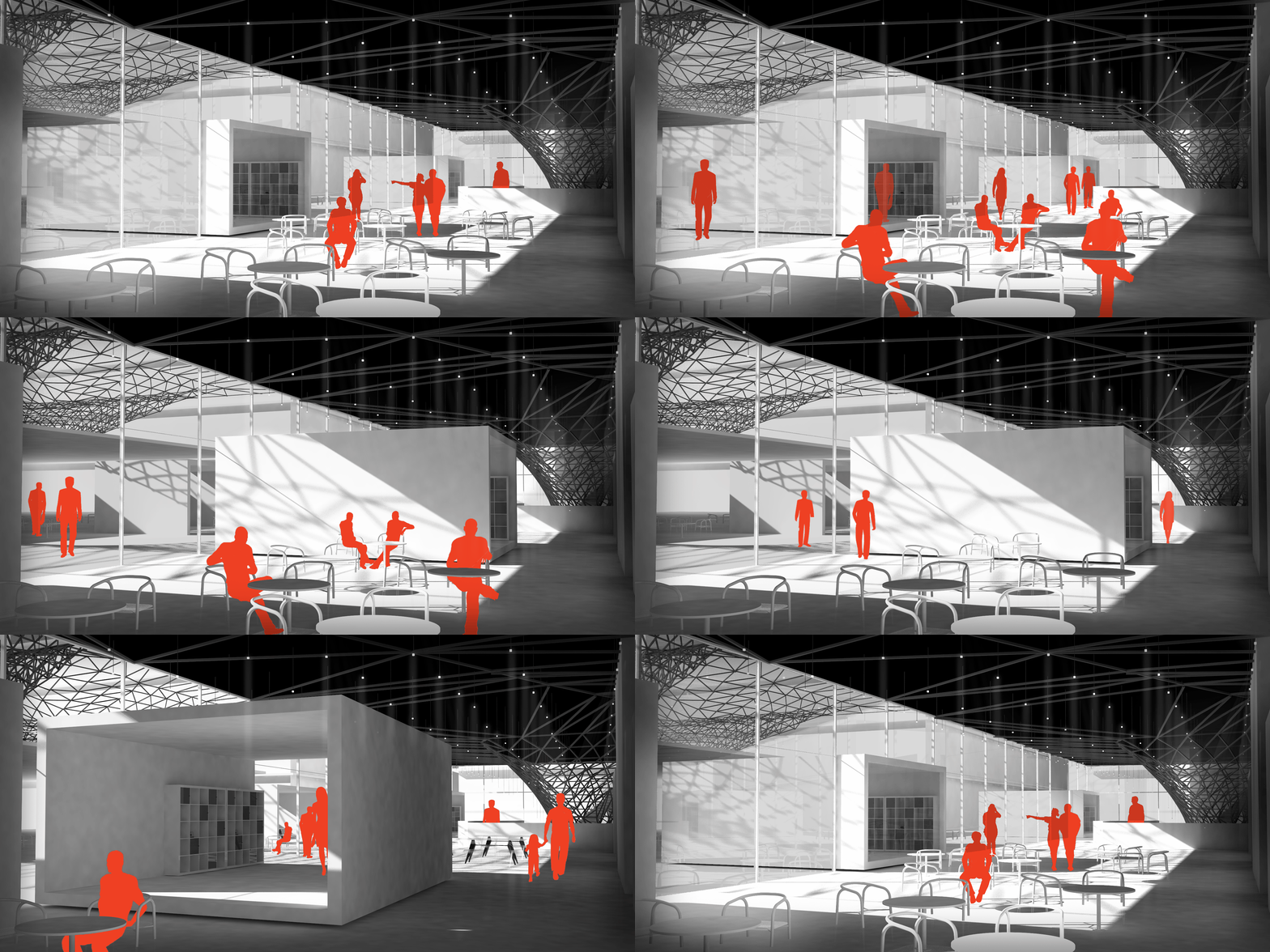
Taking full advantage of modern data science capabilities and semi-automated robotic technology currently deployed in factory settings around the world, Masters candidate Stanislas Chaillou from the Harvard GSD imagines how today’s new tech could help realize the longtime architectural ambition of creating flexible buildings capable of adapting to variable uses.
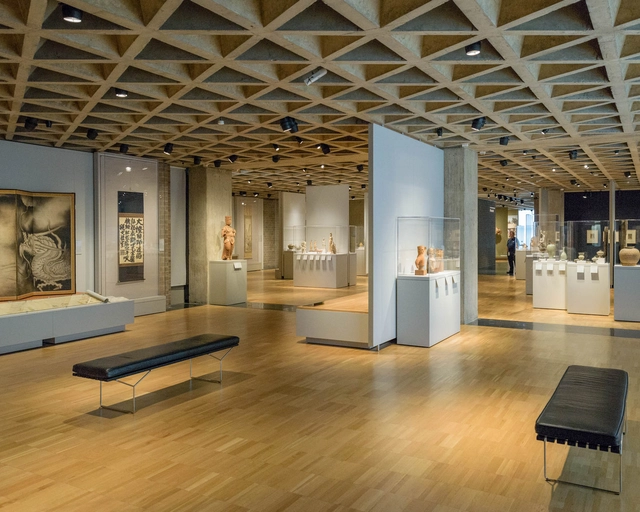
Yale University’s School of Architecture was in the midst of pedagogical upheaval when Louis Kahn joined the faculty in 1947. With skyscraper architect George Howe as dean and modernists like Kahn, Philip Johnson, and Josef Albers as lecturers, the post-war years at Yale trended away from the school’s Beaux-Arts lineage towards the avant-garde. And so, when the consolidation of the university’s art, architecture, and art history departments in 1950 demanded a new building, a modernist structure was the natural choice to concretize an instructional and stylistic departure from historicism.[1] Completed in 1953, Louis Kahn’s Yale University Art Gallery building would provide flexible gallery, classroom, and office space for the changing school; at the same time, Kahn’s first significant commission signaled a breakthrough in his own architectural career—a career now among the most celebrated of the second half of the twentieth century.
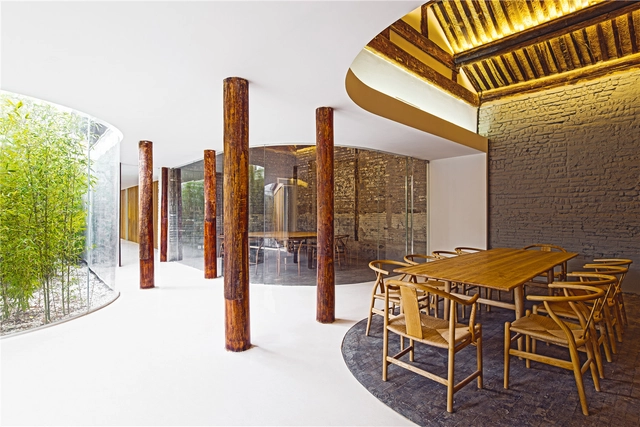
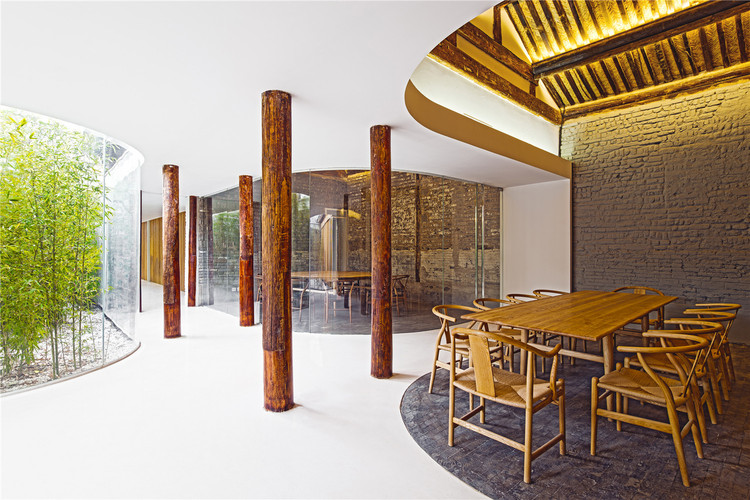
Throughout the work of Beijing-based practice ARCHSTUDIO, there is a constant feeling of sensitivity to culture and history. That is not to say that the firm’s designs are not modern—far from it in fact—but that the work of founder Han Wenqiang infuses modern materials and forms with a distinctly Chinese sensibility, that is just as apparent in his designs for a food packaging facility as it is in a Buddhist shrine (incidentally, both designs which won ArchDaily Building of the Year Awards, in 2017 and 2018 respectively). In the latest interview from his “City of Ideas” series, Vladimir Belogolovsky speaks to Han about whether architecture is an art form and what it means to create “Chinese” architecture in the 21st century.
As La Biennale prepares to open to the public this Saturday May 26, PLANE—SITE spoke to curators Yvonne Farrell and Shelley McNamara about this edition’s theme, Freespace. They move beyond architecture as an object, instead imagining Freespace as an invitation to think about architecture as a space of opportunities. Literally and metaphorically, Freespace presents environments of generosity, accessibility and freedom and celebrates the rich civic experiences that they create.
https://www.archdaily.com/895066/curators-yvonne-farrell-and-shelley-mcnamara-provide-insight-into-the-theme-of-the-2018-venice-biennaleAD Editorial Team
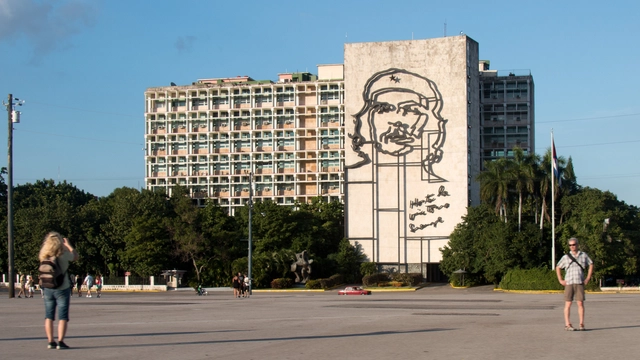
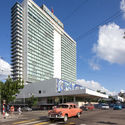
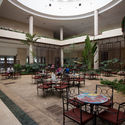
Havana is often referred to as a time machine that transports visitors to a particular moment in history, seemingly frozen in time. While it is a city that boasts an exhaustive timeline of imported styles, Havana in the present day is not defined by a singular historical era—either in its political climate or in its architectural zeitgeist.
Over the decades, the Cuban Revolution has had powerful domestic and international repercussions. In particular, it transformed Cuba’s relationship with the United States. But efforts to improve diplomatic relations have gained momentum in recent years, with the teetering lift of the embargo that exacerbated a David and Goliath situation and left a lasting economic impact on the Cuban people. Havana’s skyline has hardly altered since the fall of the Soviet Union, and the city became shut off from the rest of the world, having to rely heavily on its own resources. Today, the government in Havana occupies the gap between the last stance of post-Cold War communism, and the looming influence of Capitalism, a situation which reveals itself in the variety of distinct architectural styles. These seven sites in the island nation’s capital best explain the story about where Havana has been, and offer a prediction as to where it may head next.
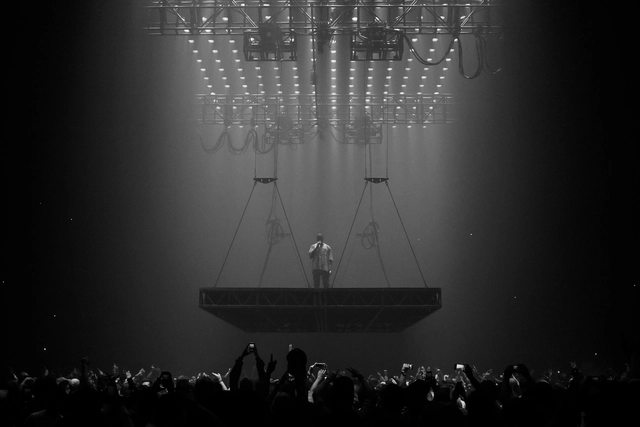
Since the publication of “Keep Talking Kanye: An Architect’s Defense of Kanye West” I have become an unwilling Kanye apologist. Each time he produces music that tempts us to use the moniker “creative genius” he quickly follows with an interview or tweet that makes him look like anything but. Invariably thereafter, a chain of text messages and emails with titles like “just to irritate you” or “come get your boy” begin to flood my inbox. My standard response is often no different from SNL’s Michael Che on Weekend Update: when presented with a headshot of Kanye and the caption “slavery was a choice” the comedian shakes his head and states simply, “Pass!” However, now that Kanye has once again entered the sphere of architectural discourse with a proposed new endeavor called “Yeezy Home” I am compelled to intervene once again with a more direct “put up or shut up” message.
Architecture's reliance on digital tools is rapidly advancing. Building Information Modeling (BIM) and augmented and virtual reality are quickly becoming the industry standard, along with more and more design businesses putting more effort and money into creating a stronger online presence. Because of this recent shift in focus, many firms have also begun experimenting with digital marketing strategies.
Content creation is at the heart of any successful online business, so what does that look like in the field of architecture? These 4 examples of content could help you begin to monetize your designs and/or practice online. By no means are these 4 examples the only means to grow a design business, but all 4 take advantage of the present trajectory of architectural practice, leveraging the possibilities of an increasingly digital world.
With its monumental form, swept diagonal lines and elevated concrete walkways, the Issam Fares Institute building at the American University of Beirut by Zaha Hadid Architects emphasizes movement, evoking the speed of contemporary life as it presides over a connecting system of pedestrian walkways. Begun in 2006 and completed in 2014, Hadid’s award-winning concrete and glass building makes a bold statement with its prominent 21-meter, two-story-tall cantilever, which creates a covered courtyard and reduces the footprint of the building to avoid blocking circulation routes. The elevated walkways carry pedestrians through the branches of huge Cypress and Ficus trees, many of which significantly predate the building at 120 to 180 years old.
A few weeks ago we published an article on a recent sustainability crisis that often goes unnoticed. The construction industry has been consuming an exorbitant amount of sand, and it's gradually depleting. When used for manufacturing concrete, glass, and other materials, it is a matter that should concern us. Construction is one of the largest producers of solid waste in the world. For instance, Brazil represents about 50% to 70% of the total solid waste produced. But how can we change this situation if most of the materials we use are not renewable, and therefore, finite?
Popularized in Europe and gradually gaining attention in the rest of the world, Cross Laminated Timber (CLT) stands out for its strength, appearance, versatility, and sustainability.
The Council on Tall Buildings and Urban Habitat (CTBUH) has recently released a new research study titled "Tallest Demolished Buildings" that examines 100 of the tallest buildings ever to have been dismantled by their owners. The report confirms that, if JPMorgan Chase continues with their plans, SOM's 270 Park Avenue in New York City would become the tallest building ever conventionally demolished, as well as the first over 200 meters in height.
The study showed that in most cases, the buildings were torn down to make way for newer high-rises, as was the case for the current tallest building ever to be demolished, the Singer Building in New York City. The Singer Building stood 187 meters and 41 stories tall until it was torn down in 1968 to make way for One Liberty Plaza.
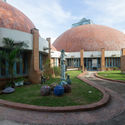
MVRDV has unveiled its vision for transforming the Communist-era “Tirana Pyramid” in Albania into a center for technology, art, and culture. Under the plans, the abandoned structure will be revitalized as a multifunctional technology education center for Tirana’s youth, with the existing dark interior becoming open, bright, and green.
The Tirana Pyramid was opened in 1988 as the Enver Hoxta Museum, designed in honor of Albania’s former communist leader. Since then, the building has transitioned into a NATO base during the Balkan Wars, a nightclub, and an event space. Though now in decay, the building remains a popular spot for young people keen to climb on its roof. As a nod to this unique appropriation, MVRDV has made the roof officially available for all visitors.
https://www.archdaily.com/894779/mvrdv-to-transform-communist-era-pyramid-into-center-for-art-and-technology-in-albaniaNiall Patrick Walsh
The way we consume long-form content has transformed drastically in recent years. More and more parts of our everyday lives are now transitioning to new digital mediums to save us time.
If you are the type of person who enjoys plugging into a good hard rock or soft jazz playlist while hammering out those 10 sheets of section details, why not simultaneously gain some knowledge about self-motivation or the latest business tactics? These 6 audiobooks could be just what you need to hear to fuel your inner entrepreneur.
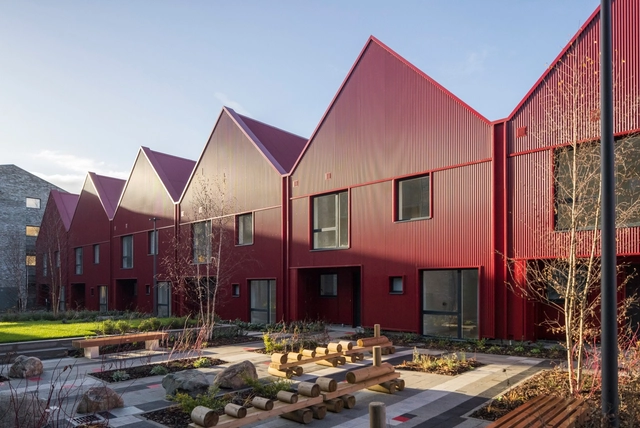
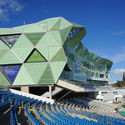
From a shortlist of 93 buildings, 61 London projects have been awarded the 2018 RIBA LondonAwards for architectural excellence, the city's most prestigious design honor. The winners include 14 housing schemes, 8 schools, and a city farm. All of these designs will be further considered for the RIBA National Awards, to be announced in June. The winners of the national award will then create a shortlist for the RIBA Stirling Prize – the highest award for architecture in the UK.
https://www.archdaily.com/894688/61-winners-announced-for-2018-riba-london-awardsNiall Patrick Walsh
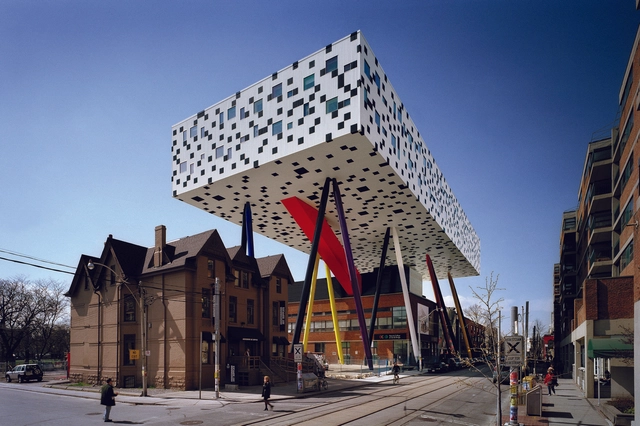
Sharp Centre for Design at the Ontario College of Art and Design, 2004. Image Courtesy of aLL Design
During my meetings with Will Alsop—two at his London studio in 2008 and 2010, and during our four-day trip to Moscow where I organized his lecture for SPEECH Magazine in winter 2011—he impressed me as having the most genuine, artistic, and free-spirited soul of all the architects I met. Calatrava, Hadid, and Gehry may strike one as great artists, but no matter how inventive they are, they are all involved in shaping buildings. Alsop, on the other hand, would find himself engaged in working in a completely boundless and unrestricted manner as a true artist. It seems that his whimsical works—"blobs and daubs," as he called them—are imagined as pure fantasies to be transformed into architecture much later by his staff. Eventually, he would have to “sell” them to his clients as buildings that function.
Alsop’s creations bring magic to the real world; they connect realities and dreams in the most fantastic ways. I never thought I would like his buildings though. I saw their renderings and photographs as cartoonish, until I visited them in person in London and Shanghai, among other places. Then my preconceptions dissipated. These structures make people feel happy and curious; they disarm the harshest critics and enrich our experiences. The following conversation with Alsop, who passed away on May 12 at age 70, is a condensed interview version based on two of our multi-hour meetings.
I’m sitting in a busy suburban coffee-and-donut shop with the quiet, grandfatherly Indian architect, Jitendra Vaidya. When I started my life as an architecture intern in the late 90s, Jitendra was one of the most experienced technical designers I knew. Equally comfortable weighing the relative merits of various flashing details as he is discussing abstract design concepts, Jitendra is an old-school, universal architect. After more than half a century in a profession famous for grinding deadlines, Jitendra still maintains a joyful twinkle in his eye when he talks about architecture. So it’s no surprise that Jitendra is visibly animated today as he tells me about his teacher, the man who was just recognized as one of the world’s greatest living architects, B.V. Doshi.
For the Pritzker Prize—the profession’s highest honor—to be awarded to a 90-year-old academic urbanist who spent his long career primarily teaching architecture students and serving poor communities in India is a stunning development. To be fair, the caricature of Pritzker winners as arrogant, scarf- wrapped, Euro-American, Starchitects, is overblown and outdated. Recent winners such as Alejandro Aravena, Wang Shu, and Shigeru Ban, are connected in their mutual dedication to serving poor and displaced communities through innovative, culturally authentic designs. But even accepting this nuance, Doshi is fundamentally different from recent winners.
After being knighted in 1990 for services to architecture, winning the 1999 Pritzker Prize and then gaining peerage in the same year, it could be argued that there is no living architect that has had a larger impact on urban life than Norman Foster. In a recent talk, Foster addressed a sold-out Barbican Hall on the future of our growing urban landscape, in the seventh installment of the Architecture On Stage series organized by The Architecture Foundation with the Barbican. While the content was full of grandiose statements and predictions, of a scale similar to the projects Foster's practice undertakes, it was the problem-solving approach he showed that gave more of an insight into the man himself. The following 5 lessons gleaned from the presentation won't guarantee Foster-like levels of success, but they may be able to help you navigate the challenges that architecture can present, both personally and professionally.
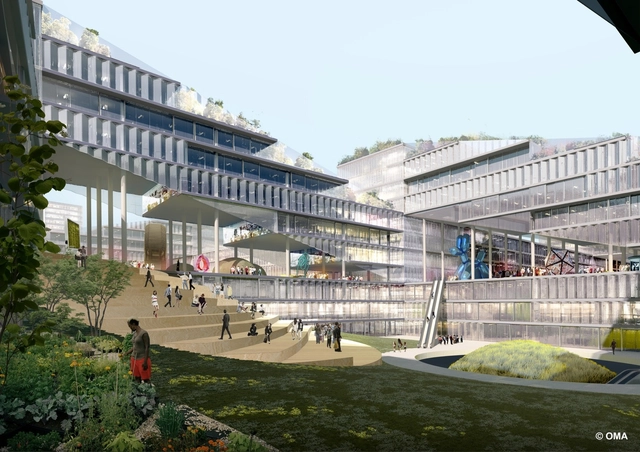
OMA has been announced as one of four firms to win an international competition for the design of Unicorn Island in Chengdu, an “innovative masterplan specifically designed for New Economy companies.”
As Chinamoves from a production-orientated economy to a knowledge and service-based economy, the masterplan seeks to provide a variety of working and living conditions for both start-up firms and “Unicorn” companies, those with a value of over one billion US dollars. Along with OMA, the four winners also included Morphosis, who were recognized for their walkable scheme integrating business, green infrastructure, and lifestyle.








.jpg?1526900955&format=webp&width=640&height=580)
.jpg?1526579450)
.jpg?1526579373 "© Bahaa Ghoussainy")
.jpg?1526578916 "© Bahaa Ghoussainy")
.jpg?1526579342 "© Bahaa Ghoussainy")
.jpg?1526578946 "© Bahaa Ghoussainy")
.jpg?1526816206)


_MVRDV.jpg?1526659703)
_MVRDV.jpg?1526659742 "Courtesy of MVRDV")
_Gent_Onuzi.jpg?1526659725 "© Gent Onuzi")
_MVRDV.jpg?1526659753 "Courtesy of MVRDV")
_MVRDV.jpg?1526659703 "Courtesy of MVRDV")
_MVRDV.jpg?1526661234)



.jpg?1526422043&format=webp&width=640&height=580)

.jpg?1526385880&format=webp&width=640&height=580)