

Produce personalized presentation boards that distill complex concepts into simple visual representations with a few helpful tools and effects.
Articles
How to Create Architectural Presentation Boards
| Sponsored Content
https://www.archdaily.comhttps://www.archdaily.com/catalog/us/products/37234/how-to-create-architectural-presentation-boards-lumion
The Architectural Monograph is Here to Stay

The monograph is a popular platform for dissemination and debate in the art and design world, yet architectural monographs are often treated with suspicion – viewed more as a self-serving PR exercise. But do monographs actually have a more substantive role within the practice of architecture? This was the backdrop for a discussion entitled ‘Why a Monograph?’ held at Waterstones Piccadilly as part of this year’s London Festival of Architecture. The participants included Jay Merrick, architecture correspondent of The Independent; Simon Henley of Henley Halebrown Rorrison (HHbR); David Grandorge, architectural photographer and Senior Lecturer at London’s CASS; and Ros Diamond of Diamond Architects. The session was chaired by ArchDaily Editor James Taylor-Foster.
https://www.archdaily.com/640615/the-monograph-is-here-to-stayMrinal Rammohan
Nevena Katalina Remembers Yugoslav Memorials Through Posters
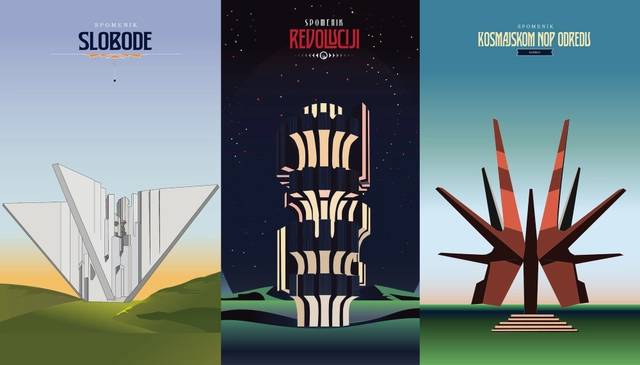
The act of remembering looms large in national cultures. Shared national memories act as a foundation for national identity, a unifying collective interpretation of history that can define what it means to belong in a certain place. Monuments loom even larger - define a national memory in concrete and stone, and you can help define your vision of the nation. That's why Nevena Katalina, a graphic design masters student at the University of Novi Sad in Serbia, has taken the famous abstract war memorials in the former Yugoslavia and translated them into posters, attempting to reconcile the imposing concrete forms with the impact they've had on culture and memory in countries around the former Yugoslavia.




https://www.archdaily.com/642192/nevena-katalina-remembers-yugoslav-memorials-through-postersDario Goodwin
Unified Architectural Theory, Chapter 14
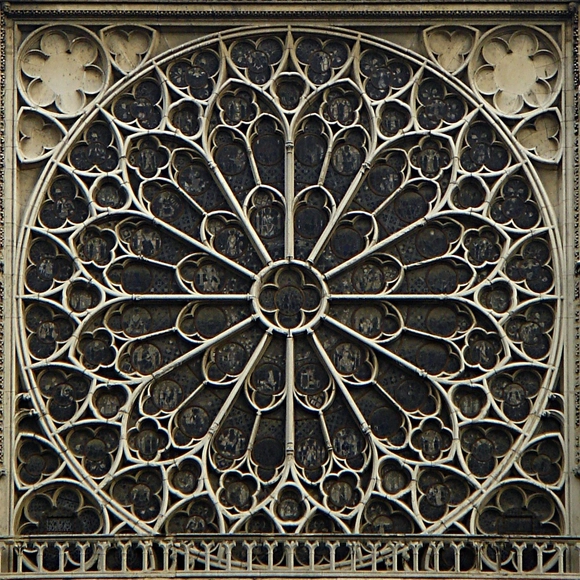
We have been publishing Nikos Salingaros’ book, Unified Architectural Theory, in a series of installments, making it digitally, freely available for students and architects around the world. In Chapter 14, the final chapter of the online version of the book, Salingaros concludes by recounting the effect that the teachings included in his book had on students in a class he taught at the University of Texas at San Antonio, during the Fall Semester of 2012. If you missed them, make sure to read the previous installments here.
Conclusion
At the conclusion of this course, the students told me that they had learned a great many things that are crucial to an understanding of architecture, but which are hardly ever taught in other architecture courses. To be precise, students had previously been told about the importance of various factors to the success of a design—site, surrounding architecture, regional adaptation, ornament (or rather excluding it), the relationship among distinct structural scales, proportions, trees and green areas—but were never taught exactly how to manage them. Now, those factors were taken into account by learning why they arise out of our own biology and natural processes.
https://www.archdaily.com/642086/unified-architectural-theory-chapter-14Nikos Salingaros
10 Revealing Time-Lapse Videos that Explore Architecture's Impact in Construction
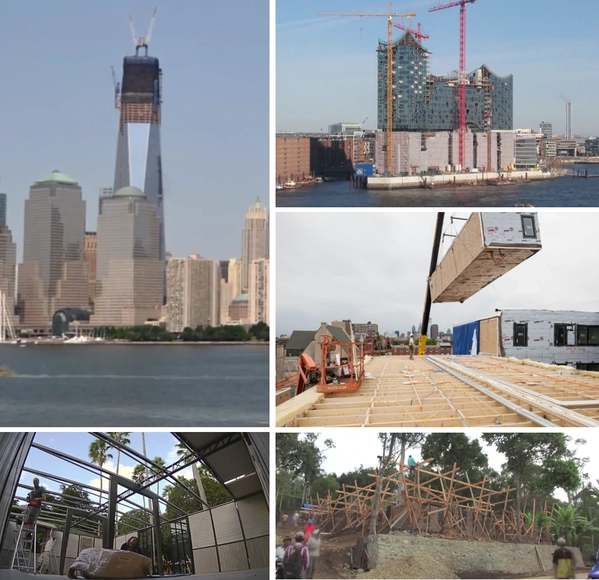
Designers are trained to consider the context for a finished building, but often neglect to consider the construction phase. When architecture is primarily judged based on the impacts it has on their surroundings once they are built, what can be learned from the process of building? The time-lapse is a method that can help architects to do just that, as it can capture years of complex development in a matter of minutes. This can uncover patterns of impact on social and economic levels, as months to years are played back over several minutes.
What is shown by time-lapse videos, though, can be as disturbing as it is interesting; when uncovered, the construction process is a revealing process, and the ramifications in regard to energy consumption can be as monumental as the buildings themselves. The time-lapse allows the viewer to get a better understanding of the types and amounts of materials being put into the construction of buildings, and the impact construction has on its immediate surroundings. By comparing time-lapse videos of different projects, what insight can we gain about how the physically generative process of architecture affects people and place?
https://www.archdaily.com/641262/10-revealing-time-lapse-videos-that-explore-architecture-s-impact-in-constructionJoey Jacobson
The Psychology of Skyscrapers: Is Bigger Always Better?
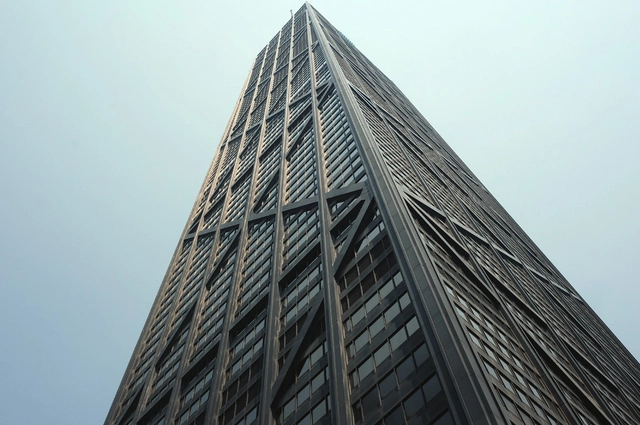
Nothing is more iconic of progress than the skyscraper - but as developers continue to build up, it begs the question: what effect does higher living have on our mental health? Taking opinions from authors, architects, engineers and residences of high-rise apartments, Fast Company reports on the pros and cons of the vertical obsession of the 21st century. Comparing the liberation offered by the Hancock building and the failure of the Pruitt-Igoe project, the article looks at how living at high altitudes may change the way that we socialize and perceive space. Read the full article, “The Psychology of Skyscrapers,” and decide for yourself whether this trend of growing buildings is a good or bad thing.
https://www.archdaily.com/639480/the-psychology-of-skyscrapers-is-bigger-always-betterEric Oh
Margot Krasojevic Turns Snow Cave Shelters into Practical, Impossible Art

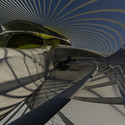
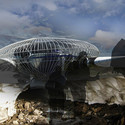
The question "what is the point of all this?" has dogged architecture for as long as anyone cares to look, but since the millenniumthe purely theoretical yet theoretically possible designs of Margot Krasojevic have taken this question as a challenge. Her latest proposal, a mesh shelter that takes the concept of snow caves and applies it to an artificial structure, is built for an eminently practical purpose: a built emergency shelter for climbers and others caught in extreme conditions. Yet the elaborate, high tech and naturally contoured structure is as much a thought experiment as it is a serious architectural proposal.



https://www.archdaily.com/639640/margot-krasojevic-turns-snow-cave-shelters-into-practical-impossible-artDario Goodwin
CatalyticAction's Playground Puts Children at the Center of Relief Efforts for Syria
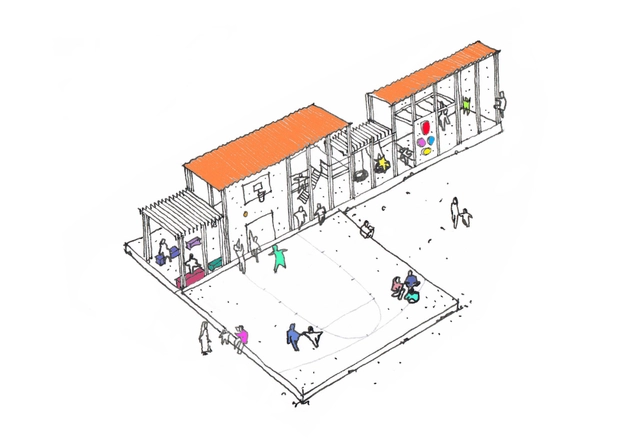
The international response to the Syrian War has often struggled to deal with the sheer scale of the disaster; huge numbers of refugees find it difficult even to source the barest essentials for life in the enormous refugee camps that have sprung up in Jordan, Lebanon, and elsewhere. Alongside the overwhelming need for basics, longer term care for displaced Syrian citizens is also proving difficult, but CatalyticAction, a not-for-profit design studio who are in their own words "a group of young graduates who believe that small changes can realize a big impact," believe that this long-term provision is equally important, especially for children.
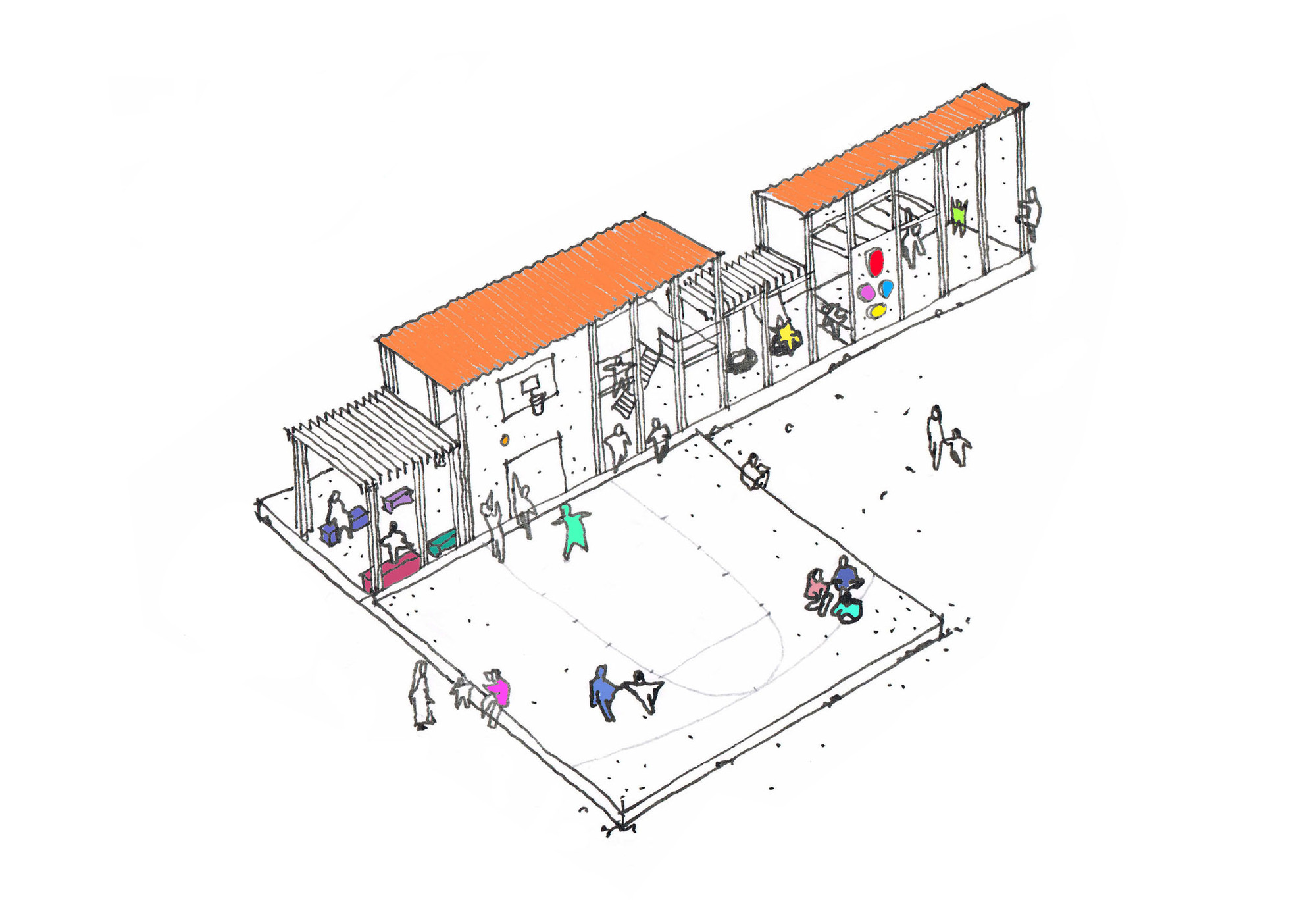
Providing a sense of normal life for children in the refugee camps is absolutely essential to helping them, and their families, to recover and cope with life as refugees, which this why CatalyticAction have begun crowdfunding the construction of a playground - designed with the help of refugee children - in the Lebanese town of Bar Elias. The playground would allow children to learn through play, provide a sense of normality and, importantly, should create a space that they feel safe in.



https://www.archdaily.com/639465/catalyticaction-s-playground-puts-children-at-the-center-of-relief-efforts-for-syriaDario Goodwin
Why I Created a Database to Document African Vernacular Architecture
_of_one_of_the_big_families_of_Niongono_(submitted_by_Daniel_Schumann).jpg?1433337453&format=webp&width=640&height=580)
Architecture is a unique component of a country's culture just as much as its language, music, art, literature or food. Architecture is also the most visual of those cultural components; the pyramids in Egypt, skyscrapers in New York, a temple in Japan, and onion domes in Russia all convey a unique image. This is called “genius loci,” the “spirit of a place”. Every country has its own genius loci, its own uniqueness. Vernacular architecture is composed of local materials and derived from local customs, techniques that have been passed on from generation to generation. But vernacular architecture in most (if not all) African countries is disappearing, being abandoned for western materials and techniques.
.jpg?1433337502 "Rwanda - Kings Hut interior. Image © Larsen Payá")
.jpg?1433337430 "Ethiopia - chicken coop constructed with woven reeds. Image © Abby Morris")
.jpg?1433337423 "Benin - a Tata Somba. Image © Lafia Yarou")
.jpg?1433337546 "Zambia - thatch stored in bundles being applied to roof. Image © Jon Sojkowski via Zambia Architecture")
_of_one_of_the_big_families_of_Niongono_(submitted_by_Daniel_Schumann).jpg?1433337453)
https://www.archdaily.com/638933/why-i-created-a-database-to-document-african-vernacular-architectureJon Sojkowski
5 Architectural Secrets of the Badjao: 21st Century Sea People

Thousands of years ago, a small civilization of hunter gatherers migrated to the coastal regions of Southeast Asia. These people progressed into a widespread tribe of travelling sea dwellers. To this day, they remain a stateless people with no nationality and no consistent infrastructure, sometimes living miles away from land. Yet these people are one of the few civilizations whose collective life practices have survived so long through human history. They are called the Badjao, and they have a surprising amount to teach us about architecture.





https://www.archdaily.com/638523/5-architectural-secrets-of-the-badjao-21st-century-sea-peopleJoey Jacobson
How to Drastically Improve Your Architectural Renderings
.jpg?1433130355&format=webp&width=640&height=580)
These days, the production of architectural renderings is something of a digital arms race, as the more sophisticated visualization becomes, the more of a disservice you do to your designs if you're not able to present clients with increasingly photo-realistic imagery. In this post, originally published by ArchSmarter as the first in their "Pro Smarts" series which features tips and tricks from seasoned professionals, Jonn Kutyla from PiXate Creative describes his seven-step process for creating more realistic renders.
Creating photo-realistic architectural renderings requires careful planning and attention to detail. Adding minor details to your renderings can be time consuming, but it is certainly worthwhile. Some of the smallest details have the greatest impact on the realism of the rendering. Today we’re going to focus on the site around your building. This isn’t going to be a tutorial for specific software, but rather a guide to using nature to make your renderings more believable.

https://www.archdaily.com/637474/how-to-drastically-improve-your-architectural-renderingsJonn Kutyla
10 Highlights from Guardian Cities' "History of Cities in 50 Buildings"

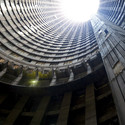
All good things must come to an end, and Guardian Cities' excellent "History of Cities in 50 Buildings" series is sadly no exception, with only a few more left to be published before they hit 50. The whole series is definitely worth the read, bringing in the best of academic and architectural writing from guest authors and the Guardian's own Cities team, but if you're strapped for time - and if you're an architect, it's fairly likely that's true - we've rounded up 10 highlights from the list to get you started.




https://www.archdaily.com/637387/10-highlights-from-guardian-cities-history-of-cities-in-50-buildingsDario Goodwin
Unified Architectural Theory, Chapter 13
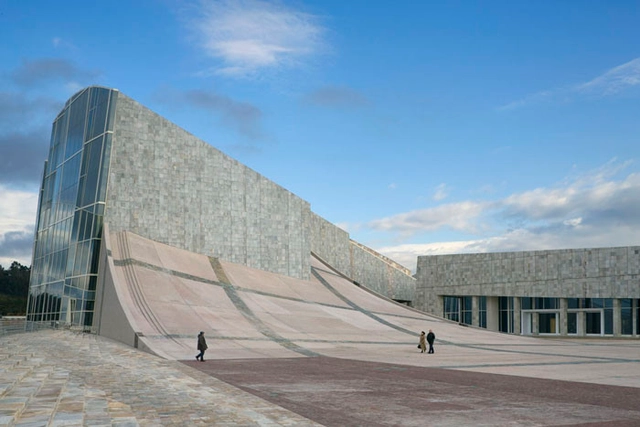
We will be publishing Nikos Salingaros’ book, Unified Architectural Theory, in a series of installments, making it digitally, freely available for students and architects around the world. In Chapter 13, Salingaros begins to conclude his argument by discussing its counterpart, explaining how post-modern theorists such as Peter Eisenman came to eclipse the ideas of Christopher Alexander – and why Eisenman’s theoretical hegemony is not based upon sound architectural thinking. If you missed them, make sure to read the previous installments here.
Natural and Unnatural Form Languages
The concept of living structure, and the support for the theory offered by both direct experience and science, offers a basis for designing and understanding architecture. This platform is a sensible way of approaching design and building, because it is beholden neither to ideology, nor to individual agendas. Moreover, it should be contrasted to the irrationality of other schemes that currently appear in and seem to drive architectural discourse.
https://www.archdaily.com/636876/unified-architectural-theory-chapter-13Nikos Salingaros
Can We Make New Office Buildings As Cool As Warehouses?

We are rapidly running out of old warehouse buildings to renovate, and selling space in the glassy towers of the central business district is difficult as corporate buildings become less and less attractive. We need a new building that is attractive to companies who cut their teeth in co-working incubators before seeking their own digs.
We are a society obsessed with the new. We want to look eternally young, drive the latest car, wear runway-fresh clothes and have up-to-the-minute technology at our fingertips. We do not care if the battery in our phones cannot be changed, because we are happy to simply get a newer phone. The American pursuit of life, liberty, and happiness is a glittering glare of polish and gloss, all sparkling and new.
That is, unless we’re talking architecture.




https://www.archdaily.com/636790/can-we-make-new-office-buildings-as-cool-as-warehousesRobert Benson
Bamboom: Elora Hardy's TED Talk on Bamboo's Exploding Popularity
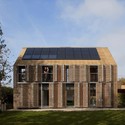
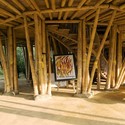
Perhaps the most surprising thing about bamboo - besides being an entirely natural, sustainable material with the tensile strength of steel that can grow up to 900 millimeters (3 feet) in just 24 hours - is that it's not more widely recognized as a fantastic construction material. Like many traditional building materials, bamboo no longer has the architectural currency that it once did across Asia and the pacific, but the efforts of Elora Hardy may help put it back into the vernacular. Heading up Ibuku, a design firm that uses bamboo almost exclusively, Hardy's recent TED Talk is an excellent run through of bamboo's graces and virtues in construction, showing off sinuous private homes and handbuilt school buildings.



https://www.archdaily.com/635886/bamboom-elora-hardy-s-ted-talk-on-bamboo-s-exploding-popularityDario Goodwin
A Country Of Converted Oil Rigs: Is This How To Save The Maldives?
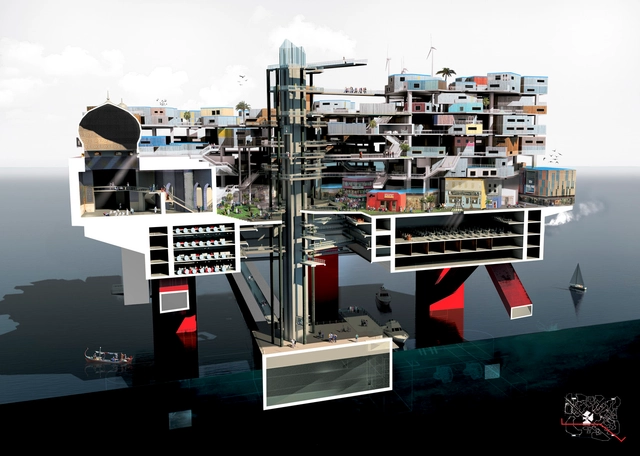
If you want to see the future of urban adaptation, head to the Maldives. That’s the message and warning behind Mayank Thammalla’s master's thesis from the Unitec School of Architecture in Auckland, New Zealand. Under even the most conservative IPCC forecasts, the low-lying Republic of Maldives will become almost uninhabitable as sea levels rise, while any further rise could leave many of the 200 inhabited islands underwater. It’s an existential threat like no other - in as little as ten year's time, the Maldivian government could be faced with the impossible situation of deciding how to deal with over 400,000 refugees leaving the area where their country used to be. Instead of attempting to rebuild the Maldives elsewhere or mount a series of defences against the oncoming sea, Thammalla’s research project has the difficult goal of realistically preserving Maldivian life in the same geographical location as it is now. His solution? Semi-submersible oil rigs.



https://www.archdaily.com/634314/a-country-of-converted-oil-rigs-is-this-how-to-save-the-maldivesDario Goodwin
AR Issues: On Destruction And New Beginnings

ArchDaily is continuing our partnership with The Architectural Review, bringing you short introductions to the themes of the magazine’s monthly editions. In this introduction to the May 2015 issue, The AR's new editor Christine Murray discusses our various reactions to different forms of destruction and endings - a topic that is perhaps particularly poignant considering the new era that The AR is entering - and outlines her ambitions as editor of the magazine.
The experience of a space can be cathartic, like one night when I visited Peter Zumthor’s Therme Vals for a midnight opening, floating in the dark baths. It was just weeks after the birth of my first child, and also my birthday. In the water, I felt the person that I had always been and the mother I had now become reconciled. In that moment, I forgave my tired self (or the building forgave me) for being so unworthy, so wholly undeserving of the perfect baby entrusted to me. I left feeling alive and new, and I know Zumthor had something to do with it.

https://www.archdaily.com/633366/ar-issues-on-destruction-and-new-beginningsChristine Murray
12 Excel Formulas Every Architect Should Know

It may not be the most exciting piece of software an architect will ever use, but Microsoft's Excel is a powerful tool which can help architects with the less glamorous parts of their work - and if you learn how to use it correctly, it can help you get back to the tasks that you'd rather be doing much more quickly. In this post originally published by ArchSmarter, Michael Kilkelly gives his short rundown of formulas that every architect should know - and a brief explanation of how to use each one.
Excel is more than just digital graph paper. It’s a serious tool for analyzing and computing data. In order to access this power, however, you need to understand formulas.
If you’re like me, you started using Excel as a way to create nice looking tables of data – things like building programs or drawing lists. Lots of text and some numbers. Nothing too crazy. If I was feeling a little bold, I’d add a simple formula to add or subtract some cells. That’s about it.
I knew I was using only about 10% of the software but I wasn’t sure what else it could do or how I could access the other functions. I’d heard about formulas but they seemed really confusing. Plus, I was an architect, not a bean counter.

https://www.archdaily.com/632855/12-excel-formulas-every-architect-should-knowMichael Kilkelly
Architecture Software Tutorials: Which Are The Best Out There?

In contemporary architecture practice, proficiency in an ever-widening array of architecture software is becoming increasingly important. For almost every job in the field, it is no longer enough to bring a skilled mind and a pencil; different jobs may require different levels of expertise and different types of software, but one thing that seems universally accepted is that some level of involvement with software is now a requirement.
While software has opened a huge range of capabilities for architects, it also presents a challenge: universities have taken wildly different approaches to the teaching of software, with some offering classes and access to experts while others prefer to teach design theory and expect students to pick up software skills in their own time. New architecture graduates therefore already face a divide in skills - and that's not to mention the many, many architects who went to school before AutoCAD was even an industry standard, and have spent the past decades keeping up with new tools.
The internet has therefore been a huge democratizing effect in this regard, offering tutorials, often for free, to anyone with a connection - as long as you know where to look. That's why ArchDaily wants your help to create a directory of the internet's best architecture tutorial websites. Find out how to help (and see our own short list to get you started) after the break.
https://www.archdaily.com/632386/architecture-software-tutorials-which-are-the-best-out-thereRory Stott
Unified Architectural Theory, Chapter 12
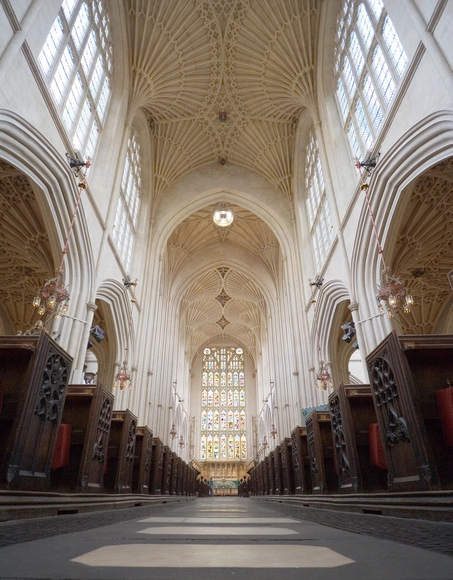
We will be publishing Nikos Salingaros’ book, Unified Architectural Theory, in a series of installments, making it digitally, freely available for students and architects around the world. In Chapter 12, Salingaros concludes his discussion of the physiological and psychological effects of architecture, demonstrating how ornament can lead to an enriching human environment. If you missed them, make sure to read the previous installments here.
Ornament and Human Intelligence
Ornament and function go together. There is no structure in nature that can be classified as pure ornament without function. In traditional architecture, which was more tied to nature, such a separation never existed. The breakdown of the human adaptation of architecture can be traced to the forced conceptual separation of ornament from function, a relatively recent occurrence in human history. It is only in 20th-century architectural discourse that people began to think of ornament as separate from function: see “How Modernism Got Square” (Mehaffy & Salingaros, 2013).
https://www.archdaily.com/632062/unified-architectural-theory-chapter-12Nikos Salingaros
4 Ways Cold-Climate Cities Can Make The Most Of Their Waterfronts
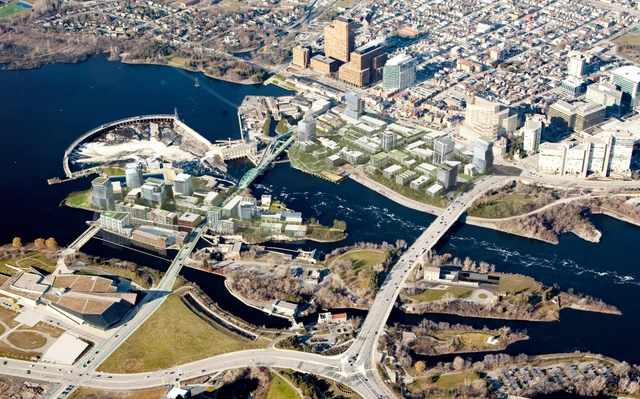
Urban waterfronts have historically been the center of activity for many cities. They began as economic, transportation and manufacturing hubs, but as most industries changed their shipping patterns and consolidated port facilities, many industrial waterfronts became obsolete. In Europe, smaller historic ports were easily converted to be reused for leisure activities. However, in North America, where the ports were larger, it was more difficult to convert the waterfronts due to logistical and contamination issues.
Over the past 40 years or so, architects and urban planners have started to recognize the redevelopment potential for waterfronts across the United States and Canada, and the impact they can have on the financial and social success of cities. Though cold-climate cities pose a unique challenge for waterfront development, with effective planning waterfront cities with freezing winter months can still take advantage of the spaces year-round.

.jpg?1431654800 "Lower Yonge project in Toronto. Image © Chris Foyd courtesy of Perkins+Will")


https://www.archdaily.com/631845/4-techniques-cold-climate-cities-can-use-to-make-the-most-of-their-waterfrontsNoah Friedman
Taking Daylight to the Next Level: How Daylighting Analysis is Changing Design
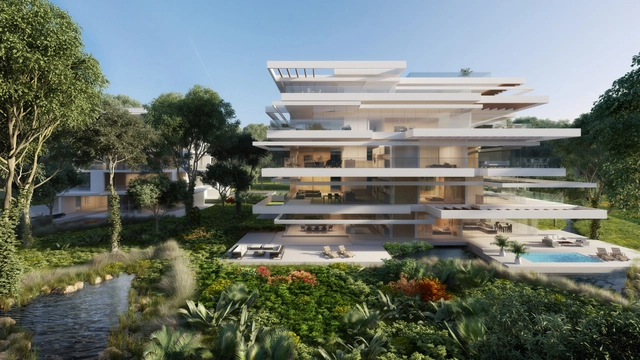
Until recently, renderings were the architect’s primary tool for understanding daylight in their designs—renderings, and a healthy dose of intuition. But a new generation of daylighting analysis tools, which is emerging alongside a new generation of daylighting metrics, are enabling architects to look at daylight in new ways—with important implications for design.
Business as usual, when it comes to daylight, is to use rules of thumb to design, then use renderings to check the design and communicate the intent. Rendering has fast become an art form: the creation of exquisite, evocative, often atmospheric imagery that communicates the mood, the experience, the visceral feel of the design. This is no accident: daylighting is a magic ingredient in architecture, bringing dynamism to static structure, imbuing buildings with a sense of time, and renderings are a powerful way to capture and communicate these ideas—a necessary complement to the hard line plans and sections that comprise much of the architect’s lexicon. Renderings have expanded our ability to communicate designs. They have also expanded our ability to conceptualize designs—and especially to conceptualize the daylight in our designs.
But there’s something missing: there are important daylight-related questions that renderings simply can’t answer. Even if they can be made reasonably accurate, they’re still incomplete: depicting a moment in time, but not providing an indication of whether that moment is unique or typical.
https://www.archdaily.com/631256/taking-daylight-to-the-next-level-how-daylighting-analysis-is-changing-designCarl S. Sterner
AR Issues: Past Imperfect, Future Tense

ArchDaily is continuing our partnership with The Architectural Review, bringing you short introductions to the themes of the magazine’s monthly editions. In this introduction to the April 2015 issue, her final editorial at the magazine, Catherine Slessor reflects on the changes in her two-decade tenure as a member of the AR's editorial staff - from the technological change that has irrevocably changed the nature of architectural publishing, to the worrying decline in the relevance of the architectural profession.
Cyberpunk king William Gibson once remarked: "The future is already here; it’s just not evenly distributed." But we’re getting there. The AR’s digital adventure has just climaxed with the recent launch of the AR app. Our lavish and incomparable banquet of criticism, culture and campaigning can now be savoured at your leisure, wherever you are and whatever you’re doing. It’s a leap that completes the journey from paper magazine to digital multiverse, offering more and different kinds of content on your platform of choice.

https://www.archdaily.com/630086/ar-issues-past-imperfect-future-tenseCatherine Slessor
Radical Cities, Radical Solutions: Justin McGuirk's Book Finds Opportunities In Unexpected Places
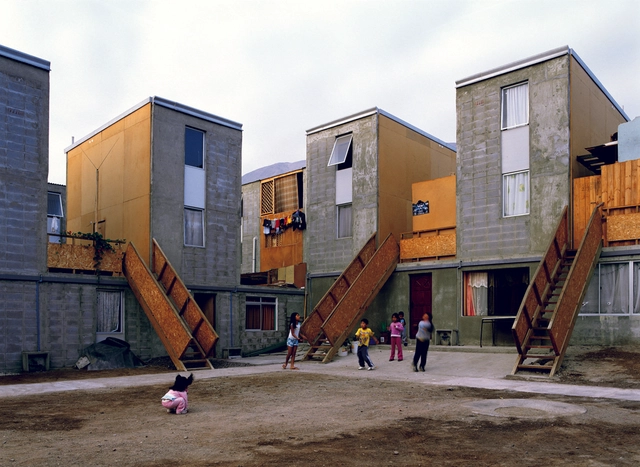
Justin McGuirk's book Radical Cities: Across Latin America in Search of a New Architecture is fast becoming a seminal text in the architecture world. Coming off the back of his Golden-Lion-winning entry to the 2012 Venice Biennale, created with Urban Think Tank and Iwan Baan, McGuirk's work has become a touchstone for the architecture world's recent interest in both low-cost housing solutions and in Latin America. This review of Radical Cities by Joshua K Leon was originally published by Metropolis Magazine as "Finding Radical Alternatives in Slums, Exurbs, and Enclaves."
Justin McGuirk’s Radical Cities: Across Latin America in Search of a New Architecture should be required reading for anyone looking for ways out of the bleak social inequality we’re stuck in. There were 40 million more slum dwellers worldwide in 2012 than there were in 2010, according to the UN. Private markets clearly can’t provide universal housing in any way approaching efficiency, and governments are often hostile to the poor. The only alternative is collective action at the grassroots level, and I’ve never read more vivid reporting on the subject.

https://www.archdaily.com/629354/radical-cities-radical-solutions-justin-mcguirk-s-book-finds-opportunities-in-unexpected-placesJoshua K Leon
Why Do Professors "Rip Apart" Projects In The Final Review?

In a recent article in which ArchDaily reached out to our readers for comments about all-nighter culture, one comment that seemed to strike a chord with many people was kopmis' assertion that, thanks to the tendency for professors to "rip apart" projects in a final review, "there is no field of study that offers so much humiliation as architecture." But what causes this tendency? In this article, originally published by Section Cut as "The Final Review: Negaters Gonna Negate," Mark Stanley - an Adjunct Professor at Woodbury University School of Architecture - discusses the challenges facing the reviewers themselves, offering an explanation of why they often lapse into such negative tactics - and how they can avoid them.
https://www.archdaily.com/629314/why-do-professors-rip-apart-projects-in-the-final-reviewMark Stanley