Is the Price of Software A Barrier of Entry to Architecture?

From the prevalence of unpaid internships to the power of the C-suite, architecture is, according to writer Ann Lui, an “unlevel playing field.” Of the many obstacles facing young designers, one (that you may not have considered) is the prohibitive costs of design software for architects trying to start their own firms.
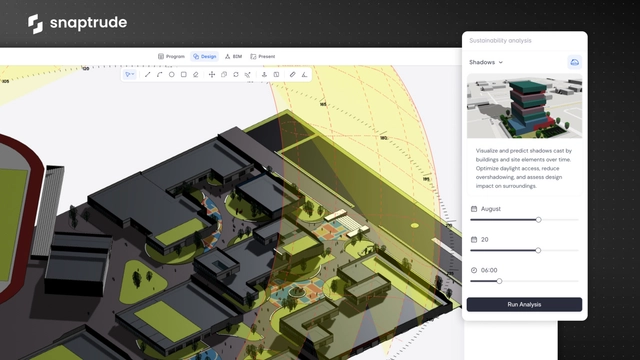
As Lui points out in her article for Archinect, the times have changed since Maya Lin won the Vietnam Veteran’s Memorial competition “with a blurry, hand-rendered sketch of a thick black line in the haze.” Today, “the winning entries of recent widely-published architectural competitions, like eVolo, are thick with unearthly renderings. Recently issued RFPs and many contract docs, even for small projects, include BIM deliverables. LEED certification — or other more holistic methods of “sustainable design” — require energy modeling; and new advances in thermal calculations and daylighting rely on digital building data. Whether or not we continue analog methods for design and how they are integrated in an architectural process is besides the point: to be competitive, cutting-edge digital design programs are integrally necessary. [...]
Yet when it comes to purchasing software, the costs of programs like Autocad and Rhino could be resulting in a self-selecting pool of designers who are able to compete, at least initially, at a higher level.”
Do you think Software is a significant barrier to entry in architecture? Should software be more accessible to all? How could we alter the profession to be more inclusive? Let us know in the comments below.
Read Lui’s article in full at Archinect
The ArchDaily “Building of the Year” App Has Launched!

We know you’ve been anxiously waiting to have ArchDaily with you everywhere you go – whether on the road or on your couch. Well, we’ve listened, and we’re more than proud to announce the launch of our first iPad application!
Our new FREE App will give you in-depth access to the winners and finalists of The Building Of The Year Award, the most important architecture award in the online world (since 2009). It’s an award that recognizes architects – both established heavyweights and emerging talents – as the best and brightest of today, and they’re all chosen by you, our community of ArchDaily readers. While you’ll have to wait a bit longer until you can vote for your favorite 2012 projects (TBA early 2013), the App offers the perfect distraction: full access to the 2011 winners.
Find out more about our “Building of the Year” App, after the break…
Make Your Own “Architecture For Dogs”
If you thought “Architecture for Dogs,” the project in which world-class architects design “sincere architectural structures” for dogs, couldn’t get any cuter, you were very, very wrong.
Today, the project’s interactive web site, designed by Yugo Nakamura, the web designer for Uniqlo, was launched. The site allows viewers to browse each of the architect’s designs and then download free blueprints to make them on their own. Plus, it features an adorable introductory video, complete with scampering puppies, which imparts the site’s mission: “bringing a new kind of joy to the relationship between dogs and humans.”
More info and Images on “Architecture for Dogs,” after the break…
Be a great Architect by sharing the design load

Architecture has always treasured the ideal of the lone creative genius but the reality we all work with today is that architecture is all about the team. Even Wright collaborated with the construction team and Gaudi based much of what he did on information learned from the trades.
Architecture, as always, involves a slew of stakeholders – not only the designers but also owners, operators, builders, colleagues, and partners working on various jobs like structural, HVAC, MEP or sustainability consulting.
Teamwork is the way of the world, so why should our profession be any different? And hey, whatever you think of Twitter and Facebook, this is the era of social communication. Why shouldn’t we get in on the action?
Even while collaborating, we can be architectural icons. We can still maintain our creative integrity. We might even do better work, make more money, and have more time for ourselves.
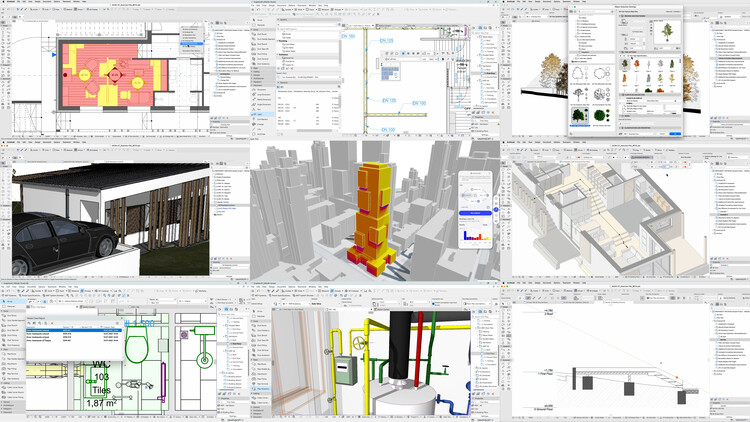
If you do want to collaborate effectively, start with a Building Information Modeling (BIM) software tool. This gives you not only the basic geometry, but packs spatial relationships, lighting, geography, quantities and properties of building components into the 3D model. The richer the foundation, the more powerful the collaboration.