In public restroom design, innovation goes far beyond aesthetics—it transforms the entire user experience. One of the most exciting trends today is integrating all functional elements—hand dryers, faucets, soap dispensers, and paper dispensers—behind the mirror.
This approach creates a cleaner, minimalist look while optimizing space and enhancing hygiene. All devices remain fully functional but hidden: users simply place their hands where indicated on the mirror, and the equipment activates automatically—no physical contact required.
Urban renewal is inherently fraught—financially complex, politically exposed, stakeholder-dense, and almost guaranteed to leave someone dissatisfied. Precisely for these reasons, many cities default to inertia rather than risk the upheaval that comes with reworking entrenched urban fabrics, their residences, and their dynamics; once the "sleeping bear" is prodded, unexpected complications tend to multiply.
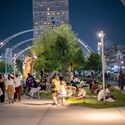
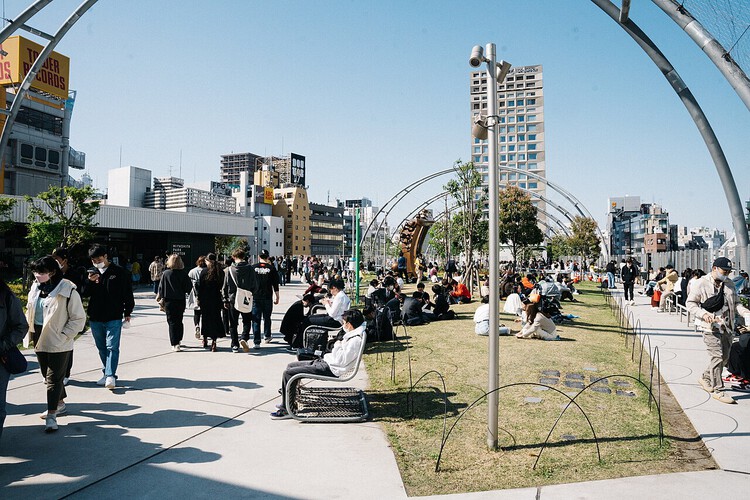
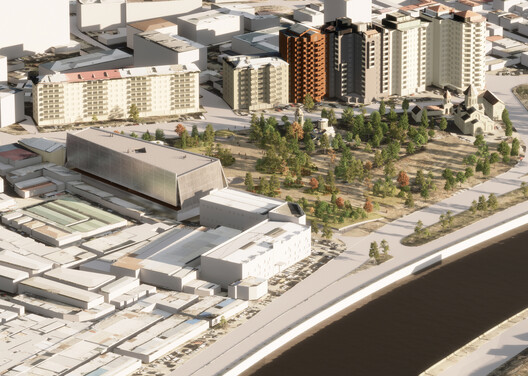
Miyashita Park (Miyashita Kōen), located in Shibuya, Tokyo, crystallizes this dilemma. Its current form—a layered, mixed-use complex balancing commercial activity with a publicly accessible park—emerged from years of negotiation, critique, and recalibration. The result is a distinctive example of a public-private partnership that seeks to align urban amenity, everyday leisure, and economic viability, producing a new piece of city that hosts public life while underwriting its own upkeep.
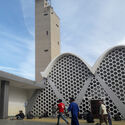
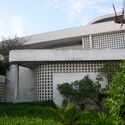
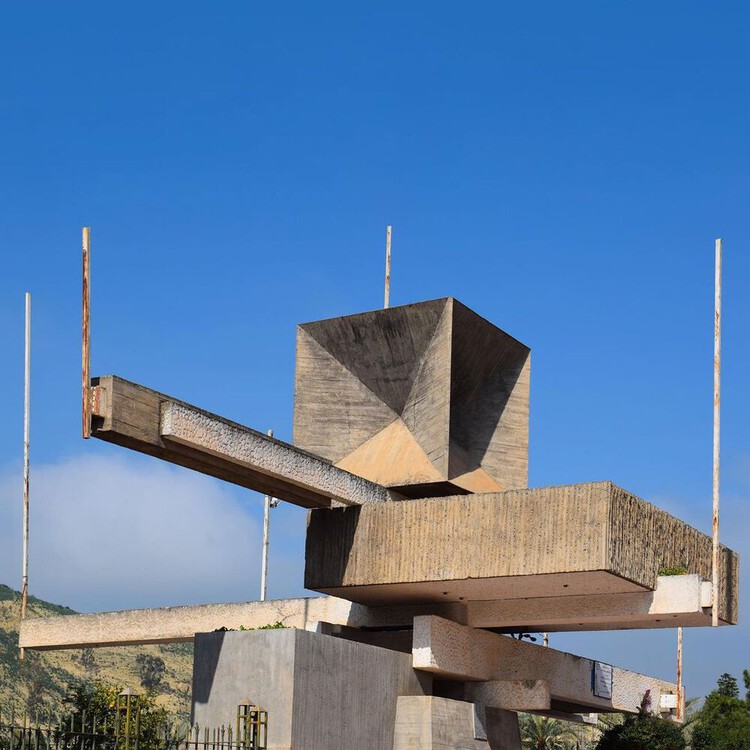
Modernism has a long history in Morocco. Being close to Europe and under French Protectorate rule, it kept pace with architectural developments in the movement. Its relative peace after the Second World War further strengthened its role as some European architects sought a hub for new ideas. Architects in independent Morocco adopted Modernism as they were tasked to build the infrastructure of a new nation. The architect Jean-François Zevaco, born in Morocco to French parents, practiced across these formative periods, developing his own expressive version of modern architecture.
In a former 16th-century church in Vicenza, two stories come together: that of Italian Renaissance sacred architecture and that of marble, the ancient material by excellence, reinterpreted here in a contemporary key. In this dialogue between eras, Lithos Design presents Quinte, a double-sided partition wall that transforms marble into a design tool: not just a surface, but a rhythmic and modular element that defines and enhances spaces. An idea designed for interior architects looking for solutions that are both functional and decorative, capable of shaping interiors with precision, elegance, and personality.
Spectrum Architecture, in collaboration with SOG and F&M, introduces the masterplan for Gonio Yachts and Marina—a significant waterfront development on the Black Sea coast designed to provide high-end residential and hospitality infrastructure for over 30,000 people.
The project is part of EMAAR's substantial investment in Georgian real estate under the Eagle Hills brand, which plans to develop two megaprojects in Tbilisi and Batumi. The total investment exceeds $6.5 billion and aims to attract $10 billion in foreign direct investment, generate 30,000 jobs across multiple sectors, and host 350,000 visitors annually.
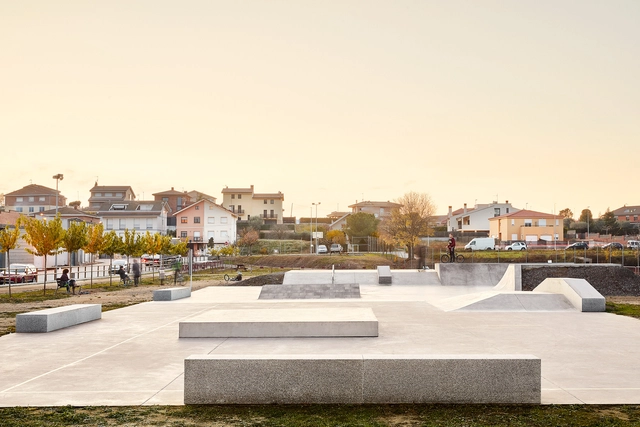
Created by California surfers who wanted to bring the lines of surfing onto asphalt, skateboarding soon outgrew its role as a simple alternative for flat days. It established itself as a practice that reads the city through a different logic, reinterpreting steps, handrails, walls, and interstitial spaces as possible lines, challenges, and opportunities. Over time, it evolved into a global urban culture, a way of inhabiting and transforming public space through movement. What was once marginal has become a catalyst for urban activation, community building, and new uses for overlooked spaces. At its core, skateboarding reveals how many cities coexist within the same city, depending on who moves through them and how each person is able to reinterpret their surroundings.
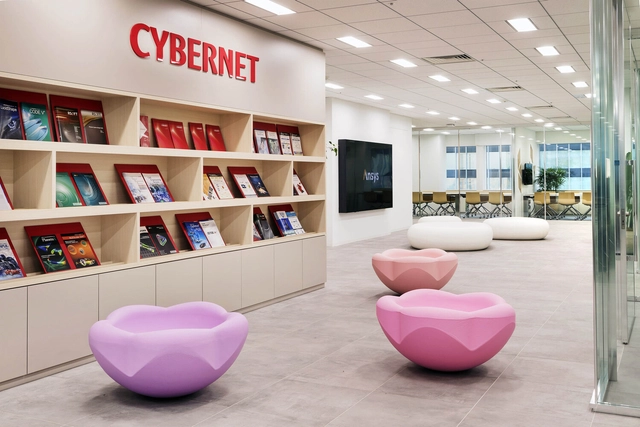
The new headquarters for Cybernet Systems was designed around the Japanese architectural concept of flexibility, promoting well-being, collaboration, and productivity. As a global leader in Computer-Aided Engineering, supporting industrial production through advanced digital solutions, the headquarters, located in the Fuji Soft Akihabara Building in Tokyo, embodies the company's commitment to creating a dynamic, technology-driven community.
Developed by MB-AA (Matteo Belfiore Architect & Associates) and Shukoh, in collaboration with Cybernet Systems, the project translates corporate values into spatial design. Minimalism, natural light, and openness define the environment. Transparent partitions and adaptable layouts foster communication while allowing each employee to personalize their workspace. Well-being, creativity, flexibility, and technology form the core of the project.
The prestigious BAUMunich, the world's leading trade fair for architecture, materials, and systems, served as the stage for Orama Minimal Frames' latest innovations in architectural frame technology. The exhibition offered a platform for industry connections and showcased advancements that challenge conventional boundaries in frame design.
Meta fitting in Matte Black. Image Courtesy of Dornbracht
Are living spaces getting smaller? As cities densify and the global population continues its steady migration toward urban centers—projected to reach around 70% by 2050—domestic space is becoming increasingly compressed. Rising land prices, high construction costs, and a surge in single-person households push developers toward smaller units and tighter floor plans. At the same time, cultural shifts toward resource efficiency and minimal living support this move. Shrinking living spaces require fewer materials, consume less energy, and encourage people to live closer to their means.
The future of cities has long been defined by intelligence: networks of sensors, data, and engineered systems. From traffic-flow algorithms to climate dashboards, the smart city promised to make urban life optimized, measurable, and predictable. Yet amid this technological abundance, something essential feels absent: sensitivity. Cities are becoming increasingly equipped to process information but less able to perceive atmosphere, emotion, or care.
As recent global debates on urban innovation reveal, the next challenge is not about adding more devices but cultivating new forms of awareness. A sensitive city listens to its climate, adapts to its inhabitants, and responds to the subtle rhythms of the environment. In this shift from computation to perception, architecture and urban design are rediscovering intelligence as a form of empathy.
Can academic projects explore new directions and contribute to public discourse on global and local issues? The 2025 Politecnico di Torino Architecture Students Award aimed to address these questions, showcasing how architectural research, training, and experimentation can be integrated into a school curriculum.
While adaptive reuse has been increasingly acknowledged as a vital architectural strategy worldwide, its discourse and implementation in Asia are still expanding—driven by growing ecological awareness and a shifting understanding of architectural knowledge. Rather than accelerating a developmentalist model centered on demolition and new construction, architects today are confronted with a different approach to the built environment: treating the existing structure as a resource—an archive of materials, spatial organizations, and informal histories.
Adaptive reuse is often associated with the preservation of historic buildings and culturally significant heritage. Yet the vast field of seemingly 'less-valued' structures—abandoned houses, standard yet old dwellings, non-conforming office buildings, and overlooked urban voids—has become ground for experimentation. These sites challenge architects and designers to reconsider prevailing standards of efficiency and market-driven development, and to imagine spatial and ecological practices that avoid the continual loss of embodied material and cultural knowledge inherent in constant rebuilding.
Across Europe and beyond, architects are confronting a turning point. As rising emissions targets collide with shrinking material supplies and the growing urgency of climate commitments, the built environment is being forced into a deeper reckoning with how it consumes, circulates, and discards resources. What was once considered waste is now revealing itself as a dormant architectural archive, an urban ecosystem of materials waiting to be reclaimed, revalued, or reimagined. Within this shift, architects are beginning to play a radically different role. Not only as designers of buildings, but also as orchestrators of the flows that sustain them.
This emerging mindset is reshaping the foundations of practice. Instead of depending on long, extractive supply chains, designers are beginning to build their own closed-loop networks, establishing material banks, negotiating deconstruction protocols, and participating in new forms of urban mining.
Architectural space has long been framed by permanence: rooms for fixed functions, facades that clearly define where exterior ends and interior begins. Yet contemporary life is defined by overlap and transition: between work and living, interior and exterior, privacy and community. Spatial needs evolve continually, demanding architecture that can respond, adapt, and remain relevant over time.
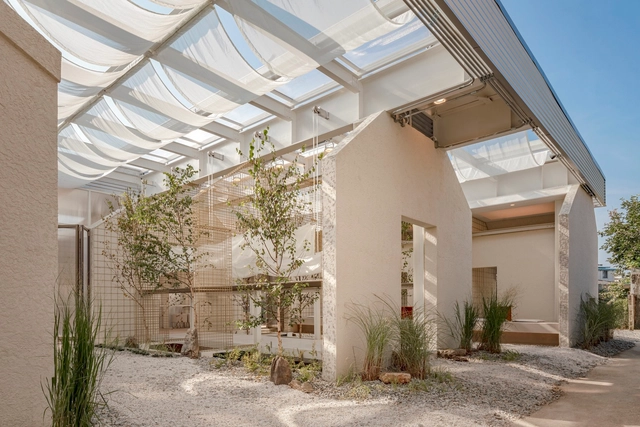
In this context, adaptability has emerged not only as a design ambition but as a sustainable necessity. Buildings that adjust to shifting uses, evolving climates, or new forms of living extend their lifespan and reduce the need for demolition or extensive retrofits. Flexibility becomes a measure of resilience, allowing structures to remain vital across decades. But how can architecture respond to the evolving ways we inhabit and experience space?
For monuments worthy of sustained admiration, conservation practices have been selectively mobilized to reinforce their prestige and secure their place at the center of heritage narratives. Structures whose vernacular ought to be passed down miss the discerning eye of the experts. Rowhouses, shopfronts, and neighborhood structures that form the fabric of our cities are often left to deteriorate beyond repair. Much more is lost, apart from aesthetics.
The conversation around AI in architecture has shifted from hype to application. Architects and designers now want to understand how the intelligent use of AI-powered tools can drive innovation and create a competitive advantage. Yet, as curiosity and optimism grow, firms also face concerns about the ethical and legal questions surrounding AI adoption.
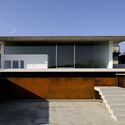
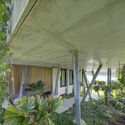
Living by the beach has long been a defining aspiration—drawn by the promise of tempered nature, privacy, and immediate access to the water. Historically, beach houses tended to be rustic and pared back: partly because servicing remote sites and delivering materials was difficult, and partly because their charm lay in being closer to the elements—simpler, rougher, more direct.
Accordingly, many early beach houses were built in timber. Wood offered clear advantages: it was lightweight, adaptable, quick to work with, and could be erected with minimal heavy machinery. While timber weathers and fares poorly in salt-laden humidity, exterior-grade lumber carries a raw, natural character that reinforced the appeal of the beach-house ideal.
In a world facing ecological exhaustion and spatial saturation, the act of building has come to represent both creation and consumption. For decades, architectural progress was measured by the new: new materials, new technologies, new monuments of ambition. Yet today, the discipline is increasingly shaped by another form of intelligence, one that values what already exists. Architects are learning that doing less can mean designing more, and this shift marks the emergence of what might be called an architecture of restraint: a practice defined by care, maintenance, and the deliberate choice not to build.
The principle recognizes that the most sustainable building is often the one that already stands, and that transformation can occur through preservation, repair, or even absence. Choosing not to build becomes a political and creative act, a response to the material limits of the planet and to the ethical limits of endless growth. That Architecture moves beyond the production of new forms to embrace continuity, extending the life of structures, materials, and memories that already inhabit the world.
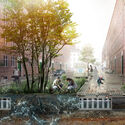
Public spaces remain some of the most dynamic sites for unbuilt architectural experimentation, revealing how cities and architects can imagine accessibility, gathering, and civic identity. In this curated Unbuilt edition, submitted by the ArchDaily community, the selected proposals examine parks, pedestrian corridors, cultural landscapes, and open-access urban environments that invite people to meet, move, rest, and participate in collective life. Rather than treating public space as leftover terrain, these projects position it as essential infrastructure—shaping urban health, memory, and social interaction.
In 1952, American composer John Cage presented his groundbreaking piece "4'33''" for the first time. In it, the orchestra produces no intentional sound for four minutes and thirty-three seconds. What can be heard instead are breaths, movements, and subtle noises that would normally go unnoticed, but here become part of the composition itself. With this work, Cage revealed that absolute silence does not exist. There is always sound, even when unplanned.
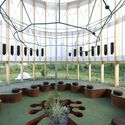
In the same way, every architectural space has its own soundscape. Sound moves, reflects, reverberates, and dissipates according to the materials, volumes, and surfaces it encounters. Hard walls and high ceilings can amplify echoes, while fabrics and porous panels soften them. Acoustics, therefore, is not merely a technical concern but a form of materialized listening, a science that operates at the boundary between perception and emotion. For this reason, it is also complex. Each typology, whether a museum, temple, studio, or theater, has its own sonic logic, and understanding these nuances is essential to creating spaces that embrace sound, voice, and silence with equal precision.
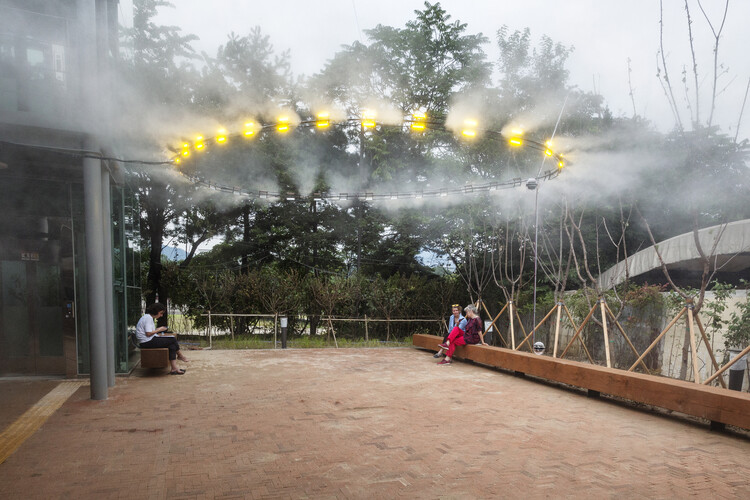
Cities bring together the best and worst of the human condition. They concentrate opportunities for work, social networks, and cultural production, but they also expose deep social inequalities. Among the many forms of urban exclusion are limited access to transportation, housing, leisure, or safety issues. One form that is rarely discussed is thermal inequality. In lower-income neighborhoods, where there are fewer trees, parks, and permeable surfaces, heat accumulates and thermal discomfort dominates, resulting in higher energy consumption and health risks. As concern about the climate crisis grows, this discussion becomes more urgent: extreme heat is no longer just a climatic phenomenon but also a spatial expression of inequality.
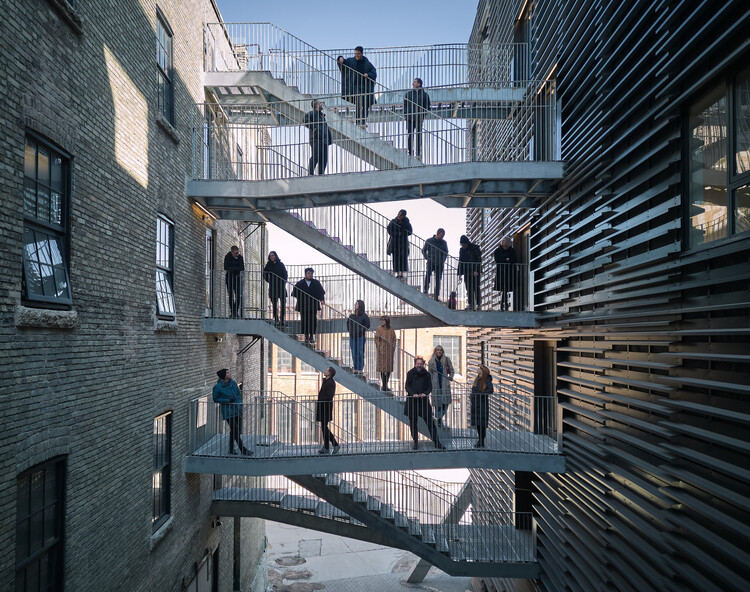
Founded in Winnipeg, Manitoba, in 2007 by Johanna Hurme and Sasa Radulovic, and shortly afterward joined by its third partner, Colin Neufeld, 5468796 Architecture was established as an architecture firm whose early work explored the current state of housing in North America. The Canadian studio operates as a collaborative group of approximately 20 designers, where they prioritize the collective value of ideas over individual authorship.
Jurong Lake Gardens is one of Singapore's newest national gardens, a 90-hectare urban oasis for the community. Elevate’s PondGard EPDM membrane was used to waterproof the pond. Image Courtesy of Holcim
The future of urban planning and architecture is promising if the world, collectively, looks beyond the concept of mere sustainability and instead embraces a nature-positive approach. As global population growth drives rapid urbanization—requiring humanity to build the equivalent of a city the size of Madrid every week for decades to come—the construction sector faces a defining challenge: how to build durable, energy-efficient, and resilient urban environments in harmony with natural ecosystems.