

Architectural space has long been framed by permanence: rooms for fixed functions, facades that clearly define where exterior ends and interior begins. Yet contemporary life is defined by overlap and transition: between work and living, interior and exterior, privacy and community. Spatial needs evolve continually, demanding architecture that can respond, adapt, and remain relevant over time.
In this context, adaptability has emerged not only as a design ambition but as a sustainable necessity. Buildings that adjust to shifting uses, evolving climates, or new forms of living extend their lifespan and reduce the need for demolition or extensive retrofits. Flexibility becomes a measure of resilience, allowing structures to remain vital across decades. But how can architecture respond to the evolving ways we inhabit and experience space?
Adaptable Walls, Shifting Limits
This shift has led architects to explore sliding walls, vanishing corners, and unfolding facades, where boundaries are no longer fixed but are instead deliberate design decisions made with glass. Spaces can expand, contract, or merge according to the life within them. Minimal window systems, such as those developed by Vitrocsa, exemplify this approach: sliding, pivoting, or disappearing, they allow facades and interiors to respond in motion to atmosphere, light, and use. Transparency and continuity become instruments of adaptability, mediating both interior-exterior and room-to-room relationships.
The pursuit of fluid, adaptable space is not new. Early 20th-century modernist architects explored interiors that blurred boundaries and accommodated changing patterns of life. Homes opened to terraces, gardens, and landscapes; rooms were conceived as flexible settings rather than fixed enclosures. Across the modernist movement, architects emphasized that buildings should move with human needs rather than constrain them. As Austrian-American architect Richard Neutra reflected:
I am an eyewitness to the ways in which people relate to themselves and to each other, and my work is a way of scooping and ladling that experience.
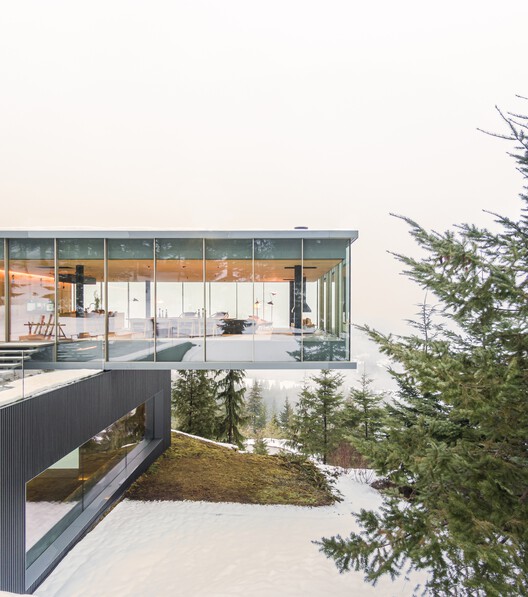
Swiss Engineering That Moves
Emerging from this modernist lineage and the tradition of Swiss precision engineering, Vitrocsa developed the world's first modern minimalist window. Conceived in the early 1990s in Saint-Aubin, Switzerland, the company redefined the relationship between glass, movement, and structure by creating mechanisms where frames nearly disappear, leaving maximum transparency.
Vitrocsa's systems—from the Invisible Frame to Turnable Corner, Guillotine, Pivoting, Sliding, and Curved models—transform facades and interior partitions through quiet, precise motion that serves spatial clarity rather than decoration. With a single gesture, a static surface becomes dynamic: walls open, air circulates, and light reaches deep into the interior.
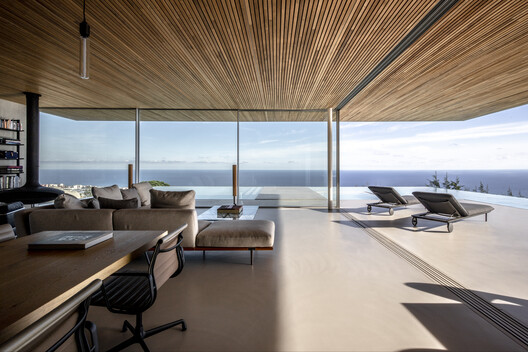
When Buildings Come Alive
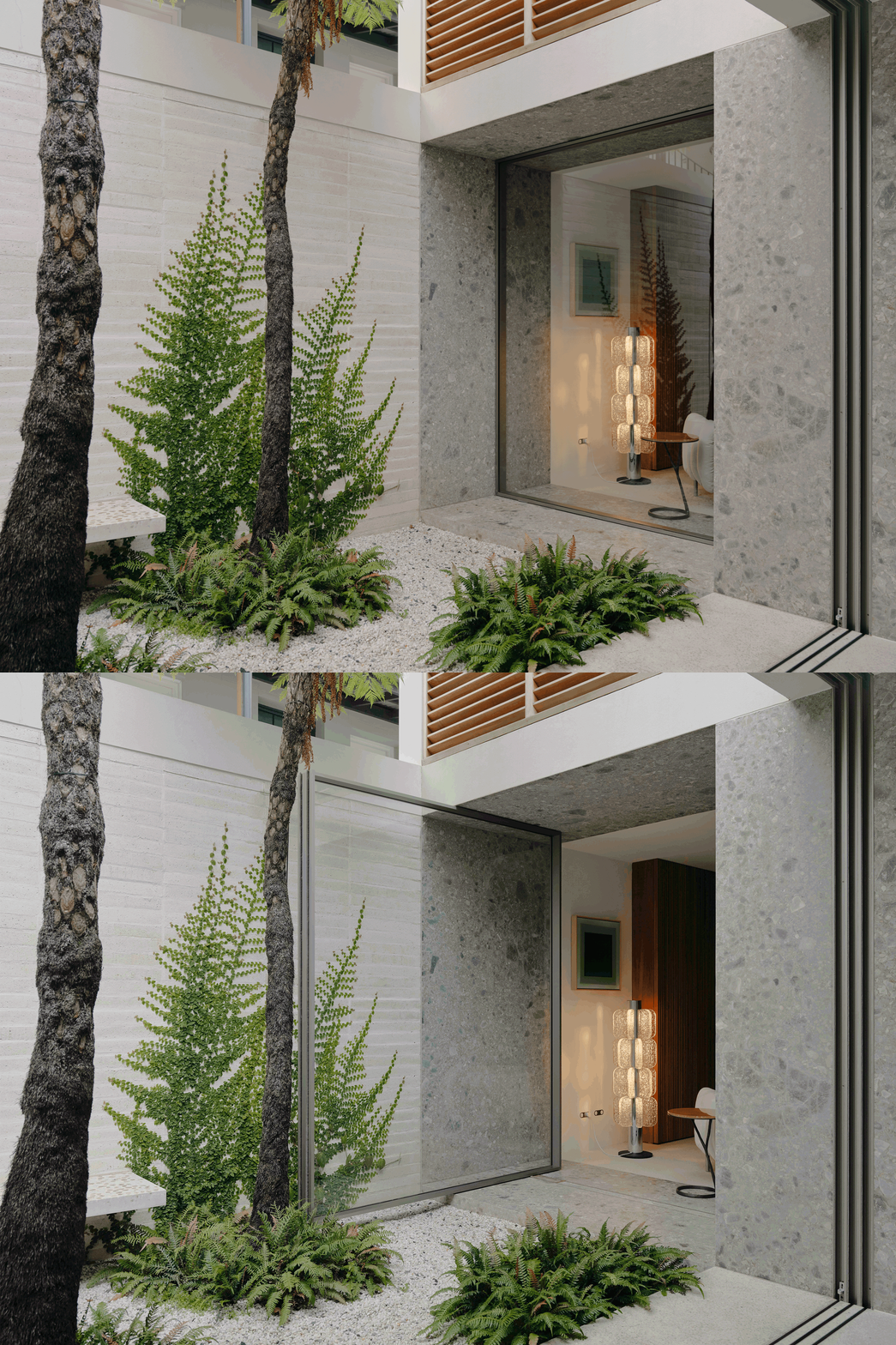
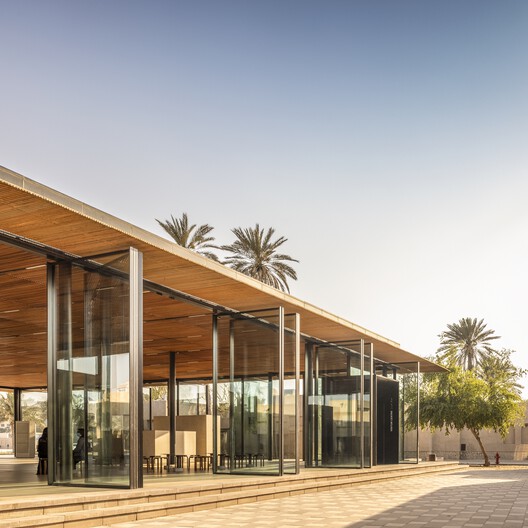
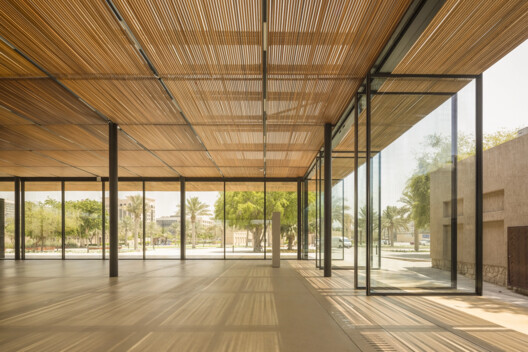
Across diverse climates and contexts, Vitrocsa systems facilitate new forms of interaction between architecture and environment. A courtyard home by Pattern Studio uses Pivoting Windows to fully open to a central garden, creating a continuous relationship between greenery and daily life. In the Shindagha Welcome Pavilion by X-Architects, Pivoting Windows organize circulation and define transitions between gathering spaces. In a coastal residence by Ström Architects, the living room extends seamlessly to the terrace, with sliding windows dissolving the threshold between inside and out, while in the mountains, Benoît Lloze Architecte & Alexandre Hordé Architectes employ the Turnable Corner system to achieve uninterrupted panoramic views.
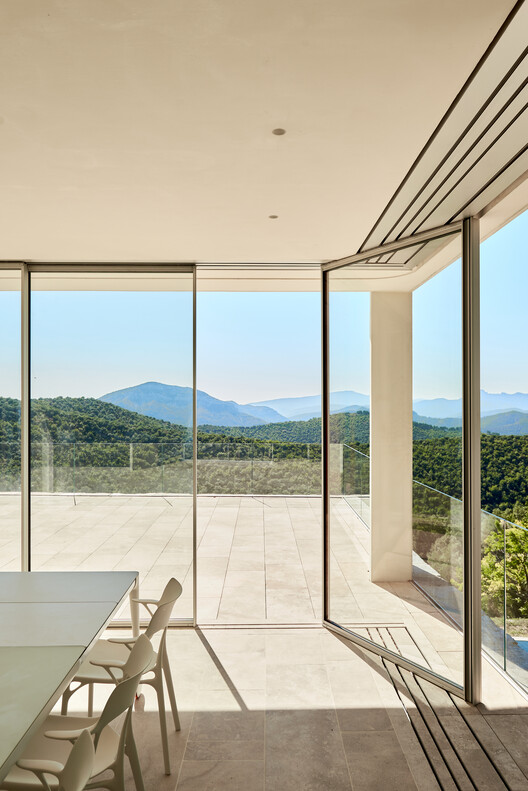
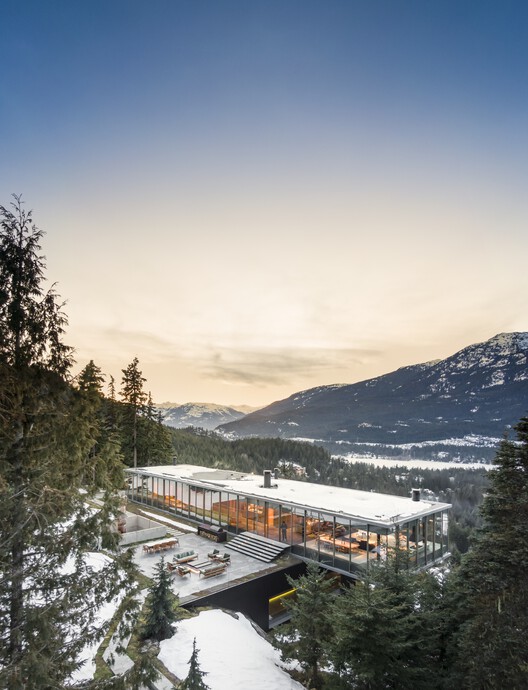
In colder climates, Studio MK27 demonstrates how Fixed and Sliding Systems frame snowy exteriors, amplifying light and depth within interiors, while ITAR Architecte's mountain chalet employs the Guillotine Window to mediate between warm interiors and crisp alpine air.
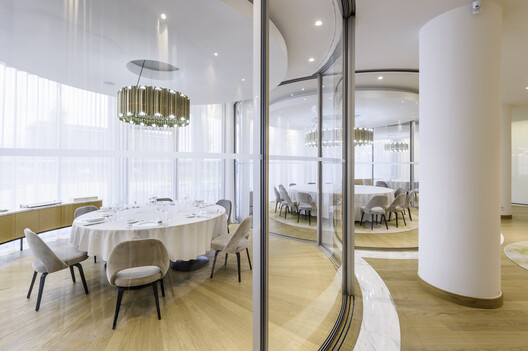
Fluidity also extends beyond facades. In a VIP space by Pierre Studer, Curved Invisible Frames reconfigure interiors, allowing a single room to shift from intimate to expansive. Here, walls no longer dictate use; they define potential. Architecture becomes participatory, allowing inhabitants to choreograph their surroundings according to need and moment.
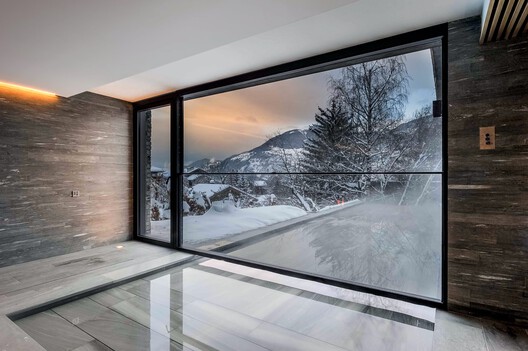
This adaptability supports both lifestyle and sustainability. Rooms expand or contract as required, facades adjust with the seasons, and homes evolve with their inhabitants. Movable glass surfaces reduce reliance on mechanical conditioning, encourage natural ventilation, and allow daylight to reach deep interiors. Glass facades that move enable architecture to respond passively—cooling in summer, warming in winter, breathing as people do.
Through precision and minimalism, Vitrocsa's systems extend a century-long architectural ambition: to create buildings that are open, resilient, and deeply connected to their context. They affirm a vision of space not as a static object, but as a living framework that moves with light, season, and human experience.



