
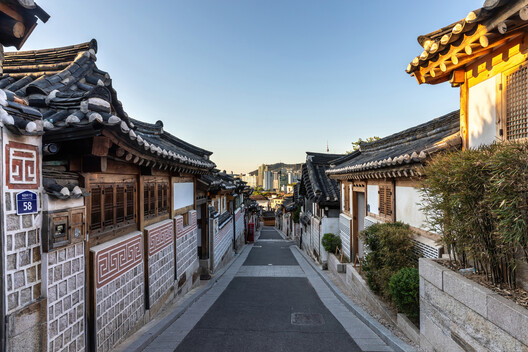
For monuments worthy of sustained admiration, conservation practices have been selectively mobilized to reinforce their prestige and secure their place at the center of heritage narratives. Structures whose vernacular ought to be passed down miss the discerning eye of the experts. Rowhouses, shopfronts, and neighborhood structures that form the fabric of our cities are often left to deteriorate beyond repair. Much more is lost, apart from aesthetics.
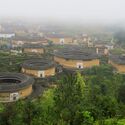
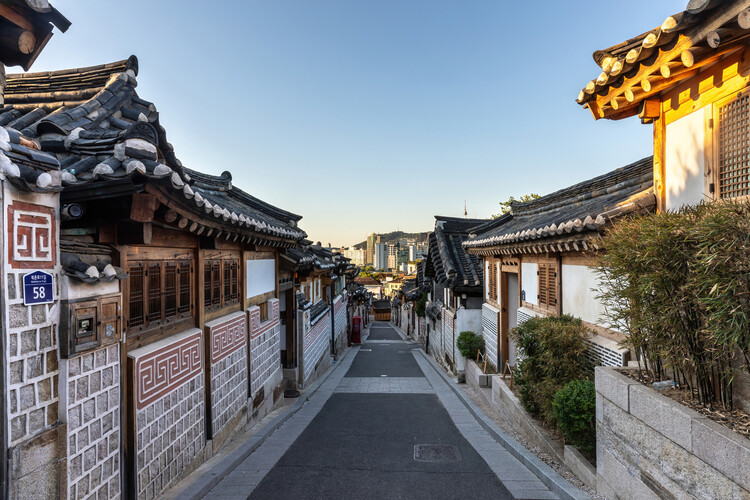
Demolition appears cheaper than restoration when the economic costs of intangible heritage are omitted. When technical conservation knowledge is locked behind professional fees, property owners facing a deteriorating building see only two numbers — the cost of the work and the cost of the fees. One is the cost of hiring a conservation architect, structural engineer, and specialized contractors for an assessment and restoration plan. The other is the cost of a demolition permit and new construction. Demolition wins, not because it's actually more economical when embodied materials, infrastructure costs, and lifecycle value are accounted for, but because the knowledge required to restore affordably remains inaccessible.
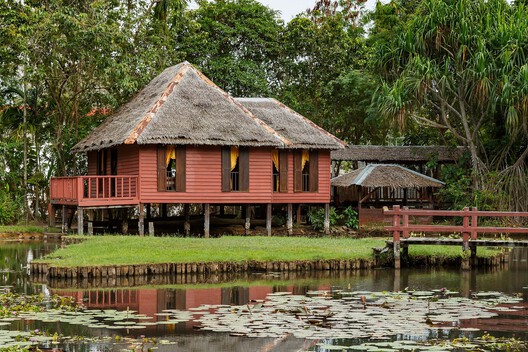
Heritage professionals are ill-equipped to address the scale of the problem. Despite vernacular architecture comprising more than half of the world's built environment, conservation efforts have historically focused on protecting monuments through top-down intervention. Meanwhile, the structures that carry the memory and identity of their neighborhoods slip into decay. Their preservation is foreclosed by the absence of accessible technical knowledge that could make their renewal imaginable.
What does it mean to protect buildings when protection itself remains protected? Conservation has operated as a highly specialized profession — its practices governed by credentialed experts, its knowledge circulated through formalized training pathways, and its interventions directed toward structures already validated as architecturally significant by those within the institutional hierarchy. The vernacular majority is left to the logic of the market.

A new generation of open-source digital platforms is democratizing conservation by breaking down the knowledge monopolies that have made it an expert-only practice. These tools don't just make information available; they restructure the economics of restoration by eliminating the consultant bottleneck. Three platforms, in particular, demonstrate how democratization works in practice.
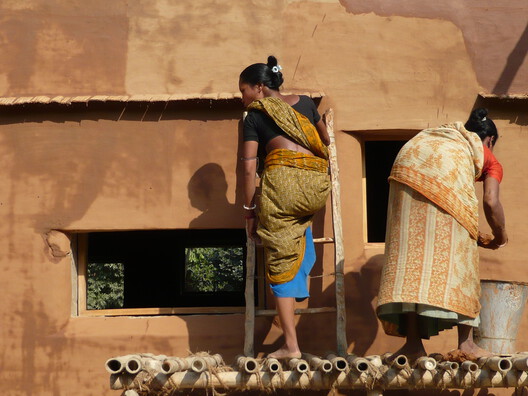
In India, architect Aishwarya Tipnis has created an accessible conservation resource. The Restoration Toolbox is a collection of 15 DIY manuals covering traditional building materials — wood, stone, brick, lime, tile — written not for other architects but for homeowners, local contractors, and municipal engineers. Built on the open-source Decidim platform, it supports users from initial conceptualization through full implementation, addressing not only procedural requirements but also sourcing considerations and the identification of qualified practitioners.

The project addresses a conspicuous economic problem. When a homeowner discovers deteriorating lime plaster or termite-damaged wooden joists, the conventional path requires hiring a specialist for diagnosis and specifications, then finding contractors willing to work with unfamiliar traditional materials. The professional fees alone can exceed the cost of simply demolishing and rebuilding with concrete and steel. The Restoration Toolbox short-circuits this by making conservation techniques directly accessible to those doing the work.
The platform focuses deliberately on "everyday heritage" — ordinary buildings that constitute neighborhood fabric. Through workshops with municipalities across India, it cultivates a framework of shared learning. Technical knowledge moves fluidly between researchers and communities, instead of being sequestered within professional domains.
Without these tools, what disappears is more than the buildings themselves; it is the accumulated craft knowledge they embody — the subtle understanding of lime mortar breathing, of wooden joinery responding to seasonal change, of stone foundations directing water safely away from walls. This intelligence, refined over centuries of trial and error, vanishes when buildings are demolished and replaced with standardized industrial materials. The Restoration Toolbox envisions democratizing conservation as a way to preserve alternative building practices whose durability, adaptability, and economic sense may exceed that of the industrial methods that followed them.
When local contractors gain access to conservation techniques, they can offer restoration as a standard service rather than a specialty. Embedding conservation in local economies creates jobs while keeping money in communities. Traditional craft knowledge, which has been disappearing as older practitioners retire, gets documented and made available to the next generations.
While The Restoration Toolbox addresses technical knowledge, the Arches Project tackles another barrier — the cost of heritage data management. Developed by the Getty Conservation Institute and World Monuments Fund, Arches provides professional-grade, open-source software for creating and managing heritage inventories. From an economic perspective, comprehensive documentation is a critical requirement for the feasibility of restoration initiatives.
Without understanding what exists, property owners and municipalities default to demolition as the path of least resistance. Arches enables small organizations and local governments to build professional heritage inventories without prohibitive software costs, creating the information infrastructure needed for informed decision-making.

The platform scales from the neighborhood to the national level. Los Angeles uses it for HistoricPlacesLA, the city's official inventory. Jamaica's National Heritage Inventory allows community members to nominate places directly, democratizing not just the tools but the process of determining what gets recognized and protected. The EAMENA project uses Arches to record archaeological sites under threat across 20 Middle Eastern and North African countries. In each case, communities can acquire, share, interpret, and analyze their own heritage data rather than depending on external consultants to create proprietary databases.
For years, heritage data has been locked in consultant reports, institutional archives, and expensive software systems that are visible only to those with access and expertise to interpret it. In the shift from proprietary to public infrastructure, buildings become harder to erase, not because regulations protect them, but because their value has been made legible to those who would otherwise have no language to argue for their retention.
When municipalities can document their own historic resources affordably, heritage becomes visible in planning decisions. When communities control their data, it becomes a public asset informing neighborhood development rather than a consultant deliverable gathering dust on a shelf.

The most radical democratization might be the simplest — turning the smartphone in everyone's pocket into a professional documentation tool. Apps like PIX4Dcatch enable 3D scanning with consumer devices, while geo-crowdsourcing systems like SOCH (Share Our Cultural Heritage) allow citizen-generated heritage data collection through geotagged photos and 360-degree panoramas.
This eliminates the equipment barrier entirely. Communities no longer need expensive laser scanners or photogrammetry rigs to document threatened buildings. In Piacenza, Italy, smartphone scanning has been deployed for heritage documentation, proving that consumer technology can produce usable records. Citizens contribute stories, photos, and data on historical landmarks, creating distributed archives that don't depend on official surveys or professional assessments.
Accelerated documentation allows communities to establish restoration priorities before demolition, producing visual assets that can mobilize financial and regulatory support. Documentation becomes an ongoing, living process rather than a one-time expert assessment, which means buildings can be monitored over time, and intervention can happen before problems become catastrophically expensive.

Distributed archives embody a tangible collective memory. Not the official memory of landmark commissions and heritage registers, but the vernacular memory of places that matter to those who inhabit them. A corner store. A neighborhood cinema. A rowhouse distinguished only by the family that has occupied it for three generations. These are the buildings that fall outside conventional conservation practice, yet their loss diminishes urban life. When documentation tools become accessible, the definition of what deserves remembering expands beyond institutional decree.
For urban development, this changes the restoration-versus-demolition argument. When technical knowledge is accessible and documentation costs are minimal, restoration becomes a viable alternative. Neighborhood-scale conservation becomes possible without massive institutional intervention. Heritage-led regeneration can be economically rational when communities have the tools to implement it themselves.
Conservation becomes more about empowering communities to shape their own environments economically and sustainably. Like essential public infrastructure, such as building codes or zoning maps, open-source platforms enable informed decisions about the built environment. When conservation is democratized, it's no longer preservation versus progress. It's simply good economics made visible, technical knowledge made common, and the built environment returned to those who must live within it.

This article is part of the ArchDaily Topics: Building Less: Rethink, Reuse, Renovate, Repurpose, proudly presented by Schindler Group.
Repurposing sits at the nexus of sustainability and innovation — two values central to the Schindler Group. By championing this topic, we aim to encourage dialogue around the benefits of reusing the existing. We believe that preserving existing structures is one of the many ingredients to a more sustainable city. This commitment aligns with our net zero by 2040 ambitions and our corporate purpose of enhancing quality of life in urban environments.
Every month we explore a topic in-depth through articles, interviews, news, and architecture projects. We invite you to learn more about our ArchDaily Topics. And, as always, at ArchDaily we welcome the contributions of our readers; if you want to submit an article or project, contact us.


