

Produce personalized presentation boards that distill complex concepts into simple visual representations with a few helpful tools and effects.
Articles
How to Create Architectural Presentation Boards
| Sponsored Content
https://www.archdaily.comhttps://www.archdaily.com/catalog/us/products/37234/how-to-create-architectural-presentation-boards-lumion
What is Graphene and How Can It Revolutionize Architecture?

Ever since Manchester University first isolated Graphene in 2004, it has been widely referred to by its properties as a promising material through diverse research that focuses on reaching a range of uses in the most varied industries. Graphene is known to be one of the strongest materials known to science due to its composition of a single carbon atomic layer in a hexagonal mesh. It is also one of the finest materials known to mankind, 200 times stronger than steel yet 6 times lighter. Plus, it is an excellent heat and electricity conductor, aside from its interesting light absorption qualities. When combined with other elements, including gases and metals, it can produce different new materials with highly superior properties.
https://www.archdaily.com/918953/what-is-graphene-and-how-can-it-revolutionize-architectureEduardo Souza
Opinion: In Architecture, Silence Is Anything But Golden
.jpg?1561559584&format=webp&width=640&height=580)
This article was originally published on Common Edge.
Architects compete, and the internet provides unlimited opportunities for competition among all who wish to offer up something for consideration. None of this is news. But there’s been a change in both the expectations and the etiquette around all of those offerings.

Earlier this month, I was asked to submit to two small competitions. I had completed successful projects that matched each competition’s focus, so I dove in. We confirmed that our entries met the criteria and deadlines; we knew the day of jury deliberations and the release date of their decision. As usual, we lost (success only comes for those willing to accept failure); also, as usual, the verdict for us and for all other runners up was silence.
https://www.archdaily.com/919849/opinion-in-architecture-silence-is-anything-but-goldenDuo Dickinson
New Plan Aims to Revamp Midtown Detroit, the City’s Cultural Hub
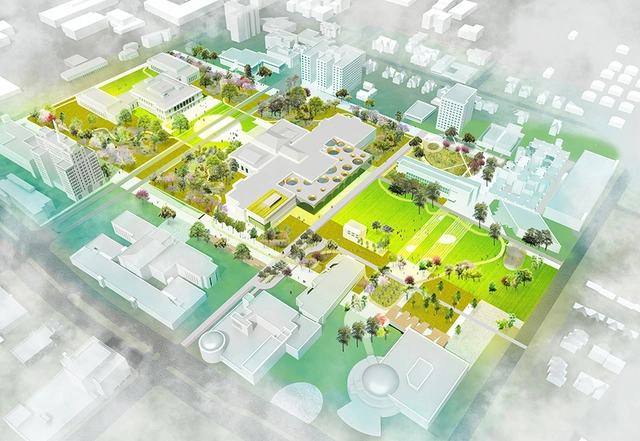
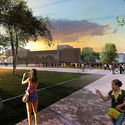
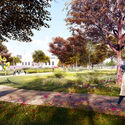
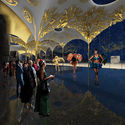
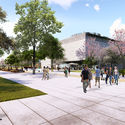

A team composed of international and local studios and individuals—Agence Ter, rootoftwo, Akoaki, and Harley Etienne—was recently chosen to revitalize the 83-acre area.

Over the course of the 20th century, across a series of administrations and economic contexts, Midtown Detroit grew into one of America’s largest (or densest) cultural districts, with over 12 major institutions, such as the Detroit Institute for the Arts (DIA) and the College for Creative Studies. But you wouldn’t know it, even if you were there—the nine-block, 83-acre area is a mish-mash of styles spanning Beaux Arts, Modernism, and Brutalism, and has a certain sense of placelessness. The area feels architecturally disjointed, illegible, and fails to translate the vibrancy of each institution into the broader public space.
https://www.archdaily.com/919951/new-plan-aims-to-revamp-midtown-detroit-the-citys-cultural-hubRebecca Greenwald
Dong-Ping Wong on +Pool and Rendering Styles

The Midnight Charette is an explicit podcast about design, architecture, and the everyday. Hosted by architectural designers David Lee and Marina Bourderonnet, it features a variety of creative professionals in unscripted and long-format conversations that allow for thoughtful takes and more personal discussions. Honesty and humor are used to cover a wide array of subjects: some episodes provide useful tips for designers, while others are project reviews, interviews, or simply explorations of everyday life and design. The Midnight Charette is available for free on iTunes, YouTube, Spotify, and all other podcast directories.

On this episode of The Midnight Charette podcast, hosts David Lee and Marina Bourderonnet are joined by Dong-Ping Wong, Founding Partner of FOOD to discuss the architecture design process, structuring a collaborative work environment, communicating with non-architects, starting +POOL (the world's first water-filtering floating pool), black tie personas and architectural education, rendering styles and more.
https://www.archdaily.com/919507/dong-ping-wong-on-plus-pool-and-rendering-stylesThe Second Studio Podcast
The Age of Travel is Over
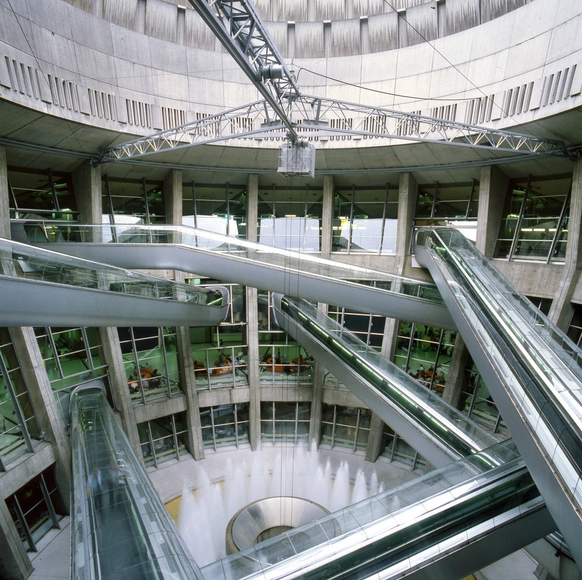
Modernism always wanted to have it both ways: on the one hand, modernist architecture was supposed to be, in theory, the same in all places; that's one reason why modernism in architecture was also called the International Style. If all modernist buildings look the same, when you see one you have seen them all: no need for further travel. Yet throughout the 20th century modernist culture and technology enthusiastically endorsed and favored travel. In the 60s we traveled to the Moon, and civil aviation made the world smaller. In modernist culture, travel was good. It made all travelers better, happier humans. It was good to learn foreign languages and to go see distant places. High modernist travel was not only good; it was also cool. The jet setters of the 60s were the coolest citizens of the world. Even later in the 20th century the general expectation was that borderless, seamless travel would keep getting easier and more frequent. Most Europeans of my generation grew up learning two or more foreign languages, and it was not unusual until recently to be born in one country, to study in another, and find one's first job in a third one. That was seen as an opportunity, not as a deprivation.
https://www.archdaily.com/919827/opinion-the-age-of-travel-is-overMario Carpo
A Town within a Town for Sadra's Civic Center
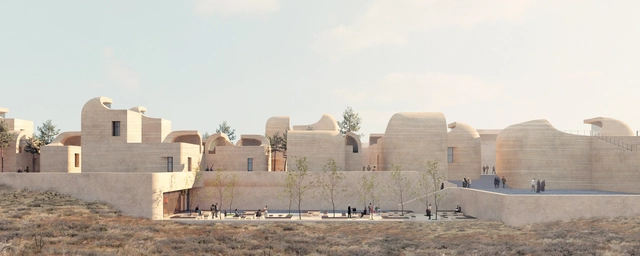
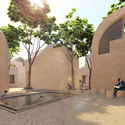
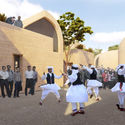
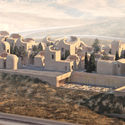
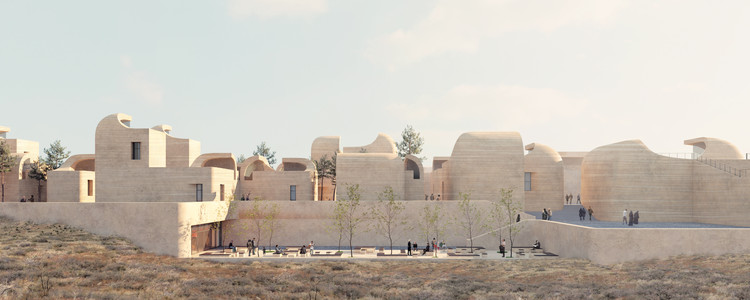
The recently-formed town of Sadra, Iran, is gradually evolving into a mega-city as a result of its geographical location and architectural potential. To improve the cultural standards of the town, several cultural centers were constructed, transforming the area into a major hub for people of all ages.
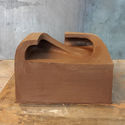
Keeping in mind that a newly-built town requires an adaptable space for potential expansions, NextOffice - Alireza Taghaboni architecture studio created the “Sadra Civic Center”, a town within a town built from its surrounding urban elements.
https://www.archdaily.com/919647/a-town-within-a-town-for-sadras-civic-centerDima Stouhi
Are There Existing Daylight Design Standards? Learn about the First European Standard
| Sponsored Content
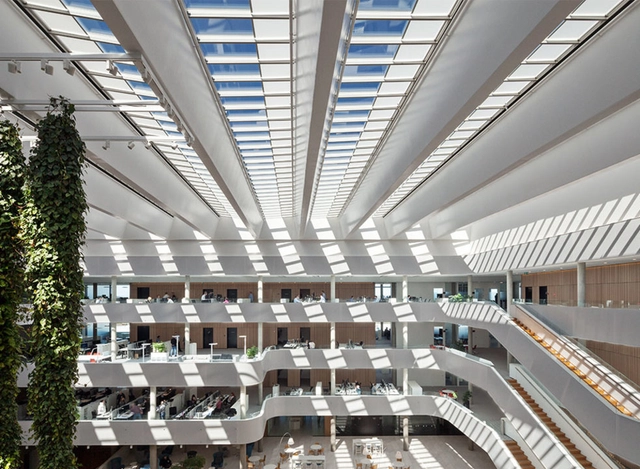
Published at the end of 2018, the new European Standard EN 17037 deals with daylight in buildings. It is the first Europe-wide standard to deal exclusively with the design for, and provision of, daylight. EN 17037 replaces a patchwork of standards across different European countries or provides one where no existing standard is present.
https://www.archdaily.com/919662/are-there-existing-daylight-design-standards-learn-about-the-first-european-standardSponsored Post
Could 3D Printing be the Future of Social Housing?
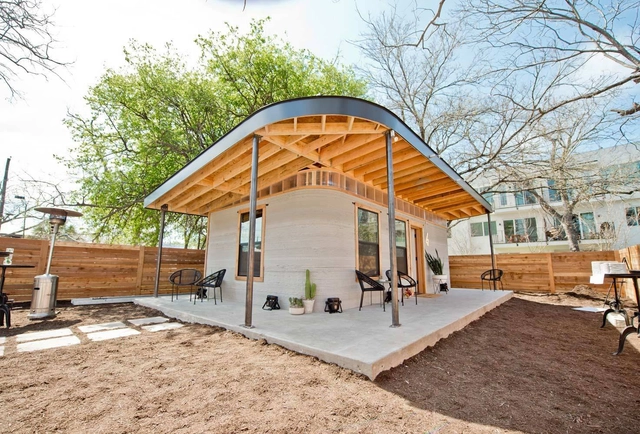
This is all quite recent: less than a year ago, a French family became the first in the world to live in a 3D printed house. Short of 20 years, this seemed like a distant dream, this new technology has developed quickly, and it arises as a possible contribution to the housing crisis around the world.
https://www.archdaily.com/919667/could-3d-printing-be-the-future-of-social-housingEduardo Souza
Elizabeth Diller on The Shed, The High Line, and the MoMA Expansion

On the latest episode of Time Sensitive, a newly launched podcast produced the New York-based “conscious entertainment” media company The Slowdown, co-host Spencer Bailey interviews architect Elizabeth Diller of Diller Scofidio + Renfro in a blockbuster-length conversation. Diller talks with Bailey about designing everything from the High Line to The Shed to the upcoming expansion of MoMA, and also delves deeper into her past, revealing how it was her mother’s idea for her “go into architecture, and if not architecture, then dentistry.” But upon getting into the Cooper Union and studying with professors like Peter Eisenman and John Hejduk, Diller’s path was clear—for the most part, anyway; it’s necessary to listen to the full episode to see why her journey to where she is today was indeed unconventional and roundabout.
https://www.archdaily.com/919748/elizabeth-diller-on-the-shed-the-high-line-and-the-moma-expansionTime Sensitive
16 Brick Cladding Constructive Details
| Sponsored Content
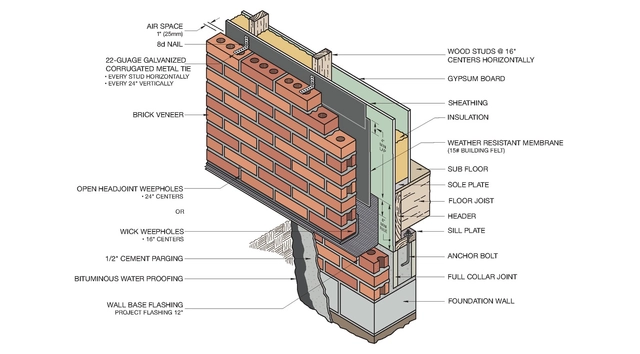
Traditionally, bricks have been used in architecture to fulfill a double function: structural and aesthetic. While they act as an effective and resistant modular solution in building structures, their faces can be exposed to constitute their architectural appearance, generating facades rich in texture and color, thanks to the iron present in the clay they are composed of.
At present, there are products that allow the attractive appearance of bricks to be merged with other structural systems, separating their functions and providing the necessary freedom of design so that the facades can adapt creatively in favor of the conditions of each project and the requirements of its users.
https://www.archdaily.com/918494/16-brick-cladding-constructive-detailsJosé Tomás Franco
Urban Agency Designs a "Student Castle" in Ireland
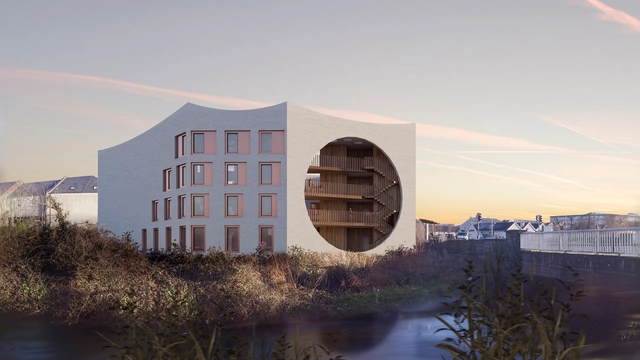
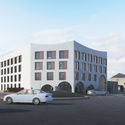
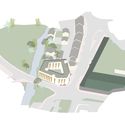
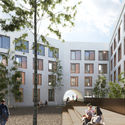
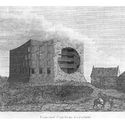
In their new student housing project, Walshe's Yard, Urban Agency has placed incredible importance on blending the building into its context while also providing a high quality of living for students. Located in Carlow, Ireland, the building is situated on the threshold between the looser urban periphery and the denser historic center of the town. The 3800 square meter project will include 125 bedspaces arranged into 32 “student houses” of either 3, 6, or 8 students, plus graduate studios on the top floor.

https://www.archdaily.com/919610/urban-agency-designs-a-student-castle-in-irelandMegan Schires
What's Pushing Refurbishment Fever in China?
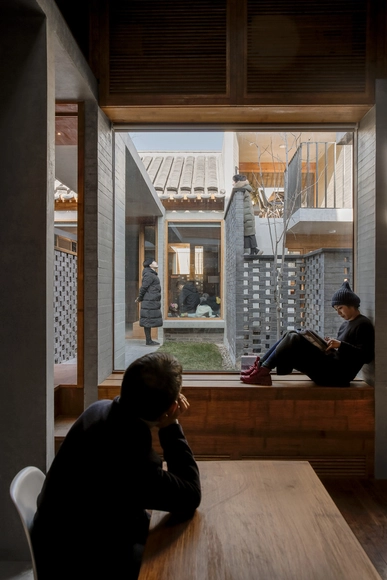
China seems to be at the peak of a refurbishment fever. Not only hutongs in historic downtowns, but abandoned industrial factories are becoming new tech or cultural hubs, and even buildings in the risk of collapse are refurbished to extend their lifespan. Why is this happening? Who is investing? How could this happen in a country where you cannot buy properties?
In this edition of Editor's Talk, our editors from ArchDaily China share their thoughts on how in a fast-paced development process, such as the one China is going through, there is a refurbishment fever in its biggest cities.
https://www.archdaily.com/919513/whats-pushing-refurbishment-fever-in-chinaNicolás Valencia
Spotlight: Robert Venturi and Denise Scott Brown
.jpg?1498408559&format=webp&width=640&height=580)
Through their pioneering theory and provocative built work, husband and wife duo Robert Venturi (born June 25, 1925) and Denise Scott Brown (born October 3, 1931) were at the forefront of the postmodern movement, leading the charge in one of the most significant shifts in architecture of the 20th century by publishing seminal books such as Complexity and Contradiction in Architecture (authored by Robert Venturi alone) and Learning from Las Vegas (co-authored by Venturi, Scott Brown and Steven Izenour).
https://www.archdaily.com/769194/spotlight-robert-venturi-and-denise-scott-brownRory Stott
Explore Boullée's Unrealized World Through Film "Lux in Tenebris"
Etienne-Louis Boullée, though regarded as one of the most visionary and influential architects in French neoclassicism, saw none of his most extraordinary designs come to life. Throughout the late 1700s Boullée taught, theorized, and practiced architecture in a characteristic style consisting of geometric forms on an enormous scale, an excision of unnecessary ornamentation, and repetition of columns and other similar elements.
https://www.archdaily.com/919380/explore-boullees-unrealized-world-through-film-lux-in-tenebrisMegan Schires
How Herman Miller's GreenHouse Inspired the Construction of Sustainable Buildings in the US
.jpg?1561180124&format=webp&width=640&height=580)
While the United States’ green-building industry was still relatively slow in the early 1990’s, Herman Miller, who are known for their architectural experimentation, decided to construct a new facility for Simple, Quick, Affordable (SQA), a company that bought used office furniture to refurbish them and sell them to smaller businesses. To do so, they chose to build sustainably, a design approach that was not yet utilized in the region.
Designed by New York architect William McDonough, the 295,000 sq ft building (approx. 90,000 sqm) was built in Holland, Michigan in 1995. The facility’s design qualities, such as storm-water management, air-filtering systems, and 66 skylights, helped set the standards for the U.S. Green Building Council LEED Certification.
https://www.archdaily.com/919578/how-herman-millers-greenhouse-inspired-the-construction-of-sustainable-buildings-in-the-usDima Stouhi
Learn How to Avoid Energy Loss in Your Buildings
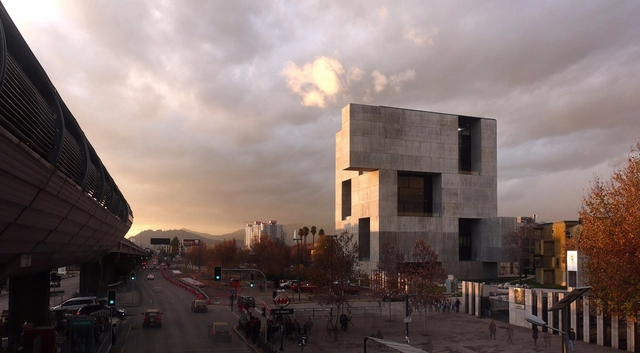
Thermal comfort becomes very evident when it is not attended to. When thermal conditions are adequate in one location, our body is in balance with the environment allowing us to perform activities normally. On the other hand, when a space is too hot or too cold, we soon see changes in our mood and body. Dissatisfaction with the thermal environment occurs when the heat balance is unstable, that is when there are differences between the heat produced by the body and the heat that the body loses to the environment.
https://www.archdaily.com/915546/learn-how-to-avoid-the-main-sources-of-energy-loss-in-your-homeEduardo Souza
The New York Botanical Garden Opens Expansive Show on Roberto Burle Marx
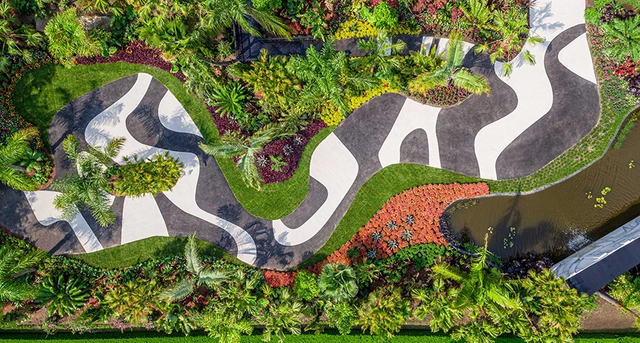
This article was originally published on Metropolismag.com.
https://www.archdaily.com/919497/the-new-york-botanical-garden-opens-expansive-show-on-roberto-burle-marxJane Levere
Tips & Tactics for Beating Competition When Applying for a Job

The Midnight Charette is an explicit podcast about design, architecture, and the everyday. Hosted by architectural designers David Lee and Marina Bourderonnet, it features a variety of creative professionals in unscripted and long-format conversations that allow for thoughtful takes and more personal discussions. Honesty and humor are used to cover a wide array of subjects: some episodes provide useful tips for designers, while others are project reviews, interviews, or simply explorations of everyday life and design. The Midnight Charette is available for free on iTunes, YouTube, Spotify, and all other podcast directories.
https://www.archdaily.com/919509/tips-and-tactics-for-beating-competition-when-applying-for-a-jobThe Second Studio Podcast
Photographer Manipulates Architecture to Create an Imaginary World

Regardless of what field designers specialize in, they are capable of translating their ideas and fantasies into visible and tangible material. After all, a designer's principle is quite simple: If it doesn't exist, create it.
For his final photography exam, Szabó Viktor took photos of existing buildings and manipulated them into structures that only exist in his imagination.





https://www.archdaily.com/919212/photographer-manipulates-architecture-to-create-an-imaginary-worldDima Stouhi
How to Choose the Right Glass for Your Projects
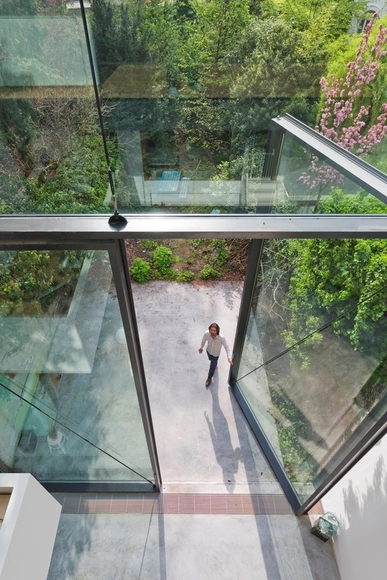
Today, improvements in glass processing technology have made it possible to render specific and effective solutions for a wide range of architectural projects. In fact, there are so many options available that it's almost necessary to research different products and their properties, and how this will impact, for example, the windows and doors that you are designing.
What variables should be considered – and prioritized – when choosing the glass used in a project? How can aesthetics coincide with function and efficiency? We sat down with the experts at Cristales Dialum to delve into the complex world of glass and to better understand the hows and whys of choosing the best type of glass for your projects and ensuring the best results for your clients.
https://www.archdaily.com/918008/how-to-choose-the-right-glass-for-your-projectsJosé Tomás Franco
Spotlight: Alejandro Aravena

As founder of the “Do Tank” firm ELEMENTAL, Chilean architect Alejandro Aravena (born on June 22, 1967) is perhaps the most socially-engaged architect to receive the Pritzker Prize. Far from the usual aesthetically driven approach, Aravena explains that “We don’t think of ourselves as artists. Architects like to build things that are unique. But if something is unique it can’t be repeated, so in terms of it serving many people in many places, the value is close to zero.” [1] For Aravena, the architect’s primary goal is to improve people's way of life by assessing both social needs and human desires, as well as political, economic and environmental issues.
https://www.archdaily.com/789618/spotlight-alejandro-aravenaMarie Chatel
Spotlight: Smiljan Radić
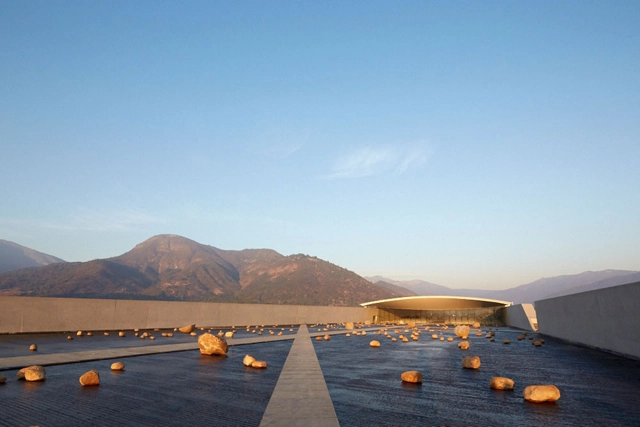
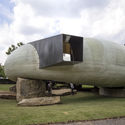
Mainly known outside of his home country for his design of the 2014 Serpentine Gallery Pavilion, architect Smiljan Radić (born June 21, 1965) is one of the most prominent figures in current Chilean architecture. With a distinctive approach to form, materials, and natural settings, Radić mostly builds small- to medium-sized projects that flirt with the notion of fragility.


https://www.archdaily.com/788812/spotlight-smiljan-radicMarie Chatel
Fabrizio Barozzi Celebrates the Uniqueness of Different Contexts in Architecture
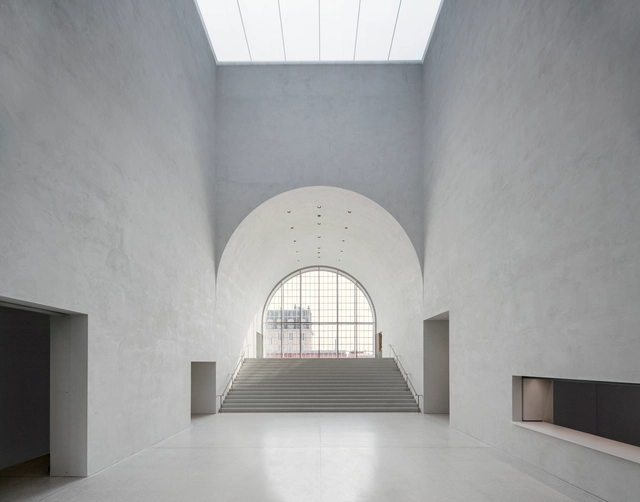
Past, Present, Future is an interview project by Itinerant Office, asking acclaimed architects to share their perspectives on the constantly evolving world of architecture. Each interview is split into three video segments: Past, Present, and Future, in which interviewees discuss their thoughts and experiences of architecture through each of those lenses. The first episode of the project featured 11 architects from Italy and the Netherlands and Episode II is comprised of interviews with 13 architects from Spain, Portugal, France, and Belgium.
The goal of the series is to research these successful firms and attempt to understand their methods and approaches. By hopefully gaining a clearer picture of what it means to be an architect in the 21st century, the videos can also serve as inspiration for the next generation of up-and-coming architects and students as they enter the field.
https://www.archdaily.com/919538/fabrizio-barozzi-celebrates-the-uniqueness-of-different-contexts-in-architectureDima Stouhi