

In recognition of the opening of One World Observatory in New York City, EarthCam has published a full time-lapse of One World Trade Center's construction. Thousands of high-definition images capture the incredible undertaking of construction and planning that took place from October 2004 to Memorial Day 2015. The camera flies the viewer across the site, showing how the building and its surroundings have taken shape over the past 11 years.
Architecture News
Watch the 11-Year Construction of One World Trade Center in this Time-Lapse
https://www.archdaily.com/639474/watch-the-11-year-construction-of-one-world-trade-center-in-this-time-lapseJoey Jacobson
12 Stunning Aerial Photos Taken with a Drone

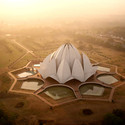
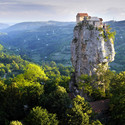
Photographer Amos Chapple has traveled the world, capturing well-known landmarks and cities from the perspective of a drone. From the Katshi Pillar in Georgia to New Delhi’s Lotus Temple and the star fort in Bourtange, the Netherlands, Chapple carried out “as much aerial work as weather and local laws allow.”
See 12 of his most impressive photos after the break.


https://www.archdaily.com/639498/12-stunning-aerial-photos-taken-with-a-droneAD Editorial Team
7 Leading Architects Defend the World's Most Hated Buildings
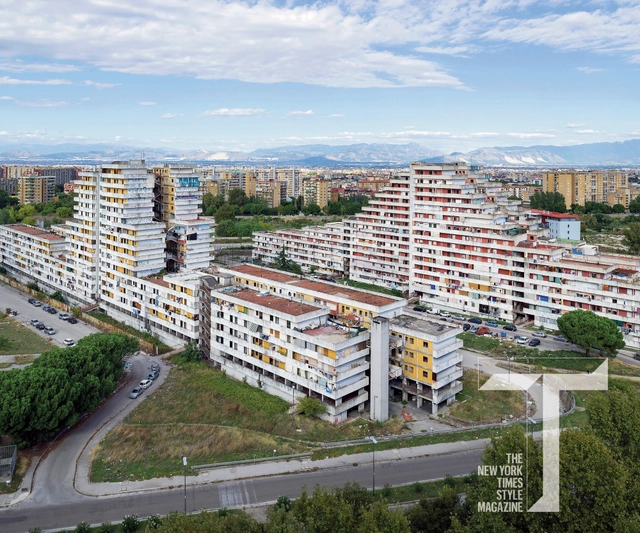
From Paris' most abhorred tower to New York's controversial government center, seven renowned architects have stepped up in defense of the world's most hated buildings in a newly published article on T Magazine. As told to Alexandra Lange, the article presents direct quotes from Zaha Hadid, Daniel Libeskind, Norman Foster and four others regarding controversial architecture whose importance goes beyond aesthetics.
See what hated building Norman Foster believes to be a "heroic" structure, after the break.
https://www.archdaily.com/639525/7-leading-architects-defend-the-world-s-most-hated-buildingsKarissa Rosenfield
Video: Pat Vale's Drawing Time-Lapse Brings NYC to Life
Back in 2012, we found "Empire State of Pen," an amazing video of London-based artist and animator Patrick Vale’s drawing of Manhattan from the perspective of the Empire State Building. Now, Vale has taken a different perspective of the city, this time traveling a bit farther uptown to the Rockefeller Center area. Vale’s new drawing looks south, with the Empire State Building in the center, and the Freedom Tower in the background. To the east you can see the Chrysler Building, and to the west lies the Bank of America Tower in the Times Square area.
Vale started the drawing in December of 2014, when he spent an afternoon in -15 degree weather sketching and taking pictures, which he then took back to his studio to create the piece. The whole process took over a month to complete. Watch Vale's drawing come to life in the time-lapse video above, and view images of his illustration after the break.
https://www.archdaily.com/639297/video-pat-vale-s-drawing-time-lapse-brings-nyc-to-lifeSabrina Santos
UNStudio and EHA Compete to Design 's-Hertogenbosch's City Center Theater

Residents of 's-Hertogenbosch have been asked to vote on proposals by UNStudio and Ector Hoogstad Architecten to decide who will design their new City Center Theater. Though vastly different, both proposals promise to provide a timeless main theater and flexible performance hall that connects to an inviting foyer and seamlessly merges with the adjacent public plaza.
The public's vote will count towards 50 percent of the final decision. Ground breaking is expected to occur in 2017, with completion scheduled for 2020. Read on for a preview of both proposals.
https://www.archdaily.com/639335/unstudio-and-eha-compete-to-design-s-hertogenbosch-s-city-center-theaterKarissa Rosenfield
2015 AIA/HUD Secretary Awards Honor Housing Projects
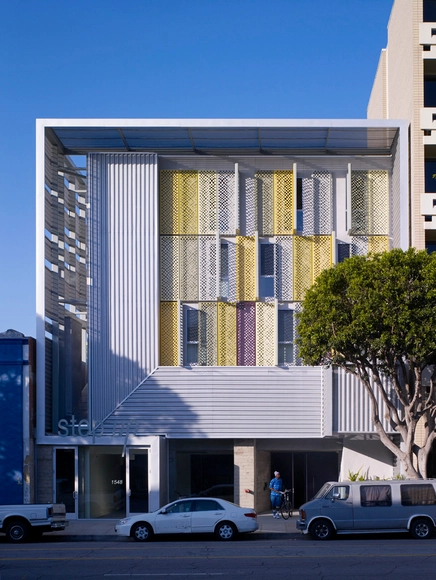
The American Institute of Architects’ (AIA) Housing Knowledge Community, together with the Office of the Secretary of the U.S. Department of Housing and Urban Development (HUD), has announced two selections for the 2015 AIA/HUD Secretary Awards, which recognize innovative housing projects with excellence in design. This year's projects were selected in the Excellence in Affordable Housing Design and Creating Community Connection categories.
The Excellence in Affordable Housing Design Award was awarded to Brooks + Scarpa for their Step Up project in Santa Monica, California, which embodies the award’s recognition of “architecture that demonstrates overall excellent design responses to the needs and constraints of affordable housing."
Gossens Bachman Architects was announced as the winner of the Creating Community Connection Award for their Co-op Plaza Redevelopment in Brattleboro, Vermont. This award “recognizes projects that incorporate housing within other community amenities for the purposes of either revitalization or planned growth.”
More about the winners, after the break…
https://www.archdaily.com/639061/2015-aia-hud-secretary-awards-honor-housing-projectsSabrina Santos
Gottlieb Paludan Architects Awarded Scandinavia’s Largest Architecture Prize
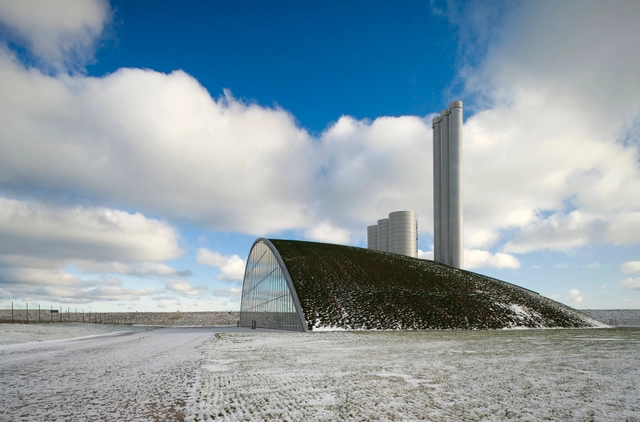
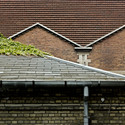
The 2015 Nykredit Architecture Prize has been awarded to Gottlieb Paludan Architects (GPA) for their contribution to the design of public utility and industrial buildings. Founded by the Nykredit Foundation, the 500,000-DKK prize has become Scandinavia’s foremost architectural award, with past winners including Jørn Utzon, Bjarke Ingels and CEBRA.

https://www.archdaily.com/639049/gottlieb-paludan-architects-awarded-scandinavia-s-largest-architecture-prizeEric Oh
Foster + Partners Declared Largest Practice In The UK
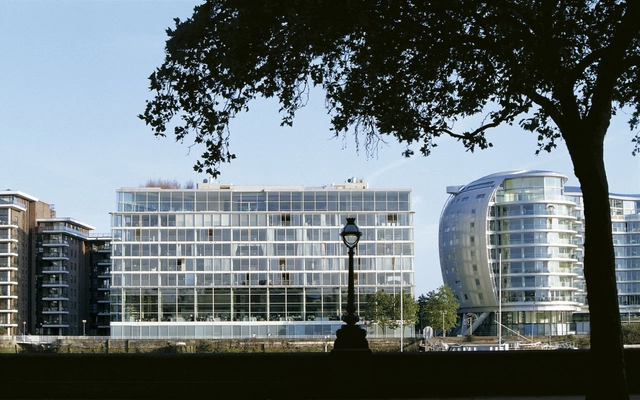
The Architects' Journal (AJ) have revealed the results of their fourth AJ120 award, an annual survey which ranks the largest and wealthiest practices based in the UK. Partially calculated on the number of ARB-registered (or equivalent) fully qualified architects in employment, the AJ have announced that London based Foster + Partners have topped the 2015 table. Describing the 48 year old practice as an "international powerhouse," employing 312 architects (out of their 1,066 employees worldwide), the survey also shows that "the £185million fees billed by the practice’s architects – up a huge £45 million from last year – made up 38% of the combined total of all of the companies in the Top 10." The survey saw BDP ranked second, while AHMM came in third.
https://www.archdaily.com/639207/foster-partners-declared-largest-practice-in-the-ukJames Taylor-Foster
Open Call: 2015 Faith & Form/IFRAA International Awards Program
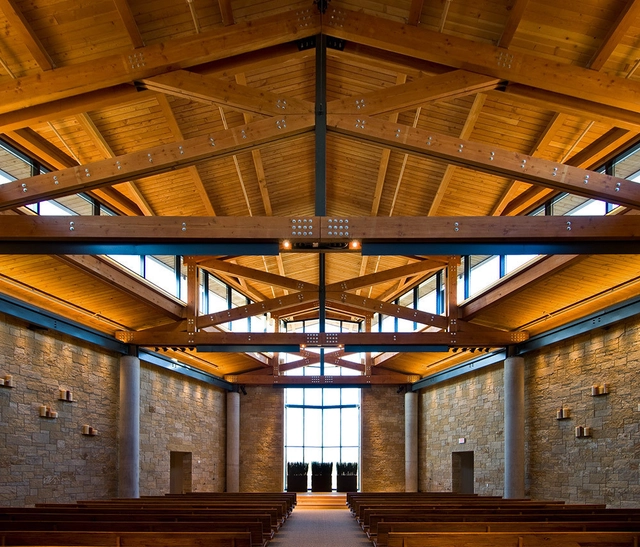
Submissions are invited for the 2015 Faith & Form/IFRAA International Awards Program, which recognizes excellence in the design of religious architecture, restoration and renovation of religious buildings, religious arts, religious landscape design, the design of unbuilt religious projects, and student design projects for spiritual environments. The winners of the awards program will be chosen by an independent jury panel of recognized experts in the field and will be published globally. All submissions are digital and the deadline is June 30, 2015. More information can be found here.
https://www.archdaily.com/639073/open-call-2015-faith-and-form-ifraa-international-awards-programKarissa Rosenfield
OMA Among 5 Shortlisted for Singapore Rail Corridor
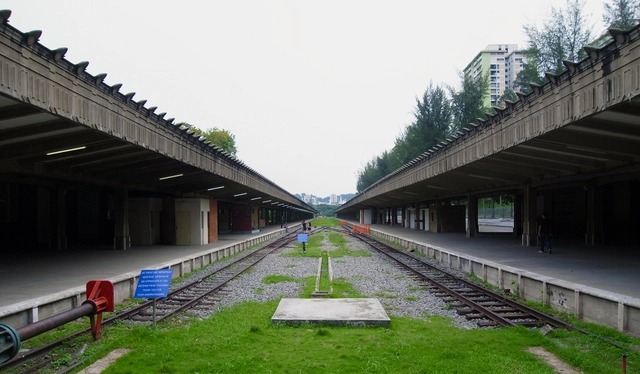
MVRDV, OMA and DP Architects are among five shortlisted teams competing to design the Singapore Rail Corridor. Spanning the island south to north, from the Tanjong Pagar Railway Station to the Woodlands Checkpoint, the corridor is the site of Singapore’s previous rail link to Malaysia. With this competition, the Singapore government hopes to develop a feasible plan to transform the 24 kilometer stretch into a public greenway that connects four important urban nodes: Buona Vista, the Bukit Timah Railway Station area, the former Bukit Timah Fire Station, and Kranji.
“The expanse of the corridor running through the centre of the entire country presents an unprecedented opportunity to develop a new typology of landscape with transformative effects for the country as a whole. This is a project that has the potential to improve quality of life for generations to come," says OMA Partner Michael Kokora.
64 teams responded to the government's call for ideas, and now only five have been selected to move onto the competition's second stage. These five teams are...
https://www.archdaily.com/638963/oma-among-5-shortlisted-for-singapore-rail-corridorKarissa Rosenfield
Material Masters: The Traditional Tiles of Wang Shu & Lu Wenyu
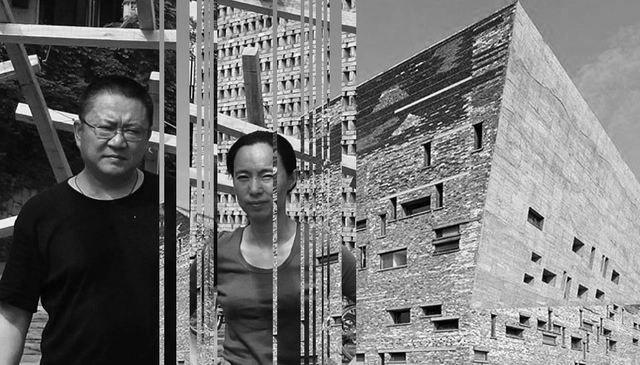
Wang Shu and Lu Wenyu of Amateur Architecture Studio are known for their distinctly contextual attitudes towards design which prize tradition and timelessness above anything else. In many cases, their use of materials is governed by local availability of salvaged building elements. Tiles, in particular, represent a material used repeatedly by Amateur Architecture studio and for Wang Shu, who won the 2012 Pritzker Prize, they offer a political as well as an architectural message.

https://www.archdaily.com/638948/material-masters-amateur-architecture-studio-s-work-with-tileEvan Rawn
Mayer/Reed, Snøhetta and DIALOG Selected to Design Oregon's Willamette Falls Riverwalk
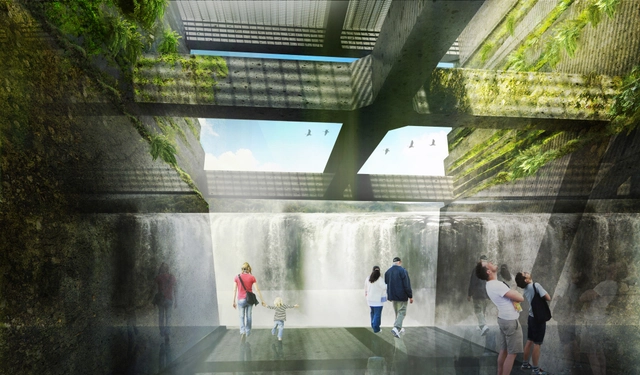
For the first time in 100 years, Oregon’s Willamette Falls will open to the public, with a Riverwalk proposed by Mayer/Reed, Snøhetta and DIALOG. The second largest waterfall in the US, Willamette Falls has a diverse history, and the proposed design seeks to celebrate and amplify the power of the falls, weaving the pedestrian through its rich cultural and geological history.
The final destination of many west-bound pioneers on the Oregon Trail during the 1800s, the falls also served as a gathering spot and source of fish for Native Americans. During the 19th and 20th century, it was an industrial powerhouse, accommodating woolen, lumber, flour and paper mills, and a brick making operation. Yet after the bankruptcy of the Blue Heron Paper Mill, the site has been inhospitable to the public, haunted by empty industrial buildings.
https://www.archdaily.com/638653/mayer-reed-snohetta-and-dialog-selected-to-design-oregon-s-willamette-falls-riverwalkEric Oh
Hundertwasser's Last Unbuilt Work Could Become a Reality in New Zealand
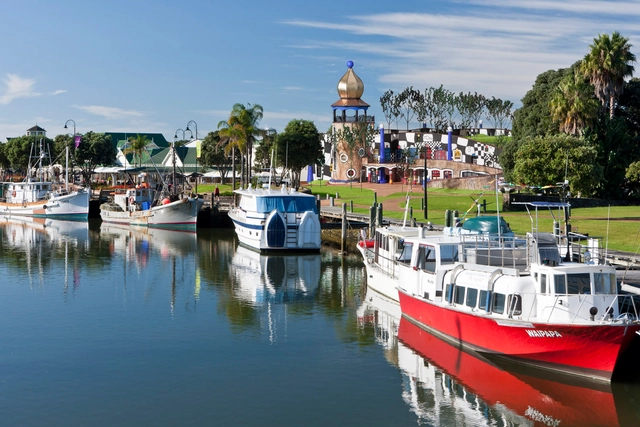
The future of Friedensreich Hundertwasser's last unbuilt work -- a proposed Art Center for Whangarei, New Zealand -- hangs in the balance and will be decided next week by a referendum. The center, backed by the Proper Northland Trust (PNT), was originally designed in 1993 by Hundertwasser to repurpose a waterfront government building, but was never completed.
Hundertwasser, an Austrian artist and architect who lived on and off in New Zealand from the 1970s until his death in 2000, centered his designs on colorful, organic forms, and the relationship between art and nature, as well as the practice of sustainable building.
https://www.archdaily.com/638687/hundertwasser-s-last-unbuilt-work-could-become-a-reality-in-new-zealandSabrina Santos
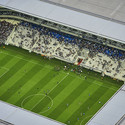
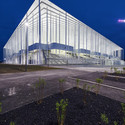
Gallery: Inside Herzog & de Meuron's Bordeaux Stadium During Its Inaugural Match
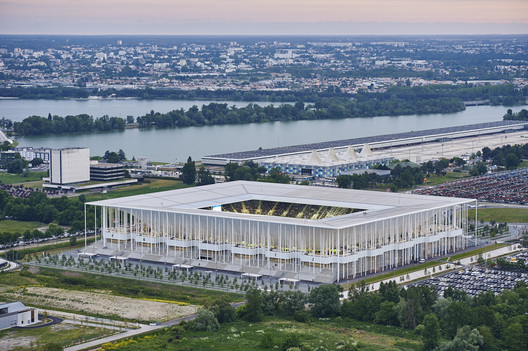
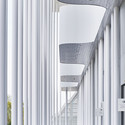
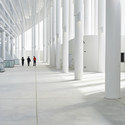
Architectural photographer Philippe Caumes has sent us images from the open match at Herzog & de Meuron's newly completed Bordeaux Stadium in France. Sometimes compared to a classical temple, the all-white, rectangular stadium is distinct with a forest of slender columns touching down on an inviting grand staircase that ushers fans into its 42,000-seat "bowl." Take a look inside, after the break.

https://www.archdaily.com/638692/gallery-inside-herzog-and-de-meuron-s-bordeaux-stadium-during-its-inaugural-matchKarissa Rosenfield
Qatar Searches for Architect to Transform Flour Mill into Museum Complex
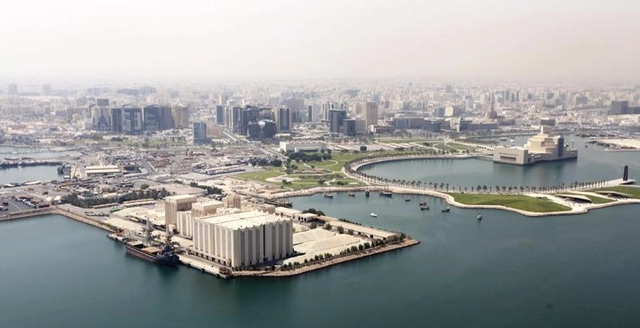
Qatar Museums has launched an international search for an architect to convert an existing flour mill within the Arabian Gulf port into a massive "Art Mill." Planned for a prominent site in Doha, near I.M. Pei’s Museum of Islamic Art and Jean Nouvel’s forthcoming National Museum of Qatar, the new museum will be realized through a three-stage competition open to practicing architects with at least seven years of experience.
"The industrial process of milling has left a fascinating legacy in the layout and spaces of the existing buildings on the site, notably voluminous spaces and a rhythmic, patterned promenade of vertical silos. Some of the Flour Mills buildings possess an authentic monumentality in terms of positioning, scale and noble forms. Re-using and adapting these structures will be integral to the project," says competition organizer Malcolm Reading on the Art Mill's official site.
https://www.archdaily.com/638651/qatar-searches-for-architect-to-transform-flour-mill-into-museum-complexKarissa Rosenfield
Live off the Grid in Nice Architects’ Wind and Solar-Powered Ecocapsule

Living off the grid just got a little bit easier, thanks to Nice Architects’ Ecocapsule, a self-sufficient, portable pod that is powered by solar and wind energy. Unveiled at the Pioneers Festival in Vienna, the micro-home’s spherical shape is designed to maximize the collection of rainwater and minimize energy loss.
The Ecocapsule includes a 9,744 watt-hour battery, which is charged by a built-in 750-watt wind turbine, and 2.6 square meters of solar panels. The energy system can support someone living off the grid for about a year, depending on the location, according to the architects. The unit also contains a built-in kitchenette with running water, a flushing toilet and hot water.
Learn more about the Ecocapsule and view images after the break.
https://www.archdaily.com/637889/live-off-the-grid-in-nice-architects-wind-and-solar-powered-ecocapsuleKatie Watkins
Inside the Spanish Pavilion at the Milan Expo 2015
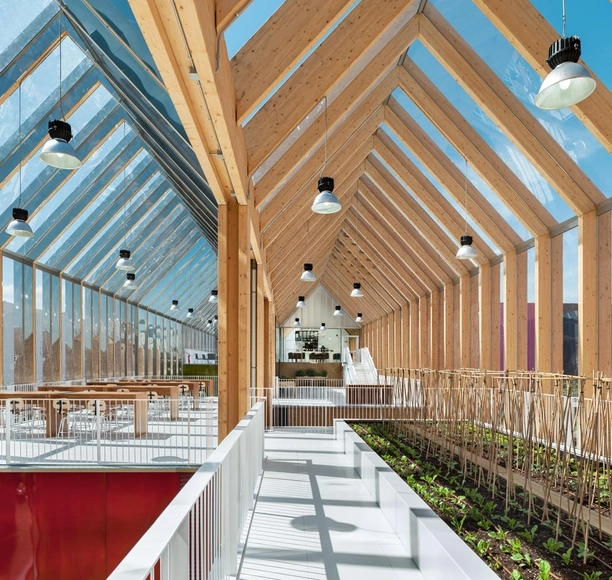
Spanish photographers Iñigo Bujedo-Aguirre and Adrià Goula have shared with us images of the Spanish pavilion at the Milan Expo 2015. Designed by B720 Fermín Vazquez Arquitectos, the pavilion represents the fusion between Spain’s traditional food and innovative gastronomy. This duality creates an attractive and flexible space, which incorporates an open, patio-like area with orange trees – another symbol of Spanish culture.


https://www.archdaily.com/637786/inside-the-spanish-pavilion-at-the-milan-expo-2015Natalia Yunis
The Rise Of Private Art Galleries
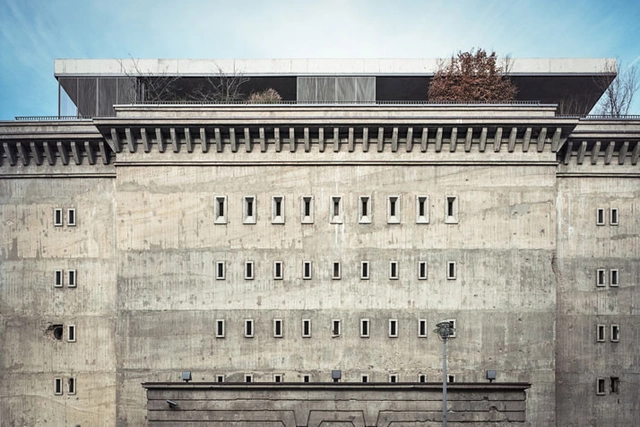
In an article for The New Yorker, Ben Mauk examines the rise of the private art 'museum.' In the centre of Berlin there sits a "heavy, grey, and shrapnel-pocked" bunker, designed by Nazi architect Karl Bonatz under the direction of Albert Speer which, in 2003, was transformed into a private gallery. Having been bought by Christian and Karen Boros in order to display a portion of their sizeable collection of contemporary art, the only way for a member of the public to gain admittance is by registering online for a group tour. For Mauk, however, this is not necessarily a bad thing. Read the article in full here.
https://www.archdaily.com/638474/the-rise-of-private-art-galleriesJames Taylor-Foster


